
 Search
 en
en English
 日本語
日本語 русский
 Español
 Deutsch
 中文简体
中文简体Content
- 1 Understanding the Role of Optical Lenses
- 2 Product Overview: Precision Optical Lens
- 3 Key Advantages Over Competitors
- 4 Manufacturing Process Strengths
- 5 Technical Considerations for Lens Specification
- 6 Advantages in Laser Optics
- 7 Advantages in Automotive Optics
- 8 Advantages in Semiconductor Optics
- 9 Advantages in Consumer Optics
- 10 Why Manufacturing Experience Matters
- 11 Quality Assurance and Certification Strength
- 12 Engineering Support from Drawing to Delivery
- 13 Surface Quality and Optical Cleanliness
- 14 Coating Performance as a Competitive Factor
- 15 Dimensional Accuracy and Assembly Efficiency
- 16 Wholesale Optical Component Supply
- 17 How Precision Lenses Improve System Performance
- 18 Choosing the Right Optical Lens Partner
- 19 Frequently Asked Questions
- 19.1 What is an optical lens used for?
- 19.2 What makes a precision optical lens different from an ordinary lens?
- 19.3 Can optical lenses be customized?
- 19.4 Why is coating important for optical lenses?
- 19.5 What industries benefit most from high-quality optical lenses?
- 19.6 Why is IATF16949 certification important for automotive optical components?
- 19.7 How does lens surface quality affect performance?
- 19.8 What information should customers provide when ordering optical lenses?
- 19.9 Can one supplier provide lenses together with mirrors, prisms, and other optical components?
- 19.10 Why should customers consider long-term manufacturing capability instead of only price?
- 20 Conclusion
- 21 References
- 22 Product: Optical Lens
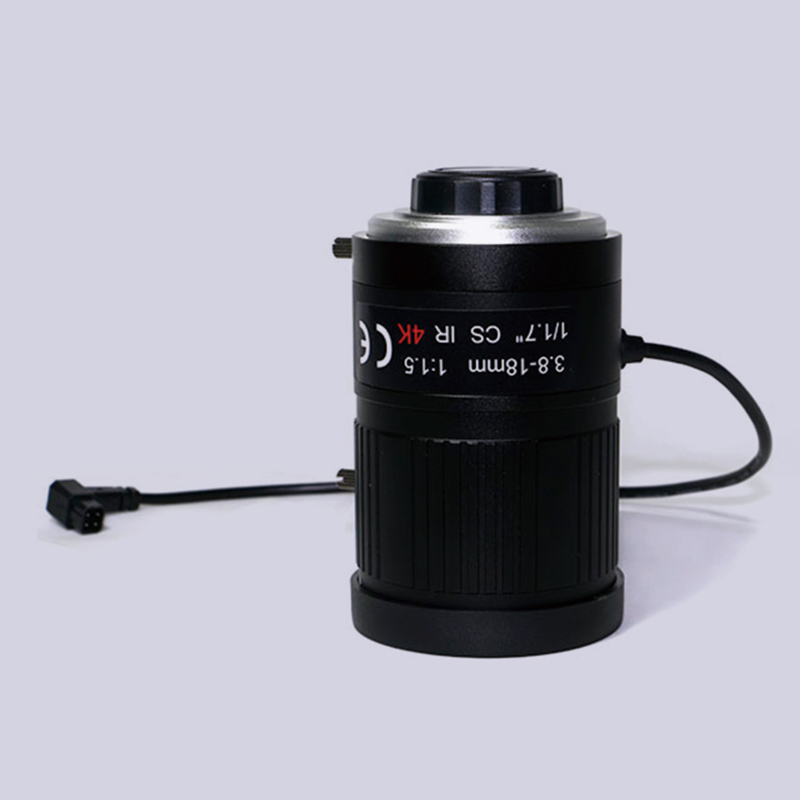
Optical lenses are essential components in modern imaging, sensing, illumination, laser delivery, inspection, projection, and measurement systems. A high-quality optical lens does far more than transmit light: it shapes, focuses, corrects, expands, condenses, collimates, or redirects light with controlled accuracy. In demanding applications, the performance of a lens can directly influence resolution, signal strength, energy efficiency, measurement repeatability, product safety, and overall system reliability.
This article focuses on precision optical lenses manufactured for industrial and high-technology markets, with particular attention to product advantages, manufacturing strengths, quality assurance, customization capability, and application value. It also presents the production capabilities of Changzhou Haolilai Photo-Electricity Scientific and Technical Co., Ltd., a professional optical component manufacturer founded in 1998 and located in Changzhou, Jiangsu, China. The company develops and produces precision optical components for laser optics, automotive optics, semiconductor optics, and consumer optics, supported by ISO9001:2015, ISO14001:2015, and IATF16949 certifications, experienced engineering teams, and long-term export experience.
In a competitive optical component market, customers often need more than a basic lens supplier. They need a manufacturing partner capable of delivering stable optical performance, precise dimensional control, reliable coating quality, consistent batch production, responsive engineering communication, and cost-effective solutions for both standard and customized projects. A precision optical lens manufacturer with advanced processing, inspection, and quality management systems can help customers reduce development risk, improve device performance, and shorten time to market.
Understanding the Role of Optical Lenses
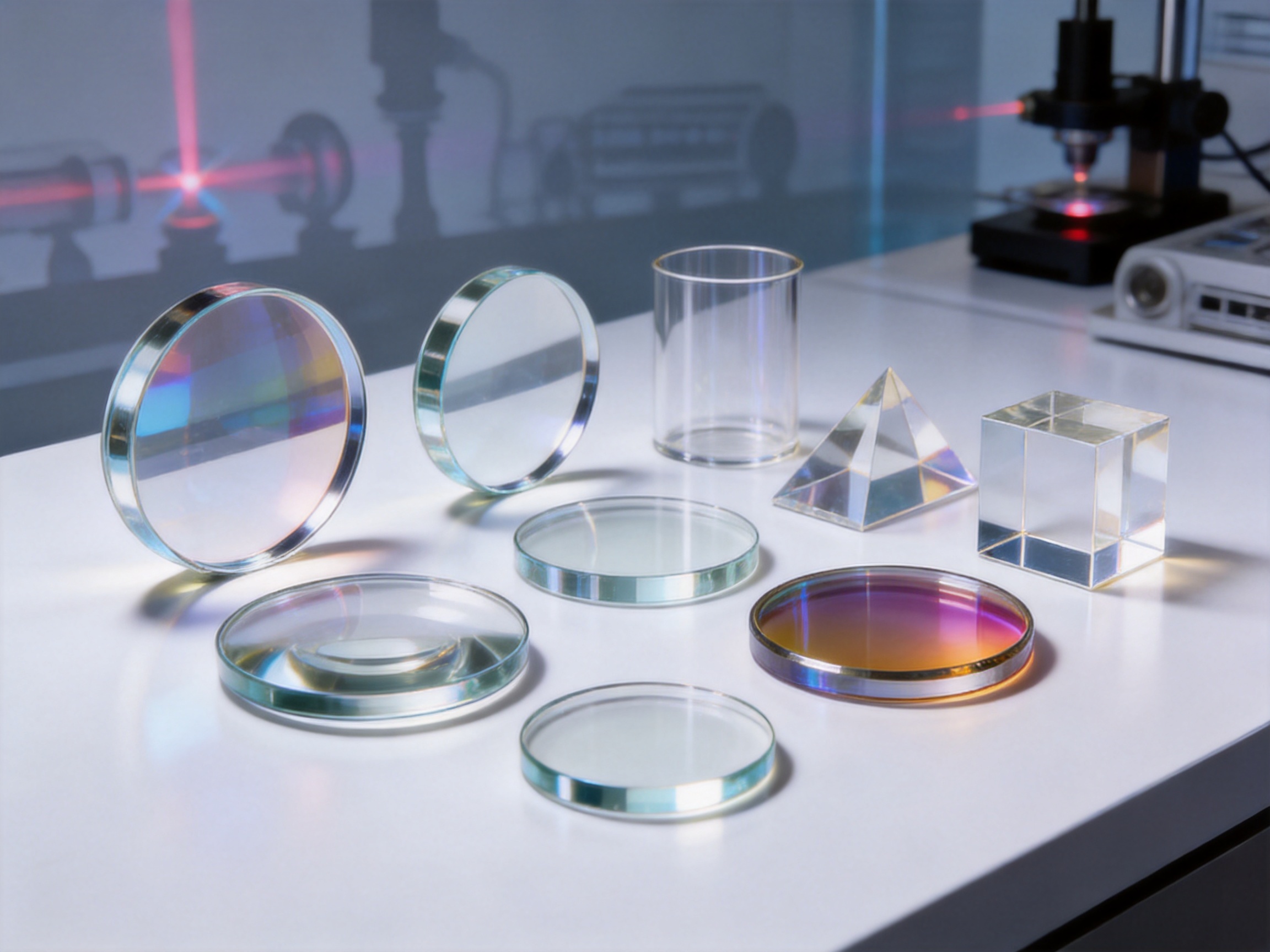
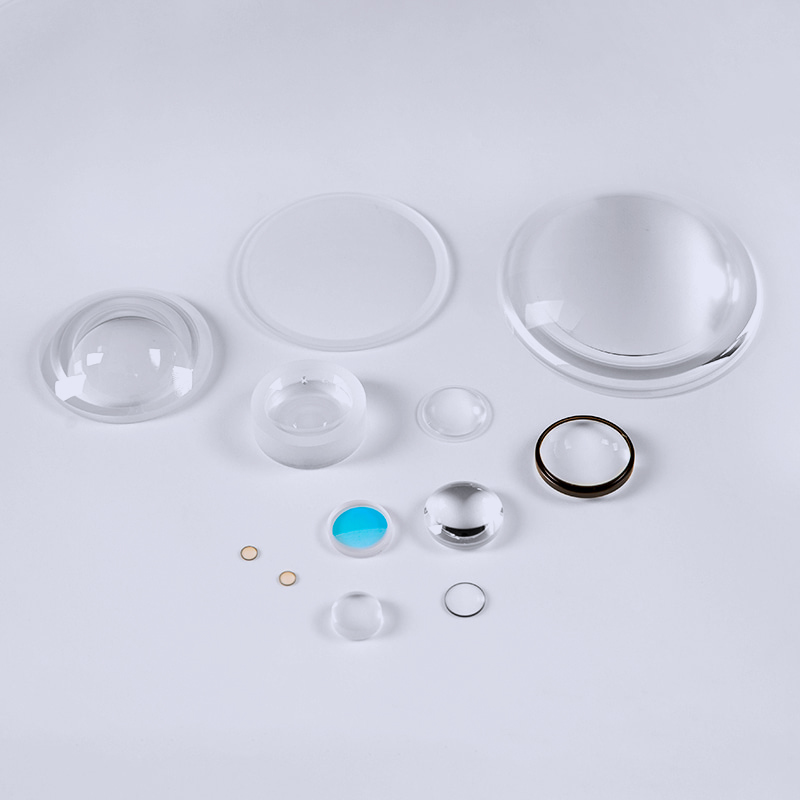
An optical lens is a transparent component designed to refract light according to a defined geometry and material property. Depending on its surface form, a lens may converge, diverge, focus, collimate, expand, or correct light beams. The most common lens types include plano-convex lenses, bi-convex lenses, plano-concave lenses, bi-concave lenses, meniscus lenses, achromatic lenses, cylindrical lenses, aspheric lenses, and customized special lenses. Each type serves a particular optical purpose and must be manufactured with strict control of radius, center thickness, diameter, surface quality, centering, wedge, coating, and material transmission.
In laser systems, lenses may be used for beam expansion, beam focusing, collimation, and energy delivery. In automotive optical systems, lenses contribute to sensing, display, lighting, driver assistance, and in-cabin monitoring. In semiconductor equipment, lenses support inspection, alignment, lithography-related processes, and precision metrology. In consumer electronics, lenses influence camera quality, projection performance, augmented reality functions, sensing accuracy, and compact optical module design.
The value of an optical lens is determined not only by its shape but also by how accurately that shape is achieved and how reliably the component performs under real operating conditions. A lens with poor surface quality can scatter light and reduce contrast. A lens with inaccurate radius can alter focal length and create focusing error. A lens with coating inconsistency can reduce transmission or increase ghost reflections. A lens with poor environmental durability can fail under humidity, temperature cycling, vibration, or long-term use. Therefore, professional optical lens production requires deep integration of optical design understanding, material knowledge, precision processing, coating engineering, inspection technology, and quality control.
Product Overview: Precision Optical Lens
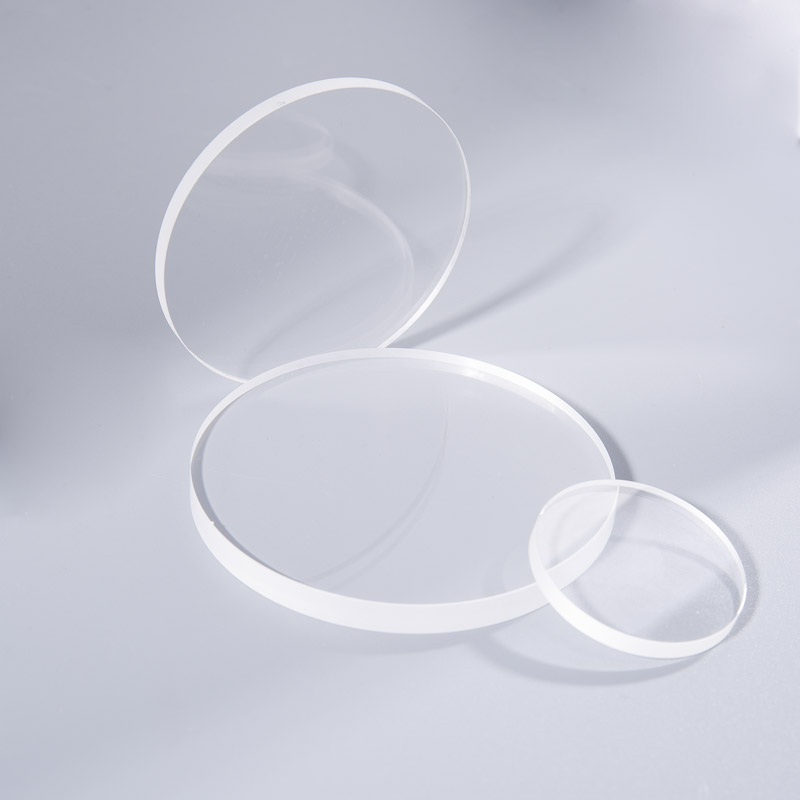
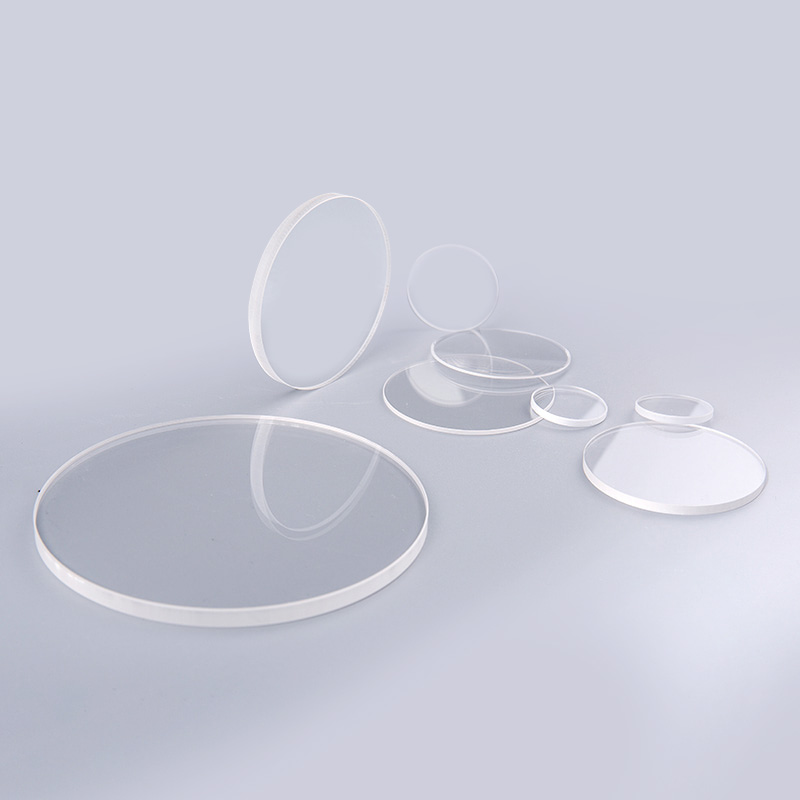
The optical lens product described here belongs to the category of precision optical components. It is designed for customers requiring dependable light control in industrial, automotive, semiconductor, laser, and consumer optical systems. The lens can be adapted according to application needs, including variations in material, diameter, focal length, surface geometry, coating design, dimensional tolerance, and surface quality grade.
A well-manufactured optical lens provides high transmission, controlled focal performance, low optical distortion, minimal scattering, and repeatable assembly performance. Depending on the design, it may be optimized for visible light, near-infrared, ultraviolet, or specific laser wavelengths. Coating options may include anti-reflection coatings, high-durability coatings, wavelength-selective coatings, broadband coatings, or customized coatings based on system requirements.
Compared with ordinary commercial lenses, a precision optical lens offers stronger advantages in tolerance consistency, surface accuracy, coating stability, and application-specific customization. These factors are especially important when the lens is used in systems where small optical errors can cause major performance losses. For example, a laser focusing lens with poor surface precision may enlarge the spot size and reduce power density. An inspection lens with high scatter may lower image contrast. An automotive optical lens with unstable coating may suffer reduced performance after environmental exposure. A semiconductor-related lens with dimensional inconsistency may cause alignment issues in high-precision equipment.
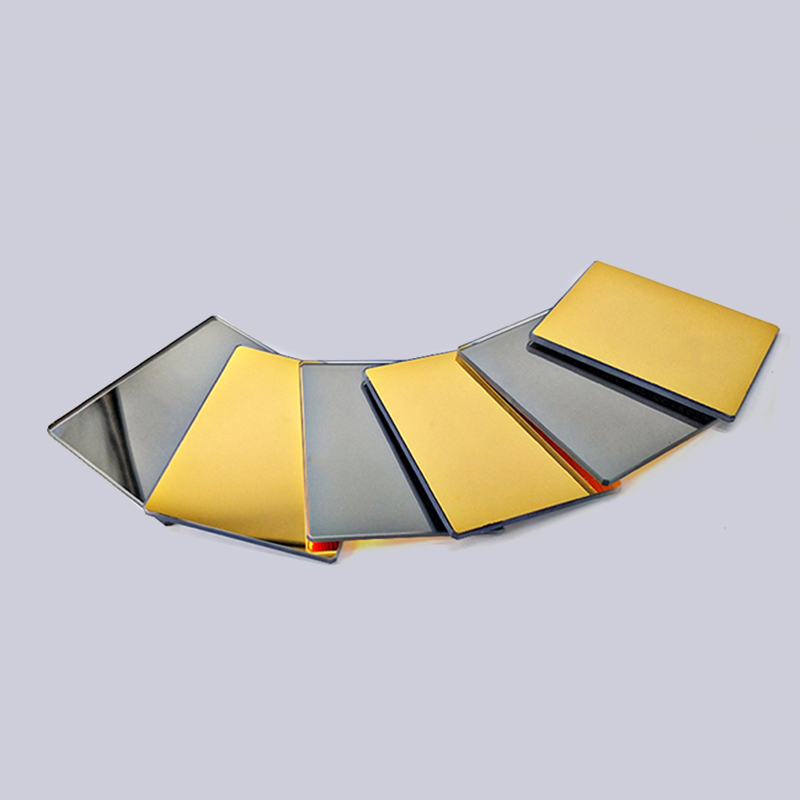
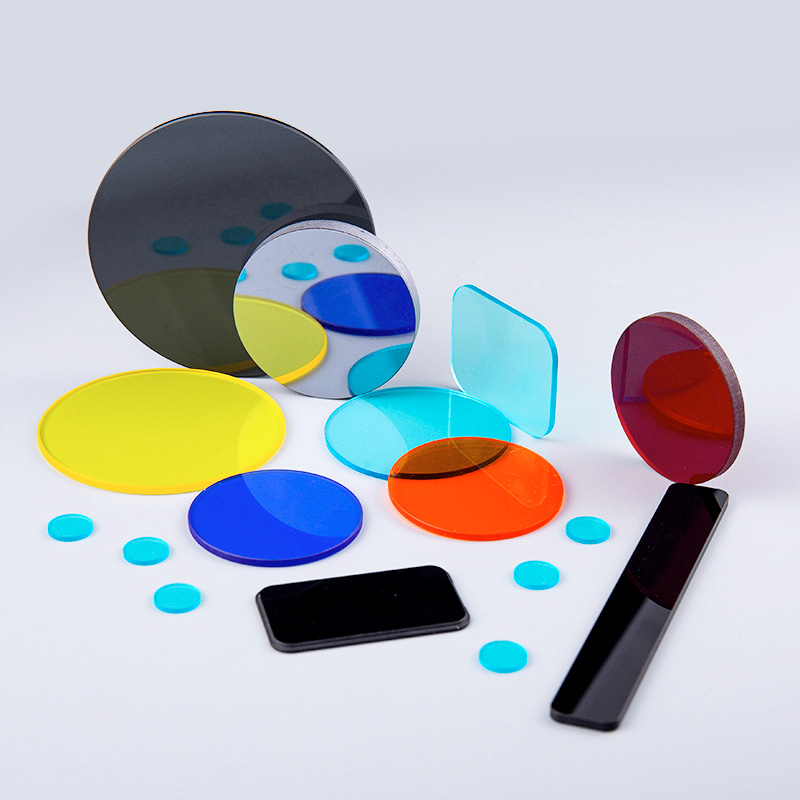
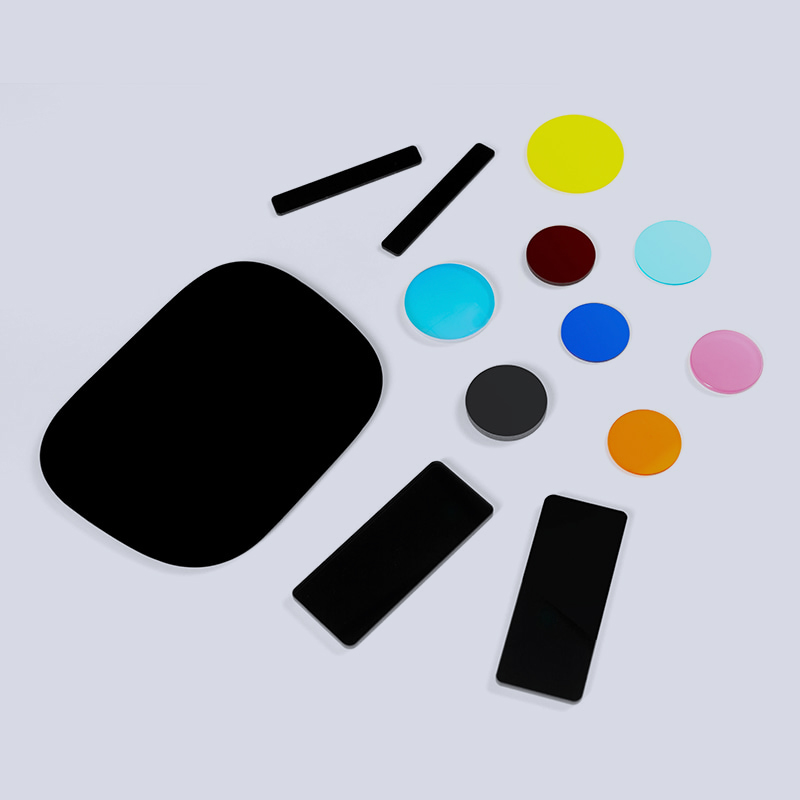
By focusing on precision manufacturing and application-oriented engineering, Changzhou Haolilai Photo-Electricity Scientific and Technical Co., Ltd. provides optical lens solutions suitable for both prototype development and batch production. The company’s background in various optical component categories, including optical flat mirrors, wafers, automotive interior glass structural components, optical prisms, optical spherical mirrors, optical lenses, and other customized components, gives it a broad manufacturing foundation for complex optical projects.
Key Advantages Over Competitors
The optical lens market includes many suppliers, but not all suppliers have the same level of engineering capability, production discipline, certification background, and long-term quality stability. Precision optical components require exact control, and small deviations can create measurable differences in final system performance. The following advantages help differentiate a high-level precision optical lens manufacturer from ordinary competitors.
Consistent Optical Performance
Consistency is one of the most important advantages in optical lens production. Customers do not simply need a good sample; they need repeated batches that behave predictably in assembly and final use. A lens manufacturer with mature process control can deliver more stable curvature, center thickness, diameter, surface accuracy, centering, and coating performance. This reduces the customer’s need for repeated incoming inspection, redesign, or assembly adjustment.
In high-volume or high-reliability applications, consistency often matters as much as peak specification. A lens with stable focal length and coating transmission helps system integrators maintain uniform product performance across thousands or millions of devices. Compared with competitors relying on less controlled processes, an experienced optical manufacturer can better maintain repeatability from sample validation to mass production.
Application-Specific Customization
Many optical systems require lenses that cannot be solved by off-the-shelf catalog items. The lens may need a special diameter, non-standard focal length, edge structure, coating wavelength, material grade, or tolerance package. Customization capability is therefore a key competitive advantage. Changzhou Haolilai Photo-Electricity Scientific and Technical Co., Ltd. serves customers across laser, automotive, semiconductor, and consumer optics, enabling the company to adapt lens solutions to practical engineering requirements.
Customization can involve optical design support, material selection, tolerance feasibility evaluation, production process planning, coating design, inspection method confirmation, and packaging requirements. A supplier with strong customization experience can help customers avoid over-specification that increases cost unnecessarily, while also preventing under-specification that leads to poor performance. This balance of performance, manufacturability, and cost is a practical advantage over competitors that only provide standard lens shapes.
Reliable Quality Management
Quality management is fundamental to optical lens manufacturing. Certifications such as ISO9001:2015, ISO14001:2015, and IATF16949 indicate that the manufacturer has established systematic controls for quality, environmental management, and automotive-related production discipline. IATF16949 is particularly significant for customers in automotive supply chains, where traceability, risk management, process control, corrective action, and continuous improvement are mandatory.
A certified manufacturer can provide stronger confidence for international customers because production is not based only on individual operator experience. Instead, it is supported by documented processes, inspection standards, quality records, equipment management, and improvement mechanisms. Compared with less structured competitors, a certified factory is better positioned to support stable long-term cooperation, especially for demanding applications.
Broad Optical Component Manufacturing Background
The company’s experience is not limited to one product category. Its product scope includes optical flat mirrors, wafers, automotive interior glass structural components, optical prisms, optical spherical mirrors, optical lenses, and other optical components. This broad background creates practical advantages because many customer projects involve multiple optical elements rather than a single lens.
For example, a laser module may require lenses and mirrors. A sensing system may require lenses, prisms, and coated glass. An automotive optical assembly may require structural glass components and precision optics. A supplier with multiple manufacturing capabilities can coordinate specifications and production more efficiently. This can reduce sourcing complexity, improve component compatibility, and support integrated optical system development.
Established Technical Resources
Changzhou Haolilai Photo-Electricity Scientific and Technical Co., Ltd. has established the Jiangsu Precision Optical Lens Engineering Technology Center and Jiangsu Enterprise Technology Research Center. These technical resources demonstrate a commitment to optical engineering, process development, and product improvement. The company has also obtained multiple invention patents, utility model patents, and Jiangsu High and New Tech Products.
For customers, this technical foundation means the manufacturer can do more than execute drawings. It can support manufacturing feasibility, improvement proposals, process optimization, and problem analysis. In optical projects, this engineering support can be highly valuable because product performance is affected by many interacting factors, including design, material, polishing, centering, coating, cleaning, inspection, and assembly conditions.
Export Experience and International Service
With exports to more than 20 countries, the company has experience serving global customers with different technical standards, documentation requirements, packaging expectations, and communication practices. International cooperation requires more than product manufacturing. It requires clear specification confirmation, reliable lead time management, proper export packaging, responsive communication, and stable after-sales support.
For overseas customers seeking wholesale optical component suppliers or an optical component factory, export experience reduces cooperation risk. A manufacturer familiar with international projects can better understand drawing requirements, technical terminology, inspection reports, and batch delivery expectations.
Manufacturing Process Strengths
Precision optical lens production involves a sequence of controlled processes. Each step influences the final optical quality. Advanced manufacturing does not depend on a single machine; it depends on the integration of material preparation, rough shaping, fine grinding, polishing, centering, edging, coating, cleaning, inspection, and packaging. A weakness at any stage can compromise the finished lens.
Material Selection and Incoming Control
The first step is selecting suitable optical material. Depending on application requirements, the lens may use optical glass, specialty glass, fused silica, or other transparent materials. Important material properties include refractive index, Abbe number, internal transmission, thermal expansion, chemical durability, homogeneity, bubble class, striae quality, and wavelength compatibility.
For high-precision optical lenses, material selection must match the design wavelength and operating environment. Laser optics may need high transmission and low absorption at specific wavelengths. Automotive optics may require environmental durability and stable optical performance under temperature changes. Semiconductor optics may require high cleanliness, dimensional precision, and low contamination risk. Consumer optics may require compact design, stable performance, and cost-effective mass production.
Incoming material control helps prevent defects from entering the production process. Proper inspection can identify cracks, inclusions, bubbles, stress, or unsuitable material batches. Compared with suppliers that focus only on final inspection, a manufacturer with strong incoming control can reduce scrap, improve stability, and protect customers from hidden material-related failures.
Cutting, Blanking, and Rough Shaping
After material selection, optical blanks are cut and prepared according to required size. Cutting and blanking must consider material utilization, edge integrity, and allowance for grinding and polishing. Poor blank preparation can create subsurface damage, excessive stress, or dimensional instability.
Rough shaping forms the approximate lens geometry. At this stage, the lens begins to approach its required curvature and thickness. Although rough shaping is not the final precision step, it must be carefully controlled to ensure efficient fine processing. Excessive material removal in later steps can increase cost and risk. Insufficient allowance can cause geometric defects or failure to meet final specifications.
Fine Grinding
Fine grinding improves the lens surface shape and prepares it for polishing. This step reduces surface roughness and controls radius accuracy. It also affects the depth of subsurface damage, which must be removed during polishing. A stable fine grinding process helps improve final surface quality and production efficiency.
Competitors with less controlled grinding may struggle with uneven removal, poor radius consistency, or increased polishing time. In contrast, a mature manufacturer uses controlled parameters, appropriate abrasives, and process monitoring to ensure that lens surfaces enter polishing in a predictable condition.
Precision Polishing
Polishing is one of the most critical stages in optical lens production. It creates the final optical surface and determines surface quality, roughness, and transmitted wavefront performance. High-quality polishing minimizes scratches, digs, haze, orange peel, and surface deformation. The goal is not only to make the lens transparent but to achieve optical-grade surface accuracy.
Precision polishing requires skilled process control. Factors such as polishing pad condition, slurry type, pressure, rotation, temperature, time, and cleaning all influence results. For spherical lenses, polishing must maintain the designed curvature while improving surface finish. For higher-precision requirements, surface accuracy may be verified using interferometric methods or other optical measurement tools.
A manufacturer with long-term optical polishing experience can better balance efficiency and precision. Over-polishing can change geometry, while under-polishing leaves defects or subsurface damage. Strong polishing capability is therefore a significant competitive advantage.
Centering and Edging
Centering and edging align the optical axis with the mechanical axis and bring the lens to its final diameter and edge profile. This step is essential for assembly performance. If a lens has excessive decenter or wedge, the transmitted beam may deviate, image quality may degrade, and optical systems may require additional compensation.
In precision assemblies, especially in laser modules, imaging systems, and automotive sensors, centering accuracy directly affects system alignment. A lens that appears optically acceptable on its own may still fail if mechanical centering is poor. Therefore, professional lens manufacturing requires precise centering equipment, operator expertise, and inspection procedures.
Cleaning Before Coating
Before coating, lenses must be thoroughly cleaned. Any residual particles, oil, polishing compound, watermarks, or contamination can cause coating defects. Cleaning is especially important for anti-reflection coatings and high-performance multilayer coatings. Defects introduced before coating may appear as pinholes, stains, poor adhesion, or localized optical failure.
A disciplined cleaning process supports coating yield and long-term reliability. It also reduces the risk of contamination in customer assemblies. For semiconductor and high-cleanliness applications, cleaning and packaging standards may be tailored to specific customer requirements.
Optical Coating
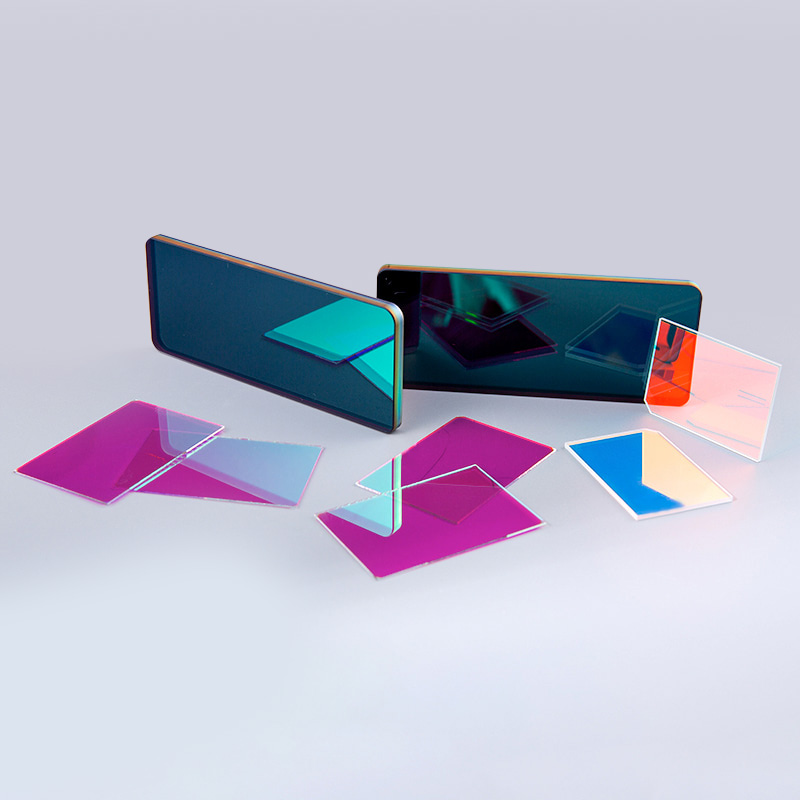
Coating technology plays a major role in lens performance. An uncoated glass surface reflects part of the incident light, reducing transmission and potentially causing ghost images. Anti-reflection coatings reduce surface reflection and improve optical throughput. Depending on design, coatings can be optimized for a single wavelength, multiple wavelengths, or a broadband range.
For laser optics, coatings must handle specific wavelength and power requirements. Low absorption and high damage threshold may be important. For imaging systems, coatings may need broadband performance and low color shift. For automotive applications, coating durability under environmental stress is important. For consumer optics, coatings must balance optical performance, durability, and cost.
Compared with competitors that only provide basic coating options, a manufacturer with coating engineering capability can design and control coatings according to application needs. Coating uniformity, adhesion, spectral performance, and environmental durability all influence final product value.
Final Inspection
Final inspection verifies that the optical lens meets agreed specifications. Inspection items may include diameter, center thickness, radius, focal length, surface quality, flatness or surface accuracy, centering, wedge, coating transmission or reflection, cosmetic appearance, and packaging condition. Depending on customer requirements, inspection reports can support traceability and quality confirmation.
A strong final inspection system reduces the risk of defective components reaching the customer. More importantly, inspection data can be used for process improvement. Manufacturers with systematic inspection can identify trends, correct deviations, and improve long-term production stability.
Protective Packaging
Optical lenses are sensitive to scratches, contamination, impact, and humidity. Proper packaging protects the lens during storage and transportation. Packaging may include individual wrapping, lens trays, clean bags, cushioning materials, desiccants, or customized export cartons. For international shipments, packaging must protect against vibration and handling risks.
Good packaging is sometimes overlooked, but it is part of product quality. A lens manufactured with excellent precision can lose value if scratched or contaminated during shipment. Experienced export manufacturers understand the need for secure, clean, and practical packaging.
Technical Considerations for Lens Specification
When purchasing optical lenses, customers should consider both optical and mechanical requirements. A clear specification helps avoid misunderstanding and ensures the manufacturer can select the correct process route. Overly loose specifications may lead to poor system performance, while overly strict specifications may increase cost and lead time unnecessarily.
| Specification Item | Importance | Typical Customer Consideration |
|---|---|---|
| Material | Determines refractive index, transmission, thermal behavior, and durability. | Select according to wavelength, environment, and optical design. |
| Diameter | Affects assembly fit, clear aperture, and system size. | Define mechanical tolerance and usable optical aperture. |
| Center Thickness | Influences focal length, mechanical fit, and optical path. | Specify tolerance based on lens design and assembly needs. |
| Radius of Curvature | Controls optical power and focal performance. | Confirm with optical design and acceptable tolerance. |
| Surface Quality | Affects scatter, imaging contrast, and laser performance. | Use stricter grades for laser and high-resolution imaging. |
| Surface Accuracy | Influences wavefront quality and focusing precision. | Apply higher precision for demanding optical systems. |
| Centering | Determines alignment between optical and mechanical axes. | Important for compact modules and multi-element assemblies. |
| Coating | Improves transmission, reduces reflection, and controls spectral behavior. | Choose wavelength range, durability, and environmental requirements. |
| Environmental Reliability | Ensures performance under temperature, humidity, vibration, and aging. | Critical for automotive, outdoor, and industrial systems. |
| Packaging | Protects the lens from contamination and damage. | Define cleanliness, tray type, labeling, and export protection. |
Advantages in Laser Optics
Laser systems place strict demands on optical lenses. A laser lens may need to focus a beam to a precise spot, collimate light from a diode, expand a beam, or shape energy distribution. Because laser light is coherent and often has high power density, lens quality strongly affects beam quality, energy efficiency, and system safety.
For laser applications, surface quality is critical. Scratches, digs, contamination, and coating defects can scatter light or absorb energy. Absorption can create local heating, which may damage the coating or distort the beam. Therefore, laser lenses require careful material selection, polishing, cleaning, and coating control.
The company’s focus on laser optics supports customers developing laser processing equipment, laser measurement systems, laser medical instruments, laser communication devices, and laboratory optical setups. Compared with lower-cost general lens suppliers, a precision optical component manufacturer can provide better control of surface defects, coating performance, and batch consistency. This improves laser system reliability and reduces the risk of failure during operation.
Customization is also valuable in laser optics. Customers may require lenses for specific wavelengths such as ultraviolet, visible, near-infrared, or common industrial laser wavelengths. They may need anti-reflection coatings optimized for a narrow spectral band, or lens geometries matched to beam diameter and working distance. A manufacturer with flexible engineering and production capability can support these requirements more effectively than suppliers limited to standard stock lenses.
Advantages in Automotive Optics
Automotive optics require a combination of precision, reliability, environmental resistance, and supply chain discipline. Optical lenses may be used in advanced driver assistance systems, in-cabin monitoring, head-up displays, ambient optical systems, sensor modules, lighting-related components, and other vehicle optical assemblies. These applications must perform under temperature changes, vibration, humidity, dust exposure, and long service life expectations.
IATF16949 certification is an important strength for automotive-related customers because it reflects a quality management system aligned with automotive industry expectations. Automotive projects often require process traceability, risk analysis, production part approval procedures, change control, statistical quality methods, and continuous improvement. A manufacturer with automotive certification and experience can better support these requirements.
In automotive interiors and sensing systems, optical components must also meet cosmetic and structural requirements. The company’s product range includes automotive interior glass structural components, which complements optical lens manufacturing. This broader experience can help customers develop integrated optical and glass solutions for vehicle platforms.
Compared with competitors that only serve general industrial markets, a certified and experienced optical manufacturer can provide stronger support for automotive projects where documentation, stability, and long-term cooperation are as important as the lens itself.
Advantages in Semiconductor Optics
Semiconductor manufacturing and inspection environments demand high precision and cleanliness. Optical lenses used in semiconductor-related equipment may contribute to wafer inspection, alignment, metrology, machine vision, laser processing, and process monitoring. These applications often require stable optical geometry, low contamination, high repeatability, and precise spectral performance.
Small optical errors can influence measurement accuracy or alignment reliability. Therefore, the lens must be produced with controlled tolerances and verified through appropriate inspection. Surface defects and particles may be unacceptable in sensitive environments. Coating stability and cleanliness are also important.
The company’s experience with optical components including wafers and precision lenses supports semiconductor-related customers looking for dependable optical parts. Compared with suppliers that lack high-precision manufacturing discipline, an experienced optical component factory can better address the challenges of demanding tolerance, documentation, and cleanliness requirements.
Advantages in Consumer Optics
Consumer optical devices often require compact size, good optical performance, attractive cost, and stable high-volume production. Applications may include cameras, projection devices, sensors, smart home products, display systems, wearable devices, and entertainment electronics. Although consumer products may have different cost constraints from scientific or semiconductor instruments, quality consistency remains critical.
A lens for consumer optics must meet optical performance requirements while being manufacturable at scale. The best solution is not always the most expensive specification; it is the specification that achieves target performance with reliable production yield. A manufacturer experienced in both precision and volume production can help customers optimize lens design for manufacturability.
Compared with suppliers that only provide low-cost commodity optics, a precision manufacturer can deliver better tolerance control, coating quality, and batch repeatability. This helps consumer product companies maintain stable user experience and reduce assembly variation.
Why Manufacturing Experience Matters
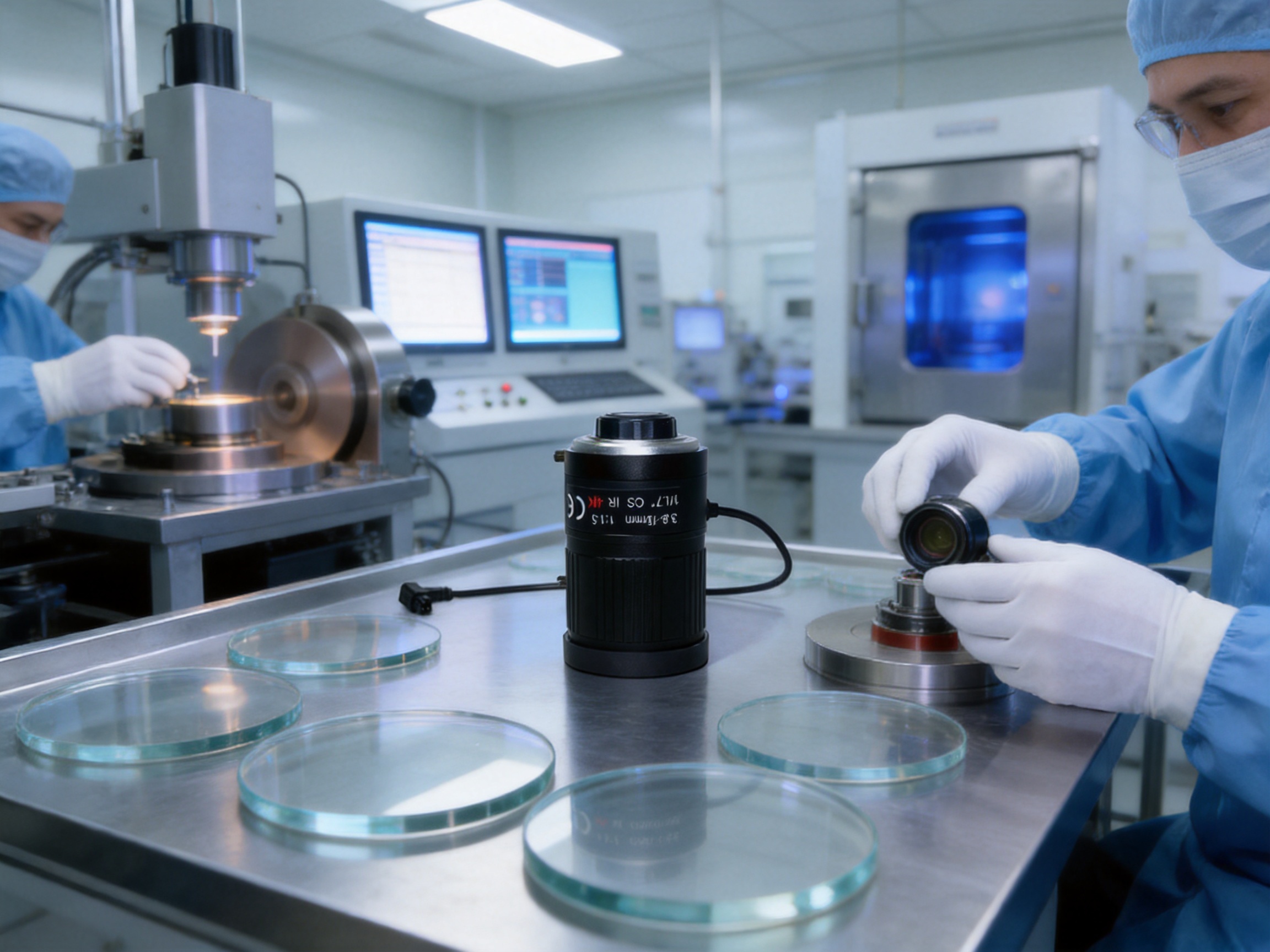
Optical lens production is a field where experience accumulates over time. Founded in 1998, Changzhou Haolilai Photo-Electricity Scientific and Technical Co., Ltd. has developed decades of manufacturing knowledge. Long-term experience helps a company understand the relationship between design requirements and production reality. It also helps teams identify likely causes of defects and implement practical improvements.
A factory with more than 300 employees can support multiple production functions, including engineering, processing, coating, inspection, quality management, sales, and logistics. For customers, this organizational scale can improve response capability and production capacity. It also helps support both small customized projects and larger wholesale orders.
The company’s location in the national-level High-tech Development District of Changzhou, Jiangsu, China, provides an industrial environment suitable for advanced manufacturing. A 35,000 square meter facility supports production organization, equipment placement, inspection areas, and administrative functions. This manufacturing foundation is important for customers seeking a stable supplier rather than a temporary trading source.
Quality Assurance and Certification Strength
Quality assurance in optical lens manufacturing must cover every stage of production. A final inspection alone cannot guarantee quality if earlier processes are uncontrolled. The company’s quality system, supported by ISO9001:2015, helps ensure that procedures, responsibilities, records, corrective actions, and customer requirements are managed systematically.
ISO14001:2015 certification reflects environmental management. In precision manufacturing, environmental responsibility is increasingly important to global customers. It indicates that the company considers environmental impacts in its operations and strives for controlled, sustainable management practices.
IATF16949 certification is especially valuable in automotive-related optics. It requires strong process discipline, risk-based thinking, defect prevention, traceability, and improvement systems. Customers in automotive and other high-reliability industries can benefit from a supplier that has experience meeting these stricter requirements.
In addition to certifications, patents and technology center recognition demonstrate technical development capability. More than 30 certificates and patents indicate ongoing investment in process knowledge and product innovation. For customers, this can translate into stronger engineering support and a more reliable long-term partnership.
Engineering Support from Drawing to Delivery
A successful optical lens project usually begins with clear communication. Customers may provide drawings, optical specifications, samples, or application goals. The manufacturer evaluates feasibility, materials, tolerances, coating requirements, inspection methods, and production schedule. Early engineering review can prevent costly problems later.
For customized lenses, the manufacturer may discuss whether the requested tolerance is practical for the intended use. Sometimes, a customer may request very strict specifications that are not necessary for the application. In other cases, an overlooked specification, such as centering or coating durability, may be critical. An experienced optical manufacturer helps customers define the right balance.
After specification confirmation, sample production may be performed. Samples allow the customer to verify optical performance and assembly compatibility. Feedback from sample testing can lead to adjustments before batch production. Once validated, the process can be stabilized for repeated production.
During production, quality control checkpoints ensure that process deviations are detected early. After final inspection, lenses are packaged and delivered according to customer requirements. For export customers, proper documentation, labeling, and packaging help ensure smooth receiving and handling.
Surface Quality and Optical Cleanliness
Surface quality is one of the most visible and important lens characteristics. Scratches and digs may scatter light, reduce contrast, or create localized heating under laser exposure. In imaging systems, surface defects can appear as glare, haze, or reduced image clarity. In laser systems, defects can become damage initiation points.
Optical cleanliness is also critical. Even if a surface is polished correctly, particles or residues can affect performance. Clean handling, controlled cleaning, and suitable packaging help preserve lens quality until assembly. Customers should consider cleanliness requirements when specifying lenses, especially for high-power laser, semiconductor, medical, or precision imaging applications.
Compared with competitors that treat lenses as ordinary glass parts, a specialized optical component manufacturer understands that microscopic defects and contamination can have significant optical consequences. This awareness is reflected in polishing, cleaning, coating, inspection, and packaging practices.
Coating Performance as a Competitive Factor
Optical coating can transform lens performance. Without coating, Fresnel reflections at glass-air interfaces reduce transmission. In multi-lens systems, repeated reflections can significantly reduce efficiency and create ghost images. Anti-reflection coatings improve transmission and contrast, making them essential for many applications.
Coating design must match the operating wavelength range and incident angle. A coating optimized for one wavelength may not perform equally across a wide spectrum. For laser lenses, coating performance at the exact laser wavelength is important. For imaging lenses, broadband anti-reflection behavior may be preferred. For outdoor or automotive lenses, coating durability under environmental stress matters.
Coating adhesion, hardness, humidity resistance, and temperature stability influence long-term reliability. A low-quality coating may initially appear acceptable but degrade during use. A manufacturer with strong coating process control provides greater value by ensuring both optical performance and durability.
Dimensional Accuracy and Assembly Efficiency
Optical lenses rarely function alone; they are assembled into mechanical holders, barrels, modules, instruments, or larger systems. Dimensional accuracy affects how easily the lens can be assembled and how well it aligns with other components. Diameter tolerance, edge thickness, bevel, center thickness, and centering all matter.
If a lens diameter is inconsistent, assembly may be too tight or too loose. If center thickness varies, optical spacing may change. If the optical axis is not aligned with the mechanical axis, system performance may degrade. These problems can increase assembly time, reduce yield, or require additional adjustment.
By controlling mechanical and optical tolerances together, a precision lens manufacturer helps customers improve assembly efficiency. This is a practical advantage over suppliers that focus only on nominal optical performance but ignore production assembly needs.
Wholesale Optical Component Supply
Customers searching for wholesale optical component manufacturers or an optical component factory often need a supplier capable of stable batch delivery. Wholesale supply requires not only production capacity but also process repeatability, quality documentation, cost management, and logistics experience. The ability to provide optical lenses alongside related components such as mirrors, prisms, wafers, and glass structural parts can simplify procurement.
Changzhou Haolilai Photo-Electricity Scientific and Technical Co., Ltd. offers wholesale optical component manufacturing capability supported by decades of production experience. The company’s export history, employee scale, certifications, and technical centers provide a strong foundation for long-term cooperation with customers in multiple industries.
For purchasing teams, supplier selection should consider more than unit price. A low initial price may become costly if products have inconsistent quality, poor coating durability, weak packaging, delayed delivery, or insufficient technical support. A reliable optical component supplier can reduce hidden costs through stable quality and professional service.
How Precision Lenses Improve System Performance
The performance benefits of precision lenses can be measured in several ways. In imaging systems, a high-quality lens improves resolution, contrast, and edge clarity. In laser systems, it improves spot quality, energy concentration, and beam stability. In sensing systems, it improves signal strength and measurement repeatability. In illumination systems, it improves light distribution and efficiency.
A precision lens also improves system reliability by reducing variation. When each lens in a batch performs consistently, the final device requires less individual adjustment. This is especially important in automated assembly and mass production. Stable optical components support stable final products.
In demanding applications, lens quality may influence safety and compliance. Automotive sensing systems must perform reliably. Laser systems must control energy accurately. Semiconductor equipment must maintain measurement precision. Consumer devices must deliver consistent user experience. In all of these cases, the optical lens is a small component with a large effect.
Choosing the Right Optical Lens Partner
Selecting an optical lens supplier should involve technical, quality, and commercial evaluation. Customers should ask whether the supplier understands the application, can produce the required tolerances, has suitable inspection capability, offers coating options, manages quality systematically, and can support long-term supply.
A strong supplier should be able to review drawings, discuss manufacturability, provide sample support, control batch production, document quality, and respond to problems professionally. The supplier should also understand packaging and export needs if products are shipped internationally.
Changzhou Haolilai Photo-Electricity Scientific and Technical Co., Ltd. combines manufacturing experience, certification strength, technical resources, patent achievements, export capability, and broad optical component production. These strengths make it suitable for customers seeking precision optical lenses and related optical components for demanding applications.

Frequently Asked Questions
What is an optical lens used for?
An optical lens is used to control light by focusing, collimating, expanding, reducing, or shaping a beam. It is commonly used in imaging systems, laser equipment, automotive sensors, semiconductor inspection tools, projection devices, consumer electronics, and precision instruments.
What makes a precision optical lens different from an ordinary lens?
A precision optical lens is manufactured with tighter control of surface quality, curvature, center thickness, diameter, centering, coating performance, and inspection standards. This results in more stable optical performance, reduced scattering, improved transmission, and better assembly consistency.
Can optical lenses be customized?
Yes. Optical lenses can be customized according to material, diameter, focal length, surface geometry, coating, tolerance, surface quality, and packaging requirements. Customization is especially important for laser, automotive, semiconductor, and specialized consumer optical systems.
Why is coating important for optical lenses?
Coating reduces reflection, improves transmission, controls spectral performance, and can increase durability. Anti-reflection coatings are widely used to improve optical efficiency and reduce ghost images. Laser, automotive, and imaging applications often require coatings designed for specific wavelengths or environmental conditions.
What industries benefit most from high-quality optical lenses?
Industries that benefit include laser processing, automotive electronics, semiconductor equipment, machine vision, medical devices, scientific instruments, consumer electronics, projection systems, and optical communication. Any system that depends on precise light control can benefit from a high-quality lens.
Why is IATF16949 certification important for automotive optical components?
IATF16949 certification indicates that the manufacturer follows automotive quality management requirements, including process control, traceability, risk management, defect prevention, and continuous improvement. This is valuable for automotive optical lenses and related components used in vehicle systems.
How does lens surface quality affect performance?
Surface defects such as scratches, digs, haze, and contamination can scatter light, reduce contrast, lower transmission, and create damage risks in laser applications. Higher surface quality improves optical clarity and system reliability.
What information should customers provide when ordering optical lenses?
Customers should provide lens type, material, diameter, center thickness, radius or focal length, wavelength range, coating requirement, surface quality, surface accuracy, centering tolerance, quantity, application environment, and packaging needs. Drawings or samples are helpful for accurate quotation and production planning.
Can one supplier provide lenses together with mirrors, prisms, and other optical components?
Yes. A manufacturer with broad optical component capability can supply lenses as well as optical flat mirrors, spherical mirrors, prisms, wafers, glass structural components, and customized optical parts. This can simplify procurement and improve component compatibility.
Why should customers consider long-term manufacturing capability instead of only price?
Optical components influence final product performance. A low-cost lens with unstable quality may increase assembly failures, inspection costs, redesign risk, and warranty issues. A reliable manufacturer provides better long-term value through consistent quality, engineering support, certification systems, and dependable delivery.
Conclusion
Precision optical lenses are vital components in advanced optical systems. Their quality affects light transmission, focus accuracy, image clarity, laser performance, sensing reliability, assembly efficiency, and long-term durability. Customers in laser optics, automotive optics, semiconductor optics, and consumer optics need lenses that are not only geometrically correct but also consistent, clean, well-coated, and suitable for real operating environments.
Changzhou Haolilai Photo-Electricity Scientific and Technical Co., Ltd. offers strong capabilities as a professional optical component manufacturer and factory. Founded in 1998, located in Changzhou, Jiangsu, China, and supported by more than 300 employees, the company has developed broad manufacturing experience in optical lenses, mirrors, prisms, wafers, automotive interior glass structural components, and other precision optical products. Its certifications, including ISO9001:2015, ISO14001:2015, and IATF16949, demonstrate systematic quality and environmental management as well as automotive production discipline.
The company’s engineering centers, patents, high-tech recognition, export experience, and focus on laser, automotive, semiconductor, and consumer optics provide meaningful advantages over ordinary competitors. From material selection to polishing, coating, inspection, and packaging, each manufacturing stage contributes to product performance and reliability. For customers seeking wholesale optical components, customized optical lenses, or a long-term optical component manufacturing partner, these strengths support stable cooperation and dependable product value.
A precision optical lens may be small in size, but its influence on system performance is significant. Choosing a capable manufacturer helps customers improve optical efficiency, reduce assembly variation, enhance product reliability, and build better optical systems for modern applications.
References
1. Hecht, E. Optics. Pearson Education.
2. Smith, W. J. Modern Optical Engineering. McGraw-Hill Education.
3. Kingslake, R., and Johnson, R. B. Lens Design Fundamentals. Academic Press.
4. Malacara, D. Optical Shop Testing. Wiley.
5. ISO 10110, Optics and Photonics: Preparation of Drawings for Optical Elements and Systems.
6. ISO 9001:2015, Quality Management Systems Requirements.
7. ISO 14001:2015, Environmental Management Systems Requirements.
8. IATF 16949, Quality Management System Standard for Automotive Production and Relevant Service Parts Organizations.


 苏公网安备32041102000130号