
 Search
 en
en English
 日本語
日本語 русский
 Español
 Deutsch
 中文简体
中文简体Content
- 1 What Is an Optical Lens?
- 2 Why Optical Lens Quality Matters
- 3 Core Advantages of High-Precision Optical Lenses
- 4 Company Manufacturing Strengths Behind the Optical Lens
- 5 Advanced Manufacturing Process for Optical Lenses
- 6 Typical Optical Lens Types and Applications
- 7 Applications in Laser Optics
- 8 Applications in Automotive Optics
- 9 Applications in Semiconductor Optics
- 10 Applications in Consumer and Industrial Optics
- 11 Competitive Advantages Over Ordinary Suppliers
- 12 Key Performance Parameters Customers Should Consider
- 13 How Precision Lenses Improve System-Level Performance
- 14 Customization for Specialized Requirements
- 15 Quality Control Philosophy
- 16 Environmental and Responsible Manufacturing
- 17 Why Choose These Optical Lenses for Wholesale Supply?
- 18 Guidelines for Selecting the Right Optical Lens
- 19 Q&A Section
- 19.1 Q1: What makes a precision optical lens different from a standard lens?
- 19.2 Q2: Why is coating important for optical lenses?
- 19.3 Q3: Which industries commonly use these optical lenses?
- 19.4 Q4: How does IATF16949 certification benefit automotive optical lens customers?
- 19.5 Q5: Can optical lenses be customized?
- 19.6 Q6: What information should customers provide when requesting a quotation?
- 19.7 Q7: Why is surface quality important in laser optics?
- 19.8 Q8: How do precision lenses support semiconductor inspection?
- 19.9 Q9: What advantages does an experienced optical component manufacturer provide?
- 19.10 Q10: How should lenses be handled after delivery?
- 20 Conclusion
- 21 References
Optical lenses are among the most important components in modern photonics, enabling light to be collected, shaped, focused, expanded, collimated, corrected, or redirected with high accuracy. From laser processing systems and semiconductor inspection equipment to automotive interior sensing modules and consumer optical devices, the performance of a lens directly affects image quality, signal stability, energy transmission, measurement precision, and long-term reliability. A well-manufactured optical lens is not merely a piece of polished glass; it is a carefully engineered component produced through advanced material selection, precision shaping, ultra-fine surface finishing, coating technology, and strict quality control.
As demand grows for higher-resolution imaging, more compact optical systems, stronger laser compatibility, and improved environmental durability, the requirements placed on optical lenses continue to rise. Customers increasingly expect tight dimensional tolerances, excellent surface quality, high transmission, low wavefront distortion, stable coating performance, and consistent batch-to-batch quality. In this environment, manufacturers with deep experience in precision optical component production, certified management systems, advanced technical teams, and integrated manufacturing capabilities gain a meaningful competitive advantage.
Changzhou Haolilai Photo-Electricity Scientific and Technical Co., Ltd. is a professional manufacturer of precision optical components founded in 1998 and located in Changzhou, Jiangsu, China. With a production area of approximately 35,000 square meters, more than 300 employees, exports to more than 20 countries, and certifications including ISO9001:2015, ISO14001:2015, and IATF16949, the company has developed strong capabilities in optical lens manufacturing for laser optics, automotive optics, semiconductor optics, and consumer optics. Its experience, engineering centers, patents, and quality systems allow it to provide optical lenses designed for demanding industrial applications and consistent wholesale supply.
What Is an Optical Lens?
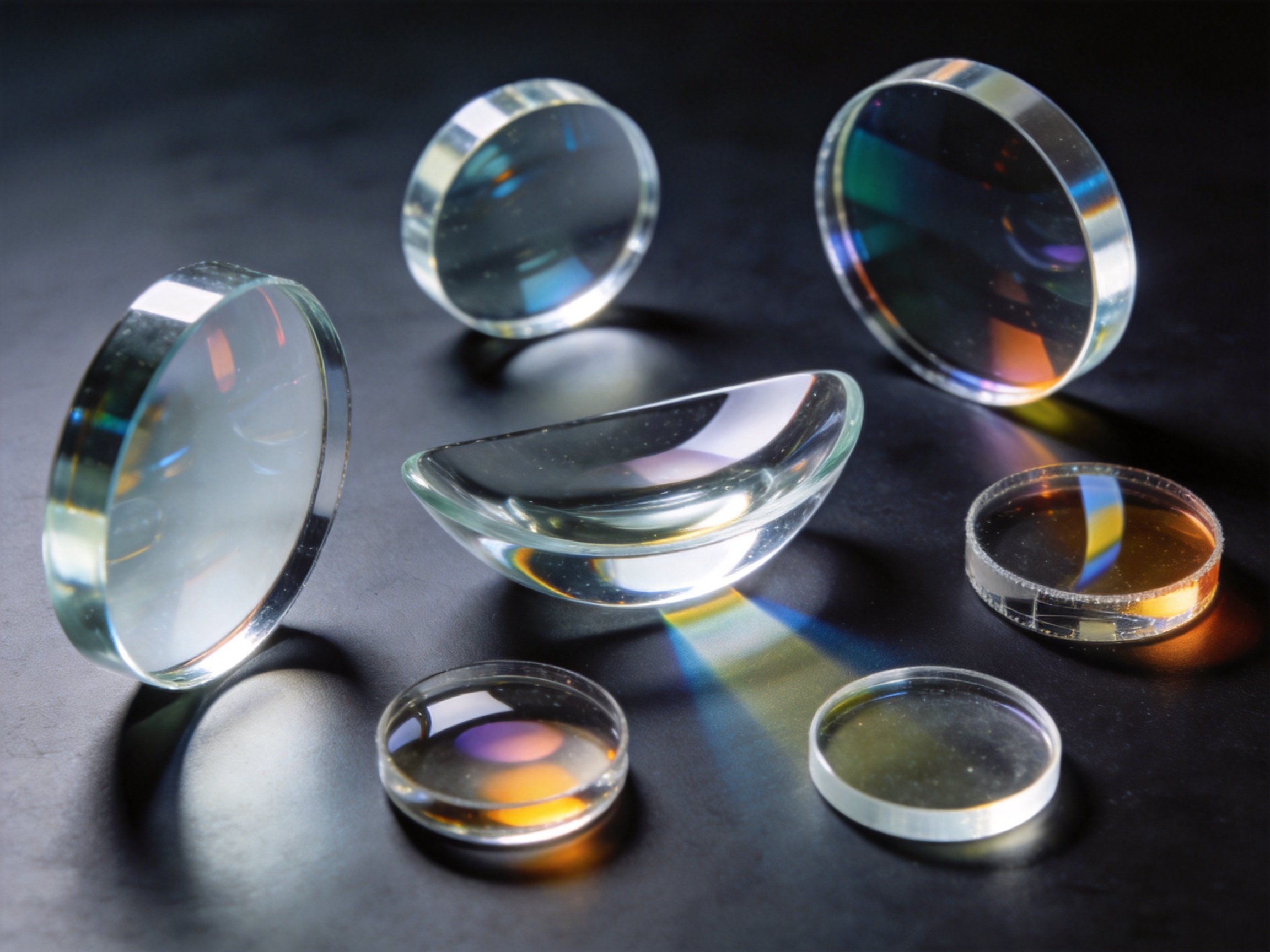
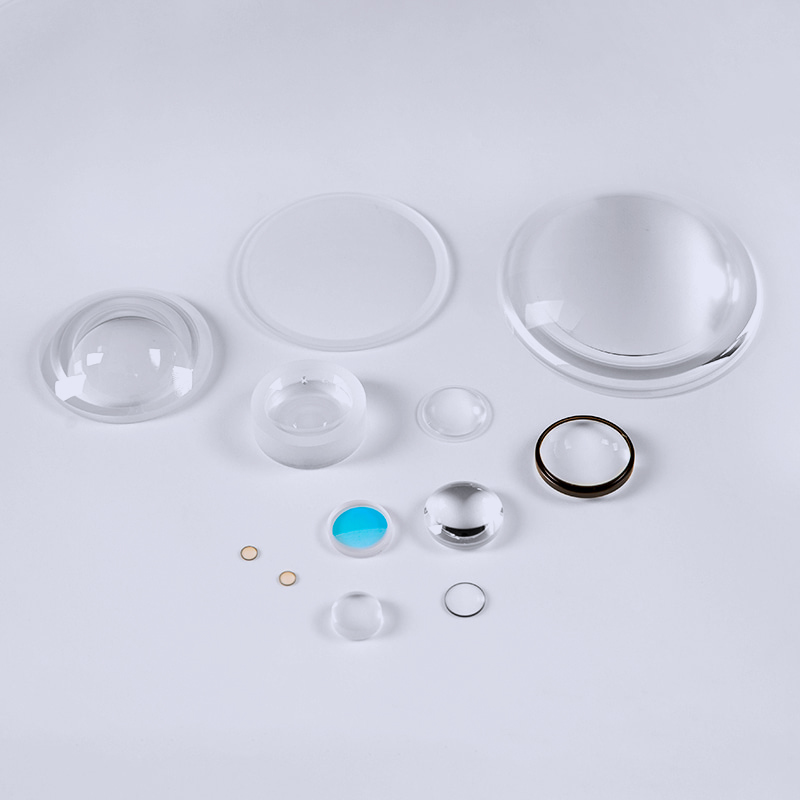
An optical lens is a transparent component, usually made from optical glass, fused silica, crystal material, or optical-grade polymer, designed to control the path of light through refraction. Depending on its geometry and application, a lens can converge, diverge, collimate, focus, or expand light beams. In practical systems, lenses may be spherical, aspheric, cylindrical, plano-convex, plano-concave, double-convex, double-concave, meniscus, achromatic, or customized according to a specific optical design.
In industrial and scientific applications, optical lenses are often required to work with very specific wavelengths, power levels, angles of incidence, and environmental conditions. A laser focusing lens, for example, must maintain excellent transmission at the selected laser wavelength while resisting thermal stress and coating damage. An automotive optical lens may need to tolerate temperature variation, vibration, humidity, and long operating life. A semiconductor inspection lens may require ultra-low defect levels, tight wavefront control, and exceptional surface cleanliness.
The value of an optical lens depends on more than its visible shape. Key parameters include diameter, center thickness, edge thickness, radius of curvature, focal length, clear aperture, centration, surface figure, surface roughness, scratch-dig grade, bevel quality, coating performance, and material homogeneity. Each parameter contributes to the final optical performance. In high-precision systems, even tiny errors can produce beam deviation, image blur, loss of energy, ghost reflections, scattered light, or measurement instability.
Why Optical Lens Quality Matters
In many optical systems, the lens is a critical performance-defining component. If the lens is inaccurate, contaminated, poorly coated, or inconsistent, the entire system may fail to achieve its intended function. For example, in a laser cutting system, insufficient lens quality may reduce beam focus and cutting efficiency. In an imaging device, surface defects or figure errors may degrade image resolution. In semiconductor optics, micro-defects or wavefront distortion can interfere with inspection accuracy. In automotive sensing, optical instability can affect safety-related functions and user experience.
High-quality lenses help equipment manufacturers achieve better optical throughput, more predictable performance, longer service life, and lower maintenance costs. They also reduce the need for excessive system-level compensation. When a lens is manufactured with tight tolerances and stable coatings, engineers can design compact, efficient, and reliable optical assemblies with fewer compromises.
Compared with ordinary commercial-grade lenses, precision optical lenses offer important advantages. They provide better surface accuracy, lower scatter, improved spectral transmission, more reliable centering, and more consistent dimensional control. These improvements can translate into measurable benefits: sharper imaging, higher laser energy density at the focus, reduced optical loss, lower noise, improved repeatability, and enhanced durability in challenging environments.
Core Advantages of High-Precision Optical Lenses
Superior Optical Performance
A precision optical lens is designed and manufactured to deliver controlled light behavior. Through accurate curvature generation, polishing, centering, and inspection, the lens can achieve stable focal length, low wavefront error, and reliable optical axis alignment. This enables optical systems to maintain high resolution, efficient beam shaping, and accurate measurement performance.
For applications involving lasers, superior optical performance means more energy can be delivered to the target with less loss and lower scatter. For imaging systems, it means higher clarity and lower distortion. For sensing modules, it means improved signal quality and better repeatability. These performance gains are especially important when optical systems become smaller, faster, and more integrated.
Reliable Material Selection
The performance of an optical lens begins with material selection. Different materials offer different transmission ranges, refractive indices, thermal expansion characteristics, hardness levels, and resistance to environmental exposure. Precision lens manufacturing requires careful matching between material properties and application requirements.
Optical glass is widely used because of its stable refractive index, excellent processability, and broad range of available optical properties. Fused silica is preferred for ultraviolet transmission, thermal stability, and high laser damage resistance. Specialty glass or crystal materials may be selected for infrared, high-power, or specific dispersion requirements. For each project, suitable materials must be chosen to balance optical design, manufacturability, cost, and durability.
Advanced Surface Quality
Surface quality is a major factor in optical performance. Scratches, digs, pits, stains, chips, and roughness can scatter light, reduce transmission, and cause image degradation. In laser applications, surface defects can also become local heat-absorption points, increasing the risk of coating failure or lens damage.
Precision manufacturing uses controlled grinding and polishing processes to achieve smooth surfaces and consistent surface figure. Surface roughness may be reduced to very low levels, helping reduce stray light and improve coating adhesion. For demanding applications, inspection standards such as scratch-dig evaluation, interferometry, and microscopic examination are used to ensure that the lens meets specified requirements.
High-Performance Coatings
Optical coatings play a crucial role in modern lens performance. Anti-reflective coatings can reduce reflection losses and increase transmission. High-damage-threshold coatings can support laser applications. Filters, beam splitters, and wavelength-selective coatings can be integrated according to system needs.
Without proper coating, even a well-polished lens may lose a significant amount of light at each surface due to Fresnel reflection. With optimized coating, transmission can be greatly improved, ghost reflection can be reduced, and system efficiency can increase. Coating design must consider wavelength range, angle of incidence, polarization, environmental durability, adhesion, and cleaning resistance.
Consistent Batch Production
For equipment manufacturers, consistency is just as important as individual lens quality. A prototype lens may perform well, but production success depends on repeatability across batches. Consistent lenses reduce assembly adjustment time, improve yield, and support stable product performance in the field.
Manufacturers with established process control, certified quality systems, experienced technicians, and reliable inspection methods are better positioned to deliver stable wholesale optical lens supply. This is especially important for automotive, semiconductor, and industrial laser customers, where component reliability and documentation are often required.
Company Manufacturing Strengths Behind the Optical Lens
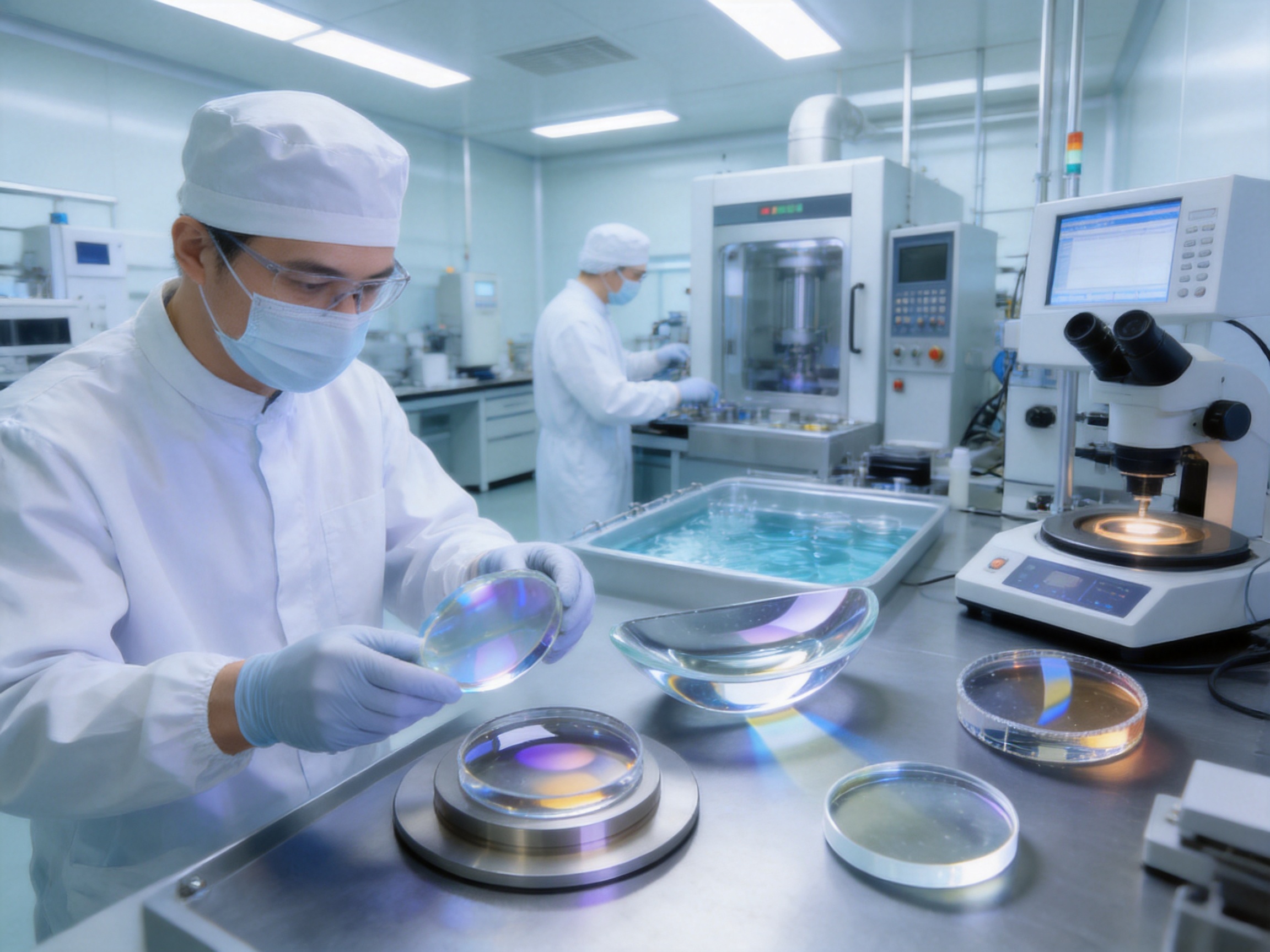
Changzhou Haolilai Photo-Electricity Scientific and Technical Co., Ltd. has built its capabilities around precision optical component manufacturing. Since its founding in 1998, the company has accumulated experience in producing optical components for multiple demanding industries. Its manufacturing and engineering strengths include technical expertise, certified production management, advanced inspection capability, and a focus on continuous improvement.
The company operates in a national-level high-tech development district in Changzhou, Jiangsu, China, with a production site covering approximately 35,000 square meters. This provides a strong foundation for organized manufacturing, process planning, quality inspection, and scalable production. With more than 300 employees and exports to more than 20 countries, the company is positioned to support both domestic and international customers requiring optical lenses and related optical components.
Certifications such as ISO9001:2015 demonstrate a quality management framework focused on process control and customer satisfaction. ISO14001:2015 reflects environmental management commitment, while IATF16949 is particularly important for automotive supply chains, where traceability, defect prevention, and continuous improvement are highly valued. These certifications help customers evaluate the company’s ability to manufacture reliable optical lenses for regulated or quality-sensitive applications.
The company has also established the Jiangsu Precision Optical Lens Engineering Technology Center and Jiangsu Enterprise Technology Research Center. These technical platforms support research, process development, product optimization, and customized optical solutions. Multiple invention patents, utility model patents, and high-tech product achievements further demonstrate engineering capability and commitment to innovation.
Advanced Manufacturing Process for Optical Lenses
1. Optical Design and Requirement Analysis
The manufacturing process begins with understanding the customer’s optical and mechanical requirements. Important specifications include lens type, material, diameter, focal length, radius of curvature, surface quality, surface figure, coating type, wavelength range, operating environment, and packaging needs. For customized lenses, engineers may also review drawings, optical design files, assembly interfaces, and performance targets.
Requirement analysis is essential because each application has different priorities. A laser lens may prioritize transmission, coating damage threshold, and thermal stability. An automotive lens may prioritize environmental durability, dimensional consistency, and long-term reliability. A semiconductor lens may prioritize surface cleanliness, low defects, and wavefront accuracy. By analyzing the requirements at the start, the manufacturer can select suitable materials and processes.
2. Material Preparation
Once the lens design is confirmed, optical material is selected and prepared. Material quality affects refractive index consistency, transmission, internal defects, bubbles, inclusions, stress, and final performance. Incoming material inspection helps confirm that the blank meets the required grade.
Material preparation may include cutting, slicing, edging, and blank shaping. The objective is to prepare a lens blank with suitable dimensions for subsequent grinding and polishing. Careful blank preparation reduces material waste and helps maintain stable geometry during later processing.
3. Curve Generation and Grinding
Curve generation creates the basic lens surface shape. Grinding removes material to approach the required radius of curvature and thickness. In this stage, process stability is important because excessive subsurface damage or geometric error can increase polishing difficulty and reduce final yield.
Precision grinding uses controlled abrasive tools and machinery to achieve accurate surface geometry. The process must maintain lens thickness, diameter, wedge, and curvature within controlled limits. For higher accuracy lenses, multiple grinding steps may be used, moving from rough grinding to fine grinding before polishing.
4. Polishing and Surface Finishing
Polishing transforms the ground surface into a transparent optical surface with required smoothness and figure accuracy. This step is one of the most technically demanding parts of optical lens manufacturing. Polishing time, pad condition, slurry type, pressure, temperature, and motion control all influence the final surface.
A well-polished lens has low roughness, minimal defects, and accurate surface shape. For precision optical applications, polishing must be carefully monitored to avoid introducing zones, edge roll-off, pits, scratches, or surface deformation. Advanced polishing capability gives the manufacturer an advantage over competitors that rely on less controlled processes.
5. Centering and Edging
Centering aligns the optical axis with the mechanical axis. Poor centration can cause beam deviation, image shift, or assembly alignment problems. Edging brings the lens to final diameter while maintaining bevel quality and mechanical tolerance.
For applications such as imaging lenses, laser collimation systems, and automotive optical modules, centration accuracy is highly important. A lens with good surface figure but poor centering may still fail to perform correctly in the final assembly. Therefore, precision centering and edging are essential parts of quality lens production.
6. Cleaning Before Coating
Before coating, the lens must be thoroughly cleaned. Dust, oil, polishing residue, fingerprints, and moisture can cause coating defects, poor adhesion, or optical contamination. Cleaning processes may include ultrasonic cleaning, deionized water rinsing, chemical cleaning, drying, and clean handling procedures.
Cleanliness is especially important for high-performance anti-reflective coatings and laser coatings. Even microscopic contaminants can create coating pinholes or damage initiation points. A manufacturer with disciplined cleaning and handling procedures can provide more reliable coating quality and fewer cosmetic defects.
7. Optical Coating
Coating adds functional layers to the lens surface. Anti-reflective coatings are among the most common, reducing reflection and improving transmission. Depending on customer needs, coatings may be designed for ultraviolet, visible, near-infrared, infrared, or laser wavelengths.
Coating technology must control layer thickness, uniformity, refractive index, adhesion, stress, and spectral performance. Coated lenses are typically tested for transmission, reflection, environmental durability, and surface appearance. High-quality coating capability is a key differentiator because coating failure can compromise even the best-polished lens.
8. Inspection and Quality Assurance
Inspection confirms that the lens meets specified requirements. Common inspection items include dimensions, radius of curvature, center thickness, diameter, surface figure, surface quality, centration, focal length, coating spectrum, cosmetic condition, and packaging cleanliness. Instruments may include interferometers, spectrophotometers, microscopes, coordinate measuring equipment, and other optical testing tools.
Quality assurance is not only a final step; it must be built into every stage of production. Process inspection, traceability, operator training, and documentation are necessary for stable mass production. This is especially true for customers in automotive and semiconductor fields, where component consistency and quality records are often critical.
9. Packaging and Delivery
Packaging protects the lens from scratches, chips, dust, humidity, and transportation damage. Precision optical lenses require clean, secure, and application-appropriate packaging. For coated lenses, special care is needed to prevent abrasion and contamination. Proper packaging helps ensure that the product reaches the customer in usable condition and reduces handling loss.
Typical Optical Lens Types and Applications
Optical lenses can be manufactured in many forms. Each type is chosen according to the optical task it must perform. The following table summarizes common lens types and their typical functions.
| Lens Type | Main Function | Typical Applications | Key Performance Priorities |
|---|---|---|---|
| Plano-Convex Lens | Converges collimated light or focuses beams | Laser focusing, imaging, illumination systems | Focal length accuracy, transmission, surface quality |
| Plano-Concave Lens | Diverges light beams | Beam expansion, optical alignment, laser systems | Curvature accuracy, coating performance, centration |
| Double-Convex Lens | Focuses light from finite conjugates | Imaging systems, projection, magnification | Low distortion, surface figure, dimensional precision |
| Double-Concave Lens | Produces beam divergence | Optical instruments, beam conditioning | Surface quality, focal control, material consistency |
| Meniscus Lens | Reduces aberration and controls beam path | Laser optics, imaging assemblies, optical relays | Aberration control, centration, coating durability |
| Achromatic Lens | Reduces chromatic aberration | Imaging, microscopy, machine vision | Color correction, cementing quality, alignment |
| Custom Precision Lens | Meets specific system requirements | Automotive optics, semiconductor inspection, specialized instruments | Customized tolerances, repeatability, environmental reliability |
Applications in Laser Optics
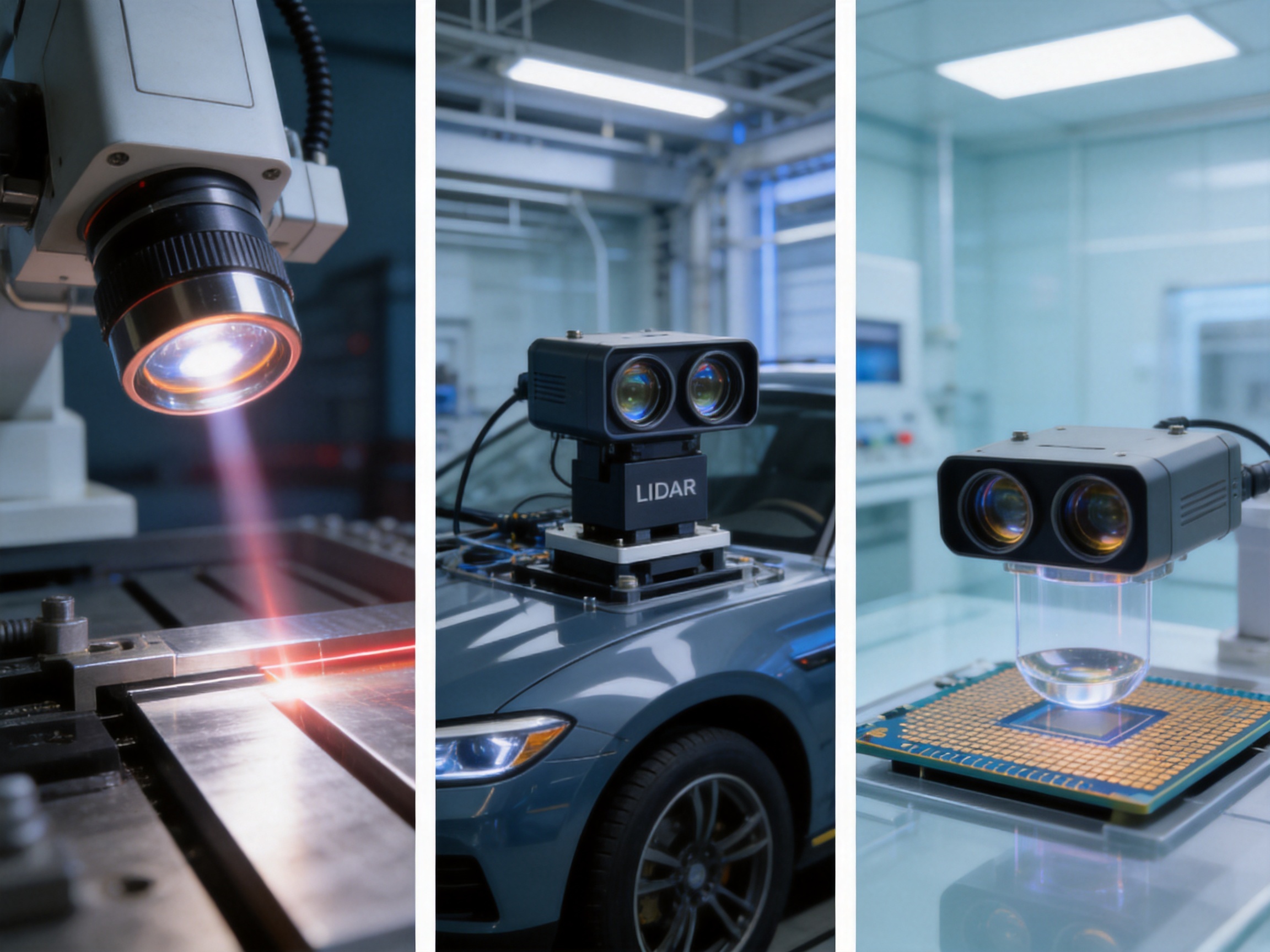
Laser optics place demanding requirements on lenses because laser beams can have high intensity, narrow wavelength ranges, and strict beam quality requirements. Optical lenses used in laser systems may focus, collimate, expand, or shape beams. They are used in laser cutting, welding, marking, medical equipment, measurement systems, LiDAR, and scientific instruments.
For laser applications, lens material and coating selection are critical. High transmission reduces energy loss, while low absorption helps prevent heating. Surface defects must be minimized because they can scatter energy or initiate laser damage. Coatings should be optimized for the operating wavelength and should withstand the intended power density.
Precision manufacturing provides major advantages in laser systems. Accurate curvature helps maintain the designed focal point. Low roughness reduces scatter. Good centration keeps the beam aligned. Durable anti-reflective coating improves energy efficiency and reduces back reflection. Compared with lower-grade competitors, a high-quality lens can support more stable laser output and longer service life.
Applications in Automotive Optics
Modern vehicles increasingly rely on optical systems for lighting, sensing, display, comfort, and safety-related functions. Optical lenses may be used in interior sensing modules, driver monitoring systems, ambient lighting, head-up displays, cameras, LiDAR, and other automotive optical assemblies. Automotive applications require not only optical performance but also durability under real operating conditions.
Automotive lenses may face temperature cycling, vibration, humidity, dust, chemical exposure, and long-term aging. Consistent production quality is essential because automotive programs often require stable supply, traceability, and compliance with strict quality systems. A manufacturer certified to IATF16949 has an advantage when serving automotive customers because this standard emphasizes defect prevention, risk management, and continuous improvement within the automotive supply chain.
Precision optical lenses can improve automotive system performance by supporting clearer imaging, stable light distribution, accurate sensing, and reliable operation. For interior glass structural components and optical assemblies, manufacturing control and material expertise are especially important. Compared with suppliers lacking automotive quality experience, a certified precision optics manufacturer can offer stronger process discipline and better readiness for large-scale production.
Applications in Semiconductor Optics
Semiconductor manufacturing and inspection require extremely precise optical performance. Optical lenses may be used in wafer inspection, lithography support equipment, metrology systems, alignment tools, and defect detection instruments. In these applications, small optical errors can lead to measurement uncertainty, reduced resolution, or false defect signals.
Semiconductor optics often require excellent surface quality, low contamination, high dimensional accuracy, and reliable coating performance. Clean handling and inspection are crucial. Material selection may also be influenced by wavelength, thermal stability, and system precision requirements. Lenses used in semiconductor-related equipment must be manufactured with high repeatability and carefully documented processes.
The company’s focus on semiconductor optics aligns with growing demand for high-precision components in electronics manufacturing. By combining precision polishing, coating, and inspection capability, it can support customers requiring optical lenses for demanding inspection and process-control systems.
Applications in Consumer and Industrial Optics
Consumer and industrial optical products cover a wide range of devices, including cameras, projectors, sensors, scanners, measurement instruments, lighting equipment, and optical modules. Although some consumer optics are cost-sensitive, performance expectations continue to increase as devices become smaller and more capable.
Industrial optical systems often require robust lenses that can operate reliably in factories, laboratories, and outdoor environments. Machine vision systems, barcode scanners, optical sensors, and measurement devices depend on lens consistency for stable operation. A lens with poor quality may reduce image contrast, introduce distortion, or require frequent recalibration.
Precision optical lens manufacturing supports both standard and customized needs. Manufacturers with flexible production capability can help customers develop lenses for new products, optimize existing designs, or supply stable quantities for mass production. The ability to produce related components such as optical flat mirrors, wafers, optical prisms, spherical mirrors, and other optical components also supports integrated optical system sourcing.
Competitive Advantages Over Ordinary Suppliers
Long-Term Manufacturing Experience
Experience matters in precision optics because many process challenges are solved through accumulated technical knowledge. Since 1998, Changzhou Haolilai Photo-Electricity Scientific and Technical Co., Ltd. has developed expertise in manufacturing optical components across multiple fields. This long-term experience helps the company understand material behavior, polishing process control, coating requirements, customer documentation needs, and application-specific performance risks.
Compared with newer or less specialized suppliers, an experienced manufacturer can better anticipate production issues and provide practical engineering support. This can shorten development cycles, improve production yield, and reduce the risk of component failure.
Certified Quality Management
Quality management certifications provide customers with confidence that manufacturing is controlled and documented. ISO9001:2015 supports general quality management. ISO14001:2015 reflects environmental responsibility. IATF16949 is particularly valuable for automotive customers and demonstrates attention to process stability, risk control, and continuous improvement.
Ordinary suppliers may offer low prices but lack strong quality systems. In precision optical applications, poor quality control can create hidden costs through rejected parts, delayed assembly, field failures, and inconsistent performance. A certified manufacturer offers a more reliable foundation for long-term cooperation.
Strong Engineering and Research Capability
The establishment of engineering and technology centers indicates a commitment to product development and technical improvement. Optical lens manufacturing is not static; new applications demand better coatings, tighter tolerances, improved materials, and more efficient production methods. Engineering capability allows a manufacturer to respond to these demands.
Customers benefit from technical support during design review, tolerance discussion, sample development, and production optimization. This is particularly important for customized lenses, where performance depends on the interaction between optical design, mechanical constraints, coating requirements, and application environment.
Broad Industry Coverage
The company focuses on laser optics, automotive optics, semiconductor optics, and consumer optics. This broad coverage creates cross-industry knowledge. Techniques developed for high-cleanliness semiconductor optics may improve handling quality in other areas. Automotive quality discipline may improve production traceability for industrial lenses. Laser coating expertise may support high-performance sensing and measurement applications.
Compared with suppliers serving only low-end general optics markets, a manufacturer active in multiple high-precision fields can offer more robust solutions and greater flexibility. Customers with complex optical component needs may also benefit from a broader product portfolio that includes lenses, mirrors, prisms, wafers, and other components.
Scalable Production and International Supply
With a large production area, more than 300 employees, and exports to more than 20 countries, the company can support both prototype development and wholesale optical component supply. International customers often require stable communication, consistent packaging, documentation, and repeatable quality. Production scale helps support these requirements.
Scalable manufacturing is important because optical lens demand may increase quickly when a customer’s product enters mass production. A supplier with insufficient capacity may struggle to meet delivery schedules or maintain quality under volume pressure. A larger, organized manufacturer is better positioned to support long-term supply programs.
Key Performance Parameters Customers Should Consider
When selecting an optical lens, customers should evaluate both optical and mechanical specifications. The most important parameters depend on the application, but several factors are commonly considered.
Focal length determines how the lens focuses or diverges light. Accurate focal length is essential for imaging, beam shaping, and system alignment. Diameter and clear aperture determine how much light can pass through the lens without obstruction. Center thickness and edge thickness affect mechanical fit and optical performance. Radius of curvature determines lens power and must be accurately controlled.
Surface figure describes how closely the lens surface matches the ideal shape. Poor surface figure can cause wavefront distortion and reduce image quality. Surface quality evaluates visible defects such as scratches and digs. For laser and high-resolution imaging, strict surface quality may be necessary. Centration controls the relationship between optical and mechanical axes; poor centration can create alignment errors. Coating performance affects transmission, reflection, durability, and wavelength compatibility.
Environmental requirements should also be considered. Some lenses must operate in high temperature, humidity, vibration, vacuum, cleanroom, or high-power laser environments. In these cases, material, coating, cleaning, and packaging must be selected accordingly.
How Precision Lenses Improve System-Level Performance
A high-quality optical lens improves the entire optical system. In imaging, it can increase resolution, contrast, and edge clarity. In laser systems, it can improve focus quality, reduce power loss, and support stable energy delivery. In sensors, it can improve signal-to-noise ratio and repeatability. In automotive optics, it can contribute to stable operation over temperature and lifetime. In semiconductor tools, it can support accurate inspection and measurement.
System-level benefits often justify investment in better lenses. Lower-cost lenses may appear attractive at the purchasing stage, but they can increase hidden costs. Poor lens consistency may require more assembly adjustment. Coating defects may cause early failure. Surface defects may reduce yield. Dimensional variation may complicate mechanical integration. By selecting precision lenses from a capable manufacturer, customers can reduce these risks and improve total value.
Customization for Specialized Requirements
Many optical systems require customized lenses rather than standard catalog items. Customization may involve special diameter, nonstandard focal length, tight tolerance, unique material, special coating, modified edge shape, high cleanliness packaging, or application-specific inspection. Custom lenses are especially common in laser modules, automotive optical assemblies, semiconductor inspection systems, and compact consumer devices.
A strong optical lens manufacturer can support customization by reviewing drawings, understanding application needs, selecting suitable materials, optimizing process routes, and controlling quality during production. Communication between customer engineers and manufacturing engineers is important. Practical manufacturability feedback can help reduce cost and improve yield without compromising required performance.
Custom optical lens projects often begin with samples or prototypes. After verification, the process may be refined for mass production. A manufacturer with both engineering capability and scalable production can help customers move smoothly from development to stable supply.
Quality Control Philosophy
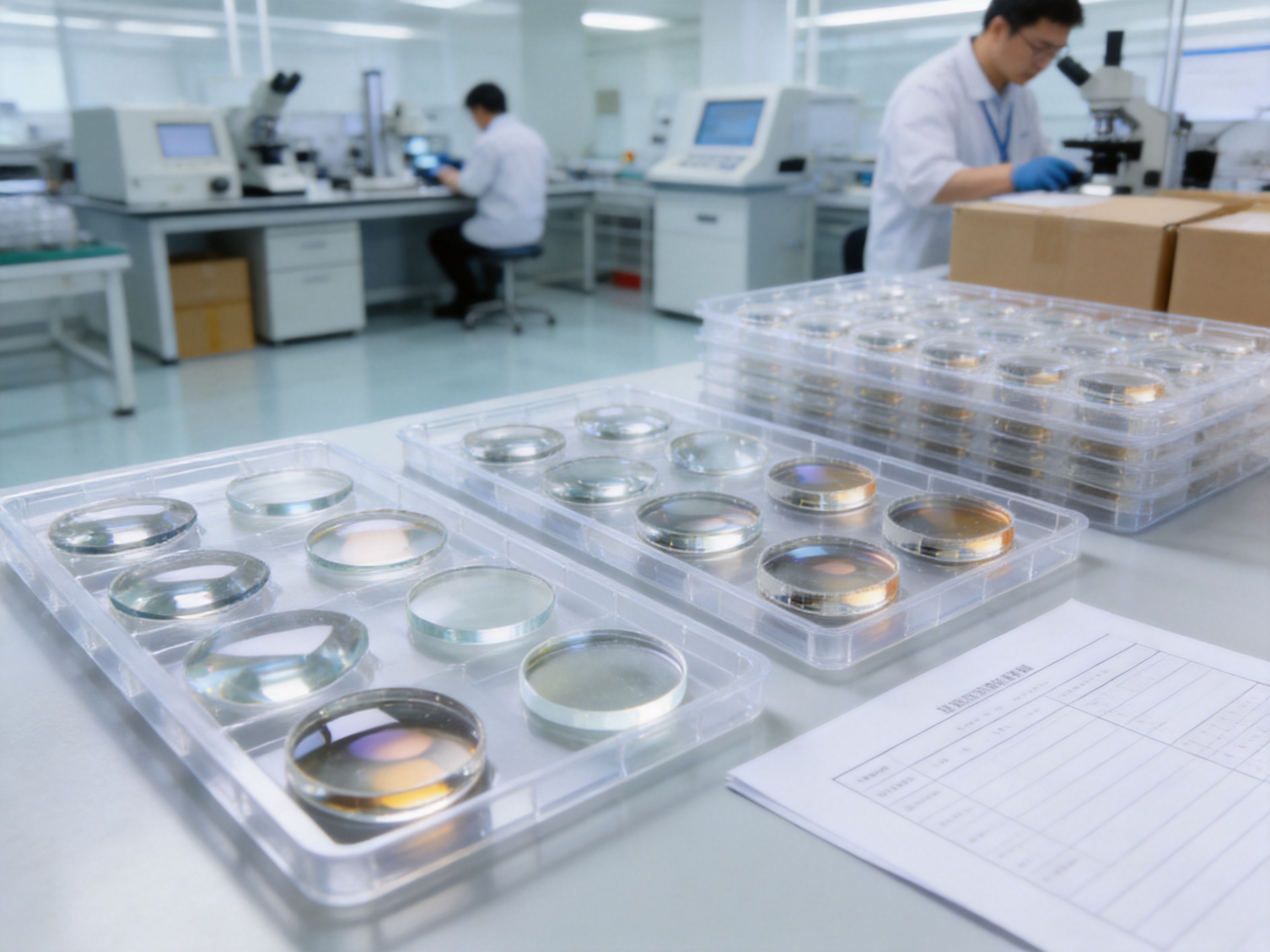
Quality control in optical lens manufacturing must be preventive, not only corrective. If defects are discovered only at final inspection, time and material have already been lost. A strong manufacturer controls quality from material selection through each process step. Incoming inspection, in-process measurement, controlled polishing, clean handling, coating verification, and final inspection all contribute to stable output.
Traceability is also important. For demanding applications, customers may need to know material batch, processing records, coating data, inspection results, and packaging information. Quality systems such as ISO9001 and IATF16949 support this type of documentation and process control.
Continuous improvement is another essential part of quality philosophy. Optical manufacturing processes can always be optimized for yield, precision, stability, and efficiency. Data collection, defect analysis, operator training, and equipment maintenance all help improve long-term performance.
Environmental and Responsible Manufacturing
Precision optical manufacturing uses materials, polishing compounds, cleaning agents, water, and energy. Responsible manufacturers must manage environmental impact while maintaining product quality. ISO14001:2015 certification indicates an environmental management system that helps control resource use, waste handling, compliance, and continuous improvement.
For international customers, environmental responsibility is increasingly important. Many companies prefer suppliers that can demonstrate sustainable practices and compliance with environmental standards. Responsible manufacturing also supports stable operations and long-term cooperation.
Why Choose These Optical Lenses for Wholesale Supply?
Wholesale optical lens buyers need more than individual product quality. They need reliable supply, consistent batches, engineering support, reasonable lead times, quality documentation, and responsive communication. The company’s combination of experience, production scale, certifications, technical centers, patents, and broad application expertise makes it suitable for customers seeking dependable optical component supply.
The lenses offer advantages over ordinary competitors because they are supported by precision manufacturing processes, careful material selection, surface finishing expertise, coating capability, and quality systems. Customers can source optical lenses for laser, automotive, semiconductor, consumer, and industrial applications while benefiting from the company’s broader optical component portfolio.
For equipment manufacturers, the main value is reliability. A precision lens should perform as designed, fit into the assembly, maintain coating performance, and remain consistent across production batches. A qualified manufacturer helps reduce procurement risk and supports long-term product success.
Guidelines for Selecting the Right Optical Lens
To select the right optical lens, customers should first define the optical function: focusing, collimating, expanding, imaging, correcting, or beam shaping. Next, they should identify the operating wavelength or wavelength range. The lens material and coating must match this spectral requirement. Then, customers should define mechanical constraints, including diameter, thickness, mounting method, and available space.
Performance tolerances should be selected according to system sensitivity. Overly loose tolerances may reduce performance, while unnecessarily tight tolerances may increase cost. A professional manufacturer can help identify a practical balance. Environmental conditions should also be reviewed, including temperature, humidity, vibration, laser power, cleaning method, and expected lifetime.
Finally, customers should consider production requirements. Is the lens needed for prototype testing, small-batch production, or mass production? Are inspection reports required? Is special packaging needed? Are automotive or semiconductor quality expectations involved? Clear communication of these details helps the manufacturer deliver the most suitable optical lens solution.
Q&A Section
Q1: What makes a precision optical lens different from a standard lens?
A precision optical lens is manufactured with tighter control over surface figure, surface quality, dimensions, centration, material consistency, and coating performance. Standard lenses may be suitable for simple applications, but precision lenses are required when high image quality, accurate beam control, low scatter, or reliable long-term performance is needed.
Q2: Why is coating important for optical lenses?
Coating reduces reflection, improves transmission, controls wavelength behavior, and can increase durability. Anti-reflective coatings are especially important because uncoated glass surfaces can reflect part of the light, reducing system efficiency. In laser applications, coating quality also affects damage resistance and operational stability.
Q3: Which industries commonly use these optical lenses?
These optical lenses are used in laser optics, automotive optics, semiconductor optics, consumer optics, industrial measurement, machine vision, sensing systems, imaging equipment, and scientific instruments. Each industry has different requirements, so lens material, shape, tolerance, and coating must be selected according to the application.
Q4: How does IATF16949 certification benefit automotive optical lens customers?
IATF16949 certification indicates that the manufacturer follows automotive quality management practices focused on defect prevention, process control, traceability, risk management, and continuous improvement. This is valuable for automotive customers who require stable supply and reliable components for long-term vehicle applications.
Q5: Can optical lenses be customized?
Yes. Optical lenses can be customized according to diameter, focal length, material, curvature, surface quality, coating, edge shape, tolerance, and packaging requirements. Customization is common for laser modules, automotive assemblies, semiconductor equipment, and specialized optical instruments.
Q6: What information should customers provide when requesting a quotation?
Customers should provide lens drawings or specifications, material requirements, diameter, thickness, radius or focal length, surface quality, surface figure, centration tolerance, coating requirements, operating wavelength, application environment, quantity, and inspection needs. The more complete the information, the more accurate the quotation and technical evaluation will be.
Q7: Why is surface quality important in laser optics?
Surface defects can scatter laser energy, reduce transmission, and create local absorption points. In high-power laser applications, these defects may increase the risk of coating damage or lens failure. High surface quality helps improve laser stability and service life.
Q8: How do precision lenses support semiconductor inspection?
Semiconductor inspection requires accurate imaging, low distortion, high cleanliness, and stable optical performance. Precision lenses help maintain resolution and measurement reliability. Low defect levels and controlled wavefront performance are especially important in inspection and metrology systems.
Q9: What advantages does an experienced optical component manufacturer provide?
An experienced manufacturer can better control polishing, coating, centering, inspection, and batch consistency. It can also provide engineering support, manufacturability advice, and quality documentation. This reduces risk for customers developing or producing high-performance optical systems.
Q10: How should lenses be handled after delivery?
Optical lenses should be handled with clean gloves or suitable tools, kept away from dust and fingerprints, and stored in protective packaging until use. Coated surfaces should not be touched directly. Cleaning should follow appropriate optical cleaning procedures to avoid scratches or coating damage.
Conclusion
Optical lenses are essential components in modern optical systems, and their quality directly influences performance, reliability, and user experience. Precision lenses provide advantages in transmission, focusing accuracy, surface quality, coating durability, and batch consistency. These advantages are particularly important in laser optics, automotive optics, semiconductor optics, consumer optics, and industrial sensing applications.
Changzhou Haolilai Photo-Electricity Scientific and Technical Co., Ltd. combines long-term manufacturing experience, advanced technical capability, certified quality systems, engineering research platforms, and scalable production resources. Founded in 1998 and supported by ISO9001:2015, ISO14001:2015, and IATF16949 certifications, the company is well positioned to manufacture high-quality optical lenses for demanding customers. Its strengths in material selection, precision grinding, polishing, centering, coating, inspection, and wholesale supply help customers achieve stable optical system performance and dependable production outcomes.
For buyers seeking optical lenses that go beyond basic functionality, precision manufacturing is the key. A carefully produced lens can improve system efficiency, reduce hidden costs, support long-term reliability, and create competitive product advantages. Whether used for laser focusing, automotive sensing, semiconductor inspection, or consumer optical devices, a high-quality optical lens is a strategic component that deserves careful selection.
References
1. Hecht, E. Optics. Pearson Education.
2. Smith, W. J. Modern Optical Engineering. McGraw-Hill Education.
3. Malacara, D. Optical Shop Testing. Wiley.
4. ISO 10110, Optics and Photonics: Preparation of Drawings for Optical Elements and Systems.
5. ISO 9001:2015, Quality Management Systems Requirements.
6. ISO 14001:2015, Environmental Management Systems Requirements with Guidance for Use.
7. IATF 16949, Quality Management System Standard for Automotive Production and Relevant Service Parts Organizations.
8. Riedl, M. Optical Design Fundamentals for Infrared Systems. SPIE Press.


 苏公网安备32041102000130号