
 Search
 en
en English
 日本語
日本語 русский
 Español
 Deutsch
 中文简体
中文简体Content
- 1 Understanding the Role of an Optical Lens
- 2 Key Advantages of Precision Optical Lenses
- 3 Major Application Areas
- 4 Materials Used in Precision Optical Lenses
- 5 Common Lens Types and Their Functions
- 6 Manufacturing Process of Precision Optical Lenses
- 6.1 1. Optical Design Review and Technical Evaluation
- 6.2 2. Material Preparation and Inspection
- 6.3 3. Cutting and Blanking
- 6.4 4. Rough Grinding
- 6.5 5. Fine Grinding
- 6.6 6. Polishing
- 6.7 7. Centering and Edging
- 6.8 8. Cleaning
- 6.9 9. Coating Deposition
- 6.10 10. Final Inspection
- 6.11 11. Packaging and Delivery
- 7 Manufacturing Strengths That Support Superior Lens Quality
- 8 Comparison with Ordinary Optical Lens Suppliers
- 9 Optical Coating Capabilities and Their Importance
- 10 Quality Control and Inspection
- 11 Customization Options for OEM Customers
- 12 Why Manufacturing Process Control Matters
- 13 Advantages for Laser Optics Customers
- 14 Advantages for Automotive Optics Customers
- 15 Advantages for Semiconductor Optics Customers
- 16 Advantages for Consumer Optics Customers
- 17 Design Considerations When Selecting an Optical Lens
- 18 How Precision Optical Lenses Improve System-Level Performance
- 19 Company Strengths Behind the Product
- 20 Purchasing Considerations for Optical Lens Buyers
- 21 Future Trends in Optical Lens Technology
- 22 Q&A Section
- 22.1 What is the main function of an optical lens?
- 22.2 Why are precision optical lenses better than ordinary lenses?
- 22.3 What materials are commonly used for optical lenses?
- 22.4 Why is coating important for an optical lens?
- 22.5 Can optical lenses be customized?
- 22.6 What industries use precision optical lenses?
- 22.7 How does surface quality affect lens performance?
- 22.8 Why is centration important?
- 22.9 What should buyers consider when choosing an optical lens supplier?
- 22.10 Why are certifications such as ISO9001 and IATF16949 valuable?
- 23 Conclusion
- 24 References
Optical lenses are among the most important functional components in modern photonics, imaging, sensing, illumination, inspection, and laser systems. A well-designed precision optical lens does far more than bend light; it controls energy distribution, improves system resolution, reduces aberration, stabilizes beam quality, and helps determine the reliability of the complete optical assembly. In high-value applications such as laser processing, automotive sensing, semiconductor inspection, medical instruments, machine vision, consumer electronics, and scientific equipment, the quality of the lens often defines the performance ceiling of the entire device.
This article focuses on precision optical lenses manufactured for demanding industrial and technological environments. It explains their key advantages, typical applications, material and coating options, advanced manufacturing processes, quality control methods, and the strengths of an experienced optical component manufacturer with large-scale production capability, international quality certifications, and a strong engineering foundation.
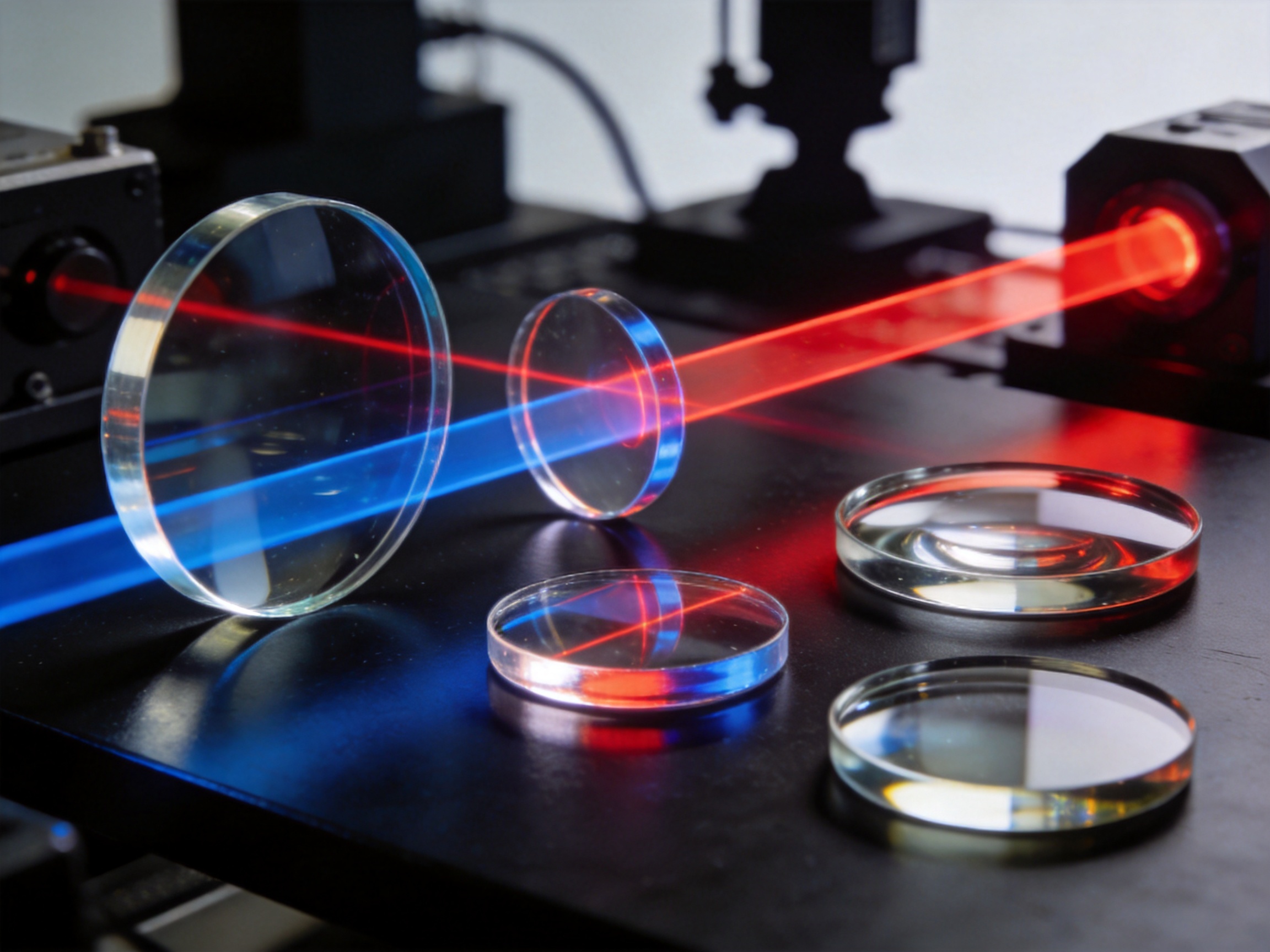
Understanding the Role of an Optical Lens
An optical lens is a transparent component designed to refract light in a controlled way. Depending on its geometry and optical design, it can focus, diverge, collimate, magnify, reduce, shape, or correct light beams. While the basic concept may appear simple, the manufacturing requirements for a high-performance lens are extremely demanding. Even a tiny deviation in curvature, surface roughness, centering, coating uniformity, or material homogeneity can affect optical transmission, imaging clarity, beam quality, or system efficiency.
In industrial environments, optical lenses are frequently exposed to high laser energy, temperature variation, vibration, humidity, contaminants, and long operating cycles. Therefore, the lens must combine optical accuracy with mechanical stability and environmental durability. This is where precision manufacturing becomes essential. A professional optical lens is not merely a polished glass element; it is the result of optical design, material science, precision grinding, fine polishing, coating engineering, metrology, and strict quality management.
Compared with ordinary commercial lenses, precision optical lenses are produced to tighter tolerances and are often customized for wavelength, focal length, diameter, clear aperture, edge thickness, coating performance, surface quality, and assembly requirements. This customization allows them to support highly specialized systems where standard off-the-shelf components may not deliver sufficient performance.
Key Advantages of Precision Optical Lenses
Precision optical lenses offer several decisive advantages over lower-grade alternatives. These advantages are especially important in industries where optical performance, stability, and repeatability directly affect productivity, safety, or product quality.
High Transmission Efficiency
A core advantage of a premium optical lens is high transmission. By selecting suitable optical glass, fused silica, or other specialized materials and applying optimized anti-reflective coatings, the lens can transmit more useful light while reducing unwanted reflection losses. This is vital in laser optics, imaging systems, and sensing devices, where every percentage of transmission can influence measurement accuracy, image brightness, or laser power efficiency.
In comparison with competitors that rely on generic coating recipes or inconsistent coating control, a manufacturer with advanced coating capability can tailor coating performance to specific wavelengths such as ultraviolet, visible, near-infrared, or infrared bands. This improves system throughput and minimizes stray light, ghost images, and energy waste.
Excellent Surface Quality
Surface quality determines how much light is scattered by imperfections such as scratches, digs, pits, sleeks, or polishing marks. In high-precision applications, poor surface quality may cause signal noise, laser damage, reduced contrast, or measurement instability. Precision optical lenses are produced with strict surface inspection standards to ensure clean, smooth, and stable optical surfaces.
This is particularly important for high-power laser systems. A small surface defect can absorb laser energy and become a damage initiation point. By controlling polishing quality and cleanliness, the lens can maintain long-term performance under demanding operating conditions.
Accurate Curvature and Focal Performance
The curvature of an optical lens defines its focal behavior. If the radius of curvature deviates from the design value, the focal length shifts, causing poor focusing accuracy, image distortion, or reduced coupling efficiency. Precision lens manufacturing uses advanced grinding and polishing processes to achieve tight radius and thickness tolerances. The resulting lens delivers reliable optical power and repeatable focusing performance.
For OEM customers producing optical instruments in volume, this repeatability is extremely valuable. It reduces the need for manual adjustment during assembly and helps ensure consistent performance from unit to unit.
Superior Centering and Edge Accuracy
Centering error occurs when the optical axis of the lens does not align properly with its mechanical axis. Excessive decentering can introduce coma, astigmatism, and alignment difficulty. High-quality optical lenses are carefully centered and edged so that they can be mounted accurately into mechanical assemblies.
Compared with low-cost suppliers that may focus only on apparent surface appearance, a precision manufacturer pays equal attention to hidden but critical parameters such as wedge, centration, bevel quality, and diameter tolerance. These details help customers achieve better assembly yield and reduce system calibration time.
Customized Coating Performance
Optical coatings are essential for modern lenses. Anti-reflective coatings reduce Fresnel reflection, high-reflective coatings support mirror-like performance when needed, filter coatings define spectral bands, and protective coatings improve environmental resistance. For optical lenses, coating design must match material, wavelength, angle of incidence, polarization, power density, and operating environment.
A major competitive advantage lies in the ability to design and deposit coatings that meet application-specific requirements rather than providing only standard broadband coatings. This gives customers improved optical efficiency and longer service life in specialized systems.
Stable Performance in Harsh Environments
Automotive, industrial, and outdoor systems require optical lenses that can resist temperature cycling, humidity, vibration, and mechanical stress. The use of appropriate materials, controlled processing, and validated coating adhesion helps ensure durability. This is especially relevant for automotive interior glass structural components, automotive optical modules, laser radar systems, and driver assistance technologies.
Manufacturers with automotive quality management experience are better positioned to support these applications because they understand batch consistency, traceability, defect prevention, and long-term reliability expectations.
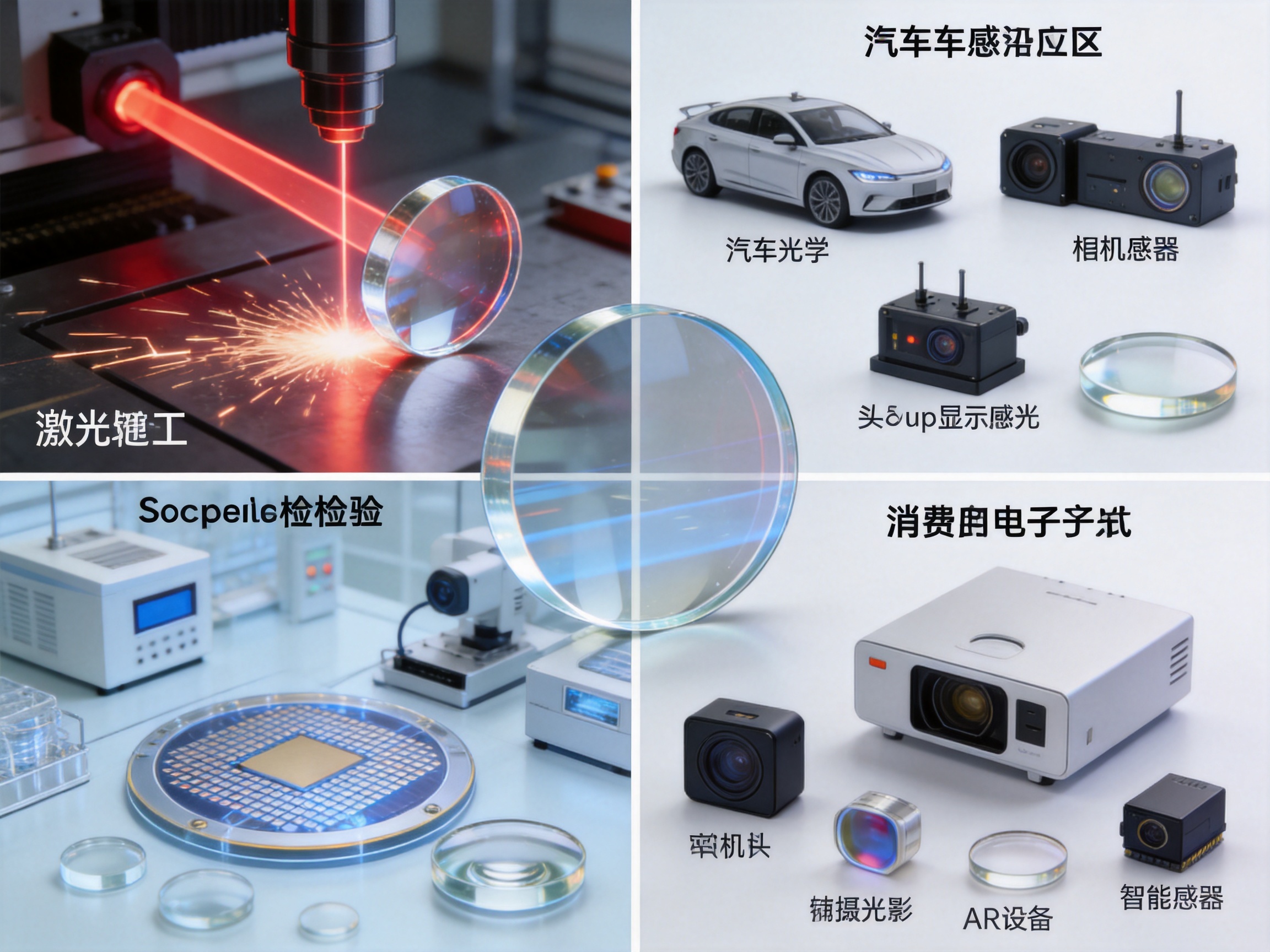
Major Application Areas
Precision optical lenses are used across a wide range of industries. Each field has its own technical priorities, and the best lens solution depends on optical design, wavelength, environmental conditions, and production requirements.
Laser Optics
Laser systems require lenses for beam expansion, collimation, focusing, scanning, shaping, and delivery. These lenses must handle high energy density while maintaining low absorption and high damage resistance. Applications include laser cutting, welding, marking, engraving, medical lasers, scientific lasers, and laser communication.
In laser processing, a stable focus spot directly affects cutting edge quality, weld penetration, marking contrast, and processing speed. A high-quality lens enables tighter beam control, better energy concentration, and more stable industrial output. For customers, this translates into improved productivity and reduced equipment downtime.
Automotive Optics
Modern vehicles use optical components in displays, sensors, lighting, cameras, head-up displays, ambient illumination, driver monitoring systems, and advanced driver assistance systems. Automotive optical lenses must satisfy strict reliability and safety expectations. They often need excellent dimensional stability, temperature resistance, coating durability, and batch consistency.
The growth of intelligent vehicles increases demand for high-performance optical lenses that can support sensing accuracy and visual comfort. A manufacturer familiar with automotive standards can provide better process control, documentation, and quality assurance for these demanding supply chains.
Semiconductor Optics
Semiconductor manufacturing and inspection equipment rely on highly precise optical systems. Lenses may be used in wafer inspection, lithography-related tools, alignment systems, metrology instruments, and laser processing equipment. In this field, contamination control, surface quality, dimensional precision, and optical stability are critical.
Semiconductor optics often require low defect levels and stable performance under strict operating conditions. Precision optical lens manufacturers with strong metrology capability and clean processing discipline can better satisfy these requirements.
Consumer Optics
Consumer devices such as cameras, projectors, augmented reality modules, smart home sensors, scanners, and wearable devices rely on compact and efficient optical components. Although consumer markets often require high volume and cost efficiency, optical performance cannot be ignored. Lenses must be consistent, scalable, and compatible with automated assembly.
A capable manufacturer can support both prototype development and volume production, helping customers shorten product development cycles and improve supply stability.
Machine Vision and Industrial Inspection
Machine vision systems use optical lenses to capture clear images for automation, measurement, defect detection, alignment, and robotic guidance. Lens quality affects image sharpness, distortion, contrast, and repeatability. High-performance lenses help improve inspection accuracy and reduce false rejects or missed defects.
As factories become more automated, the demand for reliable optical lenses continues to grow. Precision manufacturing helps ensure that machine vision systems can operate consistently over long periods.
Medical and Scientific Instruments
Medical and scientific instruments require high optical clarity, biocompatible assembly compatibility, and reliable performance. Lenses are used in endoscopes, diagnostic instruments, laboratory analyzers, microscopy systems, spectroscopy equipment, and research devices. These applications often involve demanding optical requirements and strict quality documentation.
A precision optical lens can help improve diagnostic image quality, measurement sensitivity, and instrument reliability.
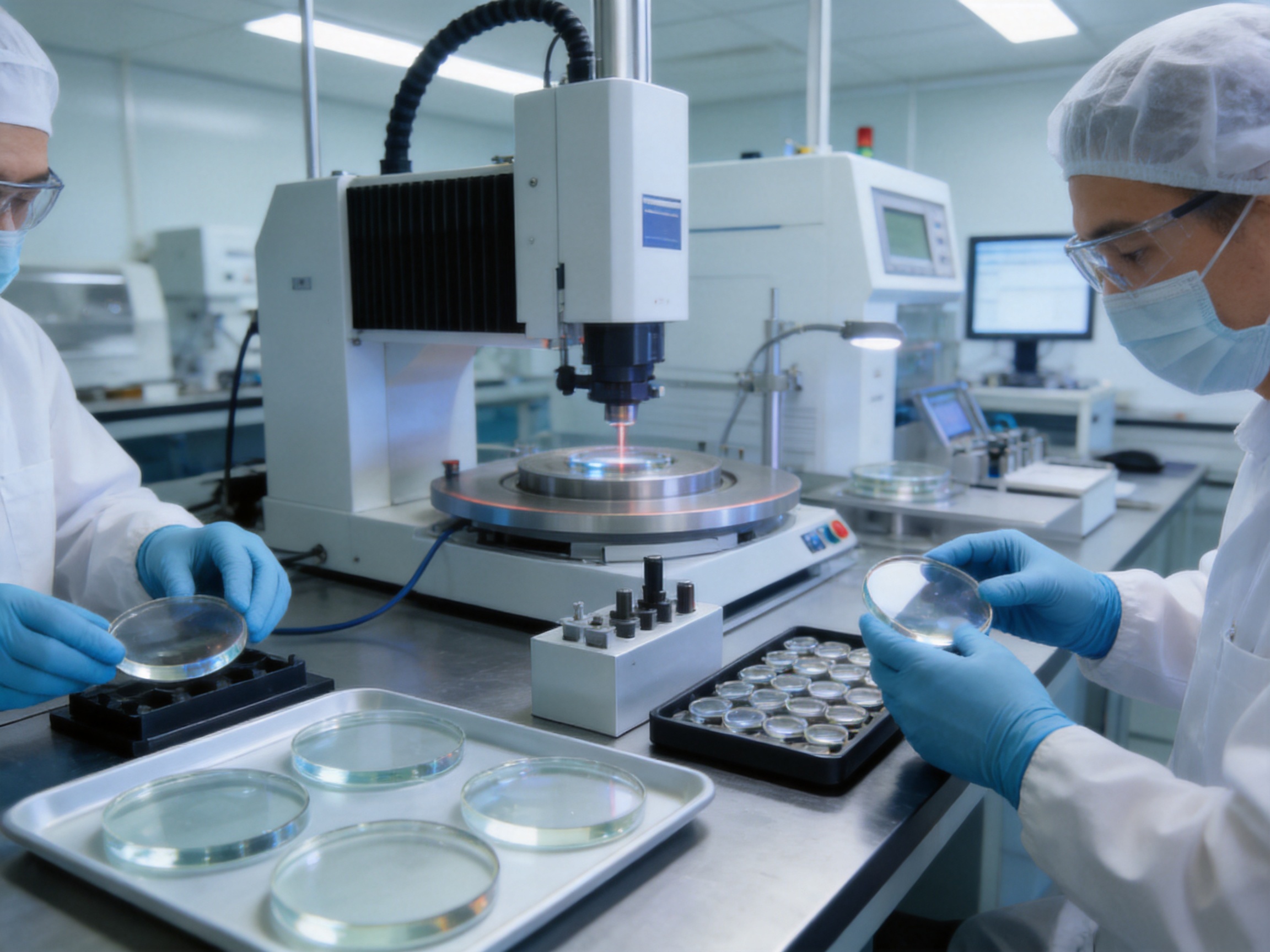
Materials Used in Precision Optical Lenses
The choice of optical material is one of the most important decisions in lens manufacturing. Material properties determine refractive index, dispersion, transmission range, thermal expansion, hardness, chemical durability, density, and laser resistance.
Optical Glass
Optical glass is widely used because it offers stable optical properties, good transparency, and a broad range of refractive indices and dispersion values. Crown glass, flint glass, borosilicate glass, and specialty optical glasses can be selected according to optical design needs. For many imaging and illumination applications, optical glass provides an effective balance of performance and cost.
Fused Silica
Fused silica is highly valued for ultraviolet transmission, low thermal expansion, excellent chemical resistance, and high laser damage threshold. It is often used in laser optics, ultraviolet systems, semiconductor tools, and harsh environments. Compared with standard optical glass, fused silica can offer superior thermal stability and lower absorption in certain wavelength bands.
Specialty Crystals
Some optical systems require materials such as sapphire, calcium fluoride, magnesium fluoride, or other crystals. These materials may provide special transmission properties, high hardness, or infrared performance. Their processing can be more challenging than conventional glass, requiring advanced machining and polishing expertise.
Material Selection as a Competitive Advantage
A strong optical manufacturer does not simply process whatever material is available. It helps customers select the right material based on optical performance, operating wavelength, environmental conditions, mechanical requirements, and cost targets. This engineering support reduces design risk and ensures that the final lens is suitable for real-world use.
Common Lens Types and Their Functions
Optical lenses are produced in many shapes and configurations. The right lens type depends on the desired control of light.
Plano-Convex Lenses
Plano-convex lenses have one flat surface and one outward curved surface. They are often used to focus collimated light or collimate light from a point source. They are common in laser systems, illumination, and imaging assemblies.
Bi-Convex Lenses
Bi-convex lenses have two outward curved surfaces and are useful for focusing light when object and image distances are similar. They are often used in projection, imaging, and magnification systems.
Plano-Concave Lenses
Plano-concave lenses have one flat surface and one inward curved surface. They diverge light and are commonly used in beam expansion, optical correction, and system balancing.
Bi-Concave Lenses
Bi-concave lenses diverge light more strongly and are useful in systems that require negative focal power. They can help correct optical paths or expand beams.
Meniscus Lenses
Meniscus lenses have one convex and one concave surface. They can reduce spherical aberration and are often used in imaging systems, laser beam control, and optical assemblies requiring improved correction.
Achromatic Lenses
Achromatic lenses combine different optical materials to reduce chromatic aberration. They are widely used in imaging, microscopy, inspection, and scientific instruments where color correction is important.
Aspheric Lenses
Aspheric lenses use non-spherical surfaces to reduce aberrations and improve image quality or beam control. They can replace multiple spherical elements in some systems, reducing size, weight, and assembly complexity. However, they require advanced manufacturing and metrology capability.
Manufacturing Process of Precision Optical Lenses
The manufacturing of optical lenses involves multiple steps, each of which influences final performance. A professional manufacturer combines experienced technicians, advanced equipment, process control, and strict inspection to ensure that every lens meets customer specifications.
1. Optical Design Review and Technical Evaluation
Before production begins, engineers review the customer’s drawings, specifications, application requirements, and tolerance expectations. Key parameters include material, diameter, center thickness, edge thickness, radius of curvature, focal length, surface quality, coating type, clear aperture, wedge, chamfer, and environmental requirements.
This early review helps identify potential manufacturing challenges and allows the manufacturer to recommend improvements. For example, a small change in tolerance may significantly improve manufacturability and reduce cost without compromising system performance. Engineering collaboration at this stage is a major advantage over suppliers that only accept drawings without technical feedback.
2. Material Preparation and Inspection
Selected optical material is inspected for bubbles, inclusions, striae, stress, and dimensional suitability. Material quality is essential because internal defects cannot be corrected by polishing. Reliable incoming inspection prevents defective blanks from entering production and supports traceability.
3. Cutting and Blanking
The raw optical material is cut into blanks of appropriate size. Precision cutting reduces material waste and prepares the workpiece for shaping. The cutting process must avoid excessive stress, chipping, or subsurface damage.
4. Rough Grinding
Rough grinding creates the basic lens shape and removes excess material. At this stage, the radius and thickness are brought closer to the target values. Although the surface is not yet optically smooth, controlled rough grinding is important because deep subsurface damage can affect later polishing efficiency and final strength.
5. Fine Grinding
Fine grinding refines the surface and reduces roughness before polishing. Abrasive size, pressure, tool shape, and processing time are carefully controlled. This step helps achieve accurate curvature and reduces the polishing burden.
6. Polishing
Polishing transforms the ground surface into an optical-quality surface. It removes fine damage, improves surface roughness, and corrects figure errors. The polishing process requires skilled control because over-polishing or uneven pressure can change curvature or introduce surface irregularities.
For high-end lenses, polishing is one of the most critical processes. A smooth surface supports high transmission, low scatter, and improved laser resistance. Advanced polishing capability gives a manufacturer a strong competitive advantage in demanding optical markets.
7. Centering and Edging
After polishing, the lens is centered and edged to achieve the specified diameter and mechanical axis alignment. Accurate centering ensures that the optical axis aligns with the mounting geometry. This reduces assembly error and improves optical system performance.
8. Cleaning
Before coating or final inspection, lenses must be thoroughly cleaned. Dust, oil, polishing residue, and microscopic contaminants can affect coating adhesion and optical appearance. Professional cleaning processes protect the optical surface and help ensure coating quality.
9. Coating Deposition
Optical coatings are deposited using controlled vacuum coating processes. Coating design may include single-layer or multilayer structures depending on wavelength range and performance requirements. Parameters such as film thickness, refractive index, adhesion, uniformity, and environmental durability are carefully managed.
Coating capability is a key differentiator. Competitors with limited coating technology may provide acceptable geometry but fail to deliver optimized spectral performance. A manufacturer with integrated coating expertise can provide lenses that are ready for high-efficiency optical systems.
10. Final Inspection
Final inspection verifies that the lens meets specifications. Typical inspection items include diameter, thickness, radius, surface quality, transmitted wavefront, coating performance, centration, focal length, chamfer, appearance, and packaging cleanliness. Advanced metrology supports objective verification and repeatability.
11. Packaging and Delivery
Precision optical lenses require careful packaging to prevent scratches, contamination, or mechanical damage during transportation. Clean packaging materials and secure handling are essential. For export customers, reliable packaging and documentation support smooth international logistics.
Manufacturing Strengths That Support Superior Lens Quality
An optical lens manufacturer with decades of experience, a large production area, more than 300 employees, and international certifications offers several advantages for customers seeking stable supply and high technical performance. Established in 1998, the manufacturer described in the provided company profile has developed a strong foundation in precision optical components and serves customers in more than 20 countries.
Long-Term Industry Experience
Experience matters in optics. Lens manufacturing involves many subtle process variables that cannot be mastered overnight. Decades of production experience help engineers and technicians understand how different materials behave, how polishing parameters affect surface quality, how coatings respond to environmental conditions, and how tolerances influence yield.
Compared with newer or less specialized suppliers, an experienced manufacturer is better equipped to solve problems, optimize processes, and provide consistent quality. This is especially valuable for customers developing high-performance optical systems where delays or defects can be costly.
Large-Scale Production Capability
A facility covering 35,000 square meters provides room for material preparation, grinding, polishing, coating, inspection, assembly support, and production management. Scale is important not only for volume but also for process separation, equipment investment, and workflow optimization.
Customers benefit from a supplier that can support both development projects and mass production. When demand increases, a larger manufacturer is more capable of expanding output while maintaining quality control.
Certified Quality Management
Certifications such as ISO9001:2015, ISO14001:2015, and IATF16949 reflect commitment to quality systems, environmental management, and automotive industry standards. For optical lens customers, these certifications indicate that production is managed through documented processes, continuous improvement, risk control, and traceability.
IATF16949 is particularly significant for automotive optical applications because it emphasizes defect prevention, process stability, and supply chain discipline. This gives automotive customers greater confidence when sourcing optical lenses for vehicle-related systems.
Engineering and Research Capability
The establishment of engineering technology centers and enterprise technology research resources demonstrates a commitment to innovation. Optical lens production is not only a manufacturing activity but also an engineering discipline. Research capability helps improve polishing methods, coating designs, process automation, inspection techniques, and product development.
Patents and high-tech product achievements further indicate that the company is not limited to basic processing. It can participate in more complex optical development projects and support customers with technical problem-solving.
International Export Experience
Serving customers in more than 20 countries requires reliable communication, stable quality, export packaging, documentation, and on-time delivery. International experience helps a manufacturer understand the expectations of global OEMs, distributors, and engineering teams.
For overseas customers, choosing a supplier with export experience reduces sourcing risk and improves project coordination.
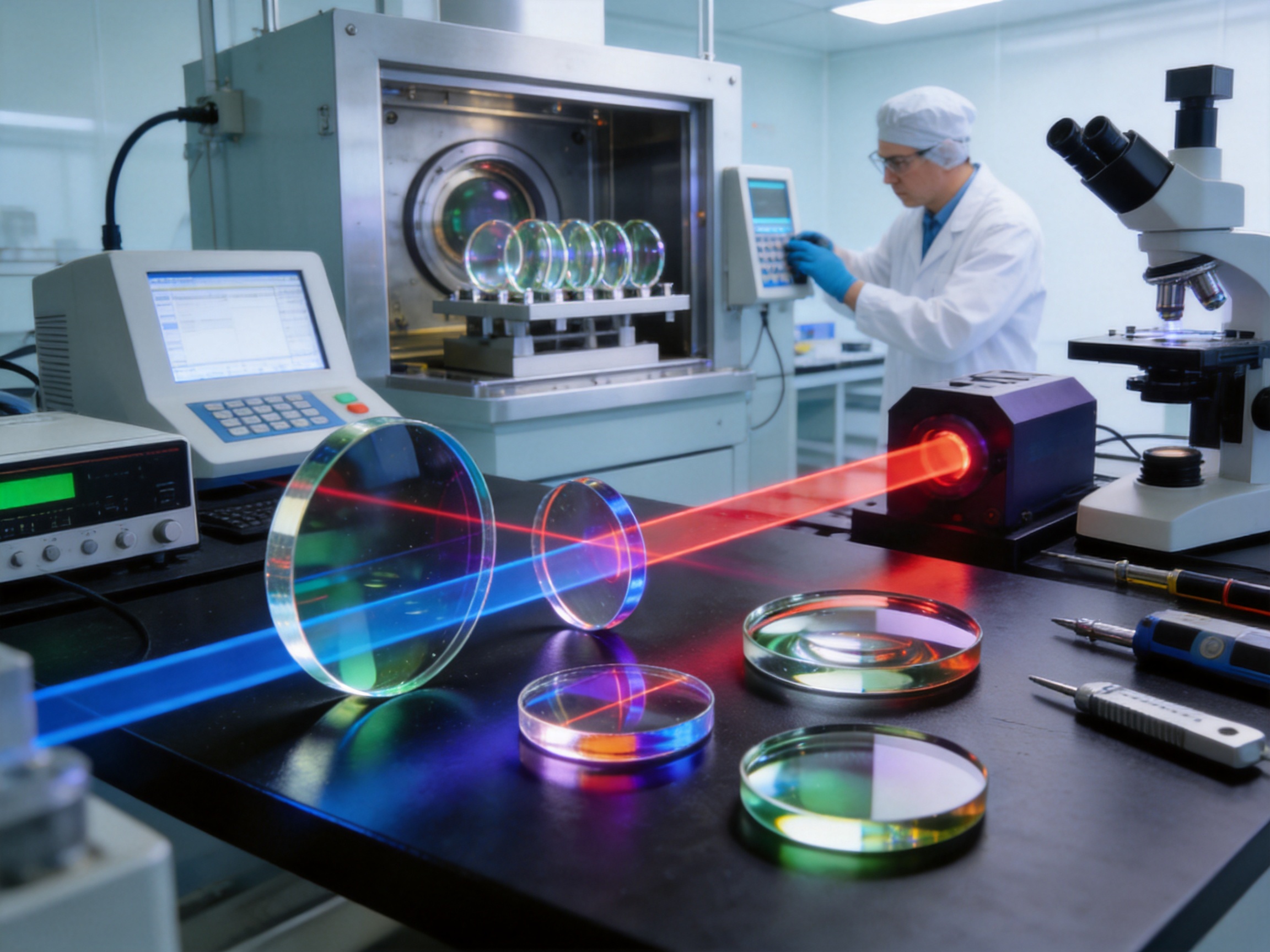
Comparison with Ordinary Optical Lens Suppliers
Not all optical lenses are equal. Two lenses may look similar to the naked eye but perform very differently in a precision system. The following table summarizes the advantages of high-quality precision optical lenses compared with ordinary low-cost alternatives.
| Evaluation Area | Precision Optical Lens Advantage | Typical Limitation of Ordinary Alternatives |
|---|---|---|
| Surface Quality | Controlled scratches, digs, roughness, and scatter for stable optical performance | Higher defect risk, more scatter, reduced image or beam quality |
| Dimensional Accuracy | Tight control of diameter, thickness, radius, wedge, and centration | Loose tolerances may cause assembly and alignment problems |
| Coating Performance | Customized coating design for wavelength, angle, durability, and transmission | Generic coatings may reduce efficiency or fail in harsh environments |
| Material Control | Careful selection and inspection of optical glass, fused silica, or specialty materials | Inconsistent material quality can affect optical stability |
| Production Consistency | Documented processes, quality systems, and batch traceability | Greater variation from batch to batch |
| Application Support | Engineering review, manufacturability advice, and customization | Limited technical support beyond basic production |
| Reliability | Suitable for laser, automotive, semiconductor, and industrial applications | May be acceptable only for less demanding uses |
Optical Coating Capabilities and Their Importance
Coating technology is one of the most influential factors in the final performance of an optical lens. Even a perfectly polished lens may lose performance if its coating is poorly designed or deposited. At each air-glass interface, uncoated glass reflects a portion of incoming light. In multi-lens systems, these losses accumulate and can significantly reduce efficiency.
Anti-Reflective Coatings
Anti-reflective coatings reduce reflection and increase transmission. They can be optimized for a single wavelength, multiple wavelengths, or a broad spectral band. For laser systems, a narrowband coating at a specific laser wavelength can provide very low reflection and improved energy delivery. For imaging systems, broadband anti-reflective coatings improve brightness and contrast across the visible spectrum.
High-Durability Coatings
Automotive and industrial environments may expose lenses to humidity, temperature changes, cleaning chemicals, or mechanical abrasion. Durable coatings improve service life and reduce failure risk. Coating adhesion and environmental resistance must be validated through proper testing.
Laser-Grade Coatings
Laser-grade coatings require low absorption, clean deposition, and high damage threshold. Poor coating quality can create thermal effects or damage under high-power laser exposure. Precision coating processes help protect the lens and maintain stable beam delivery.
Filter and Functional Coatings
Some lenses require coatings that transmit selected wavelength bands while blocking others. This is useful in sensing, spectroscopy, fluorescence, imaging, and measurement systems. Functional coating integration can reduce the number of separate components in an optical system.
Quality Control and Inspection
Quality control in optical lens manufacturing must be both comprehensive and precise. It is not enough to inspect a lens visually. Advanced instruments and trained inspectors are required to verify optical, dimensional, and coating specifications.
Surface Inspection
Surface defects are inspected according to defined standards. Scratches, digs, chips, stains, and coating defects are evaluated under controlled lighting and magnification. Surface inspection protects customers from performance loss and appearance issues.
Interferometric Testing
Interferometers measure surface figure and transmitted wavefront quality. This allows precise evaluation of how the lens affects a passing wavefront. For high-resolution imaging and laser systems, wavefront accuracy is especially important.
Dimensional Measurement
Diameter, center thickness, edge thickness, chamfer, and curvature are measured using appropriate mechanical and optical instruments. Dimensional consistency supports assembly compatibility and system alignment.
Spectral Measurement
Coated lenses are tested for transmission and reflection performance across specified wavelengths. Spectral measurement confirms that the coating meets customer requirements and performs as designed.
Environmental and Reliability Testing
For demanding applications, lenses may be tested for humidity resistance, temperature cycling, adhesion, abrasion, or other environmental factors. These tests help ensure long-term stability in real operating conditions.
Customization Options for OEM Customers
Many customers require optical lenses that are tailored to specific systems rather than standard catalog items. Customization can include geometry, material, coating, tolerance, packaging, and inspection documentation.
Custom Dimensions
Lens diameter, thickness, edge configuration, bevel, and clear aperture can be customized to match mechanical housings and optical layouts.
Custom Optical Parameters
Focal length, radius of curvature, numerical aperture, wavefront requirements, and aberration correction can be designed according to system needs.
Custom Materials
Customers can select optical glass, fused silica, crystal materials, or other transparent substrates depending on wavelength and environmental demands.
Custom Coatings
Coatings can be designed for ultraviolet, visible, near-infrared, infrared, laser-line, broadband, or multi-band performance. Coating durability can also be adapted for harsh conditions.
Custom Inspection and Documentation
OEM projects often require inspection reports, material certificates, coating curves, traceability records, or production control plans. A qualified manufacturer can provide documentation to support quality assurance and customer approval.
Why Manufacturing Process Control Matters
Optical lens quality depends on process control at every stage. A single uncontrolled step can compromise the final product. For example, poor material inspection may allow internal defects; rough grinding may create excessive subsurface damage; polishing may introduce surface irregularity; cleaning may leave contamination; coating may suffer from nonuniform thickness; packaging may scratch the lens.
Advanced manufacturers reduce these risks through standardized workflows, trained personnel, controlled environments, calibrated instruments, and continuous improvement. This systematic approach offers a clear advantage over suppliers that rely mainly on manual experience without documented control.
Advantages for Laser Optics Customers
Laser optics customers need lenses that can withstand high power, maintain beam quality, and provide stable optical transmission. Precision optical lenses deliver several advantages in laser systems.
First, low absorption materials and coatings reduce thermal lensing and damage risk. Second, high surface quality minimizes scatter and localized energy absorption. Third, accurate curvature and centration help produce a predictable focus spot. Fourth, reliable coating performance improves system efficiency and reduces reflection-related hazards.
For laser equipment manufacturers, these benefits can improve machine performance and customer satisfaction. A superior lens may reduce maintenance frequency, improve cutting or welding consistency, and support higher processing speeds.
Advantages for Automotive Optics Customers
Automotive optical systems must perform reliably over years of use. Optical lenses used in vehicles may experience temperature extremes, vibration, humidity, and continuous operation. Quality variation can lead to performance drift, image defects, sensor errors, or customer complaints.
A manufacturer with IATF16949 certification and experience in automotive optics can provide process discipline aligned with automotive expectations. This includes traceability, risk management, continuous improvement, and stable mass production. For customers, this means better supply reliability and lower quality risk.
Advantages for Semiconductor Optics Customers
Semiconductor applications demand cleanliness, precision, and consistency. Optical lenses used in inspection and processing systems must maintain high transmission, low scatter, and stable geometry. Even small defects can affect measurement results or process accuracy.
Precision manufacturing, strict inspection, and careful packaging help meet semiconductor industry expectations. Engineering support is also important because semiconductor optical systems often involve specialized wavelengths and tight tolerances.
Advantages for Consumer Optics Customers
Consumer electronics customers often need high volume, compact size, stable quality, and cost efficiency. Precision optical lens manufacturing can support scalable production while maintaining optical consistency. This helps customers reduce assembly variation and improve final product performance.
In markets where devices become smaller and more powerful, optical components must provide higher performance within limited space. Customized lens solutions can help designers achieve compact optical paths and improved user experience.
Design Considerations When Selecting an Optical Lens
Choosing the right optical lens requires more than selecting a diameter and focal length. Engineers should consider the full optical and mechanical environment.
Wavelength Range
Material and coating must match the operating wavelength. A lens suitable for visible light may not be ideal for ultraviolet or infrared applications. Transmission range, absorption, and coating design must be reviewed carefully.
Power Density
For laser systems, the lens must tolerate the expected power density. Surface quality, coating absorption, and material properties influence damage threshold.
Environmental Conditions
Temperature, humidity, vibration, chemicals, and contamination can affect lens performance. Environmental requirements should be communicated clearly during design.
Mechanical Integration
Lens diameter, thickness, bevel, centration, and edge quality affect mounting. A lens that is optically good but mechanically difficult to mount may create assembly problems.
Performance Tolerances
Tighter tolerances may improve performance but also increase cost and production time. A skilled manufacturer can help balance performance requirements with manufacturability.
How Precision Optical Lenses Improve System-Level Performance
A lens should be evaluated not only as an individual component but also as part of an optical system. High-quality lenses contribute to better system-level performance in several ways.
They increase optical throughput by reducing reflection and absorption. They improve image quality by minimizing aberrations and scatter. They support stable alignment through accurate dimensions and centration. They reduce maintenance by offering durable coatings and clean surfaces. They improve production efficiency by enabling consistent assembly and reducing variation.
For OEM customers, these system-level benefits are often more important than the initial component price. A cheaper lens may save money during purchasing but create higher costs through poor yield, field failures, calibration time, or customer dissatisfaction. A precision lens provides long-term value by supporting reliable operation.
Company Strengths Behind the Product
The manufacturer described in the supplied company information is a professional producer of precision optical components located in Changzhou, Jiangsu, China. Founded in 1998, it has developed into a high-tech enterprise with more than 300 employees, a 35,000-square-meter facility, and exports to more than 20 countries. Its certifications include ISO9001:2015, ISO14001:2015, and IATF16949.
These strengths are highly relevant to optical lens customers. The combination of engineering capability, manufacturing scale, quality management, automotive certification, and export experience allows the company to serve demanding industries such as laser optics, automotive optics, semiconductor optics, and consumer optics. Its technology centers and patent achievements further demonstrate a long-term commitment to innovation and professional development.
For customers, this means access to a supplier capable of more than simple component production. The company can support technical review, process optimization, customized manufacturing, coating solutions, quality documentation, and stable delivery. This integrated capability is a strong advantage in competitive optical markets.
Purchasing Considerations for Optical Lens Buyers
When evaluating optical lens suppliers, buyers should look beyond unit price. Important factors include manufacturing experience, material control, coating capability, inspection equipment, certifications, customization ability, communication efficiency, and long-term reliability.
A reliable supplier should be able to understand drawings, clarify specifications, provide manufacturability suggestions, control production processes, inspect final products, and package lenses safely. It should also be capable of supporting both prototype quantities and volume production.
For global buyers, export experience is also important. Proper packaging, documentation, and logistics coordination reduce risk and help maintain project schedules.
Future Trends in Optical Lens Technology
The demand for optical lenses will continue to grow as industries adopt more advanced sensing, imaging, laser, and display technologies. Several trends are shaping the future of optical lens manufacturing.
Higher Precision Requirements
As optical systems become more compact and powerful, tolerances become tighter. Lenses must deliver better surface accuracy, lower scatter, and improved alignment performance.
More Specialized Coatings
Applications increasingly require coatings for specific wavelengths, polarization states, angles, or environmental conditions. Coating design will continue to be a major area of differentiation.
Integration with Smart Mobility
Automotive optical systems will expand as vehicles become more intelligent. Lenses for displays, sensors, cameras, and monitoring systems will require high reliability and scalable production.
Growth in Semiconductor and Laser Markets
Semiconductor manufacturing and laser processing are both high-growth areas that depend on precision optics. Lens manufacturers with strong process control and material expertise will be well positioned.
Increased Customization
Standard optical components will remain useful, but many advanced systems will require custom designs. Manufacturers with engineering support and flexible production will have a clear advantage.
Q&A Section
What is the main function of an optical lens?
An optical lens controls light by focusing, diverging, collimating, shaping, or correcting it. Its function depends on its geometry, material, coating, and position in the optical system.
Why are precision optical lenses better than ordinary lenses?
Precision optical lenses offer tighter dimensional control, better surface quality, optimized coatings, improved centration, and more consistent optical performance. These features make them suitable for demanding applications such as laser systems, automotive optics, semiconductor equipment, and machine vision.
What materials are commonly used for optical lenses?
Common materials include optical glass, fused silica, and specialty crystals. The choice depends on wavelength range, transmission requirements, thermal stability, mechanical properties, and cost.
Why is coating important for an optical lens?
Coating improves transmission, reduces reflection, controls spectral performance, and can increase durability. A properly designed coating helps the lens achieve higher efficiency and longer service life.
Can optical lenses be customized?
Yes. Optical lenses can be customized in diameter, thickness, focal length, radius of curvature, material, surface quality, coating, edge design, and inspection documentation. Customization is especially important for OEM optical systems.
What industries use precision optical lenses?
Precision optical lenses are used in laser processing, automotive systems, semiconductor equipment, consumer electronics, medical devices, scientific instruments, machine vision, imaging systems, and optical communication.
How does surface quality affect lens performance?
Surface defects can cause light scatter, reduced contrast, laser damage, or measurement noise. Better surface quality improves optical clarity, system efficiency, and reliability.
Why is centration important?
Centration ensures that the optical axis aligns with the mechanical axis. Good centration reduces aberrations and makes assembly easier in precision optical systems.
What should buyers consider when choosing an optical lens supplier?
Buyers should consider manufacturing experience, quality certifications, coating capability, inspection methods, customization support, material control, production capacity, and export experience.
Why are certifications such as ISO9001 and IATF16949 valuable?
These certifications show that the manufacturer follows structured quality management systems. IATF16949 is especially valuable for automotive applications because it emphasizes defect prevention, traceability, and process control.
Conclusion
Precision optical lenses are critical components in modern optical systems. Their performance influences light transmission, imaging clarity, laser efficiency, sensing accuracy, system reliability, and production consistency. Compared with ordinary alternatives, high-quality optical lenses provide superior surface quality, accurate geometry, optimized coatings, reliable centration, and stable long-term performance.
For applications in laser optics, automotive optics, semiconductor optics, consumer optics, machine vision, medical instruments, and scientific equipment, selecting the right lens and the right manufacturing partner is essential. A manufacturer with decades of experience, advanced processing capability, strong engineering resources, international certifications, automotive quality management, and global export experience can provide clear advantages to customers seeking dependable optical components.
As optical systems continue to become more advanced, compact, and demanding, the value of precision optical lens manufacturing will only increase. Customers who prioritize quality, customization, process control, and technical support can achieve better system performance and stronger long-term competitiveness.
References
1. Hecht, Eugene. Optics. Pearson Education.
2. Smith, Warren J. Modern Optical Engineering. McGraw-Hill Education.
3. Malacara, Daniel. Optical Shop Testing. Wiley-Interscience.
4. Kingslake, Rudolf, and R. Barry Johnson. Lens Design Fundamentals. Academic Press.
5. ISO 10110. Optics and Photonics: Preparation of Drawings for Optical Elements and Systems.
6. ISO 9001:2015. Quality Management Systems: Requirements.
7. IATF 16949. Automotive Quality Management System Standard.
8. Macleod, H. Angus. Thin-Film Optical Filters. CRC Press.


 苏公网安备32041102000130号