
 Search
 en
en English
 日本語
日本語 русский
 Español
 Deutsch
 中文简体
中文简体Content
- 1 Understanding the Role of an Optical Reflector
- 2 Product Advantages of Precision Optical Reflectors
- 3 Key Specifications for Optical Reflectors
- 4 Advanced Manufacturing Strengths Behind Reliable Reflectors
- 4.1 Material Selection and Substrate Preparation
- 4.2 Cutting, Shaping, and Dimensional Processing
- 4.3 Grinding for Surface Geometry
- 4.4 Precision Polishing for Optical Quality
- 4.5 Cleaning and Surface Preparation Before Coating
- 4.6 Coating Technology for Optical Performance
- 4.7 Inspection and Quality Control
- 5 Competitive Advantages Over Ordinary Suppliers
- 6 Applications of Optical Reflectors
- 7 Design Considerations for Custom Optical Reflectors
- 8 Manufacturing Process Flow for Precision Optical Reflectors
- 9 Why Manufacturing Discipline Matters
- 10 Company Strengths Supporting Optical Reflector Production
- 11 Advantages for Wholesale and OEM Customers
- 12 Comparison with Common Reflective Alternatives
- 13 Quality Assurance from Prototype to Mass Production
- 14 Environmental and Long-Term Reliability
- 15 How Optical Reflectors Improve System Performance
- 16 Procurement Guidance for Buyers
- 17 Future Trends in Optical Reflector Technology
- 18 Q&A: Common Questions About Precision Optical Reflectors
- 18.1 What is an optical reflector used for?
- 18.2 How is a precision optical reflector different from an ordinary mirror?
- 18.3 Which coating should be selected for an optical reflector?
- 18.4 Can optical reflectors be customized?
- 18.5 Why is surface figure important?
- 18.6 Why is surface roughness important?
- 18.7 What information should be provided when requesting a quotation?
- 18.8 Why choose a certified optical component manufacturer?
- 18.9 Are optical reflectors suitable for automotive applications?
- 18.10 How do precision reflectors support laser systems?
- 19 Conclusion
- 20 References
Optical reflectors are essential components in modern photonic systems, laser instruments, semiconductor equipment, automotive optical assemblies, precision measurement devices, and advanced imaging platforms. Although a reflector may appear simple in form, its performance depends on a highly controlled combination of substrate material, surface accuracy, coating design, environmental stability, and manufacturing consistency. A high-quality optical reflector does more than redirect light; it preserves beam quality, minimizes optical loss, maintains wavefront integrity, and supports the long-term reliability of the entire optical system.
In demanding applications, small imperfections in an optical reflector can create significant performance issues. Surface figure error may distort the reflected wavefront, roughness may increase scatter, coating defects may reduce reflectivity, and dimensional instability may compromise alignment. For this reason, buyers of precision optical reflectors increasingly seek manufacturers that combine advanced processing equipment, strong engineering capability, certified quality systems, and deep experience in custom optical component production.
Changzhou Haolilai Photo-Electricity Scientific and Technical Co., Ltd. is a professional manufacturer of precision optical components with a long history in optical processing and manufacturing. Founded in 1998 and located in Changzhou, Jiangsu, China, the company focuses on the development and production of high-precision optical components for laser optics, automotive optics, semiconductor optics, consumer optics, and related fields. With more than 300 employees, a production base covering 35,000 square meters, international certifications, and strong technical research capabilities, the company provides optical reflectors and other components designed for stable performance in demanding industrial environments.
This article explores the design value, technical advantages, manufacturing process, quality control, application potential, and competitive strengths of precision optical reflectors. It also explains why choosing an experienced optical component manufacturer is critical for projects that require consistent optical performance, long service life, and scalable production support.
Understanding the Role of an Optical Reflector
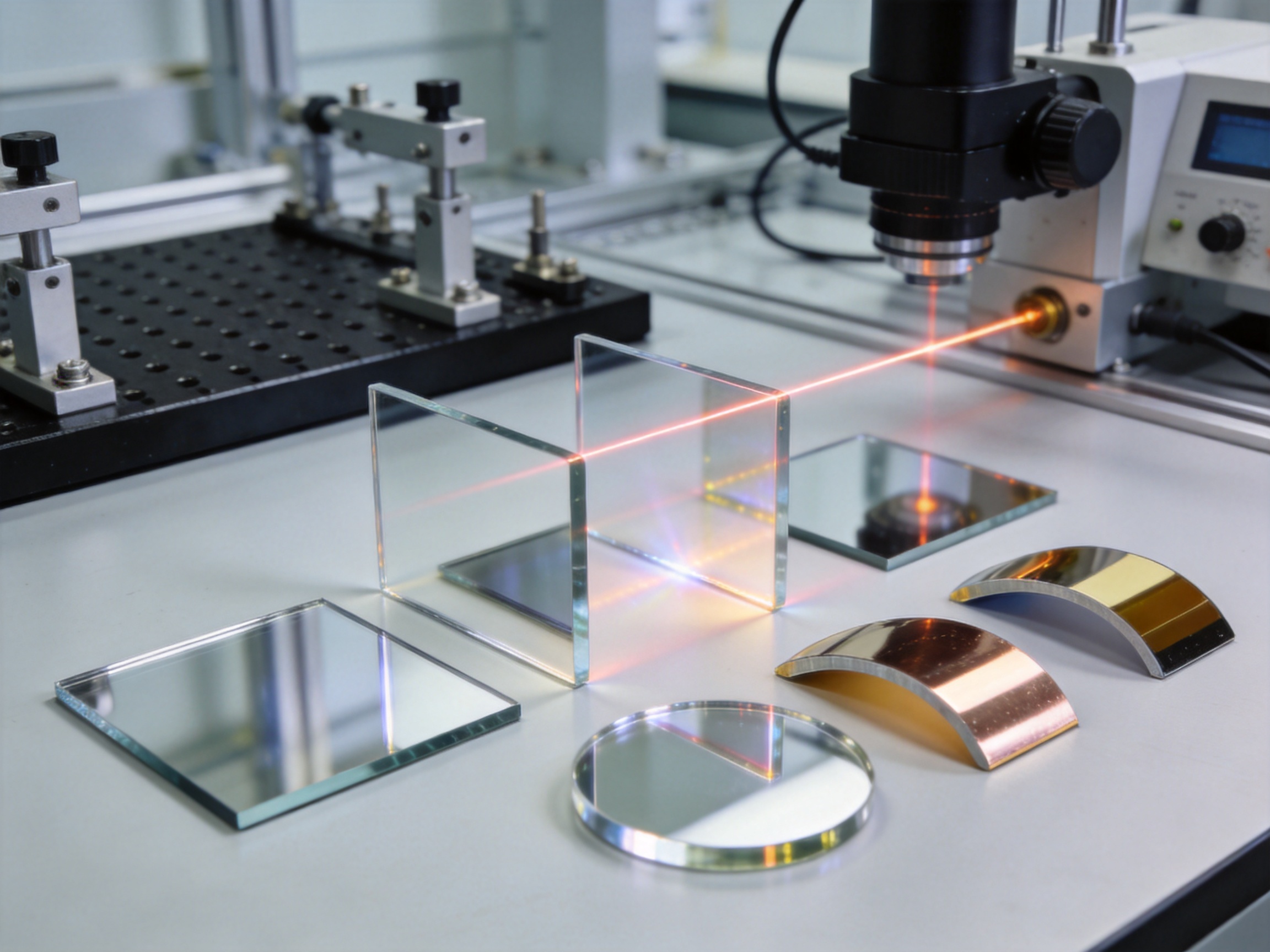
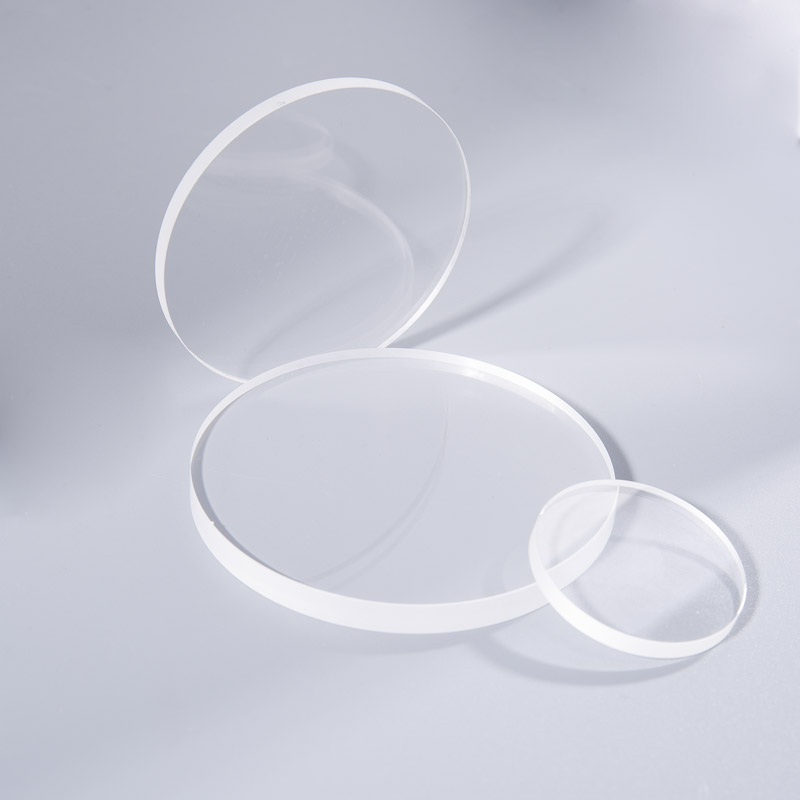
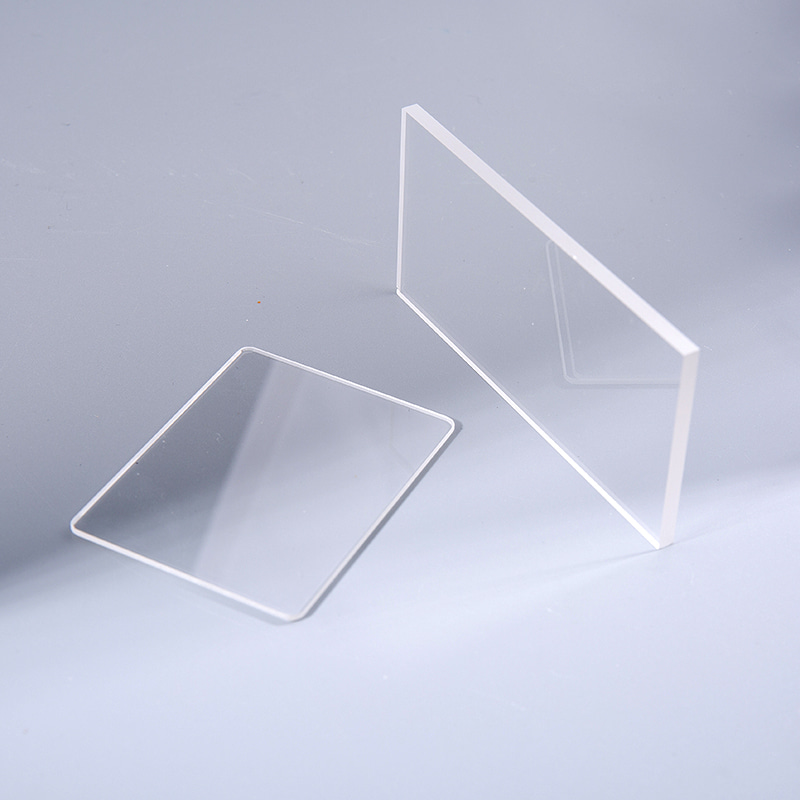
An optical reflector is a component designed to reflect light in a controlled direction while maintaining the optical characteristics required by the system. It may be used to fold an optical path, redirect a laser beam, increase illumination efficiency, support imaging geometry, or create a stable optical reference. Depending on the application, an optical reflector may be flat, spherical, concave, convex, or custom-shaped. It may use metallic coatings, dielectric coatings, enhanced reflective coatings, or protected coating structures.
The function of an optical reflector is not limited to simple reflection. In precision optical systems, the reflector must preserve the wavefront, reduce scatter, maintain high reflectance over a defined wavelength range, resist thermal and humidity stress, and remain dimensionally stable throughout its service life. In laser systems, even slight coating absorption can lead to thermal deformation or damage. In imaging systems, scatter and figure error can reduce contrast and resolution. In automotive optical assemblies, reflectors must withstand vibration, temperature changes, and long-term environmental exposure.
Because of these requirements, the optical reflector has become a highly engineered component. Its value is determined not only by reflectivity but also by the entire set of mechanical, optical, thermal, and environmental specifications. A reliable supplier must be able to understand these requirements and convert them into manufacturable, repeatable, and testable products.
Product Advantages of Precision Optical Reflectors
High-performance optical reflectors offer several important advantages over ordinary reflective components. These advantages are especially significant for customers developing laser modules, optical instruments, semiconductor inspection equipment, automotive optical assemblies, and advanced industrial systems.
High Reflectivity for Efficient Light Management
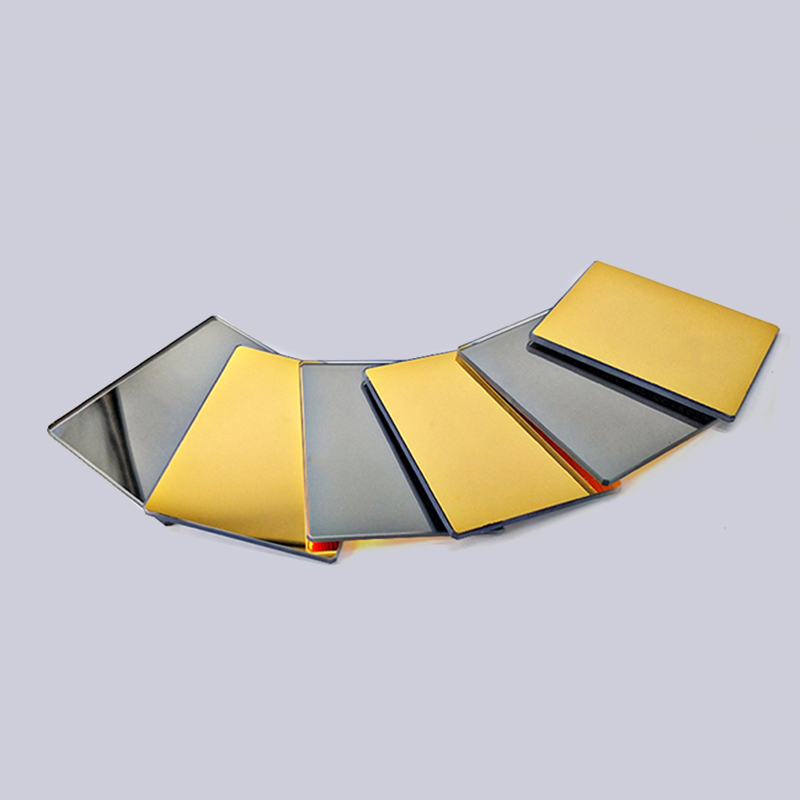
Reflectivity is one of the most visible performance indicators of an optical reflector. A high-reflectivity surface helps reduce optical loss, improve system brightness, enhance laser transmission efficiency, and reduce power demand. Depending on customer requirements, reflectors can be designed for specific wavelength ranges, such as ultraviolet, visible, near-infrared, or infrared bands. Coating selection may include aluminum, silver, gold, or multilayer dielectric structures, each offering different advantages in reflectivity, durability, wavelength response, and cost.
Compared with ordinary mirrors, precision optical reflectors are manufactured to tighter specifications and are coated under controlled conditions. This helps achieve a more stable and uniform reflective surface. For applications that require consistent optical output, this uniformity is essential. It ensures that different batches of components deliver comparable performance, which is particularly important for mass-produced instruments and modules.
Excellent Surface Accuracy and Wavefront Control
Surface accuracy determines how precisely a reflector maintains the intended optical geometry. A flat reflector should maintain flatness, while a spherical reflector should follow its designed curvature. If the surface deviates from specification, the reflected beam may become distorted, leading to reduced focusing accuracy, image degradation, or measurement error.
Precision optical reflectors manufactured with advanced grinding, polishing, and measurement processes can achieve strict surface figure requirements. The result is improved wavefront preservation and better optical system performance. This advantage is especially valuable in laser scanning, interferometry, optical measurement, machine vision, spectroscopy, and high-resolution imaging.
Low Surface Roughness and Reduced Scatter
Surface roughness affects how much light is scattered rather than reflected in the desired direction. Excessive scatter may reduce contrast, increase stray light, lower laser efficiency, and create noise in sensitive detection systems. A highly polished optical reflector can significantly reduce scatter and improve system clarity.
Manufacturing low-roughness surfaces requires optimized polishing processes, careful material selection, clean handling, and precise inspection. Professional optical manufacturers use dedicated polishing methods and metrology tools to maintain surface roughness within defined limits. This gives precision optical reflectors a clear advantage over general-purpose reflective parts.
Customizable Geometry and Coating Design
Modern optical systems often require custom reflectors rather than standard catalog parts. The reflector may need a special diameter, thickness, curvature, aperture, mounting edge, hole, bevel, or coating area. It may also need to meet strict requirements for angle tolerance, parallelism, clear aperture, chamfer, or surface quality.
A strong optical component manufacturer can support custom design from prototype to volume production. This flexibility helps customers shorten development cycles and optimize system structure. Instead of modifying an entire optical system to fit a standard reflector, engineers can obtain a reflector designed specifically for the project.
Reliable Environmental Durability
Optical reflectors used in industrial and automotive environments must survive temperature cycling, humidity, vibration, mechanical stress, and long-term operation. A reflector that performs well in a laboratory but fails under real operating conditions can cause costly system failures.
Durability depends on substrate stability, coating adhesion, edge protection, cleaning quality, and process control. Manufacturers with certified quality systems and mature production experience can provide components with more reliable environmental performance. This is a major advantage for automotive optics, semiconductor systems, outdoor instruments, and industrial laser equipment.
Key Specifications for Optical Reflectors
When selecting an optical reflector, customers typically evaluate several technical specifications. The correct specification depends on the final application, but the following factors are commonly important.
| Specification | Technical Meaning | Why It Matters |
|---|---|---|
| Reflectivity | Percentage of incident light reflected by the coated surface | Improves optical efficiency and reduces power loss |
| Surface Figure | Deviation of the optical surface from the ideal shape | Controls wavefront quality and imaging accuracy |
| Surface Roughness | Microscopic texture of the polished surface | Reduces scatter and improves optical clarity |
| Coating Type | Metallic, dielectric, protected, or enhanced reflective structure | Determines wavelength performance and durability |
| Dimensional Tolerance | Control of diameter, thickness, length, width, and geometry | Ensures mechanical fit and stable alignment |
| Clear Aperture | Usable optical area free from edge effects | Maintains effective light transmission and reflection area |
| Surface Quality | Control of scratches, digs, pits, and visible defects | Improves reliability in imaging and laser applications |
| Environmental Resistance | Ability to withstand temperature, humidity, and mechanical stress | Supports long service life in demanding systems |
A professional supplier helps customers define these specifications according to actual system requirements. Over-specification can increase cost unnecessarily, while under-specification can lead to performance failure. The best approach is to align optical, mechanical, environmental, and commercial needs at the beginning of the project.
Advanced Manufacturing Strengths Behind Reliable Reflectors
The performance of an optical reflector depends heavily on manufacturing capability. Precision optics require a complete process chain that includes material preparation, shaping, grinding, polishing, cleaning, coating, inspection, packaging, and traceability. Each process affects the final product, and each must be controlled carefully.
Material Selection and Substrate Preparation
The substrate is the foundation of the reflector. Common optical substrates may include optical glass, fused silica, borosilicate glass, low-expansion glass, or other specialty materials. The chosen substrate must match the application’s requirements for thermal expansion, transmission properties, hardness, mechanical strength, and cost.
For high-power laser or high-precision imaging applications, substrate quality is especially important. Internal defects, bubbles, inclusions, or stress can affect optical performance and long-term stability. Before processing, material is selected and inspected according to relevant standards. Proper substrate preparation reduces the risk of later defects and improves consistency in production.
Cutting, Shaping, and Dimensional Processing
After material selection, the substrate is cut and shaped according to the required geometry. This stage may involve slicing, edging, drilling, chamfering, and rough shaping. Dimensional accuracy is important because optical components must fit precisely within mechanical assemblies. Poor control at this stage may create mounting stress, alignment error, or increased scrap during later processing.
Experienced manufacturers use controlled machining methods to produce accurate dimensions while minimizing subsurface damage. This is particularly important for optical components that will undergo high-precision polishing. If subsurface cracks remain after rough processing, they may lead to surface defects, weak edges, or reduced component reliability.
Grinding for Surface Geometry
Grinding is used to create the approximate optical shape and prepare the surface for polishing. For flat reflectors, the goal is controlled flatness and parallelism. For spherical reflectors, the process must generate the required radius of curvature. Grinding parameters must be selected carefully to balance efficiency and surface integrity.
Advanced grinding capability allows the manufacturer to control shape accuracy before polishing. This reduces the amount of correction needed later and improves production efficiency. In competitive markets, the ability to maintain stable geometry across batches is an important advantage.
Precision Polishing for Optical Quality
Polishing transforms the ground surface into a high-quality optical surface. It removes subsurface damage, reduces roughness, improves surface figure, and prepares the reflector for coating. Polishing is one of the most critical steps in optical reflector manufacturing.
The quality of polishing depends on equipment stability, tooling design, polishing compounds, process time, operator skill, and environmental control. Professional optical manufacturers rely on experienced technicians and refined process parameters to achieve repeatable results. For precision reflectors, the polishing process may include multiple correction steps and inspections to meet strict surface accuracy requirements.
Changzhou Haolilai Photo-Electricity Scientific and Technical Co., Ltd. has built its manufacturing capability around precision optical processing. With decades of experience, the company supports the production of optical flat mirrors, wafers, automotive interior glass structural components, optical prisms, optical spherical mirrors, optical lenses, optical reflectors, and other optical components. This broad production foundation enables the company to apply knowledge from multiple optical fields to the development of reliable reflector products.
Cleaning and Surface Preparation Before Coating
Even a perfectly polished surface can fail if it is not properly cleaned before coating. Dust, oil, polishing residue, moisture, or microscopic contamination may reduce coating adhesion, create pinholes, or produce visible defects. Clean handling and surface preparation are therefore essential.
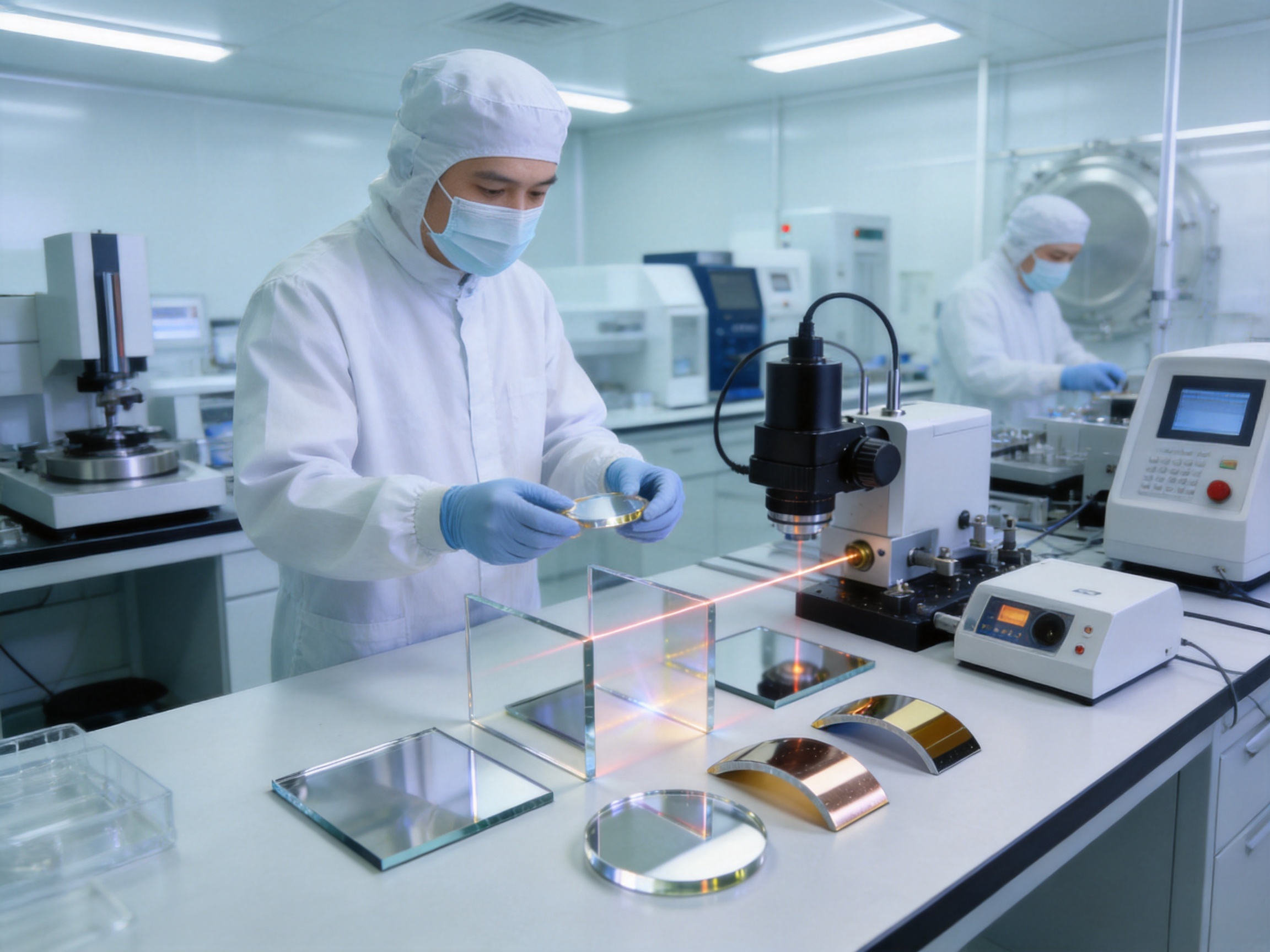
Professional optical manufacturing uses controlled cleaning procedures before coating. Components may undergo ultrasonic cleaning, rinsing, drying, and inspection. Cleanroom or clean-area conditions help reduce contamination risk. Proper preparation improves coating stability and reduces the probability of premature coating failure.
Coating Technology for Optical Performance
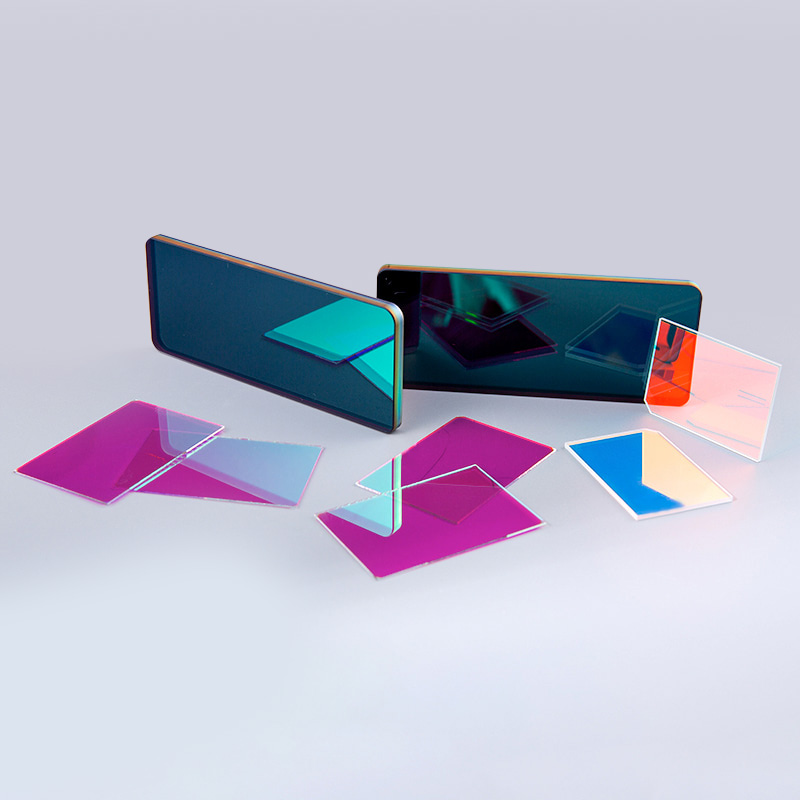
The coating determines much of the reflector’s optical behavior. Different coatings are used for different wavelengths, environments, and performance goals. Metallic coatings can provide broad spectral reflectance, while dielectric coatings can deliver very high reflectivity in selected wavelength bands. Protected coatings add durability by shielding the reflective layer from oxidation, abrasion, or environmental exposure.
Coating design is a technical discipline that requires understanding optical interference, material properties, deposition control, and environmental reliability. A well-designed coating must meet reflectivity targets, maintain uniformity, adhere strongly to the substrate, and resist environmental degradation. In laser applications, coating absorption and laser damage threshold are also important.
Advanced coating capability provides an important competitive advantage. Customers increasingly expect reflectors that are optimized for exact working wavelengths and operating conditions. A supplier that can provide customized coating solutions helps customers improve system performance while reducing design compromise.
Inspection and Quality Control
Inspection is not a final formality; it is a core part of precision optical manufacturing. Optical reflectors may be inspected for dimensions, surface figure, surface quality, coating appearance, reflectivity, radius of curvature, flatness, parallelism, and environmental reliability. Appropriate instruments may include interferometers, profilometers, spectrophotometers, microscopes, coordinate measuring systems, and dedicated optical test setups.
Quality control also includes process documentation and traceability. For industrial and automotive customers, traceability helps identify production conditions, material batches, inspection records, and corrective actions. This level of control supports stable supply and reduces risk in high-volume projects.
The company has obtained certifications including ISO9001:2015, ISO14001:2015, and IATF16949. These certifications reflect a commitment to quality management, environmental management, and automotive industry quality requirements. For customers purchasing optical reflectors for demanding applications, certified systems provide additional confidence in process discipline and consistency.
Competitive Advantages Over Ordinary Suppliers
The optical component market includes many suppliers, but not all manufacturers can meet the same level of precision, consistency, and project support. Precision optical reflectors from an experienced manufacturer offer several competitive advantages over ordinary alternatives.
Integrated Optical Manufacturing Capability
Some suppliers only perform limited processing steps or depend heavily on outsourced operations. This may create challenges in quality control, lead time, communication, and technical problem solving. An integrated manufacturer with broad in-house capabilities can control more of the production chain and respond more effectively to customer requirements.
Changzhou Haolilai Photo-Electricity Scientific and Technical Co., Ltd. develops and produces a wide range of precision optical components, including mirrors, lenses, prisms, wafers, spherical mirrors, automotive glass structural components, and reflectors. This integrated optical manufacturing background allows the company to manage complex requirements and support customers across multiple industries.
Experience Since 1998
Long-term experience matters in precision optics. Manufacturing challenges are often subtle, and effective solutions are developed through years of process refinement. Since its founding in 1998, the company has accumulated technical knowledge in optical materials, processing methods, coating requirements, inspection systems, and customer application support.
This experience helps reduce development risk for customers. When a project requires custom reflector specifications, an experienced manufacturer can identify possible manufacturing challenges early, recommend practical tolerances, and provide solutions that balance performance and cost.
Strong Technical Research Foundation
The company has established the Jiangsu Precision Optical Lens Engineering Technology Center and Jiangsu Enterprise Technology Research Center. It has also obtained multiple invention patents, utility model patents, and high-tech product recognitions. This technical foundation supports continuous improvement and product innovation.
For optical reflectors, research capability is important because customer requirements continue to evolve. Laser systems demand higher power handling. Automotive optics require better durability. Semiconductor optics require cleaner surfaces and more stable precision. Consumer optics require cost-effective mass production. A manufacturer with active engineering capability can respond to these changing needs more effectively than a supplier focused only on basic processing.
Certified Quality and Automotive-Grade Discipline
IATF16949 certification is especially relevant for customers in automotive and other high-reliability industries. Automotive optical components require stable quality, risk management, documentation, and process consistency. Even when an optical reflector is used outside the automotive field, automotive-grade quality discipline can benefit customers by improving production control and reliability.
ISO9001:2015 supports general quality management, while ISO14001:2015 reflects environmental management. Together, these systems demonstrate the company’s commitment to structured manufacturing and responsible operation. Customers seeking long-term suppliers often value this combination of technical and management strength.
Export Experience and International Service
The company exports to more than 20 countries, giving it experience with international customer expectations, documentation, packaging, logistics, and technical communication. For global buyers, export experience is important because precision optical components must be delivered safely and consistently. Proper packaging is essential to prevent scratches, contamination, coating damage, or edge chips during transportation.
International customers also benefit from a supplier that understands different application standards and can communicate effectively about technical requirements. This helps improve project efficiency and reduce misunderstandings.
Applications of Optical Reflectors
Optical reflectors serve a wide range of industries. Their design and specifications vary according to application, but their core purpose remains the same: controlled, efficient, and reliable reflection of light.
Laser Optics
Laser systems require reflectors with high reflectivity, stable coating performance, low absorption, and excellent surface accuracy. Reflectors may be used in beam delivery systems, laser marking machines, medical laser devices, laser cutting equipment, scanning modules, and scientific instruments.
In laser applications, coating quality is extremely important. Absorbed laser energy can generate heat, causing coating degradation or surface deformation. Precision manufacturing and coating control help maintain beam quality and extend service life. For customers developing laser equipment, a high-quality optical reflector can improve efficiency and reduce maintenance requirements.
Automotive Optics
Modern vehicles increasingly rely on optical components for displays, sensors, lighting, interior systems, cameras, and advanced driver assistance technologies. Reflectors used in automotive environments must withstand vibration, temperature cycling, humidity, and long operating life. They must also meet strict dimensional and appearance requirements.
The company’s experience with automotive interior glass structural components and IATF16949 certification provides a strong foundation for automotive optical reflector projects. Automotive customers often require stable mass production, quality traceability, and strong process control. These strengths help support reliable optical solutions for vehicle applications.
Semiconductor Optics
Semiconductor manufacturing and inspection systems require extremely precise optical components. Reflectors may be used in lithography-related systems, inspection tools, alignment instruments, metrology equipment, and wafer processing systems. These applications often require low contamination, high surface quality, and strict dimensional control.
Because semiconductor systems are highly sensitive, even small optical defects can affect measurement accuracy or process stability. Precision reflectors designed for semiconductor optics must be manufactured with careful control of surface figure, cleanliness, coating quality, and inspection documentation.
Consumer Optics
Consumer optical products include imaging devices, projection systems, sensors, smart devices, and entertainment equipment. These markets often require a balance between performance, cost, compact size, and production volume. Optical reflectors used in consumer products must be reliable, repeatable, and manufacturable at scale.
A manufacturer with experience in both precision optics and mass production can help consumer optics customers achieve a practical balance between specification and cost. Custom reflector design may help reduce product size, improve optical efficiency, and support attractive product performance.
Industrial Imaging and Machine Vision
Machine vision systems rely on stable illumination and accurate imaging geometry. Reflectors may be used to direct light, create compact optical paths, or support special inspection angles. Poor reflector quality can introduce stray light, uneven illumination, or image distortion.
Precision reflectors with low scatter and stable surface accuracy help improve inspection reliability. This is valuable in electronics manufacturing, automotive inspection, pharmaceutical packaging, food processing, and automated quality control.
Scientific and Laboratory Instruments
Laboratory instruments such as spectrometers, interferometers, optical benches, microscopes, and measurement devices require reliable reflective components. Researchers and instrument builders often need custom sizes, coatings, and performance specifications. Precision optical reflectors help maintain measurement repeatability and experimental accuracy.
Design Considerations for Custom Optical Reflectors
Custom optical reflector projects should begin with a clear understanding of system requirements. Important design questions include the operating wavelength, incident angle, required reflectivity, beam size, power density, environmental conditions, mounting method, allowable wavefront error, and budget target.
Wavelength and Incident Angle
Reflective coating performance depends on wavelength and incident angle. A coating optimized for one wavelength band may not perform equally well in another. Similarly, reflectivity can change with angle of incidence and polarization. Customers should provide working wavelength, angle range, and polarization conditions whenever possible.
Power Density and Thermal Load
For laser reflectors, power density is critical. High optical power can heat the coating and substrate. The reflector must be designed to minimize absorption and maintain thermal stability. Substrate material, coating design, surface quality, and mounting method all influence thermal performance.
Mechanical Mounting Requirements
Even a high-quality reflector can perform poorly if mounted incorrectly. Mechanical stress may deform the optical surface, and poor alignment may reduce system performance. Custom edge features, bevels, flats, holes, or mounting surfaces may be needed to integrate the reflector into a mechanical assembly.
Environmental Conditions
Temperature, humidity, dust, chemicals, vibration, and cleaning methods should be considered early. A reflector used in a sealed laboratory instrument has different requirements from one used in an automotive or industrial environment. Coating selection and edge protection should match the expected operating conditions.
Prototype and Volume Production Strategy
Customers developing new optical systems often start with prototypes and then move to pilot and volume production. A capable manufacturer can support each stage. During prototyping, engineering feedback helps refine specifications. During volume production, process control and inspection planning ensure stable output.
Manufacturing Process Flow for Precision Optical Reflectors
The manufacturing process for precision optical reflectors can be summarized as a sequence of controlled steps. Each step contributes to final performance.
| Process Stage | Main Activity | Quality Focus |
|---|---|---|
| Requirement Review | Analyze drawings, specifications, application conditions, and coating needs | Confirm manufacturability and avoid specification conflicts |
| Material Selection | Choose optical substrate according to optical, mechanical, and thermal needs | Ensure stable base material and reduce internal defects |
| Cutting and Shaping | Prepare blank size, edge form, and rough geometry | Control dimensions and prevent excessive subsurface damage |
| Grinding | Generate flat or curved optical surface | Control surface shape and prepare for polishing |
| Polishing | Achieve required surface figure and roughness | Improve wavefront quality and reduce scatter |
| Cleaning | Remove contamination before coating | Protect coating adhesion and optical appearance |
| Coating | Apply reflective coating according to wavelength and durability needs | Achieve reflectivity, uniformity, and environmental stability |
| Inspection | Measure optical, mechanical, and cosmetic specifications | Confirm compliance with customer requirements |
| Packaging | Protect surfaces during storage and shipment | Prevent scratches, contamination, and transport damage |
This structured process helps ensure that optical reflectors meet both performance and reliability requirements. It also allows the manufacturer to identify potential issues early and maintain stable quality during production.
Why Manufacturing Discipline Matters
In precision optics, quality cannot be added at the end. It must be built into every manufacturing step. A final inspection may detect defects, but it cannot repair a poor process. Therefore, manufacturing discipline is one of the strongest indicators of supplier reliability.
Disciplined manufacturing includes controlled work instructions, trained personnel, calibrated equipment, stable environments, documented inspection methods, and corrective action systems. It also includes communication between engineering, production, quality, and customer service teams. When these elements work together, the result is a product that performs consistently from prototype through mass production.
For optical reflectors, consistency is especially important because they are often integrated into larger systems. If reflector performance varies from batch to batch, the customer may need to adjust alignment, recalibrate instruments, or reject assemblies. Stable manufacturing reduces these hidden costs and supports smoother production.
Company Strengths Supporting Optical Reflector Production
Changzhou Haolilai Photo-Electricity Scientific and Technical Co., Ltd. offers several strengths that support optical reflector manufacturing. The company’s foundation in precision optical components, broad product capability, quality certifications, research platforms, patent portfolio, and international customer base create a strong basis for reliable supply.
The company operates in the national-level High-tech Development District of Changzhou, Jiangsu, China. Its facility covers 35,000 square meters, providing space for optical processing, inspection, management, and production support. With more than 300 employees, the company has the scale to support both specialized custom projects and larger production requirements.
Its certifications, including ISO9001:2015, ISO14001:2015, and IATF16949, show that quality and environmental management are part of its operating system. For customers in automotive, laser, semiconductor, and industrial optics, these certifications are meaningful because they demonstrate process control and a commitment to continuous improvement.
The company’s technical resources include experienced engineers, technology research centers, and patent achievements. These strengths support product development, process improvement, and problem solving. For optical reflector customers, this means the manufacturer can provide more than simple production; it can also contribute technical insight during design and optimization.
Advantages for Wholesale and OEM Customers
Many customers looking for optical reflectors are original equipment manufacturers, system integrators, or wholesale buyers. These customers need not only good components but also dependable supply. A supplier’s ability to support customization, production planning, documentation, packaging, and communication is often as important as the optical specification itself.
Customization Support
OEM projects often require reflectors tailored to specific product designs. Custom sizes, shapes, coatings, and tolerances may be needed. A capable manufacturer can evaluate drawings, provide manufacturability feedback, and produce samples for verification. This helps customers avoid design delays and reduce the need for repeated modifications.
Stable Batch Production
Wholesale and OEM buyers need consistent quality across production batches. Stable manufacturing processes, documented inspection, and traceability help ensure repeatability. This reduces incoming inspection pressure and supports smooth assembly operations.
Cost-Effective Engineering
Precision does not always mean the tightest possible tolerance. A good supplier helps customers select practical specifications that meet performance requirements without unnecessary cost. For example, a reflector used in a general illumination path may not require the same surface figure as a reflector used in an interferometer. Engineering guidance can reduce cost while preserving system performance.
Reliable Delivery and Packaging
Optical components are sensitive to scratches, contamination, and coating damage. Proper packaging is essential for transportation and storage. An experienced exporter understands how to protect optical reflectors during shipment and how to meet international customer expectations for labeling, documentation, and handling.
Comparison with Common Reflective Alternatives
Customers sometimes compare precision optical reflectors with ordinary mirrors, stamped reflective parts, plastic reflectors, or low-cost coated substrates. While these alternatives may be suitable for basic applications, they often cannot meet the demands of precision optical systems.
Ordinary mirrors may have insufficient surface accuracy, higher scatter, less controlled coating quality, and lower environmental reliability. Plastic reflectors may offer lightweight and low cost, but they may lack thermal stability, scratch resistance, and high-precision surface quality. Stamped reflectors may be useful in illumination systems but may not preserve wavefront quality for laser or imaging applications.
Precision optical reflectors provide advantages in optical accuracy, coating control, environmental durability, and customization. They are the preferred choice when system performance depends on reliable light control.
| Option | Strength | Limitation | Best Use |
|---|---|---|---|
| Precision Optical Reflector | High accuracy, custom coating, low scatter, stable performance | Requires professional manufacturing and specification control | Laser, imaging, semiconductor, automotive, measurement systems |
| Ordinary Mirror | Low cost and easy availability | Limited surface accuracy and coating consistency | Non-critical reflection and general visual use |
| Plastic Reflector | Lightweight and economical | Lower thermal stability and surface durability | Basic illumination or low-precision consumer products |
| Stamped Reflective Part | High-volume forming potential | Limited optical precision | General lighting and non-imaging applications |
Quality Assurance from Prototype to Mass Production
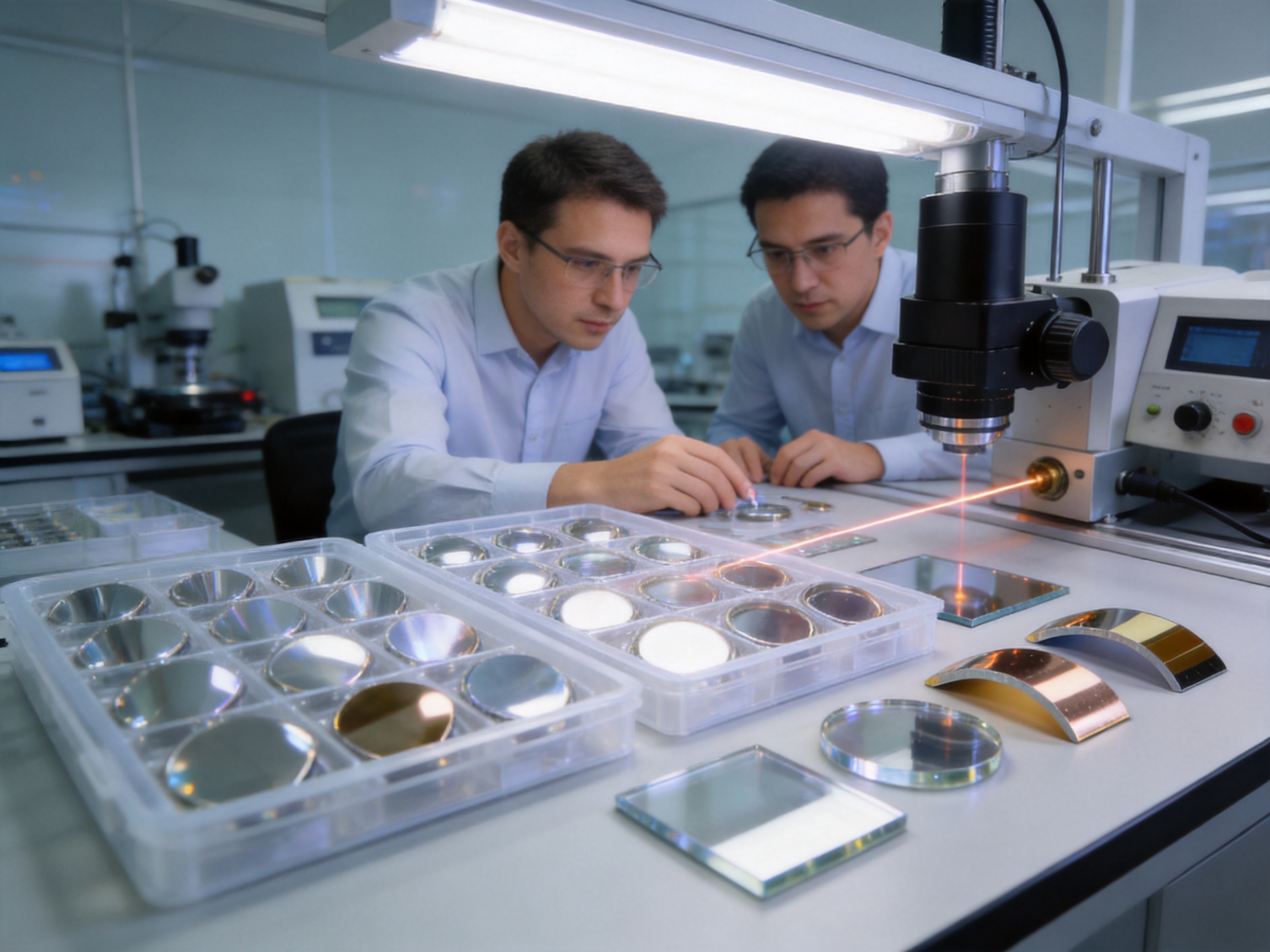
Quality assurance for optical reflectors begins before manufacturing starts. A detailed requirement review helps clarify specifications and identify potential risks. Engineering teams may evaluate whether the requested tolerance is practical, whether the coating matches the wavelength and environment, and whether the mechanical design may create stress or alignment issues.
During prototype production, inspection data provides feedback for design validation. If necessary, the reflector specification can be adjusted before mass production. This stage is valuable because it helps customers confirm optical performance and mechanical integration.
During mass production, process consistency becomes the primary focus. The manufacturer must maintain stable material supply, equipment condition, operator training, inspection methods, and packaging quality. Statistical process control, batch records, and quality documentation may be used to ensure repeatability.
For customers in automotive and high-reliability industries, quality assurance may also include production part approval processes, failure mode analysis, control plans, and additional environmental testing. The company’s IATF16949 certification provides a strong foundation for these requirements.
Environmental and Long-Term Reliability
Long-term reliability is a critical factor in optical reflector selection. A reflector may pass initial inspection but still fail after exposure to humidity, temperature changes, cleaning, vibration, or high optical power. Reliable reflectors must be designed and manufactured for the real operating environment.
Environmental reliability may be improved through appropriate substrate selection, coating protection, edge finishing, clean processing, and stable packaging. For example, a protected metallic coating may be selected when oxidation resistance is needed. A dielectric coating may be selected when high reflectivity at a narrow wavelength band is more important. Edge treatment may reduce chipping and contamination risk.
In automotive applications, reflectors may need to withstand thermal cycling and vibration. In semiconductor systems, cleanliness and coating stability may be more important. In laser systems, low absorption and damage resistance are critical. A manufacturer with experience across multiple industries can recommend suitable solutions for each case.
How Optical Reflectors Improve System Performance
A precision optical reflector can improve system performance in several measurable ways. It can increase optical throughput by reflecting more light toward the intended path. It can preserve beam shape by maintaining surface accuracy. It can reduce stray light by minimizing scatter. It can improve alignment stability through precise dimensions. It can extend system life through durable coating and stable material selection.
These improvements may translate into practical benefits for the customer. A laser system may operate more efficiently. A camera or imaging instrument may deliver better contrast. A semiconductor inspection tool may achieve more reliable measurement. An automotive optical assembly may maintain performance over long-term use. A consumer device may achieve better brightness or compactness.
In many systems, the optical reflector is a small component but a major contributor to overall performance. Investing in a high-quality reflector can reduce system-level problems and improve customer satisfaction.
Procurement Guidance for Buyers
When purchasing optical reflectors, buyers should provide as much technical information as possible. This helps the manufacturer propose the correct solution and avoid unnecessary delays.
Useful information includes drawing or 3D model, material preference, dimensions, tolerances, surface figure requirement, surface quality requirement, coating type, wavelength range, angle of incidence, reflectivity target, environmental conditions, quantity, inspection requirements, and packaging needs.
If the buyer is unsure about specifications, application information can help the manufacturer recommend suitable options. For example, a customer may know the operating wavelength and beam diameter but not the exact surface figure requirement. In this case, the manufacturer can provide guidance based on similar applications.
Buyers should also consider supplier qualifications. Important factors include manufacturing experience, quality certifications, inspection capability, customization support, export experience, and technical communication. A lower unit price may not be the best value if it leads to inconsistent quality, delayed delivery, or system performance problems.
Future Trends in Optical Reflector Technology
The demand for high-performance optical reflectors is expected to grow as photonic systems become more advanced. Several trends are shaping the market.
First, laser applications continue to expand in manufacturing, medicine, communication, sensing, and scientific research. These systems require reflectors with higher damage thresholds, lower absorption, and more precise coatings.
Second, automotive optics are becoming more complex. Advanced lighting, displays, sensors, and driver assistance systems require reliable optical components that can survive harsh environments. This creates demand for suppliers with automotive-grade quality systems.
Third, semiconductor manufacturing requires increasingly precise optical systems. Inspection and metrology tools need clean, stable, and highly accurate reflectors.
Fourth, consumer electronics continue to demand compact, efficient, and cost-effective optical assemblies. Custom reflectors can help reduce system size and improve performance.
Finally, customers increasingly value integrated engineering support. They need suppliers who can assist from design through mass production, not merely sell standard parts. Manufacturers with strong technical teams, research centers, and certified processes will be well positioned in this evolving market.
Q&A: Common Questions About Precision Optical Reflectors
What is an optical reflector used for?
An optical reflector is used to redirect, fold, or control light in an optical system. It may be used in laser equipment, imaging systems, automotive optical assemblies, semiconductor tools, measurement instruments, illumination systems, and consumer optical products.
How is a precision optical reflector different from an ordinary mirror?
A precision optical reflector is manufactured with tighter control of surface accuracy, roughness, coating quality, dimensional tolerance, and environmental reliability. Ordinary mirrors may be suitable for basic reflection, but they usually cannot meet the wavefront, scatter, and coating requirements of high-performance optical systems.
Which coating should be selected for an optical reflector?
The correct coating depends on wavelength range, angle of incidence, reflectivity target, laser power, environmental conditions, and durability requirements. Metallic coatings are often useful for broad spectral reflection, while dielectric coatings can provide very high reflectivity in selected wavelength bands.
Can optical reflectors be customized?
Yes. Precision optical reflectors can be customized by size, shape, substrate material, surface figure, curvature, coating type, clear aperture, surface quality, and mounting features. Customization is often necessary for OEM systems and advanced optical instruments.
Why is surface figure important?
Surface figure controls how accurately the reflector preserves the shape of the reflected wavefront. Poor surface figure can distort beams, reduce imaging quality, and create measurement errors. High surface accuracy is especially important in laser, imaging, and metrology applications.
Why is surface roughness important?
Surface roughness affects scatter. A rough surface scatters more light, reducing efficiency and increasing stray light. Low roughness improves contrast, beam quality, and optical clarity.
What information should be provided when requesting a quotation?
Buyers should provide drawings, dimensions, material requirements, coating specifications, wavelength range, incident angle, surface figure, surface quality, quantity, environmental conditions, and inspection requirements. If exact specifications are not known, application details can help the manufacturer recommend a suitable solution.
Why choose a certified optical component manufacturer?
A certified manufacturer follows structured quality and process management systems. Certifications such as ISO9001:2015, ISO14001:2015, and IATF16949 indicate disciplined quality control, environmental management, and automotive-grade manufacturing capability. This reduces supply risk and improves consistency.
Are optical reflectors suitable for automotive applications?
Yes, when designed and manufactured for automotive conditions. Automotive optical reflectors must withstand vibration, temperature changes, humidity, and long-term use. Manufacturing experience and IATF16949 quality discipline are valuable for these projects.
How do precision reflectors support laser systems?
They improve beam control, reduce optical loss, preserve wavefront quality, and support stable laser delivery. Coating design is especially important in laser applications because absorption and thermal effects can affect performance and lifetime.
Conclusion
Optical reflectors are critical components in high-performance photonic systems. Their value lies not only in reflecting light but in doing so with accuracy, efficiency, stability, and repeatability. In applications such as laser optics, automotive optics, semiconductor systems, industrial imaging, and scientific instruments, the quality of the reflector can directly influence system performance and reliability.
Precision optical reflectors offer clear advantages over ordinary reflective alternatives. They provide better surface accuracy, lower scatter, optimized coating performance, stronger environmental reliability, and greater customization flexibility. These advantages help customers improve optical efficiency, reduce system errors, extend product life, and achieve more stable production results.
Changzhou Haolilai Photo-Electricity Scientific and Technical Co., Ltd. combines decades of optical manufacturing experience, a broad precision component product base, certified quality systems, research and engineering capabilities, and international supply experience. Founded in 1998, the company has developed into a professional manufacturer serving laser optics, automotive optics, semiconductor optics, consumer optics, and other precision optical fields. Its strengths in manufacturing discipline, technical support, and quality management make it a valuable partner for customers seeking reliable optical reflectors and related optical components.
For buyers and engineers, selecting the right optical reflector supplier is a strategic decision. A professional manufacturer can help define practical specifications, support customization, control production quality, and deliver components that meet real application demands. As optical systems continue to become more advanced, the role of precision optical reflectors will only become more important.
References
Hecht, E. Optics. Pearson Education.
Malacara, D. Optical Shop Testing. Wiley.
MacLeod, H. A. Thin-Film Optical Filters. CRC Press.
Smith, W. J. Modern Optical Engineering. McGraw-Hill Education.
ISO 9001:2015 Quality Management Systems Requirements.
ISO 14001:2015 Environmental Management Systems Requirements.
IATF 16949 Automotive Quality Management System Standard.
Schroeder, D. J. Astronomical Optics. Academic Press.







 苏公网安备32041102000130号