
 Search
 en
en English
 日本語
日本語 русский
 Español
 Deutsch
 中文简体
中文简体Content
- 1 Understanding the Role of an Optical Reflector
- 2 Core Advantages of the Optical Reflector
- 3 Comparison with Ordinary Reflectors
- 4 Advanced Manufacturing Processes
- 5 Company Strengths Supporting the Product
- 6 Applications of Precision Optical Reflectors
- 7 Design Considerations for Selecting an Optical Reflector
- 8 Why Manufacturing Control Creates Competitive Value
- 9 Quality Assurance and Reliability
- 10 Customization and Engineering Cooperation
- 11 Optical Reflectors in System-Level Performance
- 12 Sustainability and Responsible Manufacturing
- 13 Purchasing Considerations for Wholesale and OEM Customers
- 14 Q&A: Common Questions About Precision Optical Reflectors
- 14.1 What is an optical reflector?
- 14.2 How is a precision optical reflector different from an ordinary mirror?
- 14.3 What applications can use this optical reflector?
- 14.4 Can the reflector be customized?
- 14.5 Why is coating quality important?
- 14.6 What information should be provided for a custom quotation?
- 14.7 Why choose a manufacturer with ISO9001, ISO14001, and IATF16949 certifications?
- 14.8 Can the same manufacturer supply other optical components?
- 15 Conclusion
- 16 References
- 17 Product: Optical Reflector
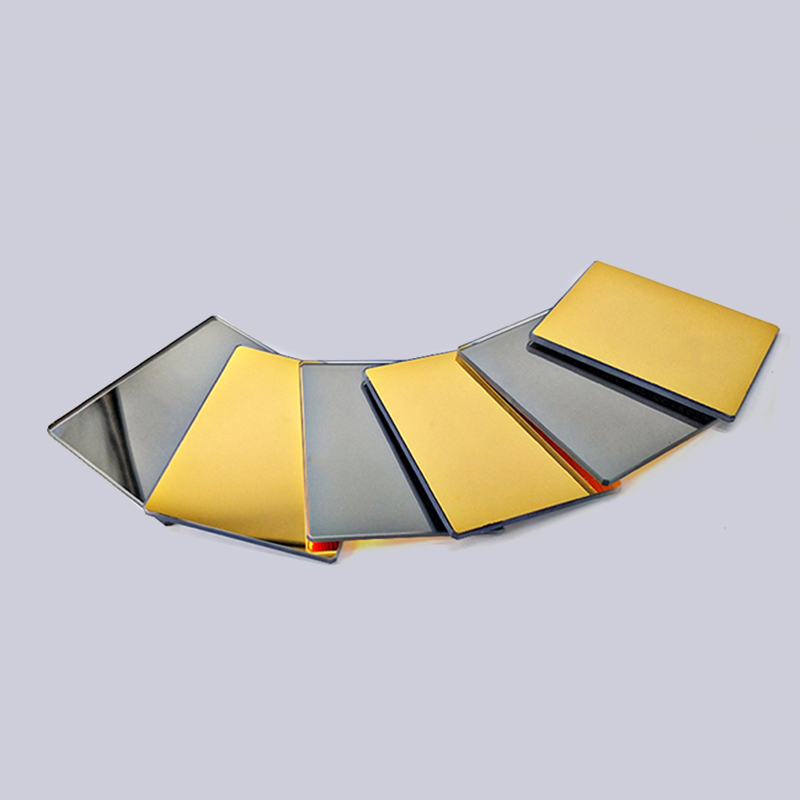
Modern optical systems depend on the ability to guide, shape, split, collect, and redirect light with repeatable accuracy. Among the many precision optical components used in laser equipment, automotive sensing, semiconductor tools, medical instruments, consumer electronics, and scientific devices, the optical reflector plays a particularly important role. It is not merely a mirror-like part; it is a carefully engineered optical component designed to deliver controlled reflection, low distortion, stable performance, and dependable integration within demanding assemblies.
An optical reflector may appear simple from the outside, but its real value is created through material selection, surface generation, polishing, coating, inspection, and process control. The quality of a reflector determines whether an optical path remains aligned, whether laser energy is transmitted efficiently, whether an imaging system maintains contrast, and whether a sensing module can perform accurately over time. For customers who require reliable optical performance, choosing the right reflector manufacturer is as important as choosing the correct optical design.
Changzhou Haolilai Photo-Electricity Scientific and Technical Co., Ltd. manufactures precision optical components with a strong focus on optical reflectors, optical flat mirrors, optical spherical mirrors, optical prisms, optical lenses, wafers, automotive interior glass structural components, and customized optical products. Founded in 1998 and located in Changzhou, Jiangsu, China, the company has developed into a professional optical component manufacturer with advanced processing capability, strict quality management, and extensive experience in laser optics, automotive optics, semiconductor optics, and consumer optics.
The optical reflector introduced here is designed for customers seeking stable reflection, precise geometry, consistent coating quality, and scalable manufacturing. It supports applications where optical efficiency, environmental durability, and dimensional accuracy are essential. Compared with many ordinary reflectors on the market, this product benefits from a manufacturing system built around precision grinding, fine polishing, coating control, metrology, and certified quality management.

Understanding the Role of an Optical Reflector
An optical reflector is a component that redirects light by reflection. Depending on the design, it may be flat, curved, spherical, aspherical, concave, convex, or specially shaped. It may be used to fold an optical path, focus reflected energy, expand or compress a beam path, increase optical efficiency, or protect sensitive systems by directing unwanted light away from critical areas. In many products, the reflector is a hidden component, but its effect is visible in the final performance of the system.
In laser optics, reflectors are often used to guide a beam with minimal loss and high directional stability. A small error in surface flatness, angle, or coating uniformity can influence beam pointing, power transmission, and energy distribution. In semiconductor equipment, reflectors may be used in inspection, exposure, alignment, or sensing systems where precision and cleanliness are required. In automotive optical systems, reflectors contribute to interior sensing, lighting, display, and driver-assistance modules, where durability and consistency under changing temperature conditions are important. In consumer optics, reflectors support compact designs by folding optical paths inside limited spaces.
The performance of an optical reflector is not defined by reflectivity alone. Reflectivity is important, but the full evaluation must include surface accuracy, scratch-dig quality, coating adhesion, substrate quality, thermal stability, dimensional tolerance, edge quality, cleanliness, and compatibility with the customer's assembly process. A reflector that has high reflectivity but poor flatness may distort the optical wavefront. A part with accurate geometry but weak coating adhesion may fail in long-term use. A component that performs well in laboratory conditions but lacks production consistency may increase the cost of downstream assembly.
For this reason, a precision optical reflector should be regarded as an engineered optical component. Its production should be controlled from the incoming material stage through final inspection, packaging, and shipment. The combination of design interpretation, process planning, equipment capability, and quality assurance determines whether each production batch can meet the customer's requirements.
Core Advantages of the Optical Reflector
The optical reflector produced by Changzhou Haolilai Photo-Electricity Scientific and Technical Co., Ltd. offers multiple advantages for customers who need reliable optical components at wholesale or customized manufacturing scale. These advantages are not limited to the product itself; they are supported by the company's production experience, certified management systems, technical team, and ability to manufacture a wide range of related optical components.
High Optical Precision
Precision reflection begins with the substrate surface. Surface flatness, surface figure, and angular accuracy directly influence the reflected beam. Through controlled grinding and polishing processes, the reflector can be produced to meet demanding optical specifications. High optical precision reduces wavefront error, improves beam stability, and supports accurate system alignment.
In comparison with lower-grade reflectors that may be suitable only for basic illumination or non-critical applications, a precision optical reflector is intended for systems where optical path quality matters. It can help reduce the need for repeated alignment, improve product consistency, and support higher system performance. Customers developing laser devices, optical instruments, sensors, inspection equipment, or compact optical modules can benefit from a reflector with stable optical geometry.
Excellent Reflective Coating Performance
The coating is the functional surface of many optical reflectors. Depending on the application, coatings may be designed for high reflectivity, wavelength selectivity, broadband reflection, enhanced durability, or environmental resistance. Coating quality must be uniform across the working surface and must adhere strongly to the substrate.
A reflector made with controlled coating processes offers better repeatability than a basic mirror product. Good coating uniformity contributes to predictable optical performance, while reliable adhesion reduces the risk of peeling, cracking, or degradation during use. For systems exposed to temperature variation, humidity, cleaning, or mechanical handling, coating durability is a major factor in long-term reliability.
Stable Dimensional Accuracy
Optical assemblies often require extremely precise mechanical fit. A reflector may need to be bonded, clamped, inserted into a holder, aligned against a reference surface, or integrated into a compact module. If the mechanical dimensions vary too much, assembly time increases and optical alignment becomes more difficult.
The company's optical reflector manufacturing approach emphasizes both optical and mechanical precision. Dimensional control supports stable assembly, reduces scrap, and helps customers improve production efficiency. This is particularly important for high-volume applications such as automotive optics and consumer optical modules, where every component must be consistent across batches.
Customizable Materials and Designs
Different applications require different substrate materials. Optical glass, fused silica, specialty glass, and other materials may be selected according to wavelength, thermal expansion, mechanical strength, environmental requirements, and cost targets. Reflectors may also be manufactured in different shapes, sizes, thicknesses, surface curvatures, and edge configurations.
Customization is one of the practical advantages of working with an experienced optical component manufacturer. Instead of forcing a customer to adapt the optical system to a standard part, the product can be designed and produced according to specific technical drawings or performance requirements. This flexibility is valuable for research equipment, industrial laser systems, semiconductor tools, automotive components, and new product development.
Reliable Batch Consistency
Prototype performance is important, but stable mass production is even more important for commercial success. A reflector supplier must be able to repeat the same quality across multiple batches. Variations in polishing, coating, cleaning, or inspection can lead to unpredictable optical performance.
With decades of manufacturing experience and quality system certification, Changzhou Haolilai Photo-Electricity Scientific and Technical Co., Ltd. is positioned to support both development and production needs. Consistency is achieved through process documentation, trained personnel, controlled equipment, inspection procedures, and continuous improvement. For customers, this means fewer supplier risks and better control over their own production schedules.

Comparison with Ordinary Reflectors
Many reflective components in the market may look similar, but their performance levels can differ greatly. A standard reflector may be sufficient for decorative, low-precision, or general lighting applications, while a precision optical reflector must meet far more demanding requirements. The difference is found in wavefront control, coating durability, surface cleanliness, dimensional accuracy, and inspection documentation.
The following table summarizes how a precision optical reflector compares with a typical low-grade or general-purpose reflector. Actual specifications depend on customer requirements, design, coating type, and application conditions, but the comparison illustrates the main value differences.
| Evaluation Item | Precision Optical Reflector | Ordinary General-Purpose Reflector | Customer Benefit |
|---|---|---|---|
| Surface Accuracy | Controlled through precision grinding, polishing, and metrology | Often lower control or mainly visual inspection | Better beam quality and reduced optical distortion |
| Reflective Coating | Designed for wavelength, reflectivity, adhesion, and durability | May use basic reflective layers with limited stability | Higher efficiency and longer service life |
| Dimensional Tolerance | Manufactured for accurate assembly and repeatable fit | Wider tolerance may create assembly variation | Improved integration and lower assembly cost |
| Batch Consistency | Supported by certified quality management and process control | May vary significantly between batches | More stable supply and predictable system performance |
| Application Range | Suitable for laser, automotive, semiconductor, and precision optical systems | Usually suitable for non-critical applications | Supports demanding technical products |
| Inspection | Optical, mechanical, surface, and coating-related inspection can be applied | Inspection may be limited | Lower risk of hidden defects |
The key advantage of a precision optical reflector is that it supports the entire optical system. A low-cost part may appear attractive at first, but if it causes misalignment, unstable reflection, poor coating life, or inconsistent assembly, the total cost can become much higher. A better reflector can reduce rework, shorten alignment time, increase system efficiency, and improve customer confidence in the final product.
Advanced Manufacturing Processes
Precision optical reflector manufacturing is a multi-stage process. Each step must be controlled because defects introduced early can become difficult or impossible to correct later. A strong manufacturer understands how material, machine parameters, polishing technique, coating environment, and inspection data interact with one another.
Material Selection and Incoming Inspection
The process begins with selecting the correct substrate. Material choice depends on optical wavelength, required thermal stability, mechanical strength, chemical durability, and cost considerations. Common substrate materials for precision optical components include optical glass and fused silica, while certain applications may require specialty materials.
Incoming inspection helps verify that the raw material is suitable for processing. The manufacturer may check dimensions, internal quality, appearance, inclusions, bubbles, strain, and other material-related factors. Material stability is important because the reflector must maintain optical performance after processing, coating, assembly, and use.
Cutting and Shaping
After material selection, the substrate is cut or shaped according to the required outline. This stage must control chipping, cracks, and material stress. For optical reflectors with special geometry, accurate shaping is essential to ensure that later grinding and polishing can achieve the desired dimensions.
The ability to process a variety of shapes gives customers more design freedom. Some reflectors may be rectangular or circular, while others may require special edges, slots, holes, bevels, or curved surfaces. Automotive, semiconductor, and compact consumer optical products often require customized structures, and the manufacturer must be able to convert design drawings into stable production processes.
Precision Grinding
Grinding establishes the basic surface geometry. It removes material and brings the part close to its final shape and thickness. In reflector production, grinding must be carefully managed to reduce subsurface damage, control surface figure, and prepare the part for polishing.
Improper grinding may leave damage beneath the surface that affects polishing efficiency or long-term reliability. Controlled grinding improves process yield and helps achieve accurate final specifications. This is especially important for optical spherical mirrors and reflectors with curvature, where the surface radius must be maintained with precision.
Fine Polishing
Polishing transforms the ground surface into an optical-quality surface. The objective is to reduce roughness, improve surface figure, and create a substrate suitable for reflective coating. Polishing requires experience, stable materials, controlled slurry or polishing compounds, machine stability, and skilled operators.
A well-polished reflector surface reduces scattering and supports high reflectivity. For laser applications, lower scatter can help preserve beam quality and reduce unwanted energy distribution. For imaging or sensing applications, a polished surface can improve contrast and accuracy. For coating processes, a clean and smooth polished surface helps coating layers adhere properly and perform consistently.
Edge Processing and Chamfering
Edges are often overlooked, but they are important for safety, handling, assembly, and durability. Sharp or damaged edges can cause chipping, particle generation, or stress concentration. Controlled edge processing improves mechanical reliability and reduces risks during transportation and installation.
Chamfering, beveling, and edge finishing can be customized according to product drawings. For reflectors used in compact optical modules, edge geometry may also influence assembly clearance and alignment references. Good edge quality helps protect both the optical component and the customer's downstream assembly process.
Cleaning Before Coating
Before coating, the optical surface must be thoroughly cleaned. Dust, oil, polishing residue, and microscopic contamination can cause coating defects, pinholes, poor adhesion, or visible blemishes. Precision cleaning is therefore a critical step in reflector manufacturing.
Cleaning procedures may include multiple stages, depending on the material and coating requirements. The goal is to deliver a surface that is chemically and physically ready for coating. Strong cleaning discipline is one of the signs of a capable optical component manufacturer, because even the best polishing result can be compromised by contamination before coating.
Reflective Coating Deposition
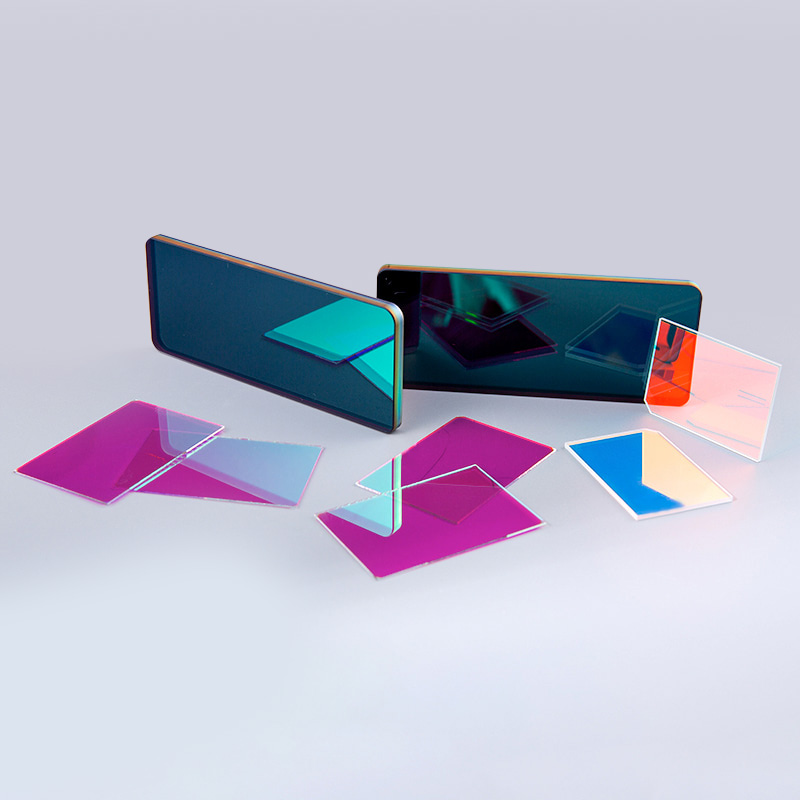
The coating process gives the reflector its optical function. Coatings may be metallic, dielectric, enhanced metallic, or multilayer designs depending on the required wavelength range and performance. Coating design must consider reflectivity, spectral response, polarization sensitivity, environmental durability, and laser damage threshold when relevant.
Coating deposition requires controlled equipment, clean conditions, stable process parameters, and inspection. Uniformity is particularly important when the entire working aperture must perform consistently. A well-controlled coating process can produce reflectors that deliver reliable optical output across production batches.
Final Inspection
Final inspection verifies that the reflector meets the agreed specifications. Inspection may include dimensional measurement, surface quality evaluation, coating appearance, reflectivity testing, flatness or surface figure testing, angle measurement, and packaging cleanliness checks. The exact inspection plan depends on the product requirements.
Reliable inspection protects both manufacturer and customer. It ensures that nonconforming parts are identified before shipment and provides confidence that the product can be used in the intended optical system. For precision applications, inspection capability is not optional; it is an essential part of the product.
Protective Packaging
Optical reflectors must be protected from scratches, contamination, and mechanical shock during shipment. Packaging should prevent direct contact with optical surfaces and reduce particle contamination. It should also be compatible with the customer's receiving and assembly procedures.
Good packaging supports the entire supply chain. A reflector that passes final inspection but is damaged in transit creates cost and schedule problems. By using suitable packaging methods, the manufacturer helps preserve product quality from the factory to the customer's production line.
Company Strengths Supporting the Product
The value of an optical reflector is closely connected to the capability of the company that manufactures it. Changzhou Haolilai Photo-Electricity Scientific and Technical Co., Ltd. was founded in 1998 and has built long-term expertise in precision optical components. With more than 300 employees and products exported to over 20 countries, the company has developed a manufacturing and quality foundation suitable for international customers.
Experience Since 1998
More than two decades of optical manufacturing experience provide practical advantages. Optical processing is not only a matter of equipment; it also depends on accumulated knowledge. Experienced teams understand how different materials respond to grinding and polishing, how to manage coating requirements, how to prevent common defects, and how to balance precision with production efficiency.
For customers, this experience can reduce development risk. When a customer submits a drawing or technical requirement, an experienced manufacturer can review manufacturability, suggest practical improvements, and identify possible cost or process challenges before production begins. This communication can shorten the path from concept to stable supply.
Certified Quality Management
The company has obtained ISO9001:2015, ISO14001:2015, and IATF16949 certifications. These certifications demonstrate commitment to quality management, environmental management, and automotive industry quality requirements. For customers in demanding sectors, certified systems provide confidence that manufacturing is supported by documented procedures, traceability, process control, and continuous improvement.
IATF16949 is particularly relevant for automotive optical components, where quality consistency and risk management are essential. Automotive supply chains demand stable production, defect prevention, and disciplined corrective action. A company with automotive-related quality certification is better prepared to meet the expectations of customers in vehicle lighting, sensing, display, interior glass, and related optical applications.
Technical Research and Innovation
Changzhou Haolilai Photo-Electricity Scientific and Technical Co., Ltd. has established the Jiangsu Precision Optical Lens Engineering Technology Center and the Jiangsu Enterprise Technology Research Center. These technical platforms support research, process improvement, and product development. The company has obtained multiple invention patents, utility model patents, and recognized high and new technology products in Jiangsu.
Innovation matters because optical markets continue to evolve. Laser systems require higher efficiency and better damage resistance. Automotive modules require compact designs and long-term reliability. Semiconductor equipment demands cleanliness and precision. Consumer optics require miniaturization and cost-effective mass production. A manufacturer with research capability can respond to these changing requirements more effectively than a supplier focused only on basic production.
Broad Optical Component Portfolio
The company's product categories include optical flat mirrors, wafers, automotive interior glass structural components, optical prisms, optical spherical mirrors, optical lenses, optical reflectors, and other customized optical components. This broad capability benefits customers who need more than one optical part for a complete system.
When a supplier understands multiple optical component types, it can support system-level needs more effectively. For example, a customer may require an optical reflector, prism, and lens in the same assembly. Working with a manufacturer that can process several related components may simplify procurement, improve technical communication, and enhance compatibility among parts.
Manufacturing Scale and International Service
The company covers an area of approximately 35,000 square meters and has a workforce of more than 300 employees. This scale supports stable production, technical specialization, and the ability to serve customers in multiple countries. Export experience is valuable because international customers often require clear communication, stable documentation, dependable packaging, and consistent quality.
Wholesale customers and original equipment manufacturers need suppliers that can manage both product precision and delivery reliability. A manufacturer with established production capacity is better positioned to support repeat orders, custom development, and long-term cooperation.
Applications of Precision Optical Reflectors
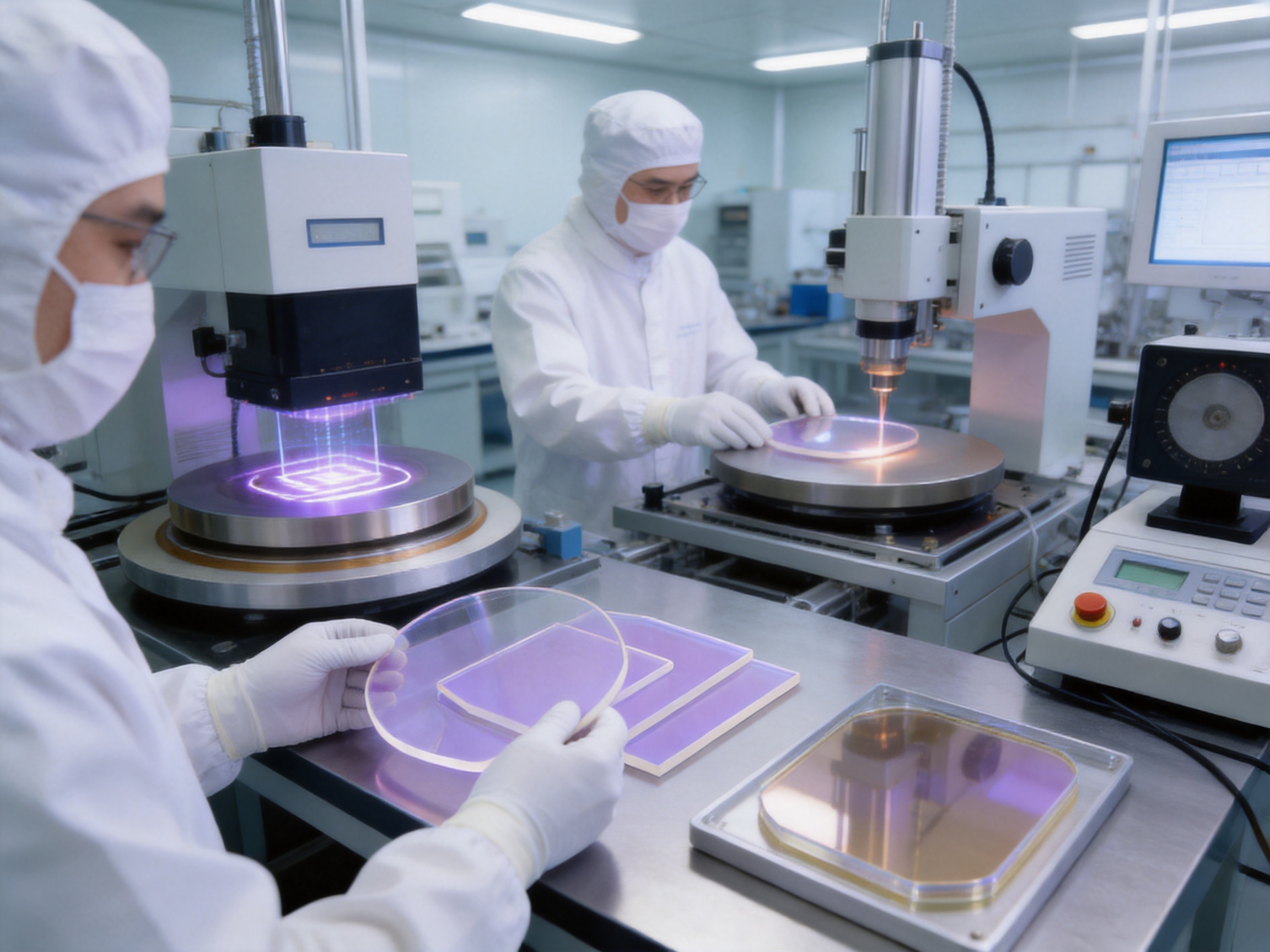
Optical reflectors are used wherever light must be redirected with control. Their applications are broad, and the required design depends on the wavelength, environment, space limitations, and system function. The following areas represent some of the most important application fields for a precision optical reflector.
Laser Optics
Laser systems require reflectors with high surface quality, accurate angles, and coatings matched to the operating wavelength. A reflector may be used to fold the beam path, direct output energy, stabilize alignment, or support scanning and measurement functions. In laser equipment, optical losses can reduce efficiency, while surface defects may increase scattering or local heating.
A precision optical reflector helps preserve beam quality and supports stable energy delivery. Depending on the application, coating requirements may include high reflectivity at a specific wavelength, low absorption, and resistance to laser-induced damage. The ability to customize coating design is therefore valuable for laser manufacturers.
Automotive Optics
Modern vehicles increasingly rely on optical technologies. Interior sensing, head-up displays, ambient lighting, driver monitoring, gesture recognition, and advanced driver-assistance systems all may use optical components. Reflectors can help guide light in compact modules where space is limited and mechanical reliability is important.
Automotive optical components must often withstand temperature changes, vibration, humidity, and long service life expectations. Consistent manufacturing and certified quality management are especially important. A reflector designed for automotive use must integrate reliably with housings, adhesives, sensors, and electronic assemblies.
Semiconductor and Industrial Inspection
Semiconductor manufacturing and industrial inspection systems depend on precise optical paths. Reflectors may be used in illumination systems, alignment modules, measurement instruments, wafer inspection equipment, and machine vision systems. High cleanliness and stable optical performance are essential because small defects can affect measurement results.
In semiconductor-related applications, optical components may need strict surface quality and low contamination. A capable optical component manufacturer can support these requirements through controlled processing, cleaning, inspection, and packaging.
Medical and Scientific Instruments
Medical devices and laboratory instruments often require optical reflectors for imaging, illumination, beam steering, fluorescence measurement, spectroscopy, or diagnostic systems. In these applications, repeatability and accuracy are critical. A reflector with poor surface quality may reduce signal strength or introduce measurement errors.
Precision optical reflectors help instrument manufacturers achieve stable optical paths and reliable performance. Customization may be needed for wavelength-specific coatings, compact geometries, or special mounting designs.
Consumer Electronics and Compact Optical Modules
Consumer products often require small, lightweight, and efficient optical designs. Reflectors can fold optical paths inside compact devices, allowing designers to reduce product thickness or fit complex optical functions into limited space. Examples may include projection systems, sensors, imaging modules, and display-related products.
In high-volume consumer applications, cost control must be balanced with quality stability. A reflector manufacturer with scalable production capability can help customers achieve both performance and production efficiency.
Design Considerations for Selecting an Optical Reflector
Selecting the right optical reflector requires careful consideration of optical, mechanical, environmental, and production factors. A well-defined specification allows the manufacturer to choose the proper material, process route, coating design, and inspection method.
Wavelength Range
The operating wavelength is one of the first parameters to define. A reflector designed for visible light may not perform the same way in the ultraviolet or infrared range. Coating materials and layer structures must be selected according to the spectral requirement. Customers should specify whether the reflector must operate at a single wavelength, multiple wavelengths, or across a broad band.
Angle of Incidence
Reflectivity and polarization behavior may change with angle of incidence. Many optical designs use reflectors at 45 degrees, but other angles are also possible. The coating should be designed for the intended angle whenever performance is critical. Mechanical design must also account for how the reflector will be mounted and aligned.
Surface Flatness or Curvature
A flat reflector is often used to redirect light without changing beam convergence, while a curved reflector may focus, collimate, or spread light. Surface flatness and curvature tolerance influence wavefront quality. Customers should specify the required surface figure according to system sensitivity.
Surface Quality
Surface defects such as scratches, digs, pits, and coating blemishes can affect scattering and appearance. For laser or imaging applications, surface quality may be especially important. The required surface quality should be matched to application needs; overly loose requirements may reduce performance, while unnecessarily strict requirements may increase cost.
Substrate Material
Material selection affects thermal behavior, processing difficulty, mechanical strength, and optical compatibility. Some systems require low thermal expansion, while others prioritize cost efficiency or specific transmission properties even if the component functions mainly as a reflector. The manufacturer can help recommend a suitable material based on the customer's requirements.
Environmental Conditions
Temperature, humidity, vibration, cleaning methods, chemical exposure, and operating lifetime should be considered. A reflector used inside a sealed laboratory instrument may have different durability needs from one used in an automotive module or outdoor sensor. Coating and packaging choices should reflect the real operating environment.
Production Volume
Prototype quantities and mass production orders may require different process planning. During early development, flexibility and technical feedback are important. During mass production, repeatability, yield, inspection efficiency, and supply stability become critical. Working with a manufacturer that can support both phases helps customers scale more smoothly.
Why Manufacturing Control Creates Competitive Value
In optical component manufacturing, competitive advantage is created by details. A reflector may fail not because of one obvious flaw, but because several small variations accumulate: a slight flatness deviation, a coating thickness shift, an edge chip, a cleaning residue, or an inconsistent dimension. Strong manufacturing control reduces these risks.
Changzhou Haolilai Photo-Electricity Scientific and Technical Co., Ltd. benefits from a structured manufacturing environment, certified management systems, and long-term technical development. This enables the company to serve customers who require more than a standard catalog mirror. The optical reflector can be manufactured as part of a complete solution, with attention to the customer's drawing, function, assembly method, and application environment.
Compared with suppliers that focus only on low-cost production, a technically capable optical component manufacturer can offer greater value through process stability, customization support, inspection discipline, and long-term cooperation. The goal is not simply to deliver a reflective surface; the goal is to deliver a component that contributes to the success of the final optical system.
Quality Assurance and Reliability
Quality assurance for an optical reflector should begin before production and continue through shipment. A complete quality approach includes requirement review, material control, process control, in-process inspection, final inspection, nonconformance management, corrective action, and customer feedback. Each stage reduces risk.
Requirement review ensures that drawings and specifications are understood. If a tolerance is unclear or a coating requirement is incomplete, early communication prevents later problems. Material control ensures that substrates meet processing and performance requirements. Process control ensures that grinding, polishing, cleaning, and coating are performed consistently. Inspection verifies results and provides confidence before shipment.
Reliability is especially important for customers in automotive, semiconductor, laser, and industrial markets. A reflector may be assembled into a device that is difficult to repair after delivery. Therefore, long-term performance must be considered from the beginning. Coating adhesion, environmental durability, and mechanical fit all contribute to reliability.
The company's certifications and technical resources support a disciplined quality culture. ISO9001:2015 emphasizes quality management. ISO14001:2015 reflects environmental management practices. IATF16949 supports automotive-related quality expectations. Together, these systems help create a production environment suitable for precision optical components.
Customization and Engineering Cooperation
Many customers require optical reflectors that are not available as standard parts. A custom reflector may need a special shape, a nonstandard coating, a defined clear aperture, a unique edge treatment, a tight thickness tolerance, or specific packaging. Engineering cooperation between customer and manufacturer is essential for successful customization.
A typical customization process begins with technical communication. The customer provides drawings, optical requirements, expected operating conditions, and quantity information. The manufacturer reviews manufacturability and may suggest adjustments to improve yield, cost, or reliability. Sample production may follow, allowing the customer to test the reflector in the actual system. After validation, the process can be optimized for batch production.
This cooperative approach helps avoid common problems. For example, a design may specify a tolerance that is much tighter than necessary, increasing cost without improving system performance. Another design may omit coating angle information, leading to lower-than-expected reflectivity at the actual working angle. Experienced manufacturing feedback can help customers refine specifications before large-scale production.
Because Changzhou Haolilai Photo-Electricity Scientific and Technical Co., Ltd. manufactures multiple types of optical components, it can support integrated discussions involving reflectors, lenses, prisms, mirrors, wafers, and glass structural components. This is valuable for customers designing assemblies with several optical parts.

Optical Reflectors in System-Level Performance
An optical reflector should not be evaluated in isolation. Its true performance is measured by how it affects the complete optical system. A high-quality reflector can improve efficiency, alignment stability, signal strength, image quality, and manufacturing yield. Conversely, a poor reflector can create problems that appear elsewhere in the system, making troubleshooting difficult.
For example, in a laser device, reduced reflectivity can be mistaken for a laser source problem. In an imaging instrument, wavefront distortion may appear as poor focus or reduced resolution. In a sensor module, scattering from surface defects may reduce signal-to-noise ratio. In an automotive optical assembly, dimensional variation may cause alignment drift during production. A precision reflector helps prevent these hidden sources of system instability.
System designers should therefore involve the reflector supplier early in the design process. Early cooperation allows the manufacturer to understand the function of the part and recommend practical specifications. This often leads to better performance and more efficient production.
Sustainability and Responsible Manufacturing
Responsible manufacturing is increasingly important in global supply chains. Optical component production involves material processing, cleaning, coating, packaging, and energy use. A company with environmental management certification is better positioned to control environmental impact and meet the expectations of international customers.
ISO14001:2015 certification indicates that the company has established an environmental management system. For customers, this can support supplier evaluation and corporate responsibility goals. Sustainable manufacturing does not replace performance and quality, but it adds another dimension of long-term supplier value.
Efficient process control also contributes to sustainability. Higher yield means less material waste, fewer rejected parts, and lower rework. Stable production reduces unnecessary resource consumption. In this way, precision manufacturing and responsible manufacturing can reinforce each other.
Purchasing Considerations for Wholesale and OEM Customers
Wholesale buyers and original equipment manufacturers should consider several factors when sourcing optical reflectors. Price is important, but it should not be the only criterion. A low unit price can become expensive if the parts create alignment problems, high rejection rates, delayed production, or field failures.
Customers should evaluate the supplier's manufacturing experience, quality certifications, inspection capability, customization support, communication efficiency, and production capacity. They should also confirm whether the supplier can provide related optical components if needed. A reliable supplier can become a long-term technical partner rather than only a parts vendor.
When requesting a quotation, customers should provide as much technical information as possible. Useful information includes material preference, dimensions, surface quality, flatness or curvature, coating requirements, wavelength range, angle of incidence, environmental requirements, quantity, packaging needs, and application background. Complete information allows the manufacturer to quote more accurately and propose the best process route.
Q&A: Common Questions About Precision Optical Reflectors
What is an optical reflector?
An optical reflector is a precision component designed to redirect light through reflection. It may be flat or curved and may use specialized coatings to achieve high reflectivity at specific wavelengths or across a broader spectral range.
How is a precision optical reflector different from an ordinary mirror?
A precision optical reflector is manufactured with controlled surface accuracy, dimensional tolerance, coating performance, and inspection standards. An ordinary mirror may be suitable for basic reflection, but it usually does not provide the optical precision required for laser systems, sensors, semiconductor equipment, or high-performance instruments.
What applications can use this optical reflector?
It can be used in laser optics, automotive optical modules, semiconductor inspection equipment, medical instruments, scientific devices, industrial sensing systems, imaging products, consumer electronics, and other optical assemblies that require controlled reflection.
Can the reflector be customized?
Yes. Customization may include size, shape, material, surface quality, flatness, curvature, coating type, clear aperture, edge treatment, and packaging. Custom production should be based on drawings and application requirements.
Why is coating quality important?
The coating determines much of the reflector's optical performance. Good coating quality improves reflectivity, uniformity, adhesion, and durability. Poor coating can reduce efficiency, create defects, or fail during long-term use.
What information should be provided for a custom quotation?
Customers should provide dimensions, material requirements, wavelength range, angle of incidence, surface quality, flatness or radius, coating requirements, quantity, operating environment, and any special assembly or packaging needs.
Why choose a manufacturer with ISO9001, ISO14001, and IATF16949 certifications?
These certifications indicate structured quality management, environmental management, and automotive quality system capability. They help customers reduce supplier risk and support stable long-term cooperation.
Can the same manufacturer supply other optical components?
Yes. The company also manufactures optical flat mirrors, optical spherical mirrors, optical prisms, optical lenses, wafers, automotive interior glass structural components, and other precision optical components. This can simplify sourcing for customers with complete optical assemblies.
Conclusion
A precision optical reflector is a critical component for controlling light in advanced optical systems. Its value is created through accurate surface processing, reliable coating, dimensional stability, clean handling, strict inspection, and consistent manufacturing. For customers in laser optics, automotive optics, semiconductor optics, consumer optics, medical instruments, and industrial systems, choosing a high-quality reflector can improve system performance and reduce production risk.
Changzhou Haolilai Photo-Electricity Scientific and Technical Co., Ltd. combines long manufacturing experience, broad optical component capability, certified quality systems, technical research resources, and international supply experience. Founded in 1998, the company has developed strong competence in precision optical components and continues to serve customers requiring customized and wholesale optical solutions.
Compared with ordinary reflective products, the optical reflector described in this article offers advantages in precision, coating performance, customization, consistency, and application reliability. It is not just a reflective surface; it is an engineered optical component designed to support demanding systems and long-term product success.
References
1. Hecht, Eugene. Optics. Pearson Education.
2. Smith, Warren J. Modern Optical Engineering. McGraw-Hill Education.
3. Macleod, H. Angus. Thin-Film Optical Filters. CRC Press.
4. ISO 9001:2015 Quality Management Systems, International Organization for Standardization.
5. ISO 14001:2015 Environmental Management Systems, International Organization for Standardization.
6. IATF 16949 Automotive Quality Management System Standard, International Automotive Task Force.
7. Malacara, Daniel, editor. Optical Shop Testing. Wiley.
8. Bass, Michael, editor. Handbook of Optics. McGraw-Hill Education.





 苏公网安备32041102000130号