
 Search
 en
en English
 日本語
日本語 русский
 Español
 Deutsch
 中文简体
中文简体Content
- 1 What Is an Optical Spherical Mirror?
- 2 Core Advantages of Precision Optical Spherical Mirrors
- 3 Product Value Compared with Ordinary Reflective Components
- 4 Manufacturing Strength Behind the Product
- 5 Company Capabilities Supporting Reliable Production
- 6 Technical Performance Factors Customers Should Consider
- 7 Applications in Laser Optics
- 8 Applications in Automotive Optics
- 9 Applications in Semiconductor and Measurement Equipment
- 10 Customization and Engineering Collaboration
- 11 Quality Assurance Throughout the Production Chain
- 12 Why Manufacturing Experience Matters
- 13 Competitive Advantages for Wholesale and Industrial Buyers
- 14 Design Considerations for Using Spherical Mirrors
- 15 Packaging, Handling, and Delivery Reliability
- 16 Frequently Asked Questions
- 16.1 What is the main function of an optical spherical mirror?
- 16.2 How is an optical spherical mirror different from an ordinary mirror?
- 16.3 What industries can use optical spherical mirrors?
- 16.4 Why is coating selection important?
- 16.5 Can the Optical Spherical Mirror be customized?
- 16.6 Why should buyers consider certified manufacturers?
- 16.7 What makes this product competitive against alternatives?
- 17 Conclusion
- 18 References
- 19 Product: Optical Spherical Mirror
Optical spherical mirrors are essential components in modern optical systems where light must be collected, focused, folded, expanded, or redirected with predictable geometric accuracy. Compared with general reflective parts, an optical spherical mirror is manufactured to strict optical requirements, including controlled radius of curvature, surface quality, dimensional stability, coating performance, and environmental reliability. In applications such as laser instruments, imaging systems, automotive optical assemblies, semiconductor equipment, measurement devices, and scientific instruments, the quality of the mirror can directly affect optical efficiency, beam shape, signal consistency, image clarity, and long-term system stability.
The Optical Spherical Mirror supplied by Changzhou Haolilai Photo-Electricity Scientific and Technical Co., Ltd. is positioned as a precision optical component for customers who require consistent quality, dependable manufacturing support, and scalable supply. The product benefits from the company’s long-term specialization in precision optical components, its certified management systems, its experienced technical team, and its accumulated know-how in laser optics, automotive optics, semiconductor optics, and consumer optics. Founded in 1998, the company has developed into a professional optical component manufacturer with a production site covering 35,000 square meters, more than 300 employees, exports to over 20 countries, and more than 30 certificates and patents.
An optical spherical mirror may appear simple from the outside, but its performance depends on a chain of refined processes. Material selection, curve generation, fine grinding, polishing, surface cleaning, coating, testing, packaging, and traceability all influence final performance. A high-quality spherical mirror must not only look reflective; it must also preserve the intended wavefront, withstand real operating conditions, and match the optical design. In this sense, the mirror is both a mechanical component and a precision optical element.
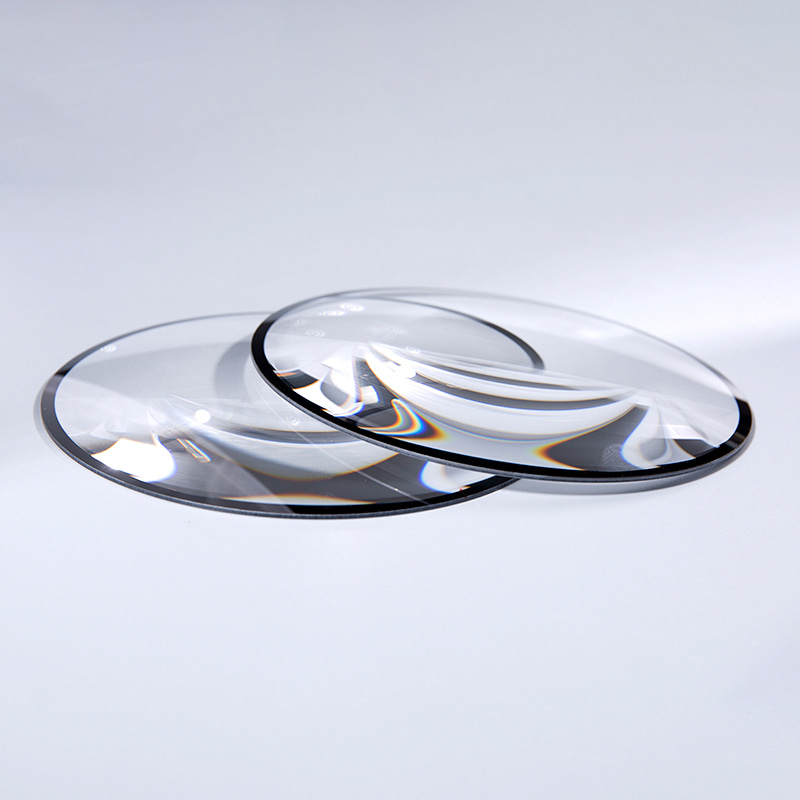
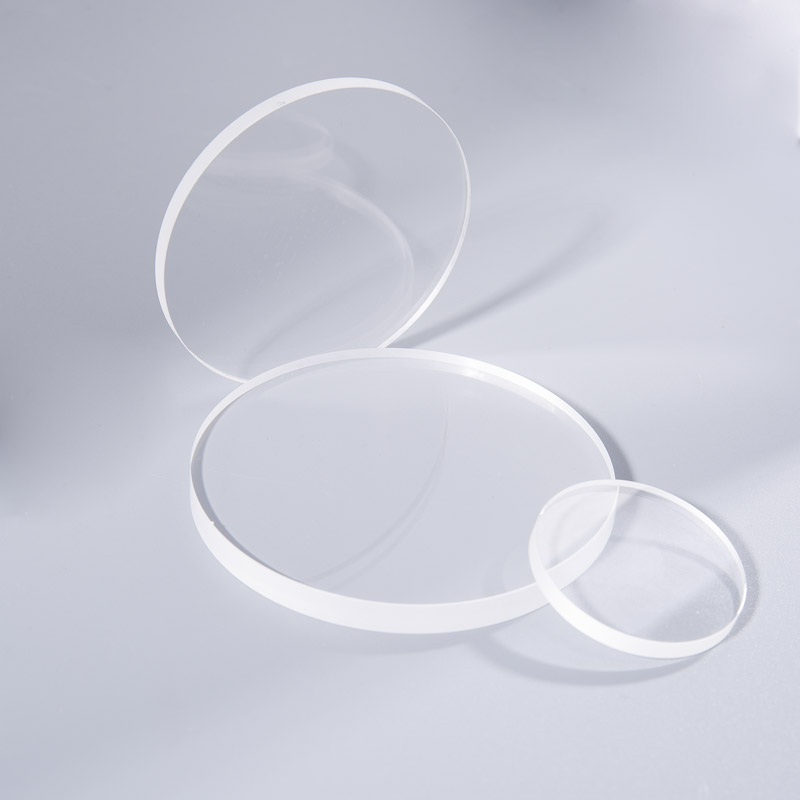
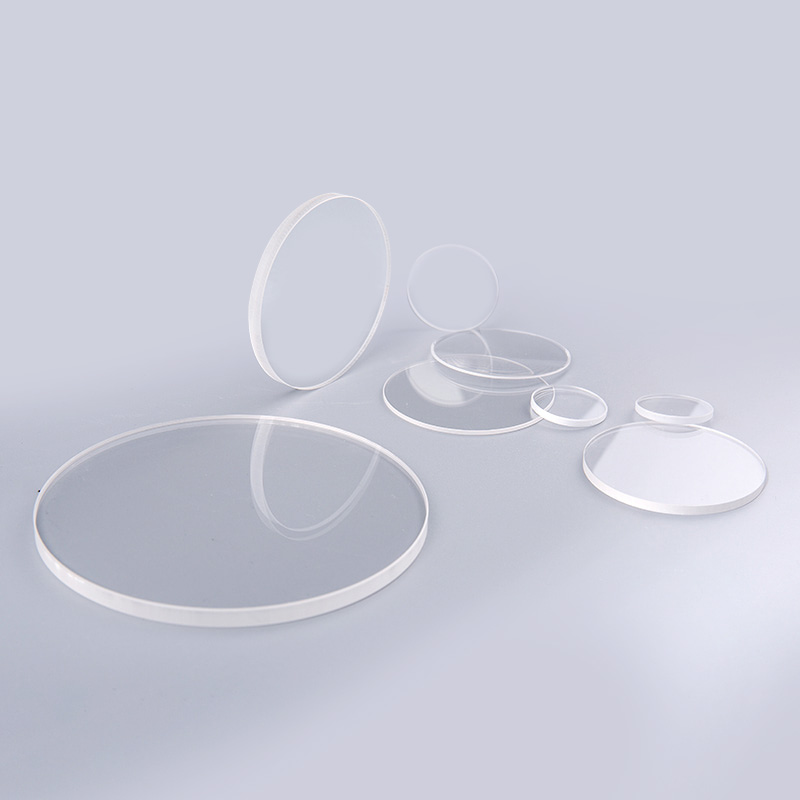
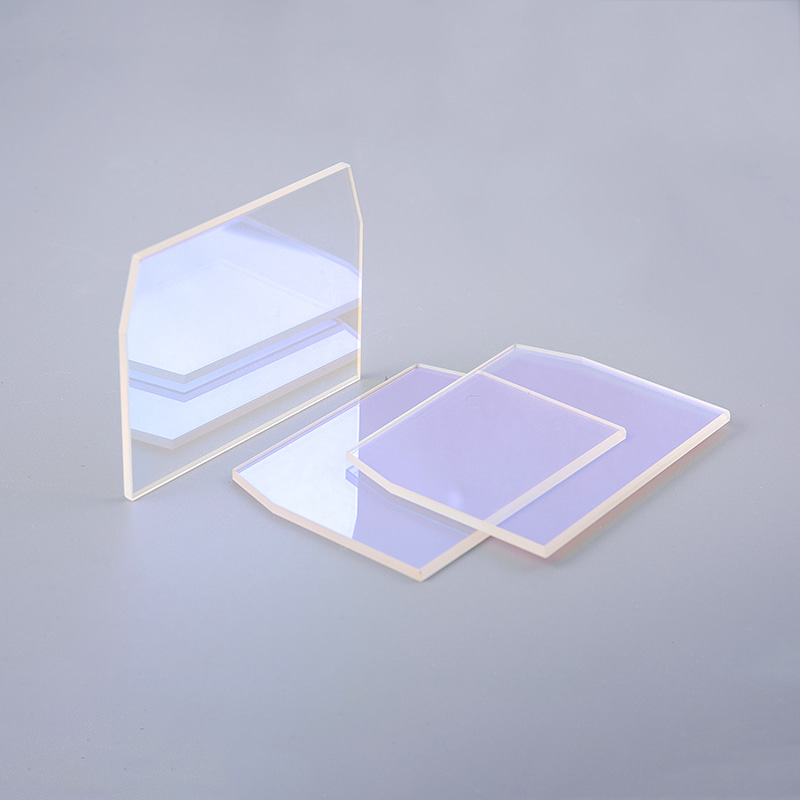
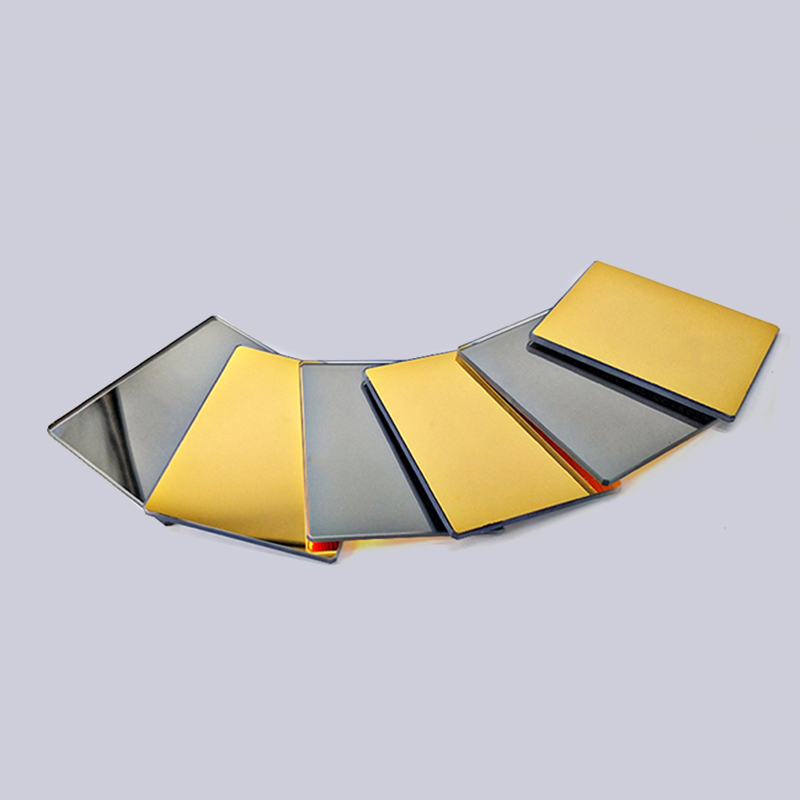
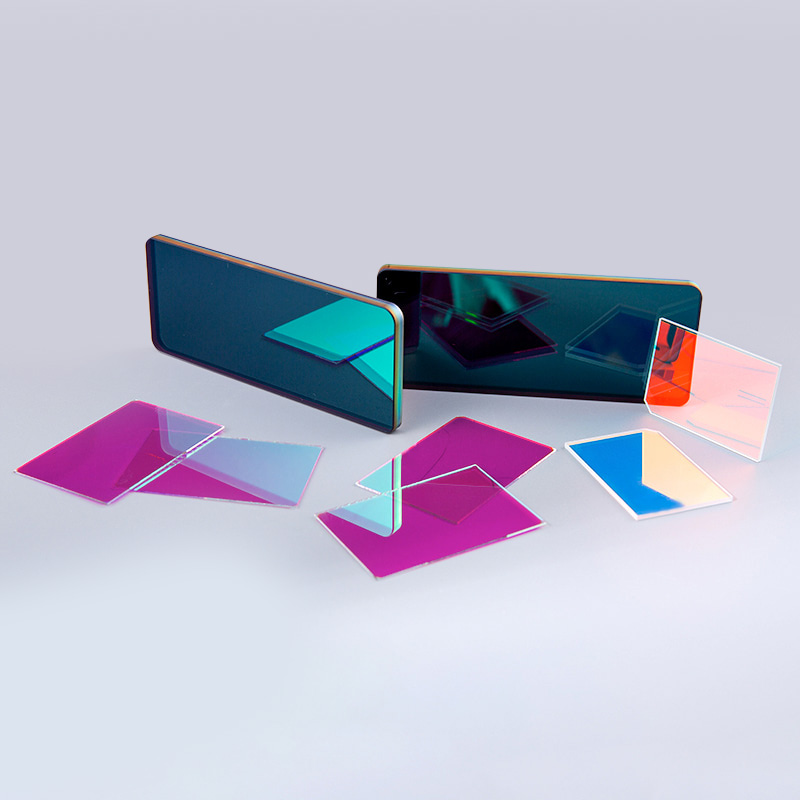
Optical Spherical Mirror
What Is an Optical Spherical Mirror?
An optical spherical mirror is a mirror whose reflective surface forms part of a sphere. Depending on the direction of curvature, it may be concave or convex. A concave spherical mirror can converge incoming light, making it useful for focusing, collecting, or forming real images. A convex spherical mirror diverges light, expands fields of view, or redirects beams in compact spaces. Because the surface is spherical, the geometry is easier to define and manufacture than certain complex aspheric forms, while still providing valuable optical functions in many systems.
The basic parameters of a spherical mirror include diameter, thickness, radius of curvature, focal length, clear aperture, surface figure, surface quality, coating type, reflectance range, substrate material, bevel, and mechanical tolerances. In precision optical applications, these parameters are not independent. For example, substrate material influences thermal expansion and polishing behavior; coating type affects reflection, durability, and laser damage resistance; surface figure influences wavefront error; and mechanical tolerances affect assembly alignment. A reliable optical manufacturer must understand how these requirements interact.
The Optical Spherical Mirror is suitable for applications in which controlled reflection is required. It can be used in optical paths where lenses alone are not ideal, especially where chromatic aberration must be minimized. Unlike refractive lenses, mirrors reflect light and do not introduce wavelength-dependent focusing in the same way. This makes spherical mirrors useful in broadband optical systems, infrared systems, ultraviolet-related setups, laser assemblies, and instruments where different wavelengths must be handled with consistent alignment.
Core Advantages of Precision Optical Spherical Mirrors
The first major advantage of a spherical mirror is predictable optical behavior. Because its curvature follows a known spherical geometry, optical designers can calculate its focal properties and integrate it into systems with confidence. In high-volume engineering projects, predictable geometry also supports repeatable assembly and stable system performance.
The second advantage is high reflection efficiency when paired with an appropriate coating. Metal coatings such as aluminum, silver, or gold may be used depending on wavelength and environmental requirements. Dielectric coatings may be selected for high reflectivity within specific wavelength bands. Enhanced coatings can improve durability, reflectance, or resistance to oxidation. The choice of coating is critical, and experienced manufacturing support helps customers match coating design to actual use conditions.
The third advantage is the ability to support compact optical layouts. A spherical mirror can fold an optical path, focus a beam, or redirect light without requiring additional refractive thickness. In instruments where space, weight, and alignment are important, reflective optics help simplify design and reduce chromatic effects.
The fourth advantage is application flexibility. Optical spherical mirrors can be designed for laser systems, automotive optical modules, inspection devices, projection systems, medical instruments, optical sensors, educational systems, aerospace-related instruments, and semiconductor process tools. A single manufacturing platform can be adapted to multiple industries by changing substrate, curvature, coating, tolerance, and inspection criteria.
The fifth advantage is durability when the mirror is produced with controlled processing and coating. Precision mirrors are not merely polished glass pieces; they are engineered parts. Reliable edge treatment, clean surface preparation, stable coating adhesion, and proper packaging help protect the mirror during transportation, assembly, and operation.
Product Value Compared with Ordinary Reflective Components
Compared with ordinary commercial mirrors, an optical spherical mirror offers much stricter performance. General mirrors are commonly designed for appearance or simple reflection. They may not control surface figure, wavefront error, coating uniformity, or edge quality to the degree required by optical instruments. In contrast, a precision spherical mirror is evaluated by optical standards and manufactured through controlled steps that protect surface integrity.
Competitor products in the market may vary widely in stability. Some suppliers can provide low-cost mirrors, but they may lack consistent documentation, systematic inspection, or experience across demanding sectors such as automotive optics and semiconductor optics. Others may provide very high specifications but with long lead times or limited customization flexibility. The Optical Spherical Mirror discussed here is strengthened by a manufacturing environment focused on precision optical components, supported by certified systems and technical experience.
A key advantage over less-specialized competitors is integrated optical manufacturing experience. The company produces various precision optical components, including optical flat mirrors, wafers, automotive interior glass structural components, optical prisms, optical spherical mirrors, optical lenses, and other custom optical parts. This broad product background matters because the manufacturing skills for grinding, polishing, coating, cleaning, inspection, and handling overlap across many optical components. Experience gained in one product family can improve process control in another.
Another advantage is industry-oriented development. The company focuses on laser optics, automotive optics, semiconductor optics, and consumer optics. These fields demand different types of quality control. Laser optics require surface cleanliness, coating reliability, and thermal stability. Automotive optics require durability, process repeatability, and often high-volume consistency. Semiconductor optics require precision, cleanliness, and stable documentation. Consumer optics require manufacturability and cost-effective quality. Serving these fields helps the manufacturer build a balanced capability that benefits spherical mirror production.
Manufacturing Strength Behind the Product
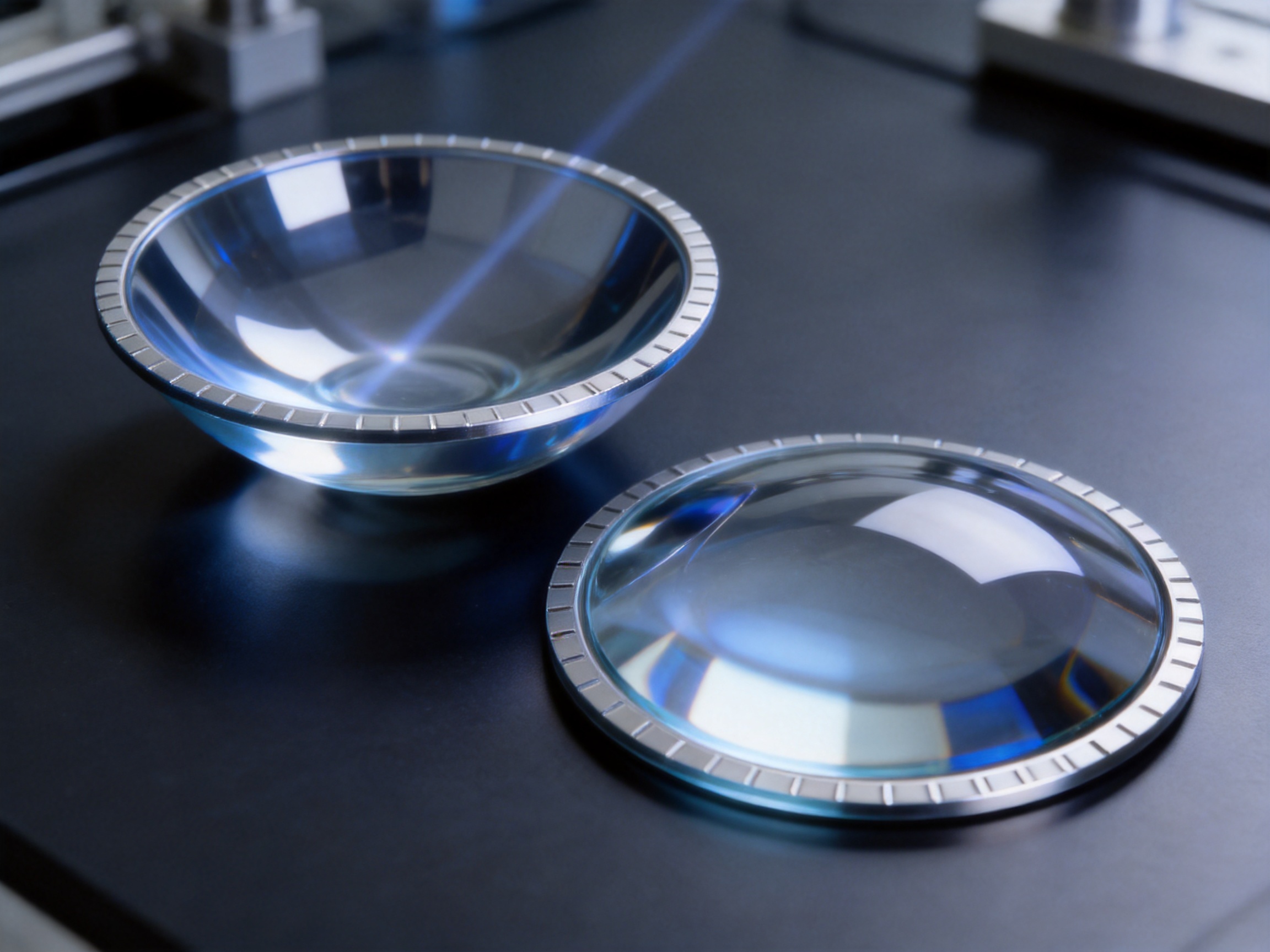
Precision optical spherical mirrors require advanced manufacturing processes. The manufacturing sequence typically begins with engineering review. Customer drawings, optical specifications, wavelength requirements, environmental conditions, and assembly constraints are evaluated. A practical production plan is then created to match material, process route, coating method, inspection standard, and packaging method.
Substrate selection is a foundational step. Common optical substrates may include optical glass, fused silica, borosilicate glass, or other materials depending on the application. The correct substrate should offer suitable homogeneity, thermal behavior, mechanical strength, polishability, and compatibility with coating. For example, laser and high-temperature applications may require materials with lower thermal expansion or better transmission characteristics even though the surface is reflective. Automotive or industrial applications may emphasize mechanical stability and production efficiency.
After material preparation, the mirror blank is shaped. Precision cutting and generating create the approximate diameter, thickness, and curvature. This step must remove material efficiently while leaving enough allowance for later fine grinding and polishing. If curve generation is inaccurate, later stages become less efficient and may introduce stress or geometry errors. Controlled shaping helps improve yield and maintain repeatability.
Fine grinding refines the spherical surface. Abrasive grades are selected to gradually reduce subsurface damage and improve surface geometry. Process parameters such as pressure, speed, tool matching, slurry condition, and time must be controlled. Fine grinding prepares the mirror for polishing and influences final figure accuracy. Poor grinding can leave hidden damage that may appear as defects during polishing or coating.
Polishing is one of the most important stages. The objective is to reach the required surface quality and surface figure. Optical polishing is a balance between material removal, local correction, surface smoothness, and defect prevention. Skilled technicians and stable equipment are both important. The manufacturer’s experienced technical team supports polishing control, while established process knowledge helps reduce common problems such as scratches, pits, turned edges, and irregular figure.
Cleaning before coating is critical. Even small residues, particles, moisture, or polishing compounds can reduce coating adhesion or create defects. Precision optical cleaning may involve multiple cleaning steps designed to remove organic and inorganic contamination without damaging the surface. Clean handling and inspection are required before the mirror enters the coating process.
Coating gives the spherical mirror its reflective function. Depending on the application, coatings may be metallic, protected metallic, enhanced metallic, or dielectric. Coating selection depends on wavelength, angle of incidence, reflectance target, polarization behavior, environmental exposure, and cost. Coating uniformity on a curved surface requires process control. Adhesion and durability must also be considered, especially for mirrors used in automotive, laser, or industrial environments.
Final inspection confirms whether the mirror meets technical requirements. Inspection may include dimensional measurement, radius verification, surface quality inspection, reflectance measurement, coating appearance inspection, and optical performance evaluation. For precision mirrors, interferometric or profilometric methods may be used depending on specification. Consistent inspection helps ensure that the part delivered to the customer is not merely manufactured, but verified.
Company Capabilities Supporting Reliable Production
Changzhou Haolilai Photo-Electricity Scientific and Technical Co., Ltd. has operated since 1998 as a professional manufacturer of precision optical components. Its long history in the optical industry provides practical manufacturing experience that newer or less-specialized suppliers may not have. Optical production depends heavily on accumulated process knowledge. Machine capability is important, but experience in solving polishing issues, coating challenges, tolerance conflicts, and inspection interpretation is equally valuable.
The company is located in the national-level High-tech Development District of Changzhou, Jiangsu, China. Its facility covers 35,000 square meters, providing a production foundation for multiple optical product lines. A larger manufacturing site can support organized process flow, dedicated equipment areas, inspection zones, warehousing, and scaling of customer projects. For customers seeking wholesale optical components or regular production supply, manufacturing capacity and process organization are important purchasing considerations.
The company has obtained certifications including ISO9001:2015, ISO14001:2015, and IATF16949. ISO9001:2015 supports quality management, process control, corrective action, and customer satisfaction. ISO14001:2015 reflects attention to environmental management, which is increasingly relevant for global supply chains. IATF16949 is especially significant for automotive-related manufacturing because it emphasizes defect prevention, continuous improvement, traceability, and process discipline. For optical spherical mirrors used in automotive optical systems or demanding industrial assemblies, this certification background strengthens customer confidence.
The company is also recognized as a High-Tech enterprise in Jiangsu Province. It has established the Jiangsu Precision Optical Lens Engineering Technology Center and Jiangsu Enterprise Technology Research Center. These technical platforms show that the company is not limited to basic processing but invests in engineering capability, research, and technology development. Multiple invention patents, utility model patents, and Jiangsu High and New Tech Products further support its technical positioning.
With more than 300 employees and exports to over 20 countries, the company has experience serving international customers. Export experience matters because global customers often require communication accuracy, documentation, packaging reliability, and compliance with technical drawings. Precision optical components must arrive clean, protected, and traceable. A supplier that has already served many countries is more likely to understand the expectations of international procurement, engineering, and quality teams.
Technical Performance Factors Customers Should Consider
When selecting an optical spherical mirror, customers should evaluate more than price. The lowest-cost mirror may create hidden expenses through assembly problems, low optical efficiency, rework, system calibration difficulty, or premature failure. A good purchasing decision considers total value across optical performance, reliability, documentation, delivery, customization, and technical support.
Surface figure is a primary performance factor. It describes how closely the mirror surface matches the desired spherical shape. If the surface figure is poor, reflected wavefronts become distorted, causing image blur, beam deformation, focus shift, or reduced measurement accuracy. The required surface figure depends on the system. A general illumination system may accept a looser specification, while a laser or imaging system may require tighter control.
Surface quality refers to defects such as scratches, digs, pits, stains, coating marks, and other visible imperfections. Surface defects can scatter light, reduce contrast, damage sensitive signals, or become failure points under high-power laser exposure. Precision polishing, careful cleaning, and controlled handling reduce the risk of these defects.
Radius of curvature determines focal properties. Even a small deviation can change focal length and alignment. In a multi-component optical assembly, radius error may create cumulative optical error. Precision manufacturing and accurate measurement help ensure that the mirror matches optical design expectations.
Coating reflectance determines how much light is returned in the intended wavelength range. For broadband applications, coating design must maintain reflectance across a wide spectrum. For laser applications, the coating may be optimized for one or more laser wavelengths. For infrared or ultraviolet use, material and coating choices become especially important. Coating durability should also match cleaning methods, humidity exposure, temperature cycling, and mechanical handling.
Dimensional tolerances affect integration. Diameter, thickness, bevel, wedge, centration, and mounting features influence whether the mirror fits into holders or assemblies. A mirror that performs optically but does not fit mechanically can delay production. A manufacturer with experience in multiple optical products is better positioned to balance optical and mechanical requirements.
| Selection Factor | Why It Matters | Typical Customer Benefit |
|---|---|---|
| Radius of curvature | Controls focal length and optical geometry | Improved alignment and predictable system performance |
| Surface figure | Determines reflected wavefront quality | Sharper imaging, cleaner beams, and lower distortion |
| Surface quality | Reduces scattering and visible defects | Higher contrast, better laser reliability, and stable output |
| Reflective coating | Defines wavelength performance and durability | Higher efficiency and better environmental suitability |
| Substrate material | Affects thermal stability and polishing behavior | Better reliability under operating conditions |
| Process certification | Supports quality control and traceability | Reduced procurement risk and stronger production consistency |
Applications in Laser Optics
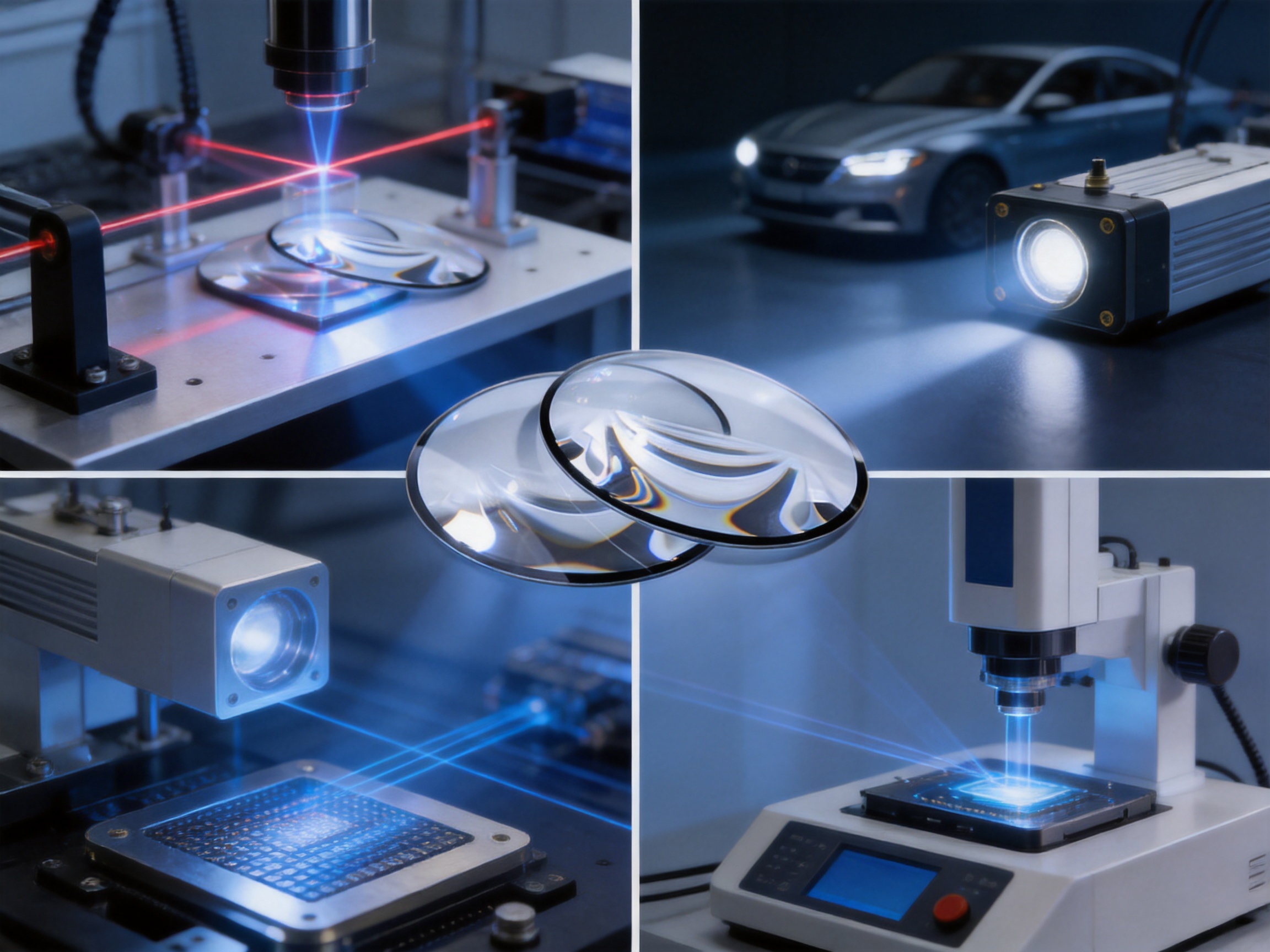
Laser systems often rely on mirrors to steer, focus, expand, or fold beams. In such systems, mirror quality is critical because laser beams may be highly coherent, intense, and sensitive to wavefront distortion. A spherical mirror can be used in laser focusing assemblies, beam delivery modules, resonator-related designs, scanning instruments, or test equipment. Depending on the laser wavelength and power, coating selection and surface cleanliness become major requirements.
A competitive spherical mirror for laser optics should offer low scatter, stable coating adhesion, accurate curvature, and consistent surface quality. Contamination or coating defects can absorb energy and create localized heating. Surface errors can distort the beam and reduce process precision. In industrial laser use, the mirror may be exposed to vibration, temperature change, and frequent operation. Reliable manufacturing helps protect system performance over time.
The company’s focus on laser optics provides a practical advantage. A supplier familiar with laser optical components is more likely to understand concerns such as reflectance at specified wavelengths, coating durability, surface cleanliness, and packaging suitable for optical handling. This knowledge helps customers move from design to production more smoothly.
Applications in Automotive Optics
Automotive optical systems require repeatability, durability, and strict process management. Interior optical components, sensors, display-related systems, and lighting-related assemblies may require mirrors or reflective surfaces that withstand temperature changes, vibration, humidity, and long service life expectations. Although the optical spherical mirror may be used in different automotive-related designs, the common requirement is dependable production consistency.
The company’s IATF16949 certification is an important advantage in automotive supply. This management system emphasizes process control, risk reduction, defect prevention, and continuous improvement. For automotive customers, choosing a supplier with IATF16949 experience can reduce qualification risk and support long-term program management. Competitors without automotive quality management experience may find it difficult to meet documentation, traceability, and corrective action expectations.
In automotive optics, small variations can become significant when components are assembled at scale. A stable spherical mirror production process helps reduce part-to-part variation. Consistent radius, coating, dimensions, and appearance support automated or semi-automated assembly and reduce inspection burden for customers.
Applications in Semiconductor and Measurement Equipment
Semiconductor equipment and precision measurement instruments require accurate and stable optical components. Optical spherical mirrors may be used in inspection paths, metrology systems, illumination modules, alignment tools, or beam conditioning setups. These applications often require clean surfaces, repeatable coating performance, and careful documentation.
The semiconductor field values cleanliness and process discipline. Even minor particles or surface defects can affect measurement accuracy or system reliability. A manufacturer experienced in semiconductor optics is better positioned to understand clean handling, inspection standards, and controlled packaging. This advantage becomes especially important when mirrors are used near sensitive optical sensors or high-precision measurement paths.
For measurement equipment, stability and repeatability are key. A mirror that changes performance under temperature, humidity, or mechanical stress can influence calibration. Proper substrate selection, polishing control, and coating durability help maintain long-term measurement consistency.
Customization and Engineering Collaboration
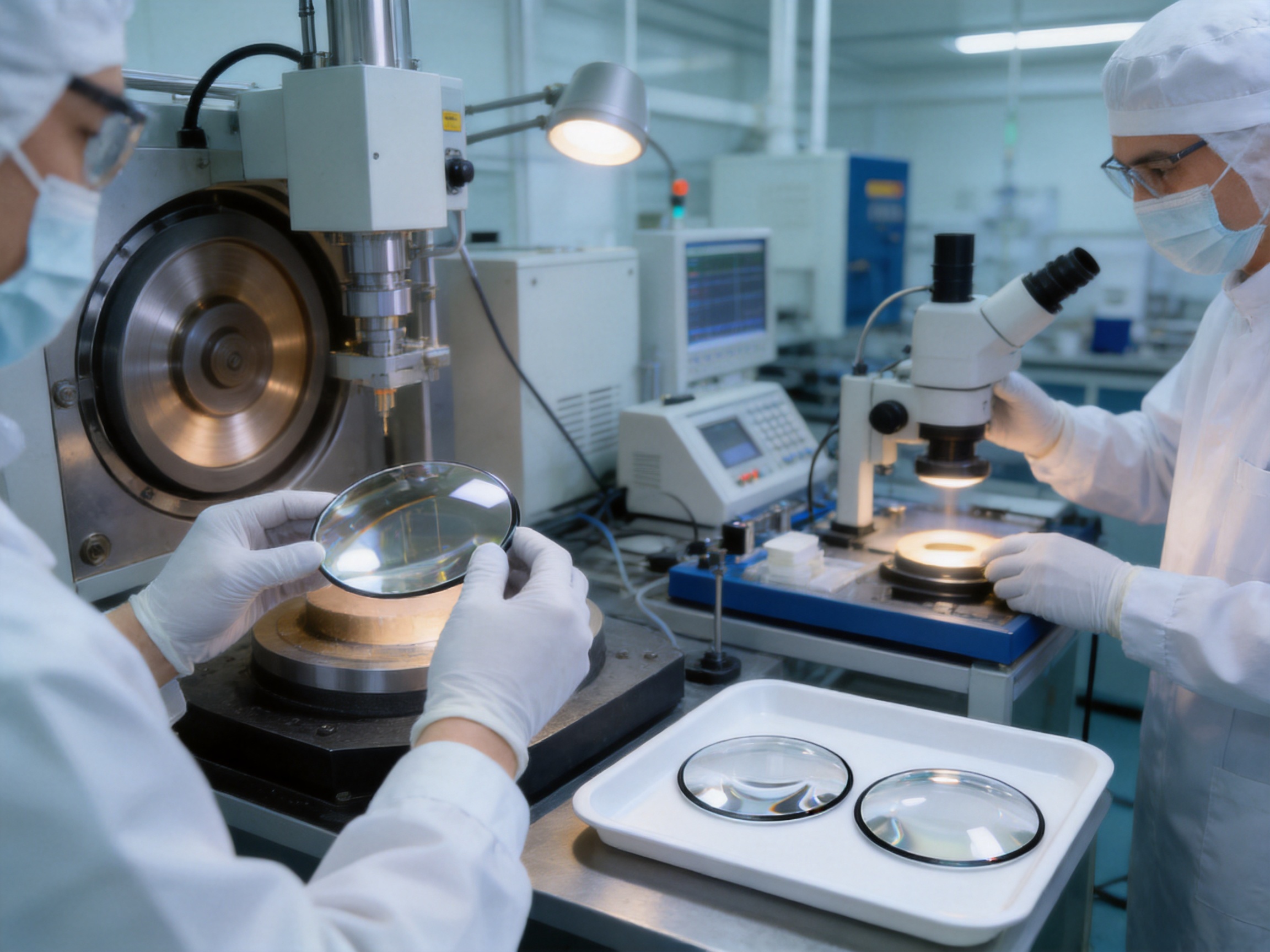
Many optical systems require customized mirrors rather than catalog-only parts. Customers may need a specific diameter, curvature, coating, substrate, edge profile, thickness, clear aperture, or inspection standard. Engineering collaboration is therefore a major part of optical component supply. A capable manufacturer should be able to review drawings, discuss manufacturability, advise on tolerance trade-offs, and propose practical production routes.
The Optical Spherical Mirror can be adapted for different requirements through material selection, curvature design, coating optimization, and dimensional control. For example, a broadband instrument may require an enhanced aluminum coating, while an infrared system may benefit from a gold-based coating. A compact optical module may need a small-diameter mirror with tight mechanical tolerance. A high-volume product may require a balanced specification that achieves optical performance while maintaining cost-effective yield.
Customization also includes inspection and documentation. Some customers require standard inspection reports, while others need detailed measurement data, coating curves, or production traceability. A manufacturer with ISO and automotive quality system experience can better support such requirements. This helps procurement and engineering teams reduce uncertainty during supplier qualification.
Good engineering collaboration can also prevent over-specification. In optics, tighter tolerances usually increase cost and production difficulty. If a customer specifies a surface figure or surface quality far beyond actual system needs, the mirror may become unnecessarily expensive. An experienced supplier can help identify which specifications are truly critical and which can be optimized for cost, yield, and lead time.
Quality Assurance Throughout the Production Chain
Quality assurance for optical spherical mirrors must begin before production and continue after final inspection. Incoming material control helps verify that substrate blanks meet requirements. Process controls guide grinding and polishing. Environmental controls reduce contamination. Inspection controls confirm product conformity. Packaging controls protect finished parts. Traceability connects delivered products to production history.
ISO9001:2015 supports a structured quality management approach. It encourages documented procedures, defined responsibilities, corrective actions, supplier control, customer feedback, and continual improvement. For precision optics, these principles translate into more stable production and fewer unexpected variations.
IATF16949 adds another layer for automotive-related customers. It emphasizes advanced quality planning, risk analysis, defect prevention, process validation, and change management. Even when a spherical mirror is not used directly in an automotive application, the presence of automotive quality culture can benefit general manufacturing discipline.
Environmental management under ISO14001:2015 is also valuable. Optical manufacturing involves water, polishing materials, cleaning processes, and coating-related operations. Responsible environmental management supports sustainable production and helps customers meet supply chain expectations.
Final quality assurance is not only about passing inspection. It is about ensuring that mirrors remain reliable during transportation, storage, assembly, and use. Proper packaging prevents scratches, coating damage, particle contamination, and edge chipping. Clear labeling and documentation help customers manage incoming inspection and inventory.
Why Manufacturing Experience Matters
Optical manufacturing is a field where experience is difficult to replace. Two mirrors may have the same drawing, but their final performance can differ greatly depending on process control. Skilled production teams understand how glass behaves during grinding and polishing, how coatings respond to surface conditions, and how measurement results should be interpreted. This knowledge is built over years of production.
Since its founding in 1998, the company has accumulated experience across many optical component types. This long development history supports practical problem-solving. When a project requires a new curvature, coating, or tolerance combination, prior experience helps reduce risk. When a customer needs volume production, process knowledge helps stabilize yield. When defects appear, experienced teams can identify likely causes and corrective actions more effectively.
The company’s research centers and patent achievements further strengthen its technical base. Precision optical manufacturing benefits from continuous improvement in tooling, process parameters, inspection methods, and product design. A supplier that invests in technology development is better prepared to support evolving customer requirements.
Competitive Advantages for Wholesale and Industrial Buyers
Wholesale and industrial buyers often evaluate suppliers based on more than unit price. They need stable quality, responsive communication, capacity, technical support, certification, customization, and delivery reliability. The Optical Spherical Mirror benefits from a manufacturing platform designed for professional optical component production rather than simple trading.
One advantage is product range. The company offers optical flat mirrors, wafers, automotive interior glass structural components, optical prisms, optical spherical mirrors, optical lenses, and other optical components. Buyers who require multiple optical parts can reduce supplier complexity by working with a manufacturer that supports several product categories. This can simplify purchasing, quality coordination, and engineering communication.
Another advantage is certified production. ISO9001:2015, ISO14001:2015, and IATF16949 certifications provide a stronger foundation for quality and management than suppliers without such systems. Certifications do not replace product inspection, but they indicate that the manufacturer operates within recognized management frameworks.
A further advantage is export experience. Serving customers in more than 20 countries suggests familiarity with international expectations. For overseas buyers, this can reduce risks related to packaging, documentation, communication, and shipment coordination. Precision optics are fragile and sensitive; export experience helps ensure that products are protected and properly handled.
The company’s scale is also relevant. A 35,000-square-meter facility and more than 300 employees indicate manufacturing capacity and organizational depth. For customers moving from prototypes to batch production, supplier scale can be a decisive factor. A small workshop may handle samples, but scaling up while maintaining quality requires systems, personnel, equipment, and management structure.
Design Considerations for Using Spherical Mirrors
Although spherical mirrors are versatile, optical designers should consider their limitations. A spherical surface can introduce spherical aberration, especially at larger apertures or shorter focal lengths. In some high-precision imaging systems, aspheric mirrors may offer better correction. However, spherical mirrors remain attractive because they are practical, cost-effective, easier to manufacture, and sufficient for many applications when properly designed.
Designers should consider aperture size, focal ratio, incidence angle, wavelength, polarization, coating type, and alignment sensitivity. If the mirror is used off-axis, aberrations and astigmatism may increase. If the system uses high-power laser light, coating damage threshold and thermal effects must be evaluated. If the mirror is used in a humid or corrosive environment, protected coatings and suitable packaging become important.
Mechanical mounting should avoid excessive stress. Clamping pressure, adhesive shrinkage, uneven contact, or thermal mismatch can distort the mirror surface. Even a well-polished mirror can perform poorly if mounted incorrectly. Customers should design holders that support the mirror securely while minimizing stress. Communication between optical designers, mechanical engineers, and the mirror manufacturer can help prevent integration problems.
Cleaning procedures should be compatible with the coating. Some coatings are more robust than others. Improper wiping, harsh chemicals, or abrasive particles can damage the reflective surface. Customers should request handling and cleaning guidance when needed, especially for high-value or high-performance mirrors.
Packaging, Handling, and Delivery Reliability
Precision optical spherical mirrors require careful packaging. The reflective surface must be protected from dust, scratches, moisture, vibration, and contact damage. Packaging may include individual protection, clean wrapping, cushioning materials, separated compartments, and outer cartons suitable for shipment. For export orders, packaging strength and moisture protection are particularly important.
Handling should be performed by trained personnel using suitable gloves, tools, and clean environments. Fingerprints and particles can affect coating appearance and optical performance. Edge chips can occur if parts are stacked or contacted improperly. Controlled handling reduces avoidable defects and helps maintain delivery quality.
Reliable delivery also depends on production planning. For customized optical spherical mirrors, lead time may include material preparation, processing, coating, inspection, and packaging. Customers should provide drawings and requirements clearly to avoid delays. A manufacturer with organized process control can better manage scheduling and communication.
Frequently Asked Questions
What is the main function of an optical spherical mirror?
An optical spherical mirror reflects light from a curved spherical surface. It can focus, diverge, collect, fold, or redirect light depending on whether it is concave or convex and how it is placed in the optical system.
How is an optical spherical mirror different from an ordinary mirror?
An ordinary mirror is usually designed for general reflection or appearance. An optical spherical mirror is manufactured to optical specifications such as controlled radius of curvature, surface figure, surface quality, coating performance, and dimensional tolerance. It is intended for use in instruments and technical systems where light behavior must be predictable.
What industries can use optical spherical mirrors?
They can be used in laser optics, automotive optical systems, semiconductor equipment, measurement instruments, imaging devices, projection systems, sensors, medical instruments, and scientific research equipment. The final application depends on mirror size, curvature, coating, substrate, and tolerance requirements.
Why is coating selection important?
The coating determines reflectance, wavelength range, environmental durability, and sometimes laser resistance. A coating suitable for visible light may not be ideal for infrared or ultraviolet applications. Protected metallic coatings, enhanced metallic coatings, or dielectric coatings may be selected according to the operating conditions.
Can the Optical Spherical Mirror be customized?
Yes. Customization may include diameter, thickness, radius of curvature, substrate material, coating type, bevel, clear aperture, surface quality, and inspection requirements. Engineering review is recommended so that optical performance, manufacturability, cost, and lead time can be balanced.
Why should buyers consider certified manufacturers?
Certified manufacturers operate under structured management systems. ISO9001:2015 supports quality control, ISO14001:2015 supports environmental management, and IATF16949 supports automotive-level process discipline. These systems help reduce procurement risk and improve consistency.
What makes this product competitive against alternatives?
The product is supported by a professional optical component manufacturer with long industry experience, certified quality systems, technical research centers, multiple patents and certificates, broad product capability, export experience, and focus areas including laser optics, automotive optics, semiconductor optics, and consumer optics. This combination provides strong support for both customized and wholesale supply.
Conclusion
The Optical Spherical Mirror is a precision component that plays a critical role in controlling reflected light. Its value comes from accurate curvature, reliable surface quality, suitable coating, stable substrate selection, careful manufacturing, and verified inspection. In demanding optical systems, mirror performance influences beam quality, imaging accuracy, optical efficiency, alignment stability, and long-term reliability.
Changzhou Haolilai Photo-Electricity Scientific and Technical Co., Ltd. provides strong manufacturing support for this product through decades of optical component experience, a 35,000-square-meter production base, more than 300 employees, international export experience, and certifications including ISO9001:2015, ISO14001:2015, and IATF16949. Its technical background, research platforms, patents, and focus on laser, automotive, semiconductor, and consumer optics help distinguish the product from ordinary reflective components and less-specialized alternatives.
For customers seeking wholesale optical components or customized precision mirrors, selecting a capable manufacturer is as important as selecting the mirror specification itself. A well-made optical spherical mirror improves system performance, reduces integration risk, and supports stable production. With appropriate engineering communication and process control, it can become a dependable part of advanced optical systems across many industries.
References
Hecht, Eugene. Optics. Pearson Education.
Smith, Warren J. Modern Optical Engineering. McGraw-Hill Education.
Malacara, Daniel. Optical Shop Testing. Wiley.
ISO 9001:2015. Quality Management Systems Requirements.
ISO 14001:2015. Environmental Management Systems Requirements with Guidance for Use.
IATF 16949. Quality Management System Standard for Automotive Production and Relevant Service Parts Organizations.
Born, Max, and Wolf, Emil. Principles of Optics. Cambridge University Press.


 苏公网安备32041102000130号