
 Search
 en
en English
 日本語
日本語 русский
 Español
 Deutsch
 中文简体
中文简体Content
- 1 What Is an Optical Reflector?
- 2 Why Precision Matters in Optical Reflectors
- 3 Core Advantages of the Optical Reflector
- 4 Technical Characteristics and Application-Oriented Parameters
- 5 Advanced Manufacturing Process
- 6 Company Strengths Supporting Optical Reflector Quality
- 7 Advantages Over Competing Reflector Suppliers
- 8 Applications of Optical Reflectors
- 9 Design Considerations for Choosing an Optical Reflector
- 10 Quality Control Philosophy
- 11 Packaging and Handling Considerations
- 12 Customization Possibilities
- 13 How Optical Reflectors Improve System Performance
- 14 Sustainability and Responsible Manufacturing
- 15 Procurement Considerations for Buyers
- 16 Q&A: Common Questions About Optical Reflectors
- 16.1 What is the main function of an optical reflector?
- 16.2 How is an optical reflector different from a standard mirror?
- 16.3 Can the reflector be customized for a specific wavelength?
- 16.4 Why is surface quality important?
- 16.5 What industries commonly use optical reflectors?
- 16.6 What certifications support the manufacturing quality?
- 16.7 Why is coating durability important?
- 16.8 Can one supplier provide multiple optical components for the same system?
- 16.9 What information should be provided when requesting a quotation?
- 16.10 How does the company support long-term cooperation?
- 17 Conclusion
- 18 References
- 19 Product: Optical Reflector
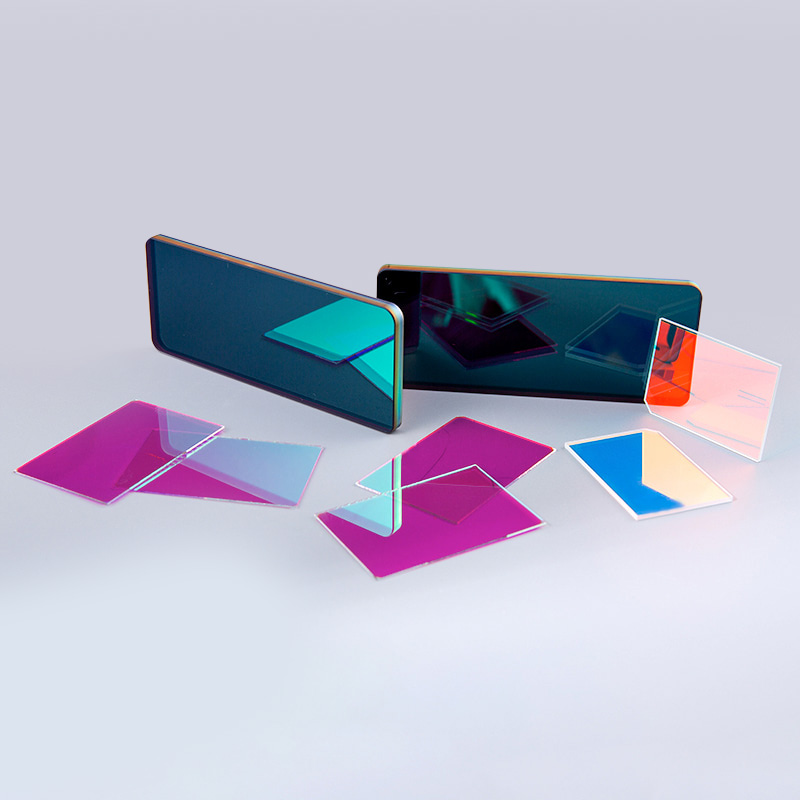
Optical reflectors are essential precision components used to redirect, shape, stabilize, and manage light in demanding optical systems. Unlike ordinary mirrors or decorative reflective surfaces, an optical reflector is engineered to deliver controlled reflection with strict requirements for surface flatness, dimensional accuracy, coating performance, spectral response, mechanical stability, and environmental reliability. In laser optics, automotive sensing, semiconductor inspection, medical instruments, consumer optical devices, and scientific equipment, the quality of the reflector directly affects optical efficiency, beam accuracy, image clarity, signal strength, and long-term system performance.
The optical reflector introduced here is designed for applications where predictable light behavior is critical. It belongs to the broader family of precision optical components, alongside optical flat mirrors, optical prisms, optical spherical mirrors, optical lenses, wafers, and specialized automotive interior glass structural components. As a high-value optical part, it combines refined material selection, advanced grinding and polishing, high-precision coating, strict inspection, and professional manufacturing control. The result is a reflector suitable for customers who require repeatable quality, customization capability, and reliable supply from an experienced optical component manufacturer.
Changzhou Haolilai Photo-Electricity Scientific and Technical Co., Ltd. is a professional manufacturer of precision optical components founded in 1998 and located in Changzhou, Jiangsu, China. With decades of experience, a 35,000-square-meter manufacturing base, more than 300 employees, and certifications such as ISO9001:2015, ISO14001:2015, and IATF16949, the company provides an industrial foundation for producing optical reflectors with stable quality and scalable output. Its focus on laser optics, automotive optics, semiconductor optics, and consumer optics makes it particularly well suited to supporting industries where optical reflectors must meet both performance and reliability requirements.
What Is an Optical Reflector?
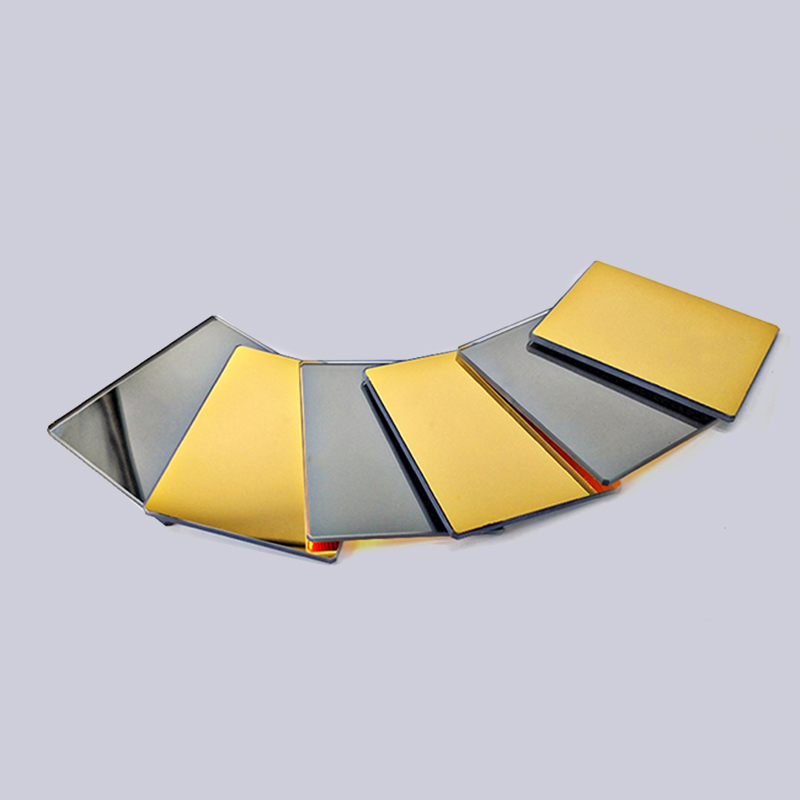
An optical reflector is a precision component designed to reflect light according to a defined optical path. It may be flat, curved, concave, convex, spherical, aspherical, or designed in a customized geometry depending on the system requirements. Its function may appear simple at first glance, but in real optical systems, reflection quality depends on many interrelated parameters. These include substrate material, surface figure, surface roughness, coating structure, reflectivity, wavelength range, angle of incidence, polarization behavior, thermal stability, and resistance to environmental stress.
In laser systems, an optical reflector may guide a beam through a controlled path, fold an optical layout to reduce system size, or maintain beam quality across multiple reflections. In automotive optical modules, it may help direct light for sensing, projection, display, illumination, or interior optical structures. In semiconductor inspection tools, it may support high-resolution measurement, wafer alignment, defect inspection, or lithography-related processes. In consumer electronics, it may contribute to compact projection, imaging, gesture recognition, or sensing assemblies.
A well-designed optical reflector does not simply bounce light. It preserves the characteristics of the light as much as possible. When the incoming light has a specific beam profile, wavelength, polarization, or intensity distribution, the reflector must maintain system performance after reflection. Poor surface quality may scatter light, causing energy loss and noise. Poor coating uniformity may reduce reflectivity or cause spectral inconsistency. Poor dimensional accuracy may create alignment errors. For this reason, optical reflectors require the same level of precision manufacturing and quality control as other core optical elements.
Why Precision Matters in Optical Reflectors
The performance of an optical reflector can be evaluated through several important technical factors. Surface flatness or surface figure determines whether the reflected wavefront remains accurate. Surface roughness influences scattering and energy loss. Coating reflectivity defines how much light is preserved after reflection. Coating durability determines whether the component can withstand humidity, temperature changes, cleaning, and long-term operation. Dimensional tolerances affect how easily the reflector can be installed and aligned inside an optical assembly.
In many high-end systems, even small deviations can create major performance changes. For example, if a reflector used in a laser path introduces wavefront distortion, the beam may become less focused or less stable. If a reflector used in an imaging system creates excessive scattering, contrast and resolution may decline. If a reflector used in an automotive optical device changes performance after thermal cycling, the entire module may fail reliability testing. Precision is therefore not an optional feature; it is the foundation of optical reflector value.
Compared with standard reflective components, a precision optical reflector is manufactured under much stricter process control. The substrate is selected for optical and mechanical properties. Grinding controls geometry and thickness. Polishing reduces surface roughness to optical-grade levels. Cleaning removes microscopic contamination before coating. Coating is deposited with controlled thickness and uniformity. Inspection verifies that the final part meets specifications before delivery. This complete process chain is what separates a professional optical reflector from a general mirror-like part.
Core Advantages of the Optical Reflector
The optical reflector offers several advantages compared with ordinary reflective products and many general-market competitors. These advantages are not limited to a single parameter; instead, they come from the combination of optical design support, material control, process capability, coating expertise, quality certification, and manufacturing experience.
High Reflective Efficiency
Reflective efficiency is one of the most important characteristics of an optical reflector. High reflectivity helps reduce optical loss, improves signal strength, and supports better energy utilization in laser, imaging, sensing, and illumination systems. Depending on the application, the reflector can be designed with metallic coatings, dielectric coatings, or enhanced reflective coatings to achieve performance across target wavelength ranges. For visible light, near-infrared, ultraviolet, or application-specific bands, coating selection can be optimized according to the customer’s technical requirements.
In comparison with low-cost reflectors that may use basic reflective films without precise spectral control, this product can be manufactured with attention to coating uniformity, adhesion, and wavelength response. This makes it suitable for systems where reflection is not merely decorative but functional and measurable.
Excellent Surface Quality
Surface quality strongly influences optical clarity and scattering. A reflector with scratches, digs, pits, or micro-defects may degrade beam quality or introduce unwanted stray light. Precision polishing processes are used to achieve smooth surfaces suitable for high-performance optical use. By controlling surface roughness and defect levels, the optical reflector can help maintain clean light paths and reduce signal noise.
Many competitors can provide simple reflective parts, but not all can maintain consistent optical surface quality across production batches. A manufacturer with long-term optical processing experience is better positioned to control both prototype-level precision and batch-level repeatability.
Stable Dimensional Accuracy
Dimensional accuracy is especially important when the reflector must fit into a compact optical module, mechanical holder, automotive assembly, or semiconductor instrument. Precise length, width, diameter, thickness, chamfer, edge quality, and angular geometry help reduce assembly difficulty and improve alignment repeatability. When customers require customized shapes or special mounting designs, precision machining capability becomes a major advantage.
For optical modules produced in volume, stable dimensions also reduce variation during automated or semi-automated assembly. This can lower system-level adjustment time, improve yield, and reduce total production cost.
Customizable Coating Solutions
Different applications require different reflective coatings. Some reflectors need broadband reflectivity. Others require high reflection at a specific laser wavelength. Some must perform at oblique incidence angles. Others must manage polarization sensitivity. Some must withstand high laser power, while others must survive automotive humidity and thermal cycling. The ability to customize coating design and processing gives the optical reflector a strong advantage.
Coating customization can include metallic reflection, protected metallic coatings, enhanced aluminum, silver or gold coatings, dielectric high-reflection coatings, or hybrid designs. The choice depends on wavelength range, environmental conditions, cost target, and optical performance requirements.
Reliability for Demanding Environments
Optical reflectors used in automotive, semiconductor, laser, and industrial equipment may face demanding operating conditions. Temperature changes, vibration, humidity, cleaning chemicals, and long operating periods can affect coating and substrate stability. A professional manufacturing process considers these requirements from the beginning. Proper substrate selection, cleaning, coating adhesion, edge protection, and inspection help ensure that the reflector remains stable during use.
The company’s certification background, including IATF16949 for automotive-related quality management, supports the production of optical components for industries that require strict reliability and process traceability. This is a meaningful advantage over suppliers that only serve low-requirement commercial markets.
Technical Characteristics and Application-Oriented Parameters
The exact specifications of an optical reflector may vary depending on customer requirements. However, common technical considerations include substrate type, size range, thickness tolerance, surface flatness, surface roughness, coating type, reflectivity, wavelength range, clear aperture, parallelism, angle tolerance, chamfer, and environmental durability. A professional supplier can help define these parameters according to the final application.
| Technical Aspect | Purpose | Customer Benefit |
|---|---|---|
| Substrate Selection | Determines mechanical stability, thermal behavior, and optical compatibility | Improves reliability and matches application requirements |
| Surface Figure | Controls reflected wavefront accuracy | Maintains beam quality and imaging precision |
| Surface Roughness | Reduces scattering and optical loss | Enhances contrast, signal strength, and system efficiency |
| Reflective Coating | Provides wavelength-specific or broadband reflection | Optimizes optical performance for laser, sensing, or imaging systems |
| Dimensional Tolerance | Ensures accurate installation and alignment | Reduces assembly time and improves product consistency |
| Environmental Durability | Protects performance under temperature, humidity, and vibration | Supports long-term stable operation in demanding systems |
This table shows why a reflector should be evaluated as a complete optical component rather than a simple reflective surface. The final performance depends on the interaction of design, materials, machining, coating, and inspection.
Advanced Manufacturing Process
The performance advantages of an optical reflector are created through a disciplined manufacturing process. Precision optics manufacturing requires both technical equipment and process experience. A single step cannot guarantee success; quality must be built throughout the entire production flow. Changzhou Haolilai Photo-Electricity Scientific and Technical Co., Ltd. has developed its capabilities through years of work in precision optical components, including reflectors, lenses, prisms, mirrors, wafers, and automotive optical structures.
Material Selection and Incoming Inspection
The manufacturing process begins with material selection. Different reflector applications may use optical glass, fused silica, borosilicate glass, crystal materials, ceramic substrates, or other specialized materials. The substrate must be selected according to optical transmission or reflection requirements, thermal expansion, mechanical strength, coating compatibility, cost, and environmental durability.
Incoming inspection helps ensure that raw materials meet basic requirements before processing begins. Material defects such as bubbles, inclusions, striae, internal stress, or surface flaws can affect final performance. A strong incoming quality control process reduces production risk and improves final yield.
Cutting and Shaping
After material approval, the substrate is cut and shaped according to the required geometry. Reflectors may be rectangular, circular, elliptical, polygonal, or customized for special optical paths. Some may require precise bevels, chamfers, holes, steps, or mounting features. Controlled cutting minimizes material damage and prepares the part for grinding and polishing.
For customized optical reflectors, shaping accuracy is especially important. If the reflector is part of a compact optical module, even a small dimensional error may prevent proper assembly. Advanced equipment and experienced technicians help maintain size and geometry consistency.
Grinding for Geometry Control
Grinding is used to bring the reflector substrate closer to its required thickness, flatness, angle, or curvature. In the case of flat reflectors, flatness and parallelism are important. For curved reflectors, radius and surface figure must be controlled. Grinding also removes subsurface damage from earlier cutting operations and prepares the part for polishing.
Competitors with limited optical processing capability may struggle to control geometry at this stage. If grinding is inconsistent, later polishing cannot fully correct the problem without excessive time and cost. Strong process control during grinding is therefore a key contributor to final quality.
Precision Polishing
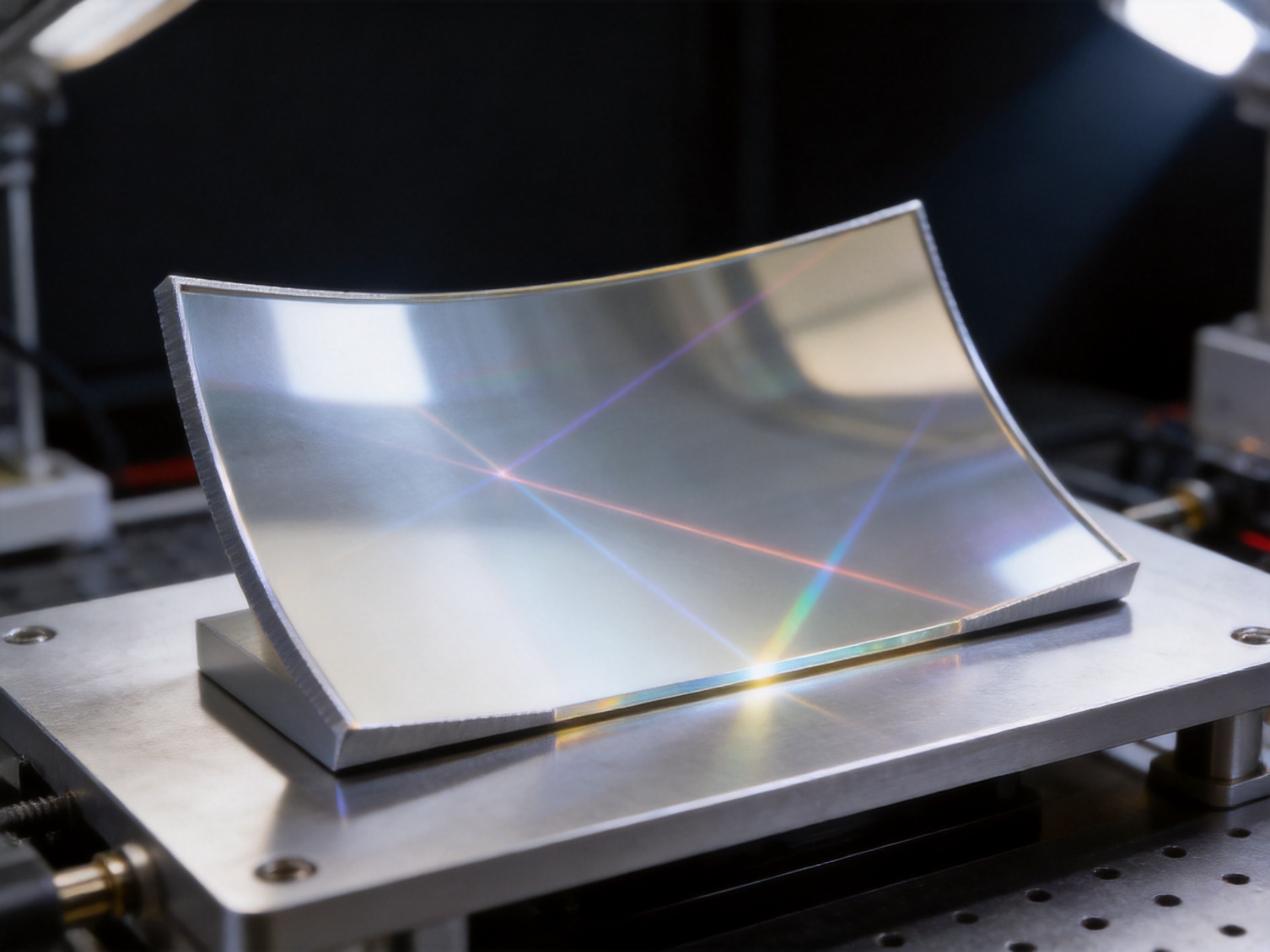
Polishing transforms a ground optical surface into a high-quality reflective surface suitable for coating. The objective is to achieve the specified surface figure, smoothness, and defect level. Polishing requires controlled pressure, slurry selection, pad condition, processing time, temperature stability, and skilled process adjustment.
For high-performance reflectors, polishing quality directly affects scattering and wavefront distortion. Fine polishing reduces microscopic irregularities that would otherwise scatter light. Consistent polishing across batches helps ensure that every reflector performs similarly in the customer’s system.
Cleaning Before Coating
Before coating, the optical surface must be extremely clean. Microscopic particles, organic residues, moisture, or polishing compound traces can cause coating defects, weak adhesion, pinholes, or reduced reflectivity. Cleaning may include ultrasonic cleaning, deionized water rinsing, chemical cleaning, drying, and clean handling procedures.
This step is often underestimated, but it is one of the most important differences between professional optical coating and low-grade reflective treatment. A high-reflection coating can only perform well when deposited onto a properly prepared surface.
Optical Coating Deposition
The coating process gives the reflector its final optical function. Depending on the product design, coating may be deposited through vacuum coating, evaporation, sputtering, ion-assisted deposition, or other advanced processes. Coating thickness and layer structure must be carefully controlled to achieve the desired reflectivity, wavelength range, durability, and angle performance.
Metallic coatings are often selected for broadband reflection and cost-effective performance. Protected metallic coatings add durability and reduce oxidation. Dielectric coatings can offer very high reflectivity at selected wavelengths and improved laser performance. The correct coating solution depends on how the reflector will be used.
The company’s optical component manufacturing background supports coating development for multiple fields, including laser optics, automotive optics, semiconductor optics, and consumer optics. This cross-industry experience is valuable because it allows coating designs to be matched to real application conditions rather than simple laboratory measurements.
Inspection and Quality Verification
Final inspection verifies whether the optical reflector meets customer specifications. Inspection may include dimensional measurement, surface quality inspection, flatness or wavefront testing, coating reflectivity measurement, adhesion testing, visual inspection, and environmental reliability evaluation when required. For automotive or high-reliability applications, traceability and process records may also be important.
Inspection is not merely a final screening step. It also provides feedback to improve grinding, polishing, cleaning, and coating processes. A manufacturer with strong inspection capability can identify process variation earlier and maintain stable production quality.
Company Strengths Supporting Optical Reflector Quality
The quality of a precision optical reflector depends not only on product design but also on the strength of the manufacturer. Changzhou Haolilai Photo-Electricity Scientific and Technical Co., Ltd. offers several strengths that help customers obtain dependable optical reflector solutions.
Decades of Optical Manufacturing Experience
Founded in 1998, the company has accumulated extensive experience in precision optical component development and production. Long-term experience matters because optical manufacturing involves many practical details that cannot be solved by equipment alone. Process stability, defect prevention, polishing behavior, coating compatibility, and customer application understanding all improve through years of manufacturing practice.
Compared with newer or less specialized suppliers, an experienced manufacturer is more capable of anticipating technical risks, supporting customized requirements, and maintaining quality across production volumes.
Certified Quality Management
The company has obtained ISO9001:2015, ISO14001:2015, and IATF16949 certifications. ISO9001 supports systematic quality management, ISO14001 reflects environmental management responsibility, and IATF16949 is especially important for automotive supply chains. These certifications indicate that the company operates with defined processes, documentation, continuous improvement, and customer-focused quality control.
For optical reflector buyers, certified systems provide confidence that production is not dependent on informal methods. They also support traceability, consistency, and structured response to quality requirements.
Research and Engineering Capability
The company has established the Jiangsu Precision Optical Lens Engineering Technology Center and Jiangsu Enterprise Technology Research Center. It has also obtained multiple invention patents, utility model patents, and recognized high and new technology products. These achievements demonstrate that the company is not only a processing factory but also an engineering-oriented manufacturer.
For customers developing new optical systems, engineering support can be extremely valuable. The reflector may need to be optimized for wavelength, shape, angle, coating, assembly, or environment. A technically capable supplier can help transform a design concept into a manufacturable and reliable optical component.
Large Manufacturing Base and Workforce
With a 35,000-square-meter facility and more than 300 employees, the company has the scale to support both customized projects and production orders. This matters because optical reflectors may be required in small prototype quantities during product development and later in higher volumes after the customer’s system enters production.
A supplier with sufficient manufacturing capacity can better support production continuity, scheduling flexibility, and long-term cooperation. This is particularly important for customers in automotive, semiconductor, and industrial markets where supply stability is a key purchasing consideration.
International Supply Experience
The company exports products to more than 20 countries. International supply experience helps improve communication, packaging standards, documentation, and understanding of global customer expectations. Optical reflectors are sensitive components, so export packaging and handling must protect surfaces and coatings during transportation. Experience with international customers helps reduce supply risk and improve cooperation efficiency.
Advantages Over Competing Reflector Suppliers
When customers compare optical reflector suppliers, the differences may not always be obvious from basic product descriptions. However, the real difference appears in performance consistency, customization support, process maturity, and long-term reliability. The optical reflector described here offers several competitive advantages.
More Than a Commodity Reflective Surface
Many low-cost reflectors are treated as commodity parts. They may provide reflection but lack strict control over surface figure, roughness, coating uniformity, and environmental durability. Such components may be acceptable for simple illumination or non-critical applications, but they are risky for precision optical systems.
This optical reflector is positioned as a precision optical component. It is manufactured with attention to optical performance, process control, and application requirements. This makes it suitable for systems where quality variation can cause measurable performance loss.
Application-Specific Engineering
Some suppliers only offer standard reflectors with fixed specifications. While standard products can be useful, many modern optical systems require customization. The reflector may need a special shape, nonstandard thickness, high reflectivity at a particular wavelength, controlled incidence angle, specific coating durability, or compatibility with an assembly process.
With experience across laser, automotive, semiconductor, and consumer optical applications, the manufacturer can support application-specific solutions. This flexibility is a major advantage for customers developing differentiated optical products.
Stronger Reliability Foundation
Reliability is a critical factor in many industries. Automotive optical components may need to withstand temperature cycling, humidity, vibration, and long service life. Semiconductor equipment may require stable optical behavior and low contamination risk. Laser systems may demand coating durability under high optical intensity. A reflector that performs well at delivery but degrades quickly in operation is not a good solution.
The company’s quality certifications, process control, and industry experience help build a stronger reliability foundation than suppliers focused only on short-term cost reduction. Customers benefit from reduced failure risk, lower maintenance burden, and improved system reputation.
Integrated Optical Component Capability
The company produces various precision optical components, not only reflectors. Its product category experience includes optical flat mirrors, wafers, automotive interior glass structural components, optical prisms, optical spherical mirrors, optical lenses, and other optical parts. This integrated capability can benefit customers who need multiple components for one optical system.
Instead of sourcing reflectors, prisms, lenses, and mirrors from separate suppliers, customers may be able to work with one experienced manufacturer for multiple optical elements. This can simplify communication, improve component compatibility, and reduce supplier management complexity.
Applications of Optical Reflectors
Optical reflectors are used in a wide range of systems. Their role changes depending on the optical design, but the need for stable reflection remains constant.
Laser Optics
In laser systems, reflectors are used to guide, fold, redirect, or shape laser beams. They may appear in laser cutting machines, laser marking systems, laser measurement devices, medical lasers, laboratory instruments, and communication-related equipment. The reflector must maintain beam quality, minimize power loss, and withstand the laser wavelength and intensity.
For high-power or precision laser applications, coating selection is especially important. Dielectric high-reflection coatings may be used when very high reflectivity and low absorption are required. Protected metallic coatings may be chosen for broader wavelength coverage. Surface flatness and coating quality help reduce beam distortion and thermal effects.
Automotive Optics
Automotive optical systems are becoming increasingly sophisticated. Reflectors may be used in interior sensing, head-up displays, lighting modules, driver monitoring systems, LiDAR-related assemblies, projection systems, and other optical structures. Automotive applications often require high reliability because the component must operate under changing temperature, vibration, humidity, and long service conditions.
The company’s IATF16949 certification provides an important foundation for automotive customers. It indicates familiarity with automotive quality expectations, including process control, documentation, continuous improvement, and defect prevention.
Semiconductor Optics
Semiconductor manufacturing and inspection require precise light control. Reflectors may be used in wafer inspection, alignment systems, metrology tools, lithography-related modules, and optical sensing assemblies. These systems often demand low scattering, high cleanliness, accurate geometry, and stable coating behavior.
In semiconductor environments, optical components may need to meet strict cleanliness and performance standards. Precision polishing, careful cleaning, and reliable coating deposition help support these requirements.
Consumer Optical Devices
Consumer electronics increasingly use compact optical systems for projection, imaging, sensing, scanning, and augmented interaction. Reflectors can help fold optical paths and reduce product size. Because consumer devices may be produced in large volumes, reflector consistency and manufacturability are important.
A supplier with both customization capability and production scale can support the transition from early design samples to volume manufacturing. This helps customers shorten development cycles and stabilize product launch schedules.
Scientific and Industrial Instruments
Optical reflectors are also used in spectrometers, microscopes, interferometers, measurement systems, optical benches, environmental monitoring equipment, and industrial inspection devices. These instruments often require stable optical paths and predictable performance. High surface quality and accurate reflection help improve measurement accuracy and repeatability.

Design Considerations for Choosing an Optical Reflector
Selecting an optical reflector requires careful evaluation of application needs. Customers should consider not only reflectivity but also wavelength, incidence angle, polarization, substrate material, coating durability, environment, size, mounting method, and cost. A professional supplier can assist in balancing these factors.
Wavelength Range
The first design question is the operating wavelength range. A reflector for visible imaging may differ significantly from one used for ultraviolet inspection or infrared laser systems. Coating materials and layer structures must be chosen to provide appropriate reflectivity in the required spectral band.
Angle of Incidence
Reflector performance changes with angle of incidence. At oblique angles, reflectivity may vary between s-polarized and p-polarized light. If the system uses a fixed angle such as 45 degrees, the coating should be designed and tested for that condition. A reflector optimized for normal incidence may not perform the same at a steep angle.
Power Density
Laser applications require attention to optical power density. If absorption is too high, the coating may heat up, distort, or fail. High-power systems may require low-absorption dielectric coatings and careful thermal management. The substrate material may also need good thermal stability.
Environmental Conditions
Temperature, humidity, vibration, dust, chemicals, and cleaning methods can all affect reflector life. Automotive, outdoor, and industrial applications often require more durable coatings and stronger adhesion. Protected coatings or special environmental testing may be recommended.
Mechanical Integration
The reflector must fit into the customer’s assembly. This includes shape, thickness, edge treatment, mounting surface, adhesive compatibility, and alignment reference surfaces. Good mechanical design reduces assembly errors and improves production efficiency.
Quality Control Philosophy
Quality control in optical reflector manufacturing should be proactive rather than reactive. Instead of relying only on final inspection, each process step should be controlled to prevent defects. This philosophy is essential for precision optics because many defects are difficult or expensive to correct after they occur.
For example, poor raw material selection may cause internal defects that remain throughout production. Inaccurate grinding may create geometry errors that polishing cannot easily fix. Insufficient cleaning may cause coating defects that only appear after deposition. Weak coating adhesion may pass visual inspection but fail during environmental testing. Therefore, a complete quality system must cover the full manufacturing chain.
The company’s certified management systems and technical centers support this approach. Process documentation, trained personnel, inspection equipment, and continuous improvement methods help ensure that optical reflectors are produced with consistent quality. For customers, this translates into fewer unexpected problems, better batch consistency, and stronger confidence during system integration.
Packaging and Handling Considerations
Optical reflectors require careful packaging because their functional surfaces can be damaged by dust, scratches, fingerprints, moisture, or mechanical shock. Proper packaging protects the coating and polished surface during storage and transportation. Components may be individually separated, sealed, cushioned, and labeled according to customer requirements.
Handling is also important after delivery. Operators should avoid touching optical surfaces directly. Clean gloves, tweezers, vacuum tools, or approved handling fixtures may be used depending on the component size and sensitivity. If cleaning is required, the cleaning method should match the coating type. Some coatings tolerate standard optical cleaning solvents, while others may require more careful procedures.
A professional supplier can provide recommendations for handling and cleaning to help customers maintain reflector performance after installation.
Customization Possibilities
Customization is one of the main reasons customers choose a professional optical reflector manufacturer. Optical systems are becoming more compact, more integrated, and more application-specific. Standard reflectors may not always meet the design requirements. Custom options may include shape, size, substrate, coating, reflectivity, angle performance, edge treatment, mounting features, and environmental testing.
For example, a customer developing a laser module may need a reflector with very high reflectivity at a single wavelength and low wavefront distortion. A customer designing an automotive optical system may need a reflector that survives temperature cycling and humidity exposure. A semiconductor equipment customer may need excellent surface quality and low contamination risk. A consumer electronics customer may need small, thin, precisely shaped reflectors suitable for compact assembly.
By working with an experienced manufacturer early in the design stage, customers can improve manufacturability and avoid costly redesign. The supplier can advise on practical tolerances, coating options, material availability, and cost-effective production methods.
How Optical Reflectors Improve System Performance
A high-quality optical reflector improves system performance in several ways. First, it reduces optical loss by providing high reflectivity. This is especially important in systems with multiple reflective elements, where small losses at each surface can accumulate. Second, it preserves beam or image quality by maintaining accurate surface figure and low scattering. Third, it supports compact optical layouts by folding light paths without sacrificing performance. Fourth, it contributes to long-term reliability by using durable materials and coatings.
In laser systems, this may mean better beam stability and higher energy delivery. In imaging systems, it may mean improved contrast and clarity. In sensing systems, it may mean stronger signals and better measurement accuracy. In automotive systems, it may mean reliable performance over the product lifetime. In manufacturing equipment, it may mean improved process control and reduced downtime.
Sustainability and Responsible Manufacturing
Modern customers increasingly consider environmental responsibility when selecting suppliers. ISO14001:2015 certification reflects the company’s commitment to environmental management. Precision optics manufacturing involves materials, cleaning processes, polishing compounds, and coating operations that must be managed responsibly. A structured environmental management system helps reduce waste, improve resource use, and support compliance with environmental expectations.
Sustainability is not separate from quality. Efficient process control reduces scrap. Stable production reduces rework. Durable products reduce replacement frequency. By manufacturing optical reflectors with consistent quality and long service life, the company supports both customer performance and responsible resource use.
Procurement Considerations for Buyers
When purchasing optical reflectors, buyers should prepare clear technical requirements whenever possible. Important information includes application field, operating wavelength, angle of incidence, required reflectivity, substrate preference, dimensions, tolerance requirements, surface quality level, environmental conditions, quantity, and inspection standards. If the design is still under development, buyers can discuss functional requirements and allow the supplier to recommend suitable specifications.
Buyers should also evaluate the supplier’s manufacturing experience, quality certifications, customization ability, inspection capability, and communication responsiveness. The lowest unit price is not always the best choice if it leads to alignment problems, optical loss, coating failure, or inconsistent batches. In precision optical systems, component quality directly affects system cost and customer satisfaction.
Choosing a supplier with proven optical manufacturing strength can reduce development risk and improve long-term supply stability.
Q&A: Common Questions About Optical Reflectors
What is the main function of an optical reflector?
An optical reflector redirects light in a controlled way. It is used to guide beams, fold optical paths, improve illumination, support imaging, or manage signals in optical systems. Unlike ordinary mirrors, precision optical reflectors are manufactured to strict optical and mechanical specifications.
How is an optical reflector different from a standard mirror?
A standard mirror is usually designed for general visual reflection, while an optical reflector is engineered for measurable optical performance. It may require precise surface flatness, low roughness, wavelength-specific coating, tight dimensional tolerance, and environmental reliability.
Can the reflector be customized for a specific wavelength?
Yes. The reflective coating can be designed for visible, ultraviolet, infrared, laser-specific, or broadband wavelength ranges depending on the application. Coating choice depends on reflectivity requirements, angle of incidence, polarization, power density, and durability needs.
Why is surface quality important?
Surface quality affects scattering, wavefront distortion, image clarity, and optical efficiency. Scratches, digs, roughness, or surface defects can reduce performance, especially in laser, imaging, and semiconductor applications.
What industries commonly use optical reflectors?
Optical reflectors are used in laser systems, automotive optics, semiconductor inspection equipment, consumer electronics, medical instruments, scientific instruments, industrial measurement systems, and optical communication-related devices.
What certifications support the manufacturing quality?
The manufacturer has obtained ISO9001:2015, ISO14001:2015, and IATF16949 certifications. These certifications support quality management, environmental management, and automotive supply chain requirements.
Why is coating durability important?
The coating is responsible for reflective performance. If it degrades due to humidity, temperature, cleaning, oxidation, or laser exposure, the reflector may lose efficiency or fail. Durable coating design helps ensure long-term system stability.
Can one supplier provide multiple optical components for the same system?
Yes. Because the manufacturer produces multiple categories of precision optical components, including reflectors, flat mirrors, spherical mirrors, prisms, lenses, wafers, and automotive glass structures, customers may source several optical elements from one experienced supplier.
What information should be provided when requesting a quotation?
Useful information includes dimensions, substrate material, wavelength range, reflectivity target, coating type, angle of incidence, surface quality, flatness, tolerance, environmental conditions, quantity, and application background. If exact specifications are not available, the supplier can help recommend suitable options.
How does the company support long-term cooperation?
The company supports long-term cooperation through its manufacturing scale, technical centers, quality certifications, international export experience, and decades of optical production knowledge. These strengths help customers move from prototype development to stable production.

Conclusion
An optical reflector is a critical component for precise light management. Its value depends on more than reflectivity alone. Surface quality, coating design, dimensional accuracy, environmental durability, and manufacturing consistency all determine how well the reflector performs in real optical systems. For industries such as laser optics, automotive optics, semiconductor optics, consumer optics, and scientific instrumentation, a high-quality reflector can improve efficiency, reliability, and overall system performance.
Changzhou Haolilai Photo-Electricity Scientific and Technical Co., Ltd. provides a strong manufacturing foundation for precision optical reflectors. With experience dating back to 1998, a large production base, more than 300 employees, advanced engineering centers, multiple certifications, patents, and international supply experience, the company is well positioned to support customers requiring both standard and customized optical reflector solutions. Its strengths in material processing, precision polishing, coating, inspection, and quality management create clear advantages over ordinary reflector suppliers.
For buyers seeking an optical reflector that combines performance, customization, reliability, and professional manufacturing support, this product represents a dependable solution. Whether used in laser equipment, automotive optical modules, semiconductor inspection systems, consumer devices, or scientific instruments, a precision optical reflector can make the difference between acceptable function and optimized optical performance.
References
1. Hecht, Eugene. Optics. Pearson Education.
2. Macleod, H. Angus. Thin-Film Optical Filters. CRC Press.
3. Smith, Warren J. Modern Optical Engineering. McGraw-Hill Education.
4. Bass, Michael, ed. Handbook of Optics. Optical Society of America and McGraw-Hill.
5. ISO 9001:2015. Quality Management Systems Requirements. International Organization for Standardization.
6. ISO 14001:2015. Environmental Management Systems Requirements. International Organization for Standardization.
7. IATF 16949. Quality Management System Standard for Automotive Production and Relevant Service Parts Organizations. International Automotive Task Force.







 苏公网安备32041102000130号