
 Search
 en
en English
 日本語
日本語 русский
 Español
 Deutsch
 中文简体
中文简体Content
- 1 Understanding Perforated Special-Shaped Quartz Window Substrates
- 2 Material Foundation: Why Quartz Glass Performs So Well
- 3 Key Product Advantages Over Conventional Alternatives
- 4 Typical Shapes, Sizes, and Processing Range
- 5 Precision Parameters That Matter
- 6 Advanced Manufacturing Processes
- 7 Company Manufacturing Strengths
- 8 Advantages in Customization and Engineering Support
- 9 Applications in Semiconductor and Electronics Manufacturing
- 10 Applications in Laser and Optical Instruments
- 11 Applications in Automotive, Industrial, and Consumer Optics
- 12 Applications in Laboratory, Medical, and Defense Equipment
- 13 Coating Options and Optical Performance Enhancement
- 14 Quality Control as a Competitive Advantage
- 15 Design Considerations for Engineers
- 16 Why Precision Manufacturing Matters More for Special Shapes
- 17 Comparison With Competing Materials
- 18 Cost Efficiency Through Reliability
- 19 Packaging and Handling Considerations
- 20 Procurement Guidance for Buyers
- 21 Q&A Section
- 21.1 Q1: What are perforated special-shaped quartz window substrates?
- 21.2 Q2: What material is used for these substrates?
- 21.3 Q3: What sizes can be manufactured?
- 21.4 Q4: Why choose quartz instead of ordinary glass?
- 21.5 Q5: Can holes and irregular shapes be processed accurately?
- 21.6 Q6: What optical tolerances are available?
- 21.7 Q7: Are these parts suitable for high-temperature environments?
- 21.8 Q8: Can coatings be applied?
- 21.9 Q9: Which industries commonly use these products?
- 21.10 Q10: What information should customers provide for customization?
- 22 Conclusion
- 23 References
- 24 Product: Perforated special-shaped parts
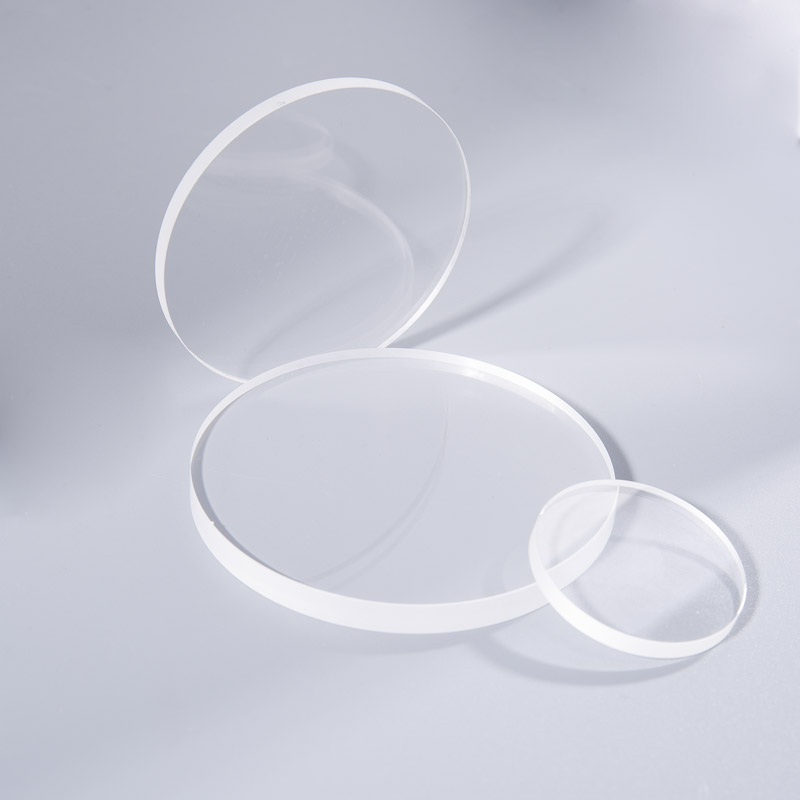
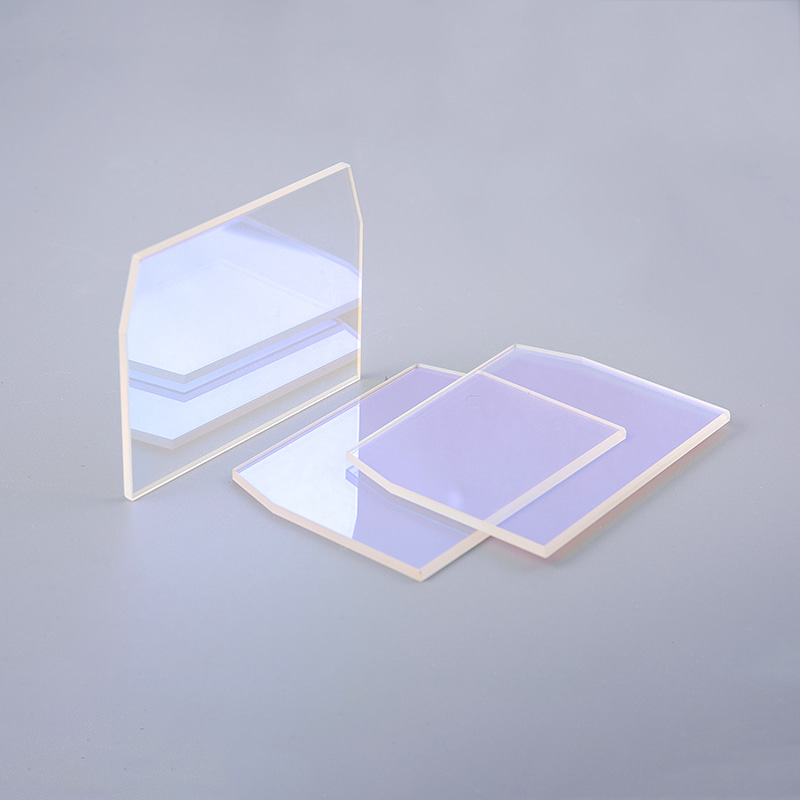
Perforated special-shaped quartz window substrates are precision optical components designed for applications where ordinary round or rectangular glass parts cannot meet the combined requirements of light transmission, dimensional accuracy, thermal stability, electrical insulation, and customized mechanical integration. These components are commonly manufactured from high-purity quartz glass containing more than 99.99% silica, giving them a distinctive balance of optical, thermal, chemical, and mechanical performance.
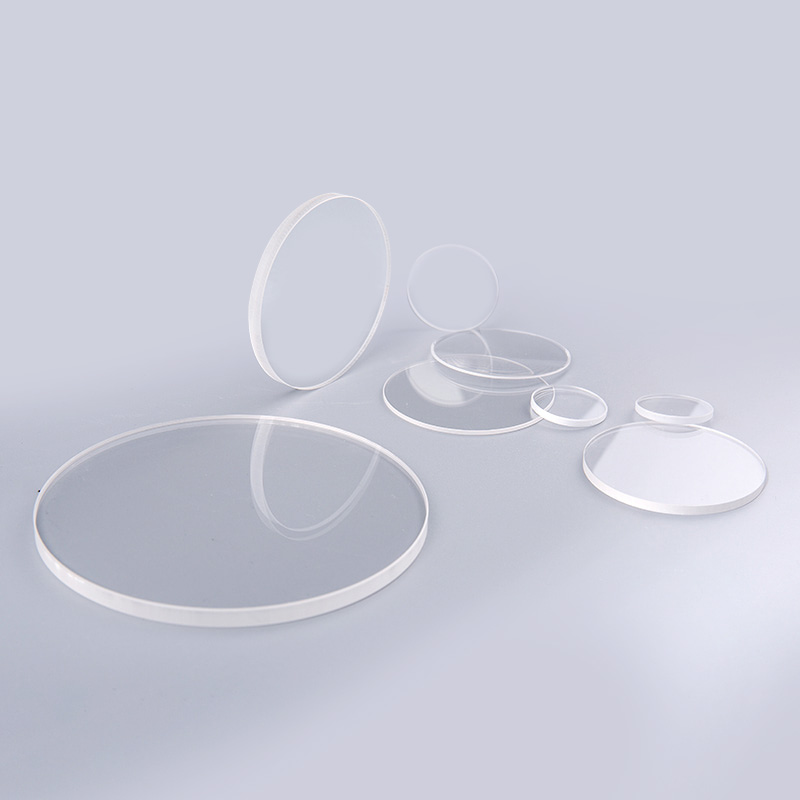
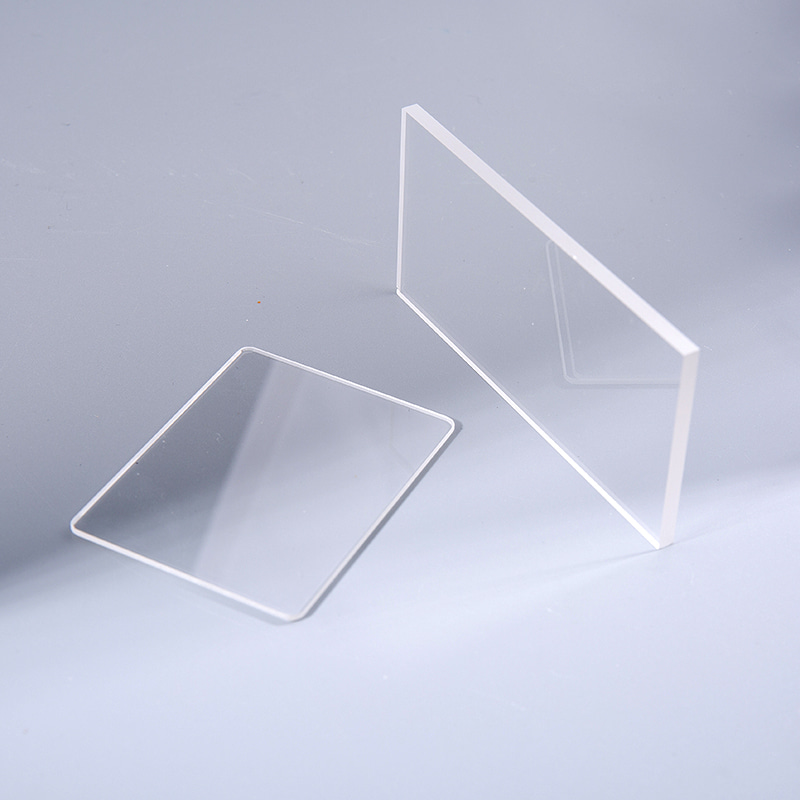
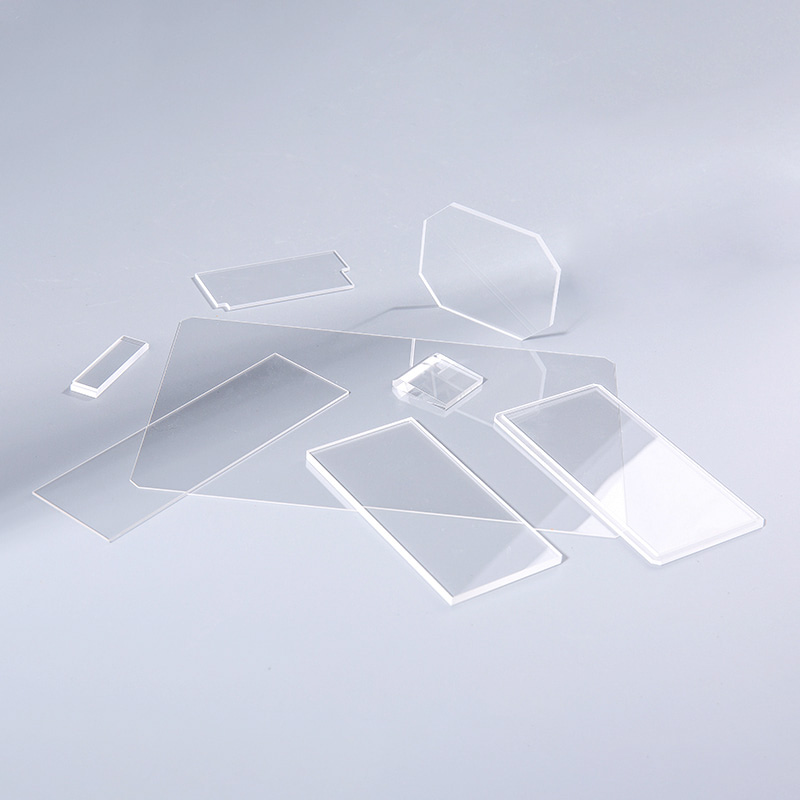
Unlike standard optical windows that are limited to simple geometries, perforated special-shaped parts can be processed into circular, square, rectangular, triangular, trapezoidal, and irregular shapes. They can also be drilled, punched, edged, polished, and manufactured according to customer drawings. This makes them suitable for optical systems, semiconductor equipment, laser instruments, laboratory devices, medical equipment, high-temperature chambers, industrial sensors, communication devices, and defense-related precision assemblies.
In demanding optical systems, the function of a window substrate is not merely to separate two environments. It must transmit light with minimal loss, maintain surface quality under thermal and mechanical stress, resist chemical attack, and preserve dimensional stability over long-term use. Quartz glass is one of the most trusted materials for these requirements because it offers broad transparency from ultraviolet to near-infrared wavelengths, low thermal expansion, strong thermal shock resistance, high hardness, and excellent electrical insulation.
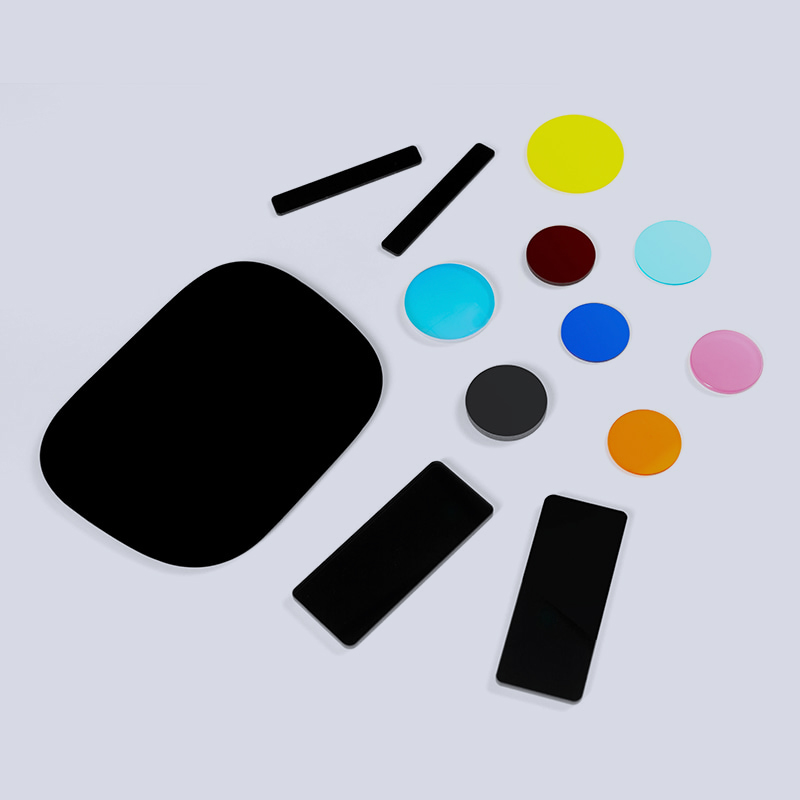
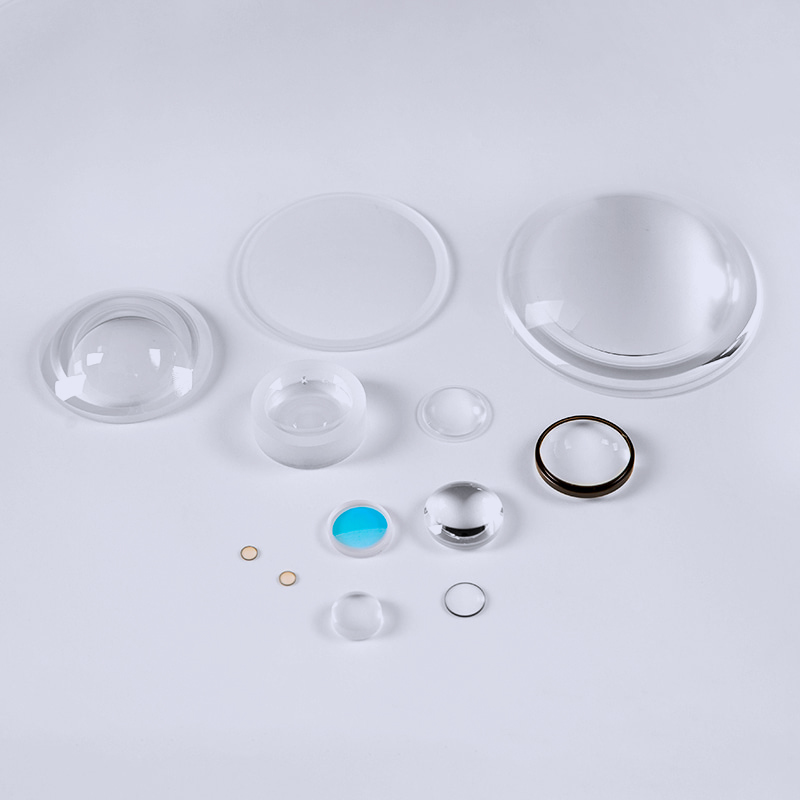
Perforated special-shaped parts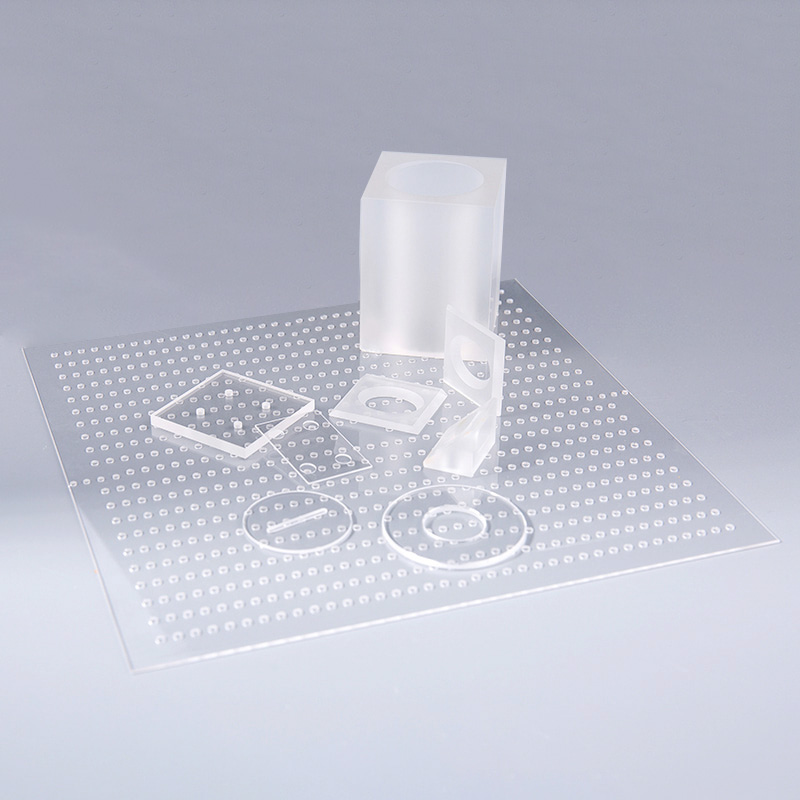
Understanding Perforated Special-Shaped Quartz Window Substrates
A quartz window substrate is a flat optical component made from quartz glass, usually used as a protective or transmission element in optical, laser, thermal, vacuum, or electronic systems. When the component includes holes, grooves, cutouts, asymmetric contours, or non-standard shapes, it becomes a perforated or special-shaped part. These features allow the part to fit into complex mechanical structures while retaining the optical performance expected from a precision window.
The term “perforated” generally refers to the presence of one or more holes or apertures in the substrate. These holes may serve mechanical, optical, fluidic, or assembly functions. For example, they can be used for mounting screws, gas passage, sensor access, alignment pins, vacuum interfaces, or beam-shaping requirements. The term “special-shaped” refers to any profile beyond conventional circular or rectangular forms, including irregular outlines, stepped edges, notches, triangles, trapezoids, and custom geometries.
The value of these components lies in the combination of customization and precision. A substrate may need to be only a few millimeters in diameter or as large as 400 mm. It may be as thin as 0.1 mm or as thick as 30 mm. It may require tight profile tolerances, highly controlled thickness, excellent parallelism, high surface flatness, and strict cleanliness. Achieving all of these conditions in a brittle, high-hardness optical material requires advanced manufacturing capability and deep process knowledge.
Material Foundation: Why Quartz Glass Performs So Well
Quartz glass is primarily composed of silica. When the silica purity exceeds 99.99%, the material achieves properties that are significantly superior to many ordinary optical glasses in demanding environments. It has a Mohs hardness of approximately level seven, which gives it strong resistance to scratching and wear. It also has a very low coefficient of thermal expansion, allowing it to maintain shape and size when temperature changes occur.
One of the most important advantages of quartz is its transparency across a wide spectral range. Depending on the grade and manufacturing method, quartz glass can provide excellent transmission in ultraviolet, visible, and near-infrared regions. This makes it useful in optical instruments, UV curing systems, laser processing equipment, spectral analysis devices, semiconductor photolithography-related equipment, and many monitoring systems that rely on accurate light transmission.
Quartz glass can be divided into fused quartz glass and synthetic quartz glass. Fused quartz is often made by melting naturally occurring crystalline silica. Synthetic quartz is manufactured through chemical processes that can deliver very high purity and consistent optical properties. Both types can offer outstanding heat resistance, transparency, electrical insulation, and chemical stability, but synthetic quartz is especially valuable where high optical uniformity and low impurity levels are required.
The low thermal expansion of quartz is a major reason it is preferred for high-precision applications. In ordinary glass, temperature changes can cause expansion or contraction that may affect alignment, sealing, or optical performance. Quartz experiences much less dimensional change, helping maintain parallelism, flatness, and mechanical fit. This is especially important in furnaces, combustion chambers, laser systems, semiconductor tools, and other environments where rapid or repeated temperature changes are common.
Quartz also provides excellent thermal shock resistance. A component may experience sudden heating or cooling during industrial operation, optical testing, laboratory experiments, or cleaning processes. Materials with poor thermal shock resistance can crack or deform under such conditions. Quartz glass, by contrast, is well known for maintaining structural integrity under harsh thermal cycling when correctly designed and processed.
Key Product Advantages Over Conventional Alternatives
Superior Optical Transmission
One of the strongest advantages of perforated special-shaped quartz window substrates is their high transparency. The transparency can reach more than 85%, and the material performs across a broad wavelength range from ultraviolet to near-infrared. For optical applications, this means the window can transmit useful light while protecting sensitive internal components from dust, particles, pressure differences, heat, or chemical exposure.
Compared with ordinary soda-lime glass or many common industrial glasses, quartz provides better UV transmission and higher resistance to optical degradation under high-energy radiation. This makes it especially valuable in UV inspection systems, photochemical processing equipment, laser systems, and analytical instruments.
Excellent Thermal Stability
Quartz maintains optical and structural integrity at temperatures that would distort, soften, or damage many other glasses. In high-temperature environments such as furnaces, combustion chambers, industrial monitoring ports, and thermal processing equipment, a window substrate must resist thermal stress while maintaining transparency. Quartz is well suited to this role because it combines high-temperature resistance with low thermal expansion.
Competitor products made from lower-grade glass may offer cost advantages but often cannot match quartz in thermal cycling or high-temperature performance. A lower-cost window that fails prematurely can cause expensive downtime, instrument contamination, or safety concerns. Quartz substrates provide a more reliable solution for mission-critical applications.
Dimensional Stability in Precision Assemblies
Special-shaped quartz parts are frequently used in assemblies where the optical window must fit precisely with metal frames, ceramic components, semiconductor fixtures, sealing structures, or sensor housings. The low thermal expansion coefficient helps the component retain its dimensions under variable operating conditions. This stability reduces the risk of misalignment, stress concentration, seal failure, or optical path deviation.
In high-precision optical instruments, even slight deformation can influence measurement accuracy. A quartz substrate with controlled thickness tolerance, surface flatness, and parallelism provides a more dependable platform for stable light transmission.
Customization for Complex Mechanical Integration
Standard windows are often available only in simple diameters and thicknesses. Perforated special-shaped quartz substrates are different because they can be customized according to drawings. The ability to manufacture round, square, rectangular, triangular, trapezoidal, and irregular profiles allows engineers to optimize the component around the complete system design rather than compromising the design around a standard part.
Holes, slots, notches, and other structural features can be created for installation, alignment, air passage, optical access, or multifunctional integration. This flexibility is a key competitive advantage, especially for customers developing advanced equipment where space, geometry, and performance requirements are highly specific.
High Hardness and Wear Resistance
With a Mohs hardness of about seven, quartz glass has strong surface durability. This is useful in environments where the component may be exposed to cleaning, handling, particles, or mechanical contact. While quartz still requires careful handling as an optical material, it provides stronger scratch resistance than many softer glass alternatives.
Chemical Stability and Cleanliness
Quartz glass has excellent chemical stability and is widely used in semiconductor, chemical, laboratory, and medical environments. It resists many corrosive substances and does not easily contaminate sensitive processes. In semiconductor applications, material purity and cleanliness are essential because contamination can affect yield and equipment reliability. High-purity quartz is therefore a preferred material for many process-related windows and fixtures.
Typical Shapes, Sizes, and Processing Range
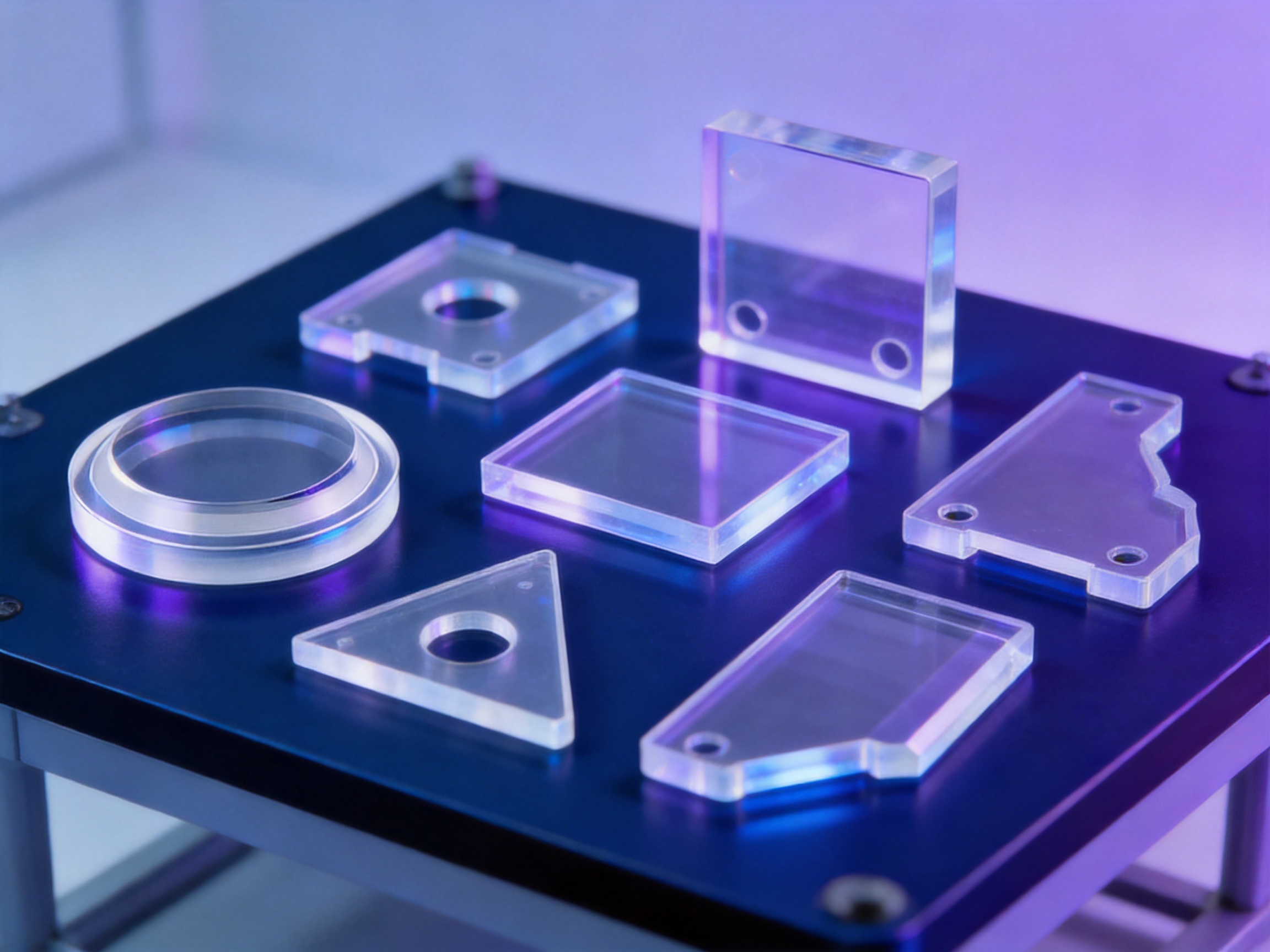
The product can be manufactured in multiple shapes and dimensions to meet different system requirements. Round substrates are suitable for lenses, optical ports, viewing windows, sensor covers, and circular mounting assemblies. Square and rectangular substrates are widely used in optical instruments, flat panel inspection equipment, laser machines, and industrial protective windows. Triangular, trapezoidal, and irregular components are ideal for custom mechanical layouts or specialized optical paths.
Item |
Available Capability |
Application Value |
Round shapes |
Outer diameter from 2 mm to 400 mm; thickness from 0.1 mm to 30 mm |
Suitable for circular optical ports, laser windows, sensor covers, and viewing windows |
Square and rectangular shapes |
Length from 2 mm to 400 mm; width from 2 mm to 400 mm; thickness from 0.1 mm to 30 mm |
Suitable for instrument panels, protective optical windows, inspection modules, and industrial housings |
Triangle shapes |
Custom production according to customer requirements |
Useful for compact optical paths, mechanical clearance designs, and specialized assemblies |
Trapezoid shapes |
Custom production according to customer requirements |
Useful for special mounting structures, angled systems, and non-standard equipment layouts |
Perforated or irregular parts |
Processed according to drawings, with holes, cutouts, and special contours |
Enables integrated mounting, alignment, ventilation, fluid access, or custom optical access |
This processing range gives design engineers meaningful freedom. Small components can be used in compact sensors or micro-optical modules, while larger components can serve as viewing windows or protective covers for industrial systems. Thin parts are suitable where weight and optical path length must be reduced, while thicker substrates offer improved rigidity and mechanical strength.
Precision Parameters That Matter
The performance of a quartz window is determined not only by material selection but also by manufacturing accuracy. The available parameters include profile tolerances around plus or minus 0.03 mm, thickness tolerances as tight as plus or minus 0.005 mm, surface flatness up to 1/8 wavelength at 632.8 nm, parallelism within 1 arc minute, and selectable surface cleanliness grades such as 5/10, 10/20, 20/40, and 60/40.
Profile tolerance is important because the component must fit accurately into the customer’s mechanical assembly. If the outline is too large, installation may be impossible. If it is too small, sealing or alignment may be compromised. A tolerance of plus or minus 0.03 mm supports reliable assembly in precision systems.
Thickness tolerance influences optical path length, mechanical clamping, sealing performance, and compatibility with adjacent components. A tolerance of plus or minus 0.005 mm is highly useful for advanced optical and semiconductor applications where consistency across multiple parts is essential.
Surface flatness affects transmitted wavefront quality. A surface type of up to 1/8 wavelength at 632.8 nm indicates the ability to control surface shape for optical applications. This is important in systems where the window must not introduce distortion or degrade beam quality.
Parallelism is another important parameter for optical windows. If the two surfaces are not sufficiently parallel, the transmitted beam may be deviated. Parallelism within 1 arc minute supports accurate beam propagation and helps reduce alignment errors.
Cleanliness specifications such as 5/10, 10/20, 20/40, and 60/40 help customers select the appropriate surface quality for different applications. Higher cleanliness and lower scratch-dig levels are important for laser, imaging, and high-precision measurement systems. Less stringent grades may be acceptable for general protection or industrial observation windows.
Advanced Manufacturing Processes
Material Selection and Incoming Inspection
High-performance quartz windows begin with material selection. The quality of the quartz blank directly affects the finished component. Advanced manufacturing requires choosing suitable fused quartz or synthetic quartz based on the customer’s optical wavelength, thermal environment, mechanical requirements, and purity expectations. Incoming inspection may include checking visual quality, internal bubbles, inclusions, stress, dimensions, and basic optical properties.
For optical substrates, bubbles and defects are especially important. Bubbles can scatter light, weaken the component, and interfere with imaging or laser transmission. A manufacturer with strong process control will select material that supports desirable optical performance without bubbles or visible defects in the effective area.
Cutting and Shape Generation
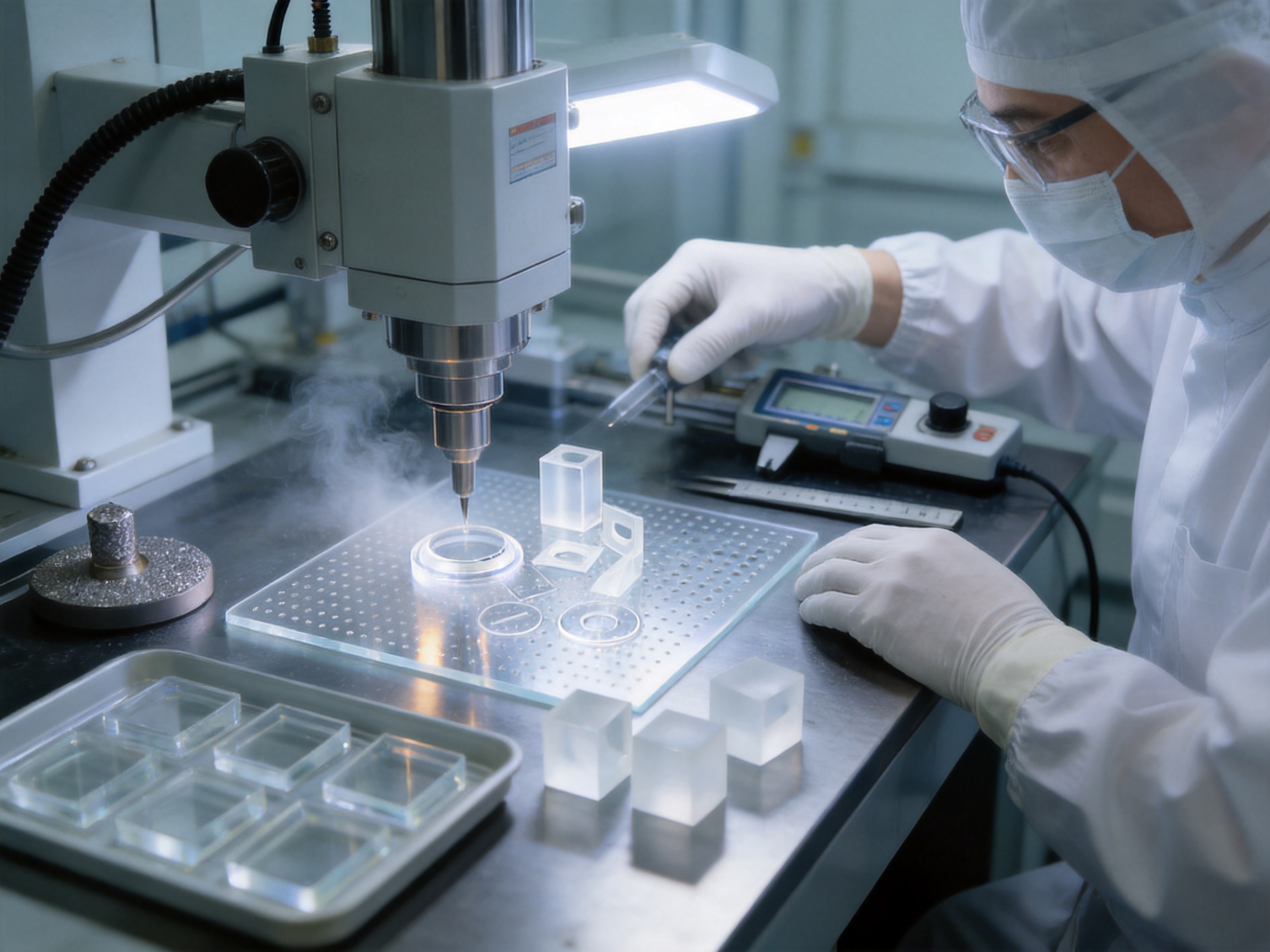
After material selection, the quartz blank is cut into an approximate shape. Depending on the required geometry, this may involve slicing, dicing, CNC contouring, water-jet preforming, core drilling, or other controlled cutting methods. Quartz is hard and brittle, so cutting must be performed carefully to avoid chipping, microcracks, and edge damage.
For special-shaped parts, shape generation is a critical step. The outline may include straight edges, arcs, notches, mounting areas, holes, and complex transitions. Precision machining equipment and experienced operators are necessary to maintain dimensional accuracy while reducing subsurface damage.
Perforation, Drilling, and Aperture Processing
Perforated quartz parts require holes or apertures that are accurately located and cleanly processed. Hole quality matters because cracks or chips around the aperture can create weak points. The effective pore size, specified as greater than 90%, indicates that usable open area and hole geometry are carefully considered.
Drilling quartz is not the same as drilling metal or plastic. Because quartz is brittle, improper drilling can cause breakout at the exit side, radial cracks, or edge defects. Advanced manufacturers use controlled tooling, cooling, feed rates, and polishing techniques to create stable hole structures. For high-end parts, hole edges may be chamfered or polished to reduce stress concentration.
Grinding and Thickness Control
Once the basic shape is established, grinding is used to bring the part closer to the target thickness and flatness. Thickness control is essential for substrates with tolerances as tight as plus or minus 0.005 mm. This requires stable equipment, calibrated measurement tools, and process compensation for material removal.
During grinding, the manufacturer must balance removal efficiency with surface integrity. Aggressive grinding can increase subsurface damage, while overly conservative grinding can reduce productivity. Experienced process engineers optimize abrasive size, pressure, speed, coolant, and sequence to achieve stable results.
Lapping for Flatness and Parallelism
Lapping improves surface geometry and prepares the component for polishing. It helps achieve flatness and parallelism by removing controlled amounts of material from the faces. For optical window substrates, lapping must be uniform and repeatable. Uneven lapping can create wedge, local thickness variation, or surface deformation.
Parallelism within 1 arc minute demands precise control of the relationship between the two surfaces. This is particularly important in laser and imaging systems where beam deviation must be minimized. Lapping is therefore a key process linking mechanical accuracy and optical performance.
Optical Polishing
Optical polishing gives the substrate its final surface quality. The goal is to create a smooth, defect-controlled surface with the required flatness and cleanliness. Polishing quartz requires suitable polishing compounds, pads, process timing, pressure control, and cleaning procedures. The process must remove lapping marks while avoiding scratches, stains, edge rounding beyond specification, or surface contamination.
High-quality polishing can produce surface flatness up to 1/8 wavelength at 632.8 nm and support strict scratch-dig requirements. In applications involving lasers or high-resolution imaging, the polished surface must reduce scattering and wavefront distortion.
Edge Finishing and Chamfering
Edges are often overlooked, but they play a major role in component reliability. Sharp edges can chip easily and create stress concentration. Precision edge finishing, chamfering, or beveling helps improve handling safety and mechanical strength. For perforated parts, hole edges may also need controlled finishing.
Special-shaped parts often have complex outlines with corners, internal radii, notches, and transitions. Each of these features must be finished carefully. Poor edge quality can cause cracks during assembly or operation, especially when the part is clamped or exposed to thermal cycling.
Cleaning and Final Inspection
After machining and polishing, cleaning is essential. Quartz windows may be used in sensitive optical, semiconductor, or medical systems, so particles, residues, oils, and polishing compounds must be removed. Cleanliness is verified according to the required quality level.
Final inspection may include dimensional measurement, thickness measurement, flatness testing, parallelism verification, surface quality inspection, visual defect review, aperture inspection, and packaging checks. For customized parts, drawing conformity is especially important. The finished component must match the customer’s geometry as well as the optical and mechanical parameters.
Company Manufacturing Strengths
Changzhou Haolilai Photo-Electricity Scientific and Technical Co., Ltd. is a professional manufacturer of precision optical components founded in 1998 and located in the national-level High-tech Development District of Changzhou, Jiangsu, China. The company has developed long-term expertise in optical components for laser optics, automotive optics, semiconductor optics, and consumer optics. This broad technical foundation is highly valuable for producing customized quartz window substrates and perforated special-shaped parts.
The company covers an area of 35,000 square meters and has more than 300 employees. Its production background supports both standard optical components and customized precision parts. For customers, this means the ability to handle multiple requirements, from drawing review and material selection to processing, inspection, and batch delivery.
Certifications including ISO9001:2015, ISO14001:2015, and IATF16949 demonstrate systematic management in quality, environmental responsibility, and automotive-related manufacturing discipline. These certifications are especially meaningful for customers who need stable production, traceable processes, documented quality control, and long-term supply reliability.
The company has also established the Jiangsu Precision Optical Lens Engineering Technology Center and Jiangsu Enterprise Technology Research Center. These technical platforms reflect continuous investment in research, engineering, process improvement, and product development. For special-shaped quartz parts, such engineering strength helps solve challenges involving difficult geometries, demanding tolerances, and application-specific performance requirements.
With multiple invention patents, utility model patents, and high and new technology products, the company demonstrates a strong innovation capability. In precision optics, manufacturing experience and technical accumulation are just as important as equipment. The ability to understand how material behavior, tool condition, polishing method, and inspection standards interact allows the manufacturer to produce stable and reliable components.
The company exports to more than 20 countries and has accumulated experience with international customer requirements. This is important because global customers often require clear communication, consistent specifications, reliable packaging, and dependable delivery. For customized optical parts, engineering communication is essential: drawings must be interpreted accurately, tolerances must be confirmed, and application requirements must be translated into manufacturable specifications.
Advantages in Customization and Engineering Support
One of the strongest competitive advantages of these quartz window substrates is the ability to process different sizes and shapes according to customer requirements. In many advanced industries, off-the-shelf windows are not sufficient. Equipment designers may need a precise opening location, a special mounting shape, a very thin substrate, a thick structural window, or an irregular outline to fit into a limited space.
Engineering support helps customers turn a concept or drawing into a manufacturable part. During this process, the manufacturer can evaluate dimensions, tolerances, hole spacing, edge distances, thickness, flatness, surface quality, and coating options. If a design creates unnecessary risk of cracking or high cost, the manufacturer can suggest adjustments while preserving the functional intent.
Customization also supports application optimization. For example, a high-temperature viewing window may prioritize thickness, thermal shock resistance, and edge strength. A laser window may prioritize surface flatness, scratch-dig quality, and coating. A semiconductor process window may prioritize purity, cleanliness, and chemical stability. A compact sensor cover may prioritize small size, accurate shape, and stable transmission. The same quartz material can be adapted to these different needs through appropriate process design.
Applications in Semiconductor and Electronics Manufacturing
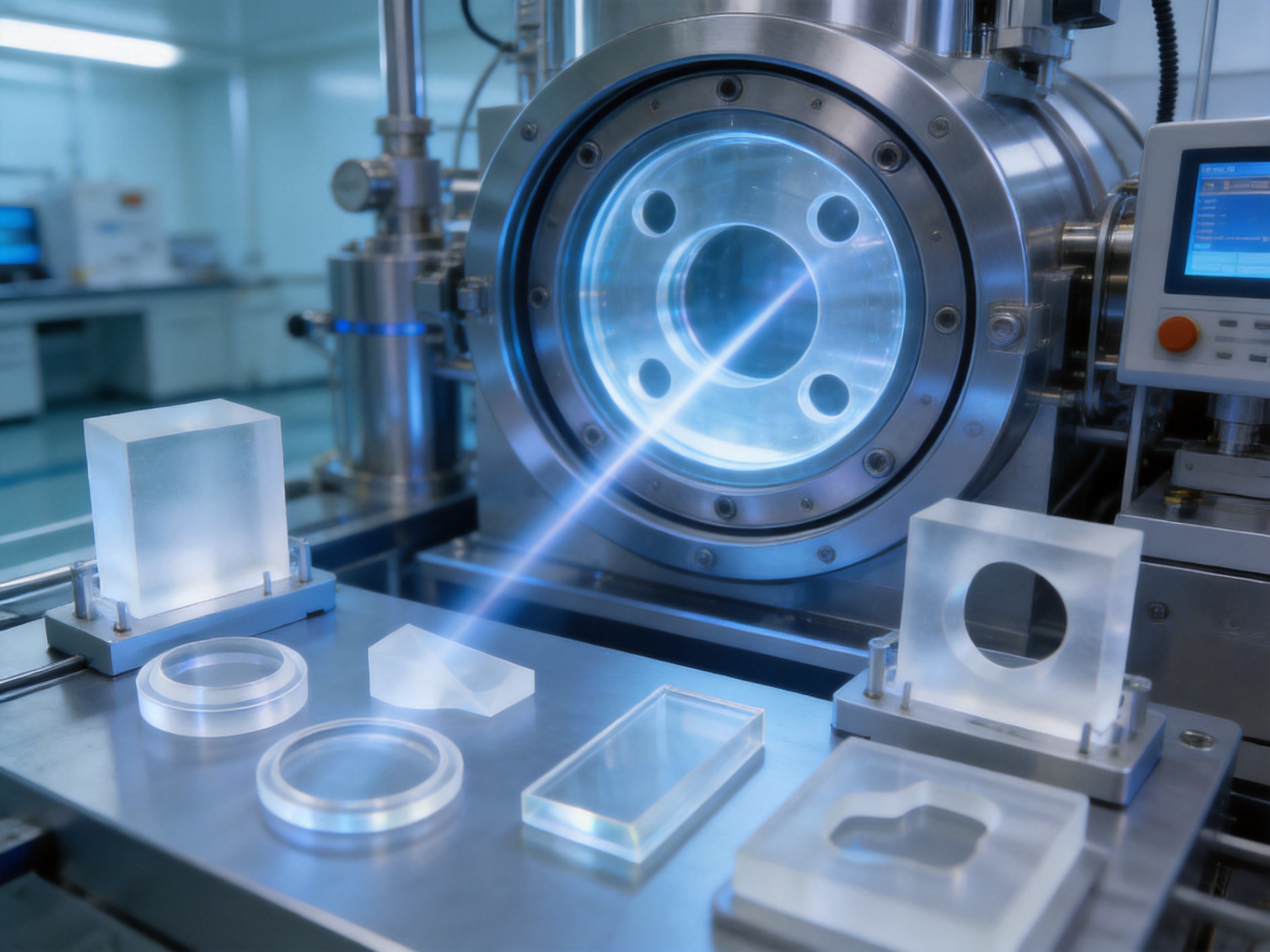
Quartz glass is widely used in semiconductor manufacturing because of its purity, thermal stability, and chemical resistance. Perforated special-shaped quartz window substrates can be used in process observation ports, optical monitoring systems, wafer inspection tools, plasma-related equipment, vacuum systems, and high-purity fixtures.
In semiconductor environments, contamination control is critical. Materials that release impurities, react with process chemicals, or degrade under heat can negatively affect yield. High-purity quartz is valued because it can withstand harsh process conditions while maintaining stability. Custom shapes and perforations allow quartz windows to be integrated into specialized equipment designs.
Optical inspection is also central to semiconductor production. Cameras, lasers, sensors, and spectral instruments require stable optical pathways. A quartz window can protect the instrument while allowing light transmission. If the window has poor flatness, bubbles, scratches, or wedge, it may introduce measurement errors. Precision polishing and strict inspection therefore provide a clear advantage.
Applications in Laser and Optical Instruments
Laser systems often demand windows that can transmit light with low distortion, resist thermal load, and maintain high surface quality. Quartz is commonly chosen because of its transmission range and thermal resistance. Perforated and special-shaped versions can be used in laser protective covers, beam delivery modules, observation windows, alignment structures, and diagnostic instruments.
Optical instruments such as spectrometers, microscopes, analytical devices, and laboratory systems also benefit from quartz windows. When ultraviolet transmission is required, quartz is often much more suitable than ordinary glass. The ability to manufacture customized shapes allows instrument designers to create compact, integrated systems without sacrificing optical performance.
In many optical systems, a window is expected to be invisible to the measurement. It should not alter the beam, create ghost reflections beyond acceptable levels, distort images, or scatter light. High flatness, good parallelism, and appropriate surface quality help the quartz window perform this role effectively.
Applications in Automotive, Industrial, and Consumer Optics
Modern automotive and industrial systems increasingly use optical sensors, cameras, displays, illumination modules, and environmental monitoring devices. While quartz may not be required for every automotive interior or exterior optical component, it is valuable in high-temperature, high-stability, or high-precision modules. Custom-shaped quartz parts can be used where geometry, durability, and optical clarity are essential.
Industrial environments can be harsh. Equipment may be exposed to dust, heat, chemicals, pressure changes, and vibration. Quartz windows protect sensitive sensors and optical instruments while allowing observation or measurement through a stable transparent barrier. Perforated designs may support mounting, gas flow, pressure balancing, or additional sensor access.
Consumer optics can also benefit from customized quartz components in specialized devices requiring stable optical transmission, wear resistance, and miniaturized shapes. As products become more compact and integrated, special-shaped optical substrates provide designers with more freedom.
Applications in Laboratory, Medical, and Defense Equipment
Laboratory equipment often requires materials that are chemically stable, optically clear, and resistant to heat. Quartz windows are used in reaction chambers, UV instruments, analytical cells, heating stages, and observation ports. Special-shaped parts allow the component to match unique experimental setups or instrument designs.
Medical devices may require optical windows for imaging, illumination, sterilization, analysis, or sensing. Quartz is useful where UV transparency, cleanliness, and thermal stability are required. The ability to maintain good surface quality and dimensional accuracy supports reliable medical instrument performance.
Defense and aerospace-related systems may require optical components that perform reliably under difficult environmental conditions. Thermal stability, mechanical durability, and optical precision are important in these applications. Customized quartz substrates can be designed for rugged housings, sensor windows, optical guidance systems, or high-energy optical environments.
Coating Options and Optical Performance Enhancement
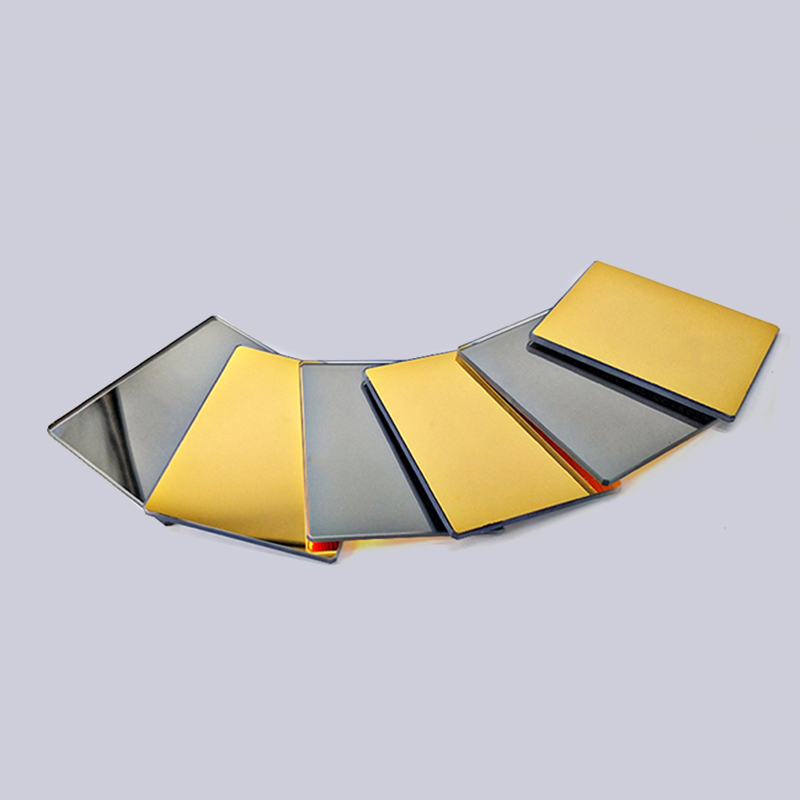
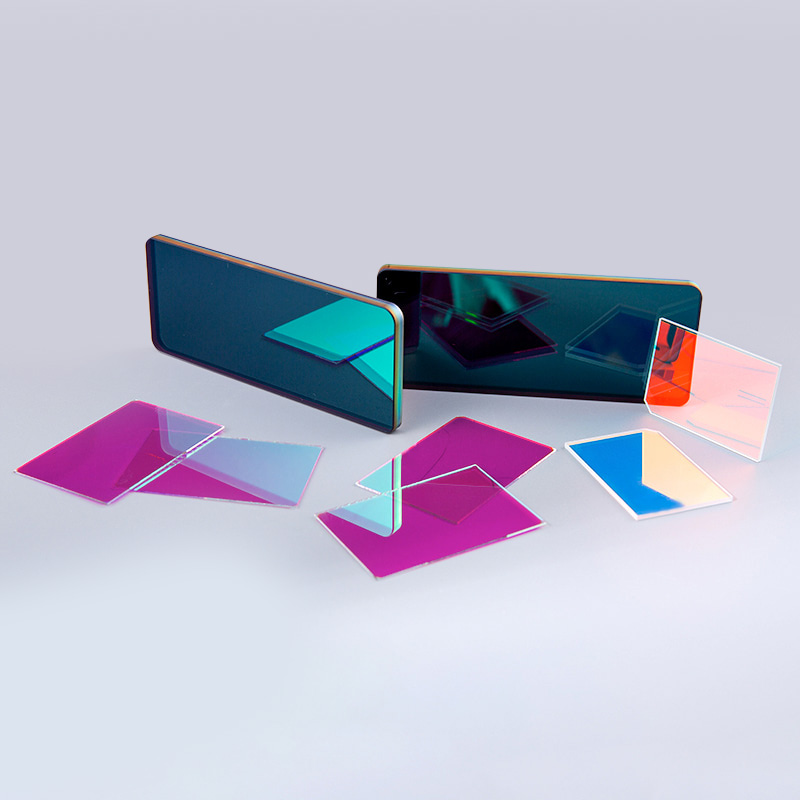
Quartz window substrates can be supplied with coating options according to application requirements. Coatings may be selected to improve transmission, reduce reflection, protect the surface, or optimize performance in ultraviolet, visible, or infrared wavelength ranges. The correct coating depends on operating wavelength, angle of incidence, environmental exposure, cleaning method, and required durability.
Anti-reflection coatings are commonly used when reflection losses must be reduced. Even a high-quality uncoated quartz surface reflects a portion of incident light. In precision optical systems, this reflection can reduce efficiency or cause ghost images. A properly designed coating can increase transmission and improve signal quality.
For ultraviolet or infrared applications, coating design must account for wavelength-specific material behavior. The substrate and coating must work together. A manufacturer with optical component experience can help customers select suitable coating specifications based on the working environment.
Quality Control as a Competitive Advantage
In precision optics, quality control is not a final step; it is a complete system running through the entire production process. For perforated special-shaped quartz parts, quality control begins with drawing review and material selection and continues through cutting, drilling, grinding, lapping, polishing, cleaning, inspection, and packaging.
Dimensional inspection ensures that the component matches the required outer profile, hole position, thickness, and special features. Optical inspection ensures surface quality, flatness, transparency, and absence of bubbles or defects in the effective area. Mechanical inspection focuses on edge quality, hole integrity, and risk areas such as internal corners or thin sections.
Process consistency is especially important for batch production. A prototype may be made successfully, but the real manufacturing challenge is producing repeated parts that all meet specification. Certified management systems and experienced production teams help maintain this consistency.
Customers benefit from strict quality control because it reduces assembly problems, inspection failures, downtime, and hidden reliability risks. A precision quartz window may appear simple, but if it has poor geometry, scratches, wedge, or microcracks, it can affect the entire system. Reliable quality reduces total cost of ownership.
Design Considerations for Engineers
When designing perforated special-shaped quartz window substrates, engineers should consider optical, mechanical, thermal, and manufacturing factors at the same time. The first question is the optical function: what wavelength range must pass through the window, and what transmission quality is required? If the component is used in a laser or imaging system, surface flatness, parallelism, and scratch-dig quality may be critical.
The second question is mechanical integration. The outer profile, hole diameter, hole position, edge distance, mounting method, and thickness must be designed to avoid stress concentration. Holes should not be too close to edges unless the design has been reviewed for manufacturability. Internal corners should include suitable radii when possible, because sharp internal corners can increase crack risk.
The third question is thermal environment. If the part will experience high temperature or rapid temperature changes, thickness, edge finish, mounting stress, and thermal expansion mismatch with the frame must be considered. Even though quartz has excellent thermal shock resistance, improper mounting can create mechanical stress that reduces reliability.
The fourth question is cleanliness and surface quality. For semiconductor or high-precision optical use, strict cleanliness may be necessary. For general industrial observation, a lower grade may be sufficient and more economical. Selecting the correct specification helps balance performance and cost.
Why Precision Manufacturing Matters More for Special Shapes
Simple round windows are comparatively easier to produce than irregular perforated quartz parts. Special shapes introduce additional manufacturing challenges. Corners may chip, holes may crack, thickness may vary near complex features, and polishing may be less uniform around edges or apertures. These risks increase when the substrate is very thin, very small, or contains multiple holes.
Advanced manufacturing processes reduce these risks through controlled machining, proper sequencing, stable fixturing, careful edge treatment, and thorough inspection. The manufacturer must understand how to process quartz without creating invisible damage that could later cause failure. This experience is a key differentiator from suppliers that only produce standard flat glass parts.
For customers, choosing a capable manufacturer is especially important when the component is part of expensive equipment. A low-quality special-shaped window can delay assembly, fail during testing, or cause system instability. A high-quality quartz substrate improves reliability and supports faster product development.
Comparison With Competing Materials
Several materials can be used for optical windows, including soda-lime glass, borosilicate glass, sapphire, optical crown glass, and various specialty glasses. Each material has advantages, but quartz offers a particularly strong balance for high-temperature, high-transmission, chemically stable, and precision applications.
Soda-lime glass is inexpensive and widely available, but it has limited thermal resistance and poor ultraviolet transmission compared with quartz. It is suitable for basic windows but not ideal for advanced optical or high-temperature environments.
Borosilicate glass has better thermal resistance than soda-lime glass and is commonly used in laboratory glassware, but quartz generally provides superior UV transmission, higher temperature resistance, and lower thermal expansion.
Sapphire is extremely hard and strong, with excellent scratch resistance and high-temperature performance. However, it is often more expensive and can be more difficult to process into complex custom shapes. Quartz can offer a more balanced solution when high optical quality, custom geometry, and cost efficiency are required.
Some optical glasses provide specific refractive or dispersion properties, but they may not match quartz in thermal shock resistance, UV transmission, or chemical stability. For window substrates rather than lenses, quartz often provides the most practical performance package.
Cost Efficiency Through Reliability
The initial price of a quartz window may be higher than that of ordinary glass, but cost should be evaluated over the full product life cycle. A component that maintains performance under heat, chemicals, optical exposure, and repeated use can reduce replacement frequency and equipment downtime.
In semiconductor equipment, laser systems, and industrial instruments, downtime can be far more expensive than the window itself. A reliable quartz substrate helps protect the system and maintain process stability. Customization also reduces the need for additional adapters or compromises in mechanical design, saving engineering time and assembly complexity.
High manufacturing precision also reduces hidden costs. If a window does not fit correctly, customers may face assembly delays. If surface quality is insufficient, optical performance may fail. If holes or edges contain defects, the part may crack after installation. By investing in a precision-manufactured component, customers improve overall system reliability.
Packaging and Handling Considerations
Although quartz is hard and thermally stable, finished optical components still require careful handling. Polished surfaces should be protected from scratches, fingerprints, dust, and impact. Special-shaped parts may have delicate corners, thin sections, or perforations that require custom packaging support.
Proper packaging helps maintain cleanliness and prevent damage during transportation. For international shipments, packaging must protect against vibration, shock, humidity, and accidental contact. A manufacturer experienced in exporting optical components understands the importance of secure packaging and clear labeling.
Users should handle quartz windows with clean gloves or appropriate tools. Cleaning should follow procedures compatible with the coating and application. Abrasive wiping or improper solvents can damage coatings or leave residues. For critical optical systems, cleaning methods should be validated before use.
Procurement Guidance for Buyers
When requesting a quotation for perforated special-shaped quartz window substrates, buyers should provide a clear drawing and define the main technical requirements. Important information includes material type, dimensions, thickness, tolerances, hole sizes, hole locations, edge requirements, surface flatness, parallelism, surface quality, coating requirements, quantity, operating wavelength, temperature conditions, and cleanliness requirements.
If the application is not fully defined, buyers can describe the usage environment and performance goals. The manufacturer can then recommend suitable specifications. For example, if a window is used for UV transmission, the material and coating should be selected accordingly. If the part is used in a high-temperature chamber, thermal stress and mounting design should be reviewed.
Prototype orders are useful for new designs. They allow the customer to verify fit, optical performance, and mechanical stability before scaling to batch production. Once the design is confirmed, process parameters can be stabilized for repeated manufacturing.
Q&A Section
Q1: What are perforated special-shaped quartz window substrates?
They are precision quartz glass optical parts made in customized shapes with features such as holes, cutouts, notches, or irregular profiles. They are used when standard round or rectangular windows cannot satisfy mechanical or optical integration needs.
Q2: What material is used for these substrates?
They are typically made from high-purity quartz glass containing more than 99.99% silica. Synthetic quartz can also be used when high purity and optical consistency are required.
Q3: What sizes can be manufactured?
Round parts can generally be produced from 2 mm to 400 mm in outer diameter, with thickness from 0.1 mm to 30 mm. Square and rectangular parts can generally be produced from 2 mm to 400 mm in length and width, also with thickness from 0.1 mm to 30 mm. Other shapes can be customized according to customer drawings.
Q4: Why choose quartz instead of ordinary glass?
Quartz offers better thermal stability, lower thermal expansion, broader ultraviolet-to-near-infrared transparency, higher hardness, stronger chemical stability, and better resistance to thermal shock. These advantages make it more reliable for advanced optical, industrial, semiconductor, and high-temperature applications.
Q5: Can holes and irregular shapes be processed accurately?
Yes. With advanced cutting, drilling, grinding, lapping, polishing, and inspection processes, holes and irregular profiles can be manufactured according to drawings. Proper edge finishing helps reduce chipping and stress concentration.
Q6: What optical tolerances are available?
Available performance can include profile tolerances around plus or minus 0.03 mm, thickness tolerances around plus or minus 0.005 mm, surface flatness up to 1/8 wavelength at 632.8 nm, and parallelism within 1 arc minute, depending on the final design and specification.
Q7: Are these parts suitable for high-temperature environments?
Yes. Quartz glass has excellent high-temperature resistance and low thermal expansion. It is suitable for environments such as furnaces, combustion chambers, industrial monitoring systems, and thermal processing equipment, provided that the mounting structure is properly designed.
Q8: Can coatings be applied?
Yes. Coating options can be selected according to wavelength and application needs, such as anti-reflection or wavelength-specific coatings for ultraviolet, visible, or infrared use.
Q9: Which industries commonly use these products?
Common industries include semiconductor manufacturing, laser optics, optical instruments, laboratory equipment, medical devices, industrial sensing, communication systems, automation equipment, metallurgy, chemical processing, and defense-related systems.
Q10: What information should customers provide for customization?
Customers should provide drawings, dimensions, tolerances, material requirements, hole specifications, surface quality, flatness, parallelism, coating needs, operating wavelength, temperature conditions, quantity, and any special packaging or cleanliness requirements.
Conclusion
Perforated special-shaped quartz window substrates are advanced optical components that combine high-purity material performance with customized precision manufacturing. They solve the limitations of standard windows by enabling complex shapes, accurate holes, strict tolerances, excellent surface quality, and application-specific optical performance.
Their advantages over many competing materials include broad ultraviolet-to-near-infrared transparency, excellent thermal stability, low thermal expansion, strong thermal shock resistance, high hardness, chemical stability, and reliable electrical insulation. These properties make them suitable for semiconductor equipment, laser systems, optical instruments, industrial sensors, high-temperature chambers, laboratory devices, medical instruments, and many other demanding applications.
Manufacturing these parts requires more than basic glass cutting. It requires careful material selection, precision contouring, controlled drilling, accurate grinding, lapping, optical polishing, edge finishing, cleaning, inspection, and packaging. A manufacturer with established optical expertise, certified quality systems, advanced engineering centers, and long-term production experience can provide consistent parts that support reliable customer systems.
For engineers and buyers seeking a durable, transparent, stable, and highly customizable optical window solution, perforated special-shaped quartz substrates offer a practical and high-performance answer. Their value is found not only in the quartz material itself, but also in the precision manufacturing process that transforms a hard, brittle glass into a reliable optical component tailored to exact application requirements.
References
1. Brückner, R. “Properties and Structure of Vitreous Silica.” Journal of Non-Crystalline Solids.
2. Heraeus Conamic. “Quartz Glass for Optics: Material Properties and Applications.” Technical literature.
3. Malitson, I. H. “Interspecimen Comparison of the Refractive Index of Fused Silica.” Journal of the Optical Society of America.
4. ISO 10110. “Optics and Photonics: Preparation of Drawings for Optical Elements and Systems.” International Organization for Standardization.
5. MIL-PRF-13830. “Performance Specification: Optical Components for Fire Control Instruments.” United States military specification.
6. Bach, H., and Neuroth, N. The Properties of Optical Glass. Springer.
7. Shelby, J. E. Introduction to Glass Science and Technology. Royal Society of Chemistry.
8. Uhlmann, D. R., and Kreidl, N. J. Glass: Science and Technology. Academic Press.


 苏公网安备32041102000130号