
 Search
 en
en English
 日本語
日本語 русский
 Español
 Deutsch
 中文简体
中文简体Content
- 1 What Is a Precision Optical Lens?
- 2 Key Performance Characteristics of Optical Lenses
- 3 Advantages of Precision Optical Lenses from an Experienced Manufacturer
- 4 Advanced Manufacturing Process for Optical Lenses
- 4.1 1. Requirements Review and Optical Design Confirmation
- 4.2 2. Optical Material Selection
- 4.3 3. Cutting, Blocking, and Preforming
- 4.4 4. Precision Grinding
- 4.5 5. Fine Polishing
- 4.6 6. Edge Processing and Chamfering
- 4.7 7. Cleaning and Surface Preparation
- 4.8 8. Optical Coating
- 4.9 9. Final Inspection and Documentation
- 5 Manufacturing Strengths That Differentiate the Product
- 6 Application Areas for Optical Lenses
- 7 Comparison with Less Specialized Optical Suppliers
- 8 How Customers Can Specify an Optical Lens
- 9 Quality Control from Raw Material to Shipment
- 10 Benefits of Choosing a Long-Term Optical Lens Partner
- 11 Q&A About Precision Optical Lenses
- 11.1 What types of optical lenses can be produced?
- 11.2 Can optical lenses be customized?
- 11.3 What industries use precision optical lenses?
- 11.4 Why is centration important?
- 11.5 How do coatings improve lens performance?
- 11.6 Are optical lenses suitable for automotive applications?
- 11.7 What certifications does the manufacturer have?
- 11.8 Can the manufacturer support both samples and mass production?
- 11.9 What information should be included in an inquiry?
- 11.10 How should precision lenses be handled?
- 12 Why Manufacturing Quality Matters More Than Appearance Alone
- 13 Product Value for OEM and System Integrators
- 14 Conclusion
- 15 References
- 16 Product: Optical Lens
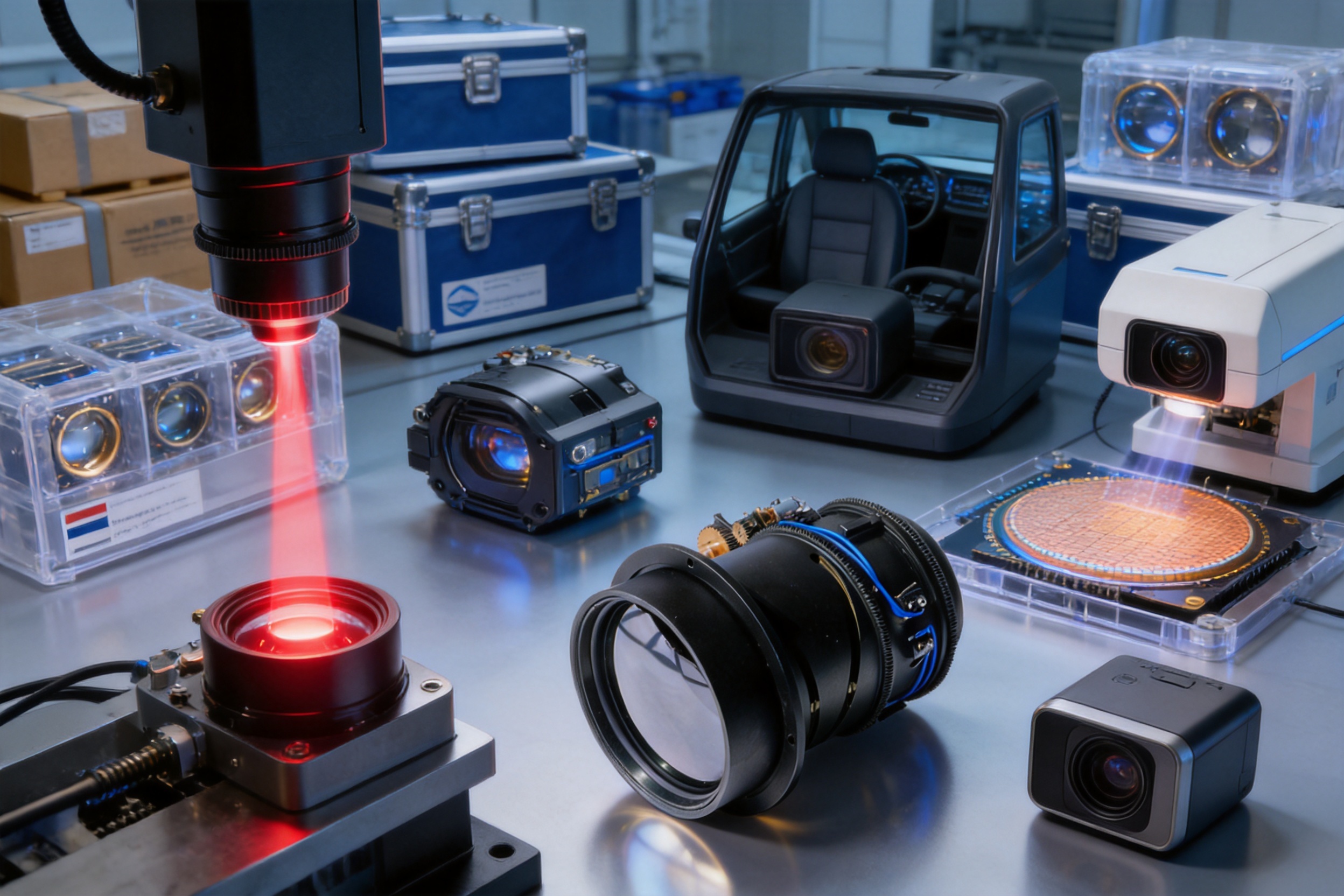
Optical lenses are essential components in systems that control, focus, magnify, redirect, or shape light. Although a lens may appear to be a relatively small part of a larger product, its dimensional accuracy, surface quality, optical performance, and environmental stability can determine the reliability of the complete system. In applications such as laser processing, automotive sensing, semiconductor inspection, imaging, projection, and consumer electronics, even a minor deviation in lens geometry or coating performance can affect image clarity, beam quality, measurement accuracy, and service life.
Precision optical lenses are therefore manufactured according to demanding technical requirements. The production process must combine suitable optical materials, accurate shaping, controlled polishing, advanced inspection, and disciplined quality management. It must also support stable volume production while allowing customization for different optical designs, dimensions, coatings, and application environments.
Changzhou Haolilai Photo-Electricity Scientific and Technical Co., Ltd. is an experienced Chinese manufacturer of precision optical components. Founded in 1998, the company develops and produces optical products for laser optics, automotive optics, semiconductor optics, and consumer optics. Its manufacturing capabilities, engineering resources, certifications, and application experience make it a suitable supplier for customers seeking dependable optical lens production and long-term technical cooperation.
This article explains the characteristics of precision optical lenses, the manufacturing considerations that influence their performance, the advantages of working with an experienced optical component supplier, and the application value of lenses produced for demanding industrial and commercial systems.
What Is a Precision Optical Lens?
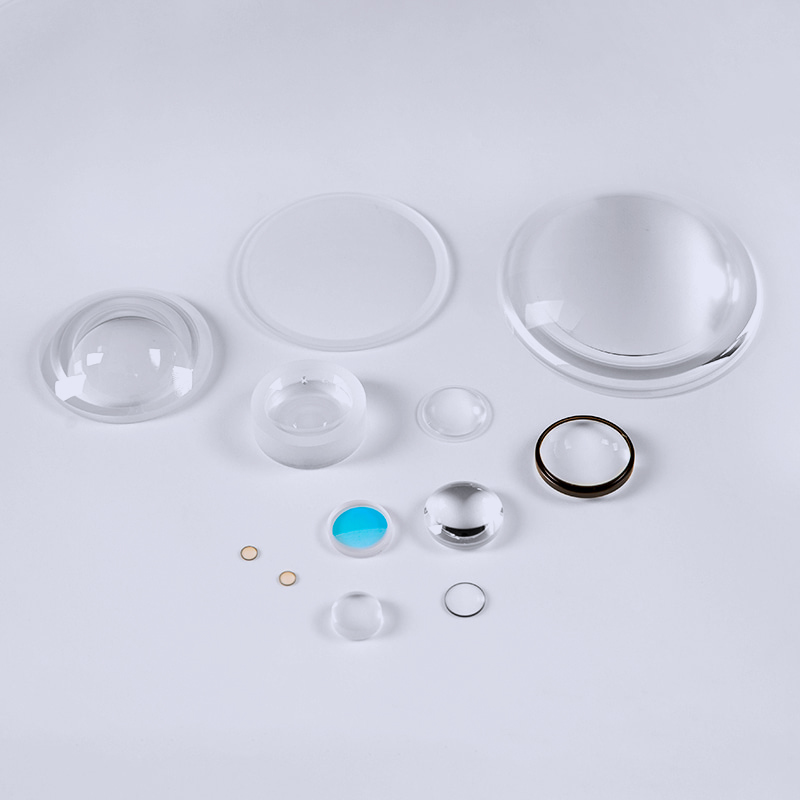
A precision optical lens is a transparent optical element designed to refract light in a controlled and predictable manner. Depending on its geometry and optical function, a lens may converge light, diverge light, correct aberrations, form an image, collimate a beam, or distribute illumination. Lenses can be produced in many forms, including plano-convex, plano-concave, bi-convex, bi-concave, meniscus, cylindrical, aspherical, and custom-designed configurations.
The optical performance of a lens depends on more than its nominal diameter or focal length. Important characteristics include radius accuracy, center thickness, edge thickness, centration, wedge, surface irregularity, surface roughness, clear aperture, refractive index, dispersion, coating reflectance, and resistance to environmental conditions. These parameters must be controlled together because an improvement in one area cannot compensate for a serious defect in another.
For example, a lens with good transmission but poor centration may introduce unwanted beam deviation. A lens with accurate curvature but excessive surface roughness may scatter light and reduce contrast. A lens with excellent room-temperature performance but weak coating adhesion may fail in automotive or industrial environments. Precision manufacturing is therefore a system of coordinated processes rather than a single machining step.
Key Performance Characteristics of Optical Lenses
Accurate Optical Geometry
The shape of an optical lens determines how light is refracted. Curvature errors can alter focal length, magnification, numerical aperture, and beam convergence. In high-precision systems, small changes in radius or thickness may influence the performance of an entire optical assembly. Controlled grinding, polishing, and measurement are required to achieve the intended geometry.
Manufacturers must also control the relationship between the optical axis and the mechanical reference surfaces. This is particularly important when the lens is installed in a barrel, sensor module, laser head, or imaging assembly. Accurate centration allows the lens to align correctly with other components and reduces the risk of optical misalignment during assembly.
High Surface Quality
Surface quality affects the way light is transmitted through or reflected from the lens. Scratches, digs, pits, stains, and polishing defects may scatter light or create visible artifacts in an image. High-quality optical lenses use carefully controlled finishing processes to achieve smooth surfaces with low defect levels.
Surface quality requirements vary according to the application. A basic illumination lens may have different requirements from a laser focusing lens or a semiconductor inspection lens. The supplier must understand the operating conditions and determine a suitable inspection standard rather than applying a one-size-fits-all approach.
Low Surface Irregularity
Surface irregularity refers to deviations from the intended optical surface form. Excessive irregularity can produce wavefront distortion, reduce image sharpness, and affect laser beam quality. In precision imaging or measurement applications, controlling surface form is vital to maintaining repeatable optical performance.
Modern optical production uses precision measurement equipment and process feedback to monitor surface form. Inspection results can be used to adjust polishing conditions, tooling, process time, and other variables. This feedback-based approach improves consistency across individual lenses and production batches.
Reliable Coating Performance
Optical coatings are applied to reduce reflection, increase transmission, control spectral response, or protect the lens surface. Common coating functions include antireflection, high reflection, infrared transmission, ultraviolet transmission, and laser-specific performance. The coating design must match the wavelength range, angle of incidence, polarization condition, power density, and environmental requirements of the application.
A coating is only useful if it remains stable throughout the product’s service life. Adhesion, abrasion resistance, humidity resistance, thermal stability, and resistance to cleaning chemicals are all important considerations. An experienced supplier can help select a coating structure suitable for the intended operating environment and can include coating inspection within the quality-control process.
Stable Dimensional Tolerances
Optical lenses must often fit precisely into mechanical housings or assemblies. Diameter tolerance, thickness tolerance, chamfer dimensions, edge condition, and reference datum accuracy all contribute to assembly reliability. Stable dimensional control reduces fitting problems, excessive adhesive use, mechanical stress, and alignment errors.
Dimensional consistency is especially valuable for customers operating automated assembly lines. When lens dimensions remain stable from batch to batch, equipment settings can be standardized and production interruptions can be reduced.
Low Optical Loss
Transmission efficiency is an important consideration in laser, imaging, sensing, and illumination systems. Optical loss may result from material absorption, surface reflection, scattering, contamination, or coating limitations. Proper material selection, surface finishing, cleaning, and coating design can help improve the amount of useful light passing through the lens.
Low optical loss contributes to brighter images, improved detector signals, lower laser power requirements, better energy efficiency, and more reliable system operation. The required performance depends on wavelength and application, so lens specifications should be developed around the complete optical system rather than evaluated in isolation.
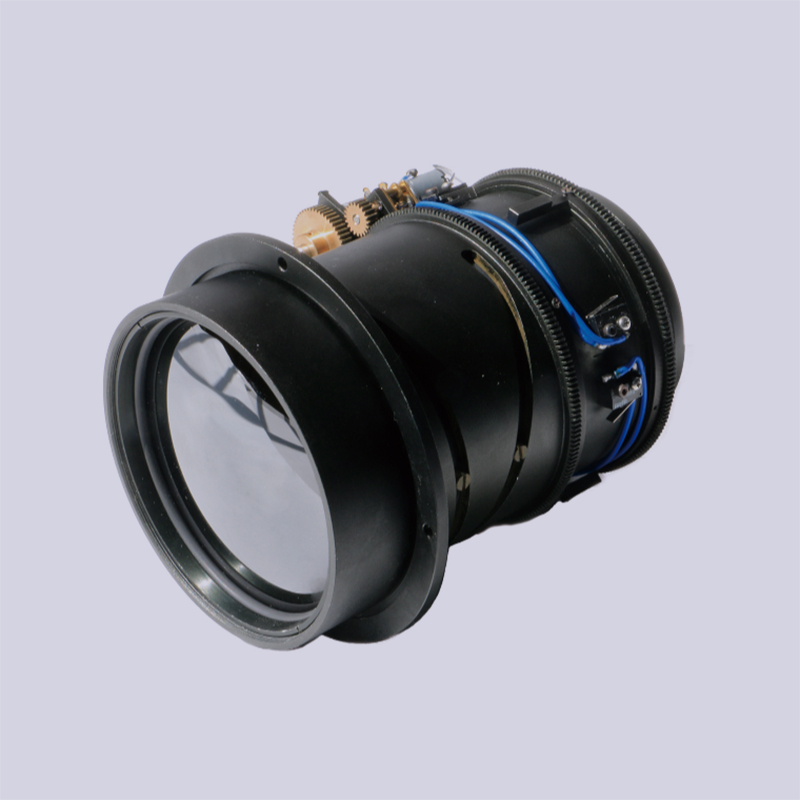
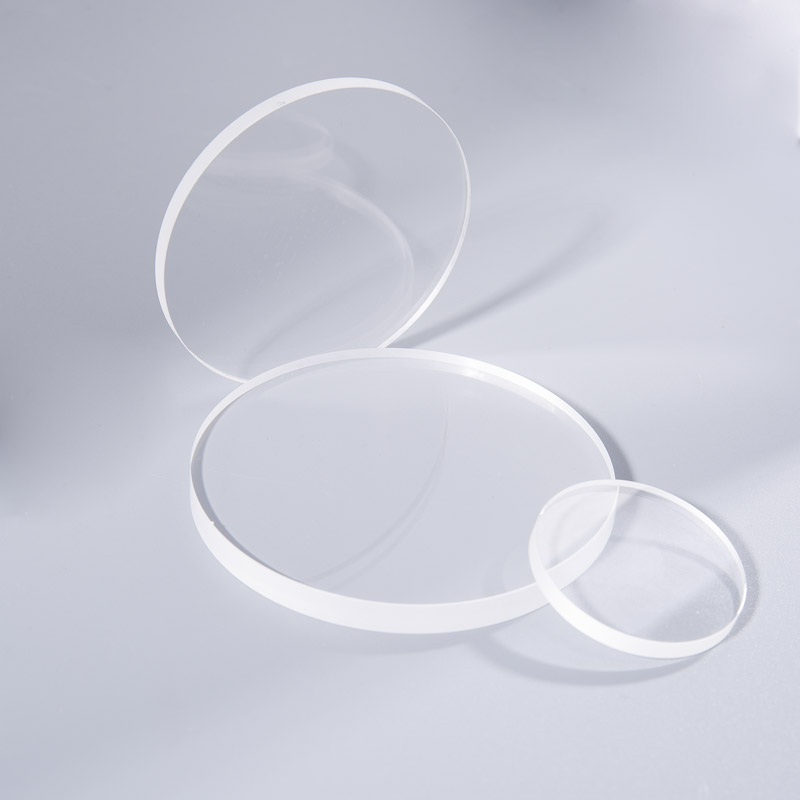
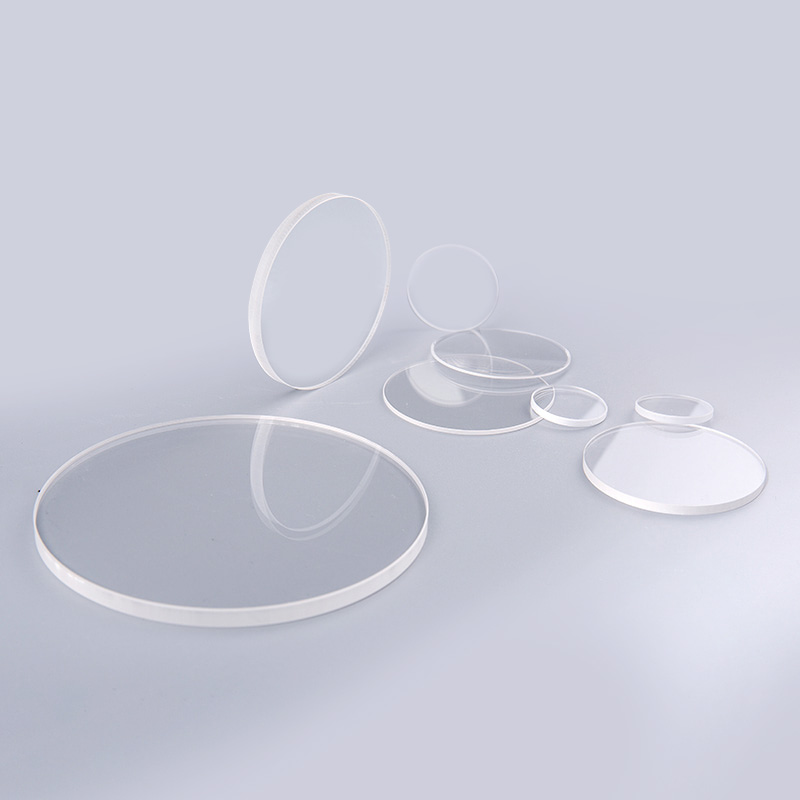
Optical Lens
Advantages of Precision Optical Lenses from an Experienced Manufacturer
Application-Focused Engineering
One of the main advantages of working with an experienced optical component manufacturer is the ability to connect product design with application requirements. A lens for automotive interior sensing may need a different balance of field of view, distortion control, environmental stability, and packaging compatibility than a lens for a semiconductor inspection instrument.
Similarly, a laser lens may require high transmission at a specific wavelength, low absorption, high laser-induced damage resistance, and accurate beam control. A consumer optical lens may prioritize compact dimensions, image quality, weight, cost efficiency, and high-volume consistency. Application-focused engineering helps ensure that the lens specification reflects the real operating conditions.
Support for Multiple Optical Industries
Changzhou Haolilai Photo-Electricity Scientific and Technical Co., Ltd. focuses on several important optical fields, including laser optics, automotive optics, semiconductor optics, and consumer optics. Experience across these industries provides a broad understanding of different optical requirements, production volumes, tolerance structures, and inspection methods.
Knowledge developed in one sector can also support innovation in another. For example, process discipline from semiconductor optics can contribute to improved cleanliness and inspection for consumer products. Automotive quality practices can support greater production traceability for industrial optics. Laser applications can encourage close control of surface quality, coating performance, and material selection.
Integrated Production Capability
Precision optical manufacturing requires coordination between engineering, material preparation, shaping, polishing, cleaning, coating, inspection, and packaging. When these activities are managed within an integrated production system, the manufacturer can better control process interfaces and respond more quickly to technical issues.
Integrated production also improves communication. If inspection identifies a deviation, engineering and production personnel can evaluate the relevant process conditions without relying entirely on multiple external suppliers. This can shorten problem-solving cycles and support more stable product development.
Quality Management for Demanding Customers
Changzhou Haolilai Photo-Electricity Scientific and Technical Co., Ltd. has obtained ISO9001:2015, ISO14001:2015, and IATF16949 certifications. These certifications represent structured approaches to quality management, environmental management, and automotive industry quality requirements. Certification alone does not replace technical capability, but it demonstrates that the company has established formal systems for process control, documentation, corrective action, and continuous improvement.
IATF16949 is especially relevant to automotive supply chains, where customers commonly require strong traceability, risk management, process consistency, change control, and defect-prevention practices. Optical components used in automotive systems must meet strict expectations because performance may affect safety, comfort, sensing, or vehicle reliability.
Technical Research and Development Resources
The company has established the Jiangsu Precision Optical Lens Engineering Technology Center and the Jiangsu Enterprise Technology Research Center. These technical platforms support product development, process improvement, and the conversion of engineering concepts into manufacturable optical components.
Research and development capability is important when a customer requires a lens that is not available as a standard catalog item. A custom lens may involve a new optical shape, a special material, a non-standard coating, unusual dimensional constraints, or a demanding environmental specification. Engineering resources help evaluate feasibility, develop prototypes, optimize the process, and prepare the product for stable production.
Patents and High-Technology Recognition
Changzhou Haolilai Photo-Electricity Scientific and Technical Co., Ltd. has obtained invention patents, utility model patents, and Jiangsu High and New Tech Product recognitions. These achievements indicate continued attention to technical improvement and product development.
In optical manufacturing, innovation can involve tooling, polishing methods, alignment structures, coating approaches, inspection techniques, packaging, or application-specific product design. Patents and technical recognitions may reflect improvements that increase production efficiency, reduce variation, improve product durability, or solve difficult engineering problems.
Advanced Manufacturing Process for Optical Lenses
1. Requirements Review and Optical Design Confirmation
The process begins with a clear understanding of the customer’s requirements. Typical information includes optical function, material, wavelength range, lens diameter, focal length, radius, thickness, clear aperture, coating, dimensional tolerances, environmental conditions, quantity, packaging, and inspection standards.
Engineering personnel review the proposed drawing or optical data to identify manufacturing risks. Some designs may be optically suitable but difficult to produce economically or consistently. Early design-for-manufacturing review can identify sharp edges, excessively tight tolerances, unsuitable reference surfaces, coating limitations, or assembly risks before mass production begins.
For a custom project, the manufacturer may also review the intended optical system and recommend adjustments. A small change to a mechanical edge, chamfer, mounting area, or tolerance relationship can sometimes improve manufacturability without affecting the optical function.
2. Optical Material Selection
Material selection influences transmission, refractive index, dispersion, thermal behavior, chemical resistance, hardness, and processability. Optical glass is widely used for precision lenses because it offers stable optical properties and can be produced in many grades. Other materials may be considered when lower weight, special infrared transmission, impact resistance, or particular environmental performance is required.
The material must be compatible with the application wavelength and operating temperature. It should also meet internal quality requirements regarding homogeneity, striae, bubbles, inclusions, stress, and internal defects. Material certificates and incoming inspection help confirm that the selected substrate is suitable for production.
Material handling is also important. Optical substrates must be stored, transported, and cleaned carefully to reduce the possibility of chips, scratches, contamination, or accidental damage. Controlled material flow supports stable production and protects the value of work already completed during later stages.
3. Cutting, Blocking, and Preforming
Depending on the product design, optical material may be cut into suitable blanks before grinding. Blocking or mounting may be used to hold one or more pieces in a controlled position during processing. The purpose is to provide stable support while preserving the required optical geometry.
Preforming establishes a basic approximation of the final lens shape. This stage removes excess material efficiently and prepares the surfaces for finer grinding and polishing. The process must balance removal rate, thermal control, edge protection, and dimensional accuracy.
Improper preforming can create unnecessary stress on later processes. If too much material remains, polishing may require excessive time. If material is removed too aggressively, the lens may develop edge damage, subsurface defects, or geometry that is difficult to correct. Controlled parameters and suitable tooling are therefore essential.
4. Precision Grinding
Grinding refines the lens geometry and brings the part closer to its required radius, thickness, and profile. Coarse grinding removes material, while finer grinding reduces the size and depth of subsurface damage created during earlier operations.
Grinding conditions must be selected according to material hardness, lens geometry, tooling, abrasive type, coolant, and production requirements. Process stability helps prevent excessive heat, deformation, edge roll, and uneven material removal. For curved lenses, uniform contact between the tool and workpiece is necessary to maintain the intended surface form.
After grinding, the lens is inspected to verify that the remaining stock, dimensions, and surface condition are suitable for polishing. This intermediate inspection helps prevent defective parts from proceeding to higher-value processes.
5. Fine Polishing
Polishing is one of the most important stages in optical lens manufacturing. It removes the fine damage layer left by grinding and creates a smooth optical surface. Polishing must achieve the required surface quality while preserving the designed curvature and form.
Process variables may include polishing tool condition, slurry properties, pressure, speed, temperature, time, and workpiece support. Small changes can influence removal rate and surface behavior. Experienced operators and process engineers use controlled methods to maintain consistency across production batches.
For high-precision lenses, polishing is not judged only by visual appearance. Measurement of surface form, roughness, transmitted wavefront, or other optical characteristics may be required. Inspection results provide information for process adjustment and support objective acceptance decisions.
6. Edge Processing and Chamfering
Edge processing removes sharp or fragile portions of the lens perimeter and prepares the component for handling and assembly. Proper chamfering can reduce the risk of edge chipping during cleaning, transportation, insertion, and mounting.
The edge design must remain compatible with the clear aperture. Excessive chamfering may reduce the usable optical area, while insufficient chamfering may leave a fragile edge. Controlled edge processing is particularly important for lenses installed in compact modules or subjected to vibration and thermal cycling.
7. Cleaning and Surface Preparation
After polishing and edge processing, lenses must be cleaned to remove abrasive residues, particles, oils, and other contaminants. Cleaning quality directly affects coating adhesion and optical performance. Even small particles can produce visible defects, localized coating problems, or scattering in high-sensitivity systems.
Cleaning procedures should be selected according to the material, surface condition, coating process, and required cleanliness level. Handling methods must also prevent recontamination. Clean gloves, suitable fixtures, controlled work areas, and appropriate packaging are important elements of the process.
8. Optical Coating
Coating design begins with the required optical function. An antireflection coating may be optimized for a narrow laser wavelength, a broad visible spectrum, or a selected infrared band. The coating may also need to perform at a particular angle of incidence or under high-power illumination.
Before coating, lenses are inspected and prepared to ensure that the surfaces meet the required condition. During coating, process parameters must be controlled to achieve uniform layer thickness and reliable adhesion. After coating, the lenses may be tested for spectral performance, appearance, adhesion, abrasion resistance, humidity resistance, or other application-specific requirements.
Coating processes are particularly important for laser and imaging systems. A well-designed coating can improve transmission, reduce ghost images, increase contrast, and support more efficient use of available light. In high-power applications, coating quality can also influence thermal behavior and laser-induced damage resistance.
9. Final Inspection and Documentation
Final inspection confirms that the completed lens meets its drawing, optical specification, appearance standard, coating requirement, and packaging condition. Depending on the product, inspection may include dimensional measurement, radius measurement, center thickness measurement, centration testing, surface quality evaluation, surface form measurement, transmission testing, coating inspection, and cleanliness verification.
Inspection records support traceability and help customers understand the consistency of delivered products. Documentation may include inspection reports, material information, coating data, batch identification, and conformity records. Clear documentation is valuable for qualification, incoming inspection, production audits, and long-term quality analysis.
Manufacturing Strengths That Differentiate the Product
Experience Built Over More Than Two Decades
Since its establishment in 1998, Changzhou Haolilai Photo-Electricity Scientific and Technical Co., Ltd. has developed long-term experience in precision optical component production. More than two decades of manufacturing activity provide practical knowledge of materials, tooling, process variation, inspection, customer qualification, and product application.
Experience is particularly valuable in optical manufacturing because many problems are not immediately visible from a drawing. A lens may meet basic dimensions but still require improved centration, edge design, coating durability, or cleaning control. An experienced manufacturer can identify these issues earlier and recommend solutions that support both performance and production stability.
Production Scale and Skilled Personnel
The company covers approximately 35,000 square meters and has more than 300 employees. This scale supports dedicated functions for engineering, production, quality, procurement, technical research, and customer service. It also provides a foundation for serving both development projects and regular production requirements.
Optical lens manufacturing depends heavily on skilled personnel. Operators need to understand material behavior, tooling condition, surface appearance, process signals, and handling precautions. Engineers must connect optical specifications with practical production methods. Quality personnel must interpret inspection results and control nonconforming products. A coordinated team helps convert equipment capability into consistent product performance.
Support for International Customers
The company exports products to more than 20 countries. International supply experience requires attention to technical communication, packaging, documentation, delivery coordination, quality expectations, and customer-specific standards.
For overseas customers, a reliable supplier should be able to communicate clearly during specification review, sample approval, process changes, and production follow-up. Consistent communication reduces misunderstandings and helps both parties respond efficiently when a product requirement changes.
Environmental and Process Responsibility
ISO14001:2015 certification reflects the company’s structured approach to environmental management. Optical manufacturing includes material processing, cleaning, coating, packaging, energy use, and waste management. Environmental controls are important not only for regulatory compliance but also for maintaining a clean and stable production environment.
A controlled environment contributes to product quality by reducing dust, contamination, and process inconsistency. Responsible management of materials and production resources can also support long-term operational stability and improve the sustainability of the supply chain.
Automotive-Oriented Quality Capability
Automotive optical components often operate in challenging conditions, including temperature variation, vibration, humidity, dust, chemical exposure, and long service periods. Components used in interior sensing, displays, cameras, lighting, or driver-assistance systems must be manufactured with strict attention to repeatability and traceability.
IATF16949 certification and automotive manufacturing experience provide a strong foundation for these requirements. The supplier can apply risk-based quality planning, process monitoring, corrective action, and change management to optical products intended for automotive systems.
Application Areas for Optical Lenses
Laser Optics
Laser systems require optical lenses that can focus, collimate, expand, or shape a beam with minimal distortion and loss. Applications include laser marking, cutting, welding, measurement, medical equipment, alignment, and scientific instruments.
Important requirements may include precise focal length, low absorption, high transmission at the operating wavelength, low scatter, accurate centration, and suitable coating performance. For high-power lasers, the lens must also withstand concentrated optical energy without coating failure or thermal damage.
A precision lens can help improve spot size, working distance, process repeatability, and energy distribution. In industrial laser equipment, stable lens performance supports consistent processing results and reduces the frequency of maintenance or replacement.
Automotive Optics
Optical lenses are used in automotive cameras, sensing systems, interior monitoring, illumination modules, displays, and other vehicle-related optical assemblies. Automotive applications often require compact dimensions, reliable image formation, controlled distortion, environmental resistance, and stable performance over a wide temperature range.
Interior optical systems may be used for driver monitoring, occupant detection, gesture recognition, ambient lighting, or information display. The lens must be compatible with the module’s mechanical structure and provide consistent optical behavior despite vibration and temperature changes.
When automotive components are produced in high volumes, manufacturing consistency is as important as initial optical performance. A stable process reduces variation between vehicles and supports efficient assembly-line operation.
Semiconductor Optics
Semiconductor equipment uses optical lenses for inspection, alignment, metrology, imaging, illumination, and process monitoring. These applications can be highly sensitive to wavefront error, contamination, focus deviation, and dimensional variation.
Semiconductor optics may require strict cleanliness, stable coatings, low scatter, accurate alignment features, and repeatable performance across multiple production batches. The lens supplier must understand that a small optical defect can affect inspection accuracy or create measurement uncertainty in a much larger system.
Precision manufacturing, controlled cleaning, detailed inspection, and careful packaging are therefore essential for semiconductor-related optical components.
Consumer Optics
Consumer optical products may include imaging modules, projection systems, smart devices, visual sensors, compact cameras, and other electronic products. These products often combine high production volumes with demanding requirements for size, weight, cost, appearance, and image quality.
Optical lenses for consumer applications must be produced efficiently while maintaining stable performance. Small design changes can influence assembly yield, image uniformity, focus accuracy, and product appearance. A supplier with both engineering and volume-production experience can help balance optical performance with commercial requirements.
Scientific and Industrial Instruments
Optical lenses are also used in microscopes, analytical instruments, measuring equipment, imaging systems, projectors, and laboratory devices. These applications may require custom optical specifications and careful integration with mechanical and electronic components.
In scientific and industrial instruments, reliable long-term performance is often more important than the lowest initial purchase price. A lens that maintains its optical properties, resists environmental changes, and fits accurately into the assembly can reduce maintenance and improve the overall value of the instrument.
Comparison with Less Specialized Optical Suppliers
| Evaluation Area | Precision Optical Lens Manufacturer | Less Specialized Supplier | Customer Benefit |
|---|---|---|---|
| Engineering support | Application-oriented design review and process feasibility evaluation | Primarily based on standard catalog specifications | Lower development risk and better product fit |
| Manufacturing scope | Coordinated shaping, polishing, cleaning, coating, and inspection | May depend on several unrelated subcontractors | Improved communication and process control |
| Quality systems | ISO9001, ISO14001, and IATF16949-based management structure | Quality controls may vary by product or supplier | Greater traceability and production consistency |
| Industry experience | Laser, automotive, semiconductor, and consumer optics | Often limited to one product category | More informed recommendations for specialized applications |
| Customization | Supports custom dimensions, optical requirements, coatings, and packaging | May offer limited customization | More flexibility for new product development |
| Production capability | Suitable for prototypes, qualification samples, and repeat production | May focus only on small orders or standard parts | Better continuity as demand increases |
| Technical development | Supported by engineering technology centers and patent activity | Limited internal research resources | Greater potential for process improvement and innovation |
The comparison shows why supplier capability should be evaluated beyond unit price. Optical lenses are performance-critical components, and their total cost includes development time, assembly yield, inspection effort, field reliability, replacement risk, and supply continuity.
How Customers Can Specify an Optical Lens
Optical Requirements
Customers should provide the intended optical function, focal length, effective focal length, radius, aperture, wavelength range, refractive index requirements, field of view, magnification, numerical aperture, and allowable aberrations where applicable. If the lens is part of an existing optical assembly, drawings or optical data can help the manufacturer evaluate compatibility.
Mechanical Requirements
Mechanical information should include outside diameter, center thickness, edge thickness, mounting reference, chamfers, clear aperture, tolerances, and any special assembly features. The lens must be designed not only to perform optically but also to fit securely into the intended housing.
Environmental Conditions
Customers should identify temperature range, humidity, vibration, shock, pressure, chemical exposure, cleaning method, UV or laser exposure, and expected service life. These factors affect material selection, coating design, packaging, and inspection requirements.
Quality and Documentation Requirements
Quality information may include surface quality grade, surface accuracy, centration, wedge, coating performance, cosmetic standards, test methods, sampling plans, and certificate requirements. Clear specifications reduce disagreement during sample approval and mass production.
Volume and Commercial Requirements
Forecast quantity, annual demand, delivery schedule, packaging requirements, prototype timing, and target cost should be discussed early. Production planning is more effective when the manufacturer understands both the initial sample requirement and the expected future volume.
Quality Control from Raw Material to Shipment
Quality control begins with incoming material inspection. Substrates should be checked for identification, dimensions, visible defects, and relevant material documentation. Establishing material conformity at the beginning helps prevent unnecessary processing of unsuitable blanks.
During grinding and polishing, process parameters and equipment conditions should be monitored. Tool wear, abrasive condition, machine stability, coolant condition, and operator handling can all influence the final result. Preventive maintenance and process documentation help reduce unexpected variation.
Intermediate inspections are useful because they detect problems before additional value is added. For example, dimensional or surface-form deviations found after grinding may be corrected more efficiently than the same problems discovered after coating.
Post-coating inspection confirms the performance and appearance of the treated surfaces. Optical transmission, reflection, coating uniformity, adhesion, and environmental resistance can be evaluated according to the product specification. The inspection method should match the lens’s intended wavelength and operating conditions.
Final packaging is also part of quality assurance. Clean optical lenses must be protected from dust, scratches, moisture, impact, and contact between surfaces. Appropriate separators, protective films, trays, bags, and cartons help preserve product condition during storage and transportation.
Traceability links the finished lens to its material batch, process history, inspection records, and shipment information. This is especially important for automotive and semiconductor customers, where corrective action and product genealogy may be required.
Benefits of Choosing a Long-Term Optical Lens Partner
Reduced Development Risk
Working with a capable manufacturer from the early design stage can reduce the risk of selecting a lens geometry or coating that is difficult to produce. Engineering review helps identify potential problems before tooling and production investment are finalized.
Faster Product Qualification
A supplier familiar with optical documentation, inspection standards, and application-specific requirements can prepare samples and reports more efficiently. Clear communication and organized records support customer testing and approval.
Improved Production Yield
Consistent optical and mechanical quality helps improve assembly yield. Lenses that fit correctly and perform predictably require fewer adjustments, replacements, or manual sorting operations.
Stable Supply and Scalable Production
A manufacturer with substantial facilities, personnel, engineering support, and international experience can provide better continuity as a customer’s demand grows. The transition from prototype to regular production is easier when the same supplier can support both stages.
Continuous Improvement
Optical products may require process refinement after launch. A long-term supplier can analyze quality data, investigate field feedback, optimize tooling, improve inspection, and develop cost or efficiency improvements without losing knowledge of the original product.
Q&A About Precision Optical Lenses
What types of optical lenses can be produced?
Precision optical manufacturers can produce various lens forms, including plano-convex, plano-concave, bi-convex, bi-concave, meniscus, cylindrical, and other custom geometries. The exact product range depends on material, diameter, curvature, tolerance, coating, and production capability.
Can optical lenses be customized?
Yes. Customization may include optical geometry, dimensions, material, coating, clear aperture, surface quality, centration, edge treatment, packaging, and inspection documentation. Customers should provide a drawing, optical data, or application description so the manufacturer can evaluate feasibility.
What industries use precision optical lenses?
Precision lenses are used in laser equipment, automotive optical systems, semiconductor inspection tools, consumer electronics, scientific instruments, industrial measurement equipment, imaging systems, and illumination products.
Why is centration important?
Centration describes the alignment between the optical axis and the mechanical reference axis. Poor centration can cause beam deviation, image displacement, uneven focus, and assembly alignment problems. It is particularly important when multiple lenses are installed in a compact optical module.
How do coatings improve lens performance?
Coatings can reduce surface reflection, increase transmission, improve contrast, control spectral response, and protect the lens surface. The correct coating depends on wavelength, angle of incidence, optical power, environmental conditions, and the intended use of the lens.
Are optical lenses suitable for automotive applications?
Yes. Optical lenses can be used in automotive cameras, interior monitoring systems, displays, sensing modules, lighting assemblies, and other vehicle-related systems. Automotive products require careful control of dimensions, optical performance, environmental resistance, traceability, and production consistency.
What certifications does the manufacturer have?
Changzhou Haolilai Photo-Electricity Scientific and Technical Co., Ltd. has obtained ISO9001:2015, ISO14001:2015, and IATF16949 certifications. These systems support quality management, environmental management, and automotive-oriented process control.
Can the manufacturer support both samples and mass production?
The company’s engineering, manufacturing, and quality resources are designed to support product development as well as repeat production. Customers should discuss their prototype requirements, qualification schedule, forecast volume, and delivery expectations during the initial project review.
What information should be included in an inquiry?
An inquiry should include the lens drawing or optical specification, material, dimensions, tolerances, coating, wavelength, application, expected quantity, environmental conditions, inspection requirements, and packaging needs. If some technical information is not yet available, an application description can help begin the feasibility discussion.
How should precision lenses be handled?
Optical lenses should be handled with clean gloves or suitable approved tools. The optical surfaces should not be touched directly, and lenses should be stored in clean protective packaging. Cleaning procedures should follow the material and coating requirements to avoid scratches or coating damage.
Why Manufacturing Quality Matters More Than Appearance Alone
A lens may look clear and attractive while still failing to meet the requirements of a precision optical system. Visual inspection cannot fully reveal focal-length deviation, centration error, wavefront distortion, coating performance, or internal material defects. Reliable optical manufacturing therefore combines appearance inspection with dimensional, geometric, optical, and environmental evaluation.
This distinction is important when comparing suppliers. A low-cost lens may appear acceptable in a basic inspection but create problems during assembly or system calibration. The resulting costs can include production delays, additional sorting, equipment adjustment, customer complaints, and field replacement.
A precision optical component supplier provides value by controlling the entire chain from material selection to final packaging. Stable manufacturing processes, appropriate inspection equipment, documented standards, and experienced personnel help ensure that the lens performs as intended after installation.
Product Value for OEM and System Integrators
Original equipment manufacturers and system integrators often need more than a finished lens. They need a supplier that can understand the optical architecture, respond to engineering changes, manage approval samples, maintain production consistency, and support future revisions.
Changzhou Haolilai Photo-Electricity Scientific and Technical Co., Ltd. offers a combination of manufacturing experience, technical research resources, quality certifications, production scale, and international service experience. This combination supports cooperation with customers that require precision optical components for specialized equipment or high-volume products.
For OEM customers, the most important benefit may be reduced supply-chain complexity. A manufacturer capable of coordinating optical processing, coating, inspection, and packaging can reduce the number of technical interfaces. Fewer interfaces make it easier to define responsibility, investigate issues, and maintain consistent specifications.
For system integrators, engineering support can help optimize the relationship between the lens and the rest of the system. Lens geometry, housing dimensions, detector position, illumination angle, and coating performance must work together. Early technical discussion can prevent avoidable redesigns and improve final system performance.
Conclusion
Precision optical lenses are critical components in modern laser, automotive, semiconductor, consumer, scientific, and industrial systems. Their performance depends on accurate geometry, smooth surfaces, low irregularity, reliable coatings, controlled dimensions, cleanliness, and stable assembly compatibility.
Compared with less specialized suppliers, an experienced optical manufacturer can offer stronger application support, broader industry knowledge, integrated processing, formal quality systems, better customization, and improved production continuity. These advantages help customers reduce development risk, improve assembly yield, and achieve more dependable product performance.
Changzhou Haolilai Photo-Electricity Scientific and Technical Co., Ltd. brings together manufacturing experience dating back to 1998, a 35,000-square-meter facility, more than 300 employees, exports to over 20 countries, ISO9001:2015, ISO14001:2015, and IATF16949 certifications, technical research centers, and a portfolio of patents and high-technology product recognitions.
With a focus on laser optics, automotive optics, semiconductor optics, and consumer optics, the company is positioned to support both customized optical lens development and repeat production. Its combination of engineering capability, process control, inspection discipline, and industry experience makes precision optical lenses a dependable choice for demanding optical systems.
References
1. International Organization for Standardization. Quality Management Systems: ISO 9001:2015 Principles and Requirements.
2. International Organization for Standardization. Environmental Management Systems: ISO 14001:2015 Principles and Guidance.
3. International Automotive Task Force. Automotive Quality Management System Standard: IATF 16949.
4. Optical Society and professional optics publications. Fundamentals of Geometrical Optics and Lens Design.
5. Technical literature on optical fabrication, grinding, polishing, coating, inspection, and surface-quality evaluation.
6. Industry references concerning laser optics, automotive optical systems, semiconductor inspection optics, and consumer imaging components.


 苏公网安备32041102000130号