
 Search
 en
en English
 日本語
日本語 русский
 Español
 Deutsch
 中文简体
中文简体Content
- 1 What Is a Precision Optical Lens?
- 2 Major Types of Optical Lenses
- 3 Key Advantages of High-Quality Optical Lenses
- 4 Advanced Manufacturing Process for Optical Lenses
- 4.1 1. Technical Review and Optical Design Confirmation
- 4.2 2. Optical Material Selection
- 4.3 3. Cutting, Blocking, and Preforming
- 4.4 4. Rough Grinding
- 4.5 5. Fine Grinding
- 4.6 6. Precision Polishing
- 4.7 7. Edge Processing and Chamfering
- 4.8 8. Centering and Alignment
- 4.9 9. Cleaning and Surface Preparation
- 4.10 10. Optical Coating
- 4.11 11. Final Inspection and Documentation
- 4.12 12. Protective Packaging
- 5 Manufacturing Strengths Supporting Product Quality
- 6 Application Advantages by Industry
- 7 Optical Lens Performance Parameters
- 8 Advantages Over Less Specialized Competitors
- 9 How to Select the Right Optical Lens Supplier
- 10 Customer Benefits of Working with an Experienced Optical Manufacturer
- 11 Quality Management and Continuous Improvement
- 12 Future Trends in Optical Lens Manufacturing
- 13 Q&A About Precision Optical Lenses
- 13.1 Q1: What is the difference between an ordinary glass lens and a precision optical lens?
- 13.2 Q2: Can optical lenses be customized?
- 13.3 Q3: Why is centration important?
- 13.4 Q4: Which coating should be used for an optical lens?
- 13.5 Q5: Are optical lenses suitable for automotive applications?
- 13.6 Q6: How can lens quality be verified?
- 13.7 Q7: What information should a customer provide when requesting a quotation?
- 13.8 Q8: Can the same supplier support prototypes and mass production?
- 13.9 Q9: Why is packaging important for optical lenses?
- 13.10 Q10: What makes an optical lens manufacturer competitive?
- 14 Conclusion
- 15 References
- 16 Product: Optical Lens
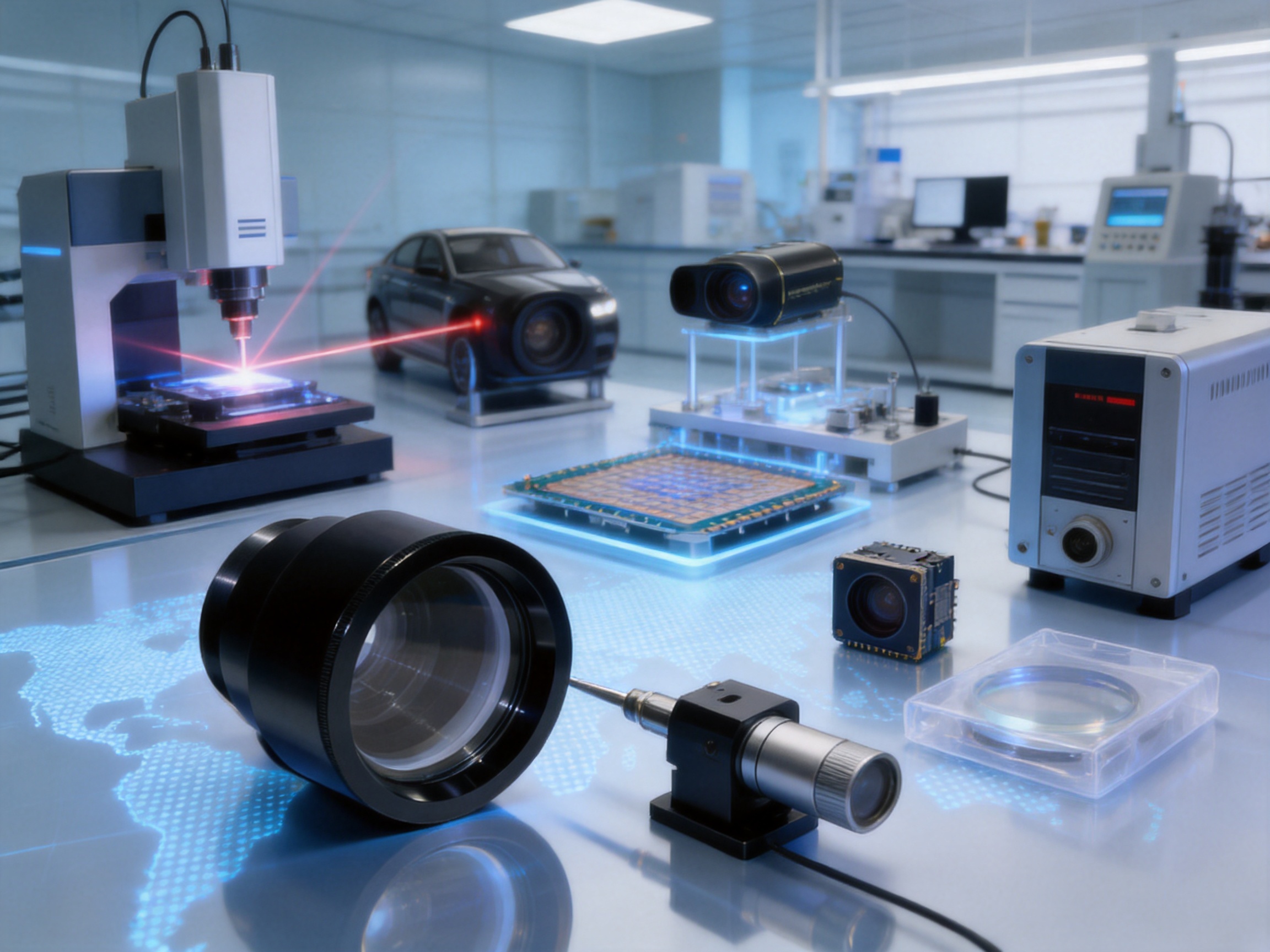
Optical lenses are among the most important components in modern photonic, imaging, sensing, automotive, semiconductor, and consumer-electronics systems. Although a lens may appear to be a relatively small part of a finished device, its geometry, material quality, surface condition, coating performance, and dimensional stability can determine the accuracy, brightness, resolution, and service life of the entire optical assembly. For this reason, precision optical lenses must be designed and manufactured according to demanding technical requirements rather than treated as ordinary glass products.
Modern optical systems require lenses that can control light with a high degree of predictability. Depending on the application, a lens may focus, collimate, magnify, reduce, redirect, or distribute light. It may also need to operate in high-temperature environments, resist humidity and chemical exposure, withstand vibration, or maintain imaging performance across a broad wavelength range. Meeting these expectations requires advanced optical design, carefully selected materials, highly controlled processing, precise measurement, and consistent quality management.
Changzhou Haolilai Photo-Electricity Scientific and Technical Co., Ltd., commonly associated with the HLL brand, is a professional manufacturer of precision optical components with extensive experience in optical lens development and production. Founded in 1998, the company serves demanding markets including laser optics, automotive optics, semiconductor optics, and consumer optics. Its production capabilities, technical centers, engineering resources, certification systems, and export experience support the manufacture of optical lenses for customers that require stable quality and reliable customization.
This article explains the characteristics of precision optical lenses, their manufacturing process, major application benefits, quality-control requirements, and the strengths that distinguish an experienced optical component manufacturer from a general glass-processing supplier.
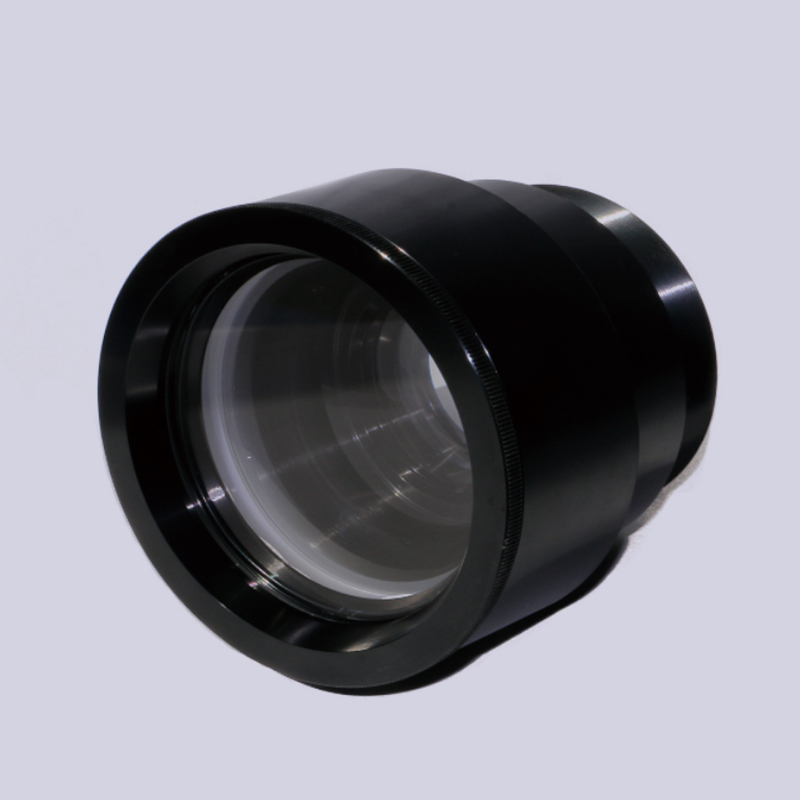
Optical Lens
What Is a Precision Optical Lens?
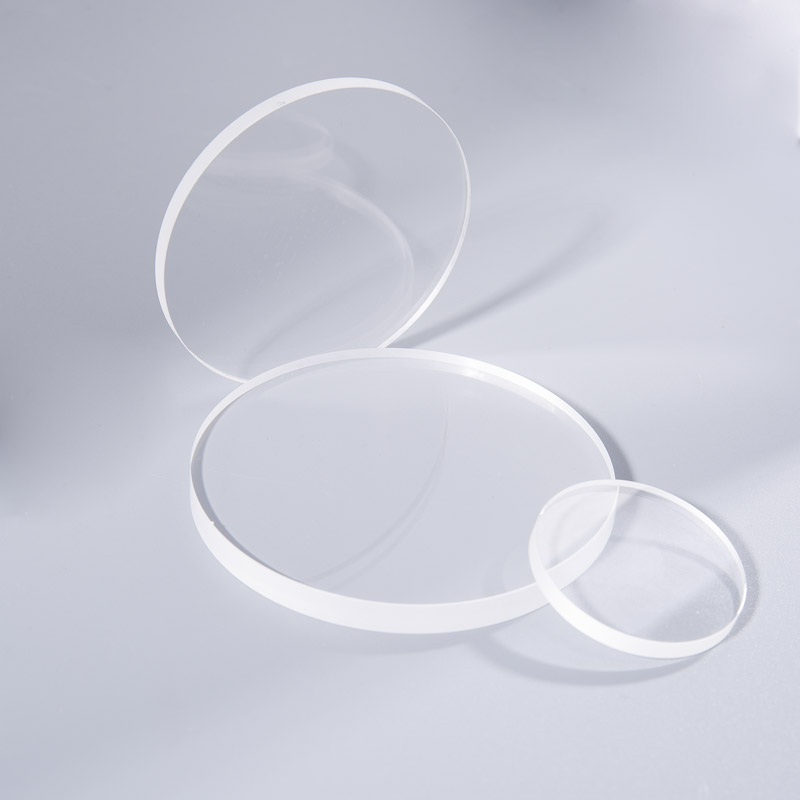
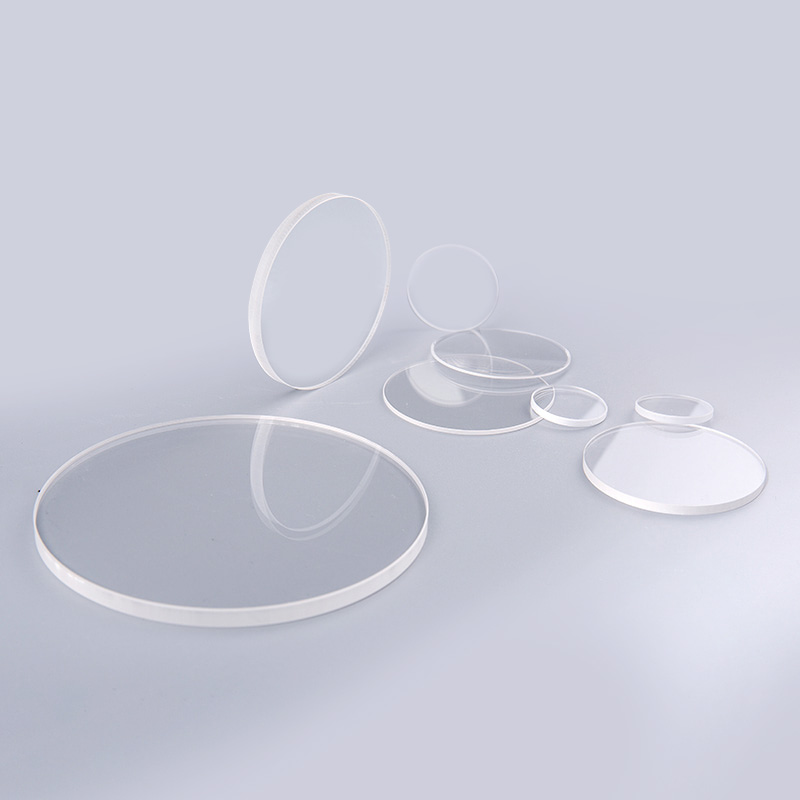
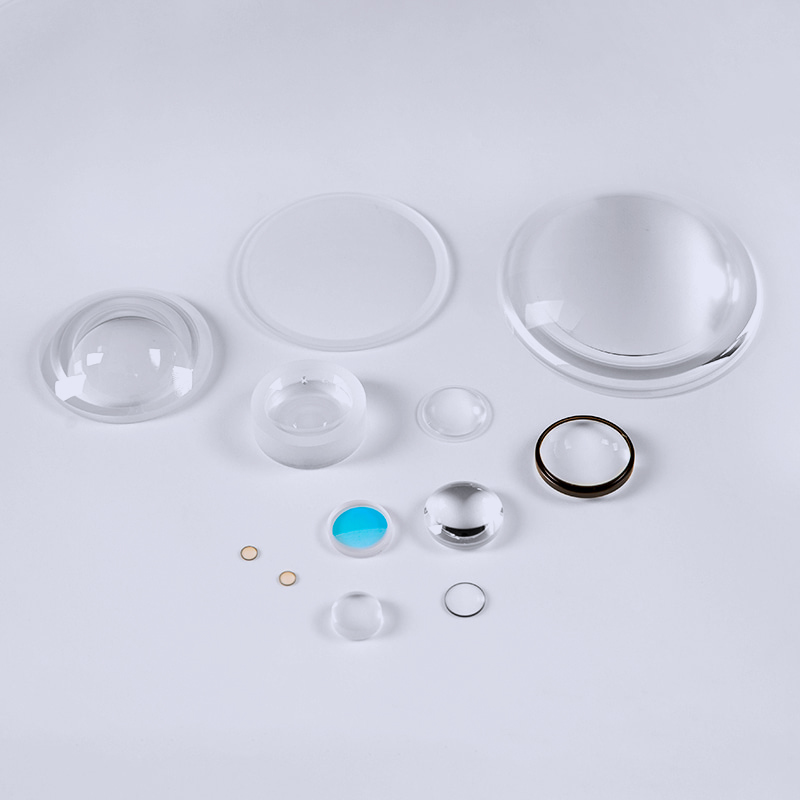
A precision optical lens is a transparent optical element with one or more curved or planar surfaces designed to alter the path of light. The lens may be convex, concave, plano-convex, plano-concave, meniscus, aspheric, cylindrical, or specially shaped for a specific optical system. Its optical behavior is determined by the refractive index of the material, surface curvature, center thickness, edge thickness, clear aperture, wavelength range, and surrounding medium.
In practical applications, a lens does much more than simply magnify an image. It can focus laser energy onto a small spot, collect light from a sensor field, correct aberration, compensate for temperature changes, form an image on a camera detector, or improve the coupling efficiency between optical devices. The performance of the complete system depends on how accurately the lens conforms to its design data.
Precision is therefore measured through several parameters. These may include radius of curvature, surface figure, surface roughness, wedge, centration, thickness, diameter, chamfer dimensions, coating reflectance, transmission, and cosmetic quality. A lens can have a visually attractive surface yet fail to perform if its centration is poor or its surface figure deviates from the required specification.
Compared with ordinary transparent glass products, precision optical lenses require much tighter control at every stage. The raw material must have suitable optical homogeneity and internal quality. Grinding and polishing must produce accurate geometry. Cleaning and coating must avoid contamination. Inspection must verify both measurable optical performance and appearance. Packaging must prevent scratching, impact, moisture, and particle contamination during transportation.
Major Types of Optical Lenses
Spherical Lenses
Spherical lenses have surfaces based on spherical radii. They are widely used because their design and production are relatively efficient, and they provide reliable performance in many imaging, illumination, laser, and sensing systems. Common forms include plano-convex, bi-convex, plano-concave, bi-concave, and meniscus lenses.
Plano-convex lenses are commonly used for focusing parallel light, while plano-concave lenses can expand or diverge a beam. Bi-convex lenses are suitable for converging applications where the object and image positions require a balanced curvature. Meniscus lenses may reduce certain aberrations and are often incorporated into compact optical assemblies.
Aspheric Lenses
Aspheric lenses have at least one surface that is not a simple spherical curve. Their geometry is designed to reduce spherical aberration and improve image quality with fewer optical elements. This can help reduce the size, weight, and complexity of an optical system.
Manufacturing aspheric lenses requires more advanced equipment, process control, and measurement capability than conventional spherical lenses. The surface profile must conform closely to a mathematical design, and the transition between the optical surface and edge region must be controlled carefully. High-quality aspheric lenses can provide strong advantages in cameras, laser modules, optical sensors, and compact imaging devices.
Cylindrical Lenses
Cylindrical lenses focus or spread light in one direction rather than two. They are useful in laser line generation, beam shaping, barcode scanning, machine vision, spectroscopy, and certain medical or scientific instruments. Since cylindrical performance depends strongly on directional curvature and alignment, manufacturing and inspection must account for axis orientation and cross-sectional accuracy.
Custom Optical Lenses
Many industrial systems cannot use standard catalog lenses. They may require custom diameter, unusual curvature, special glass, nonstandard coating, tight centration, special edge geometry, or integration with a mechanical housing. Custom optical lenses are developed through cooperation between the customer and manufacturer. The process normally includes drawing review, optical simulation, material selection, prototype production, testing, and controlled mass production.
Key Advantages of High-Quality Optical Lenses
Improved Optical Accuracy
The primary advantage of a precision optical lens is accurate control of light. A lens with stable curvature, low surface error, and correct centration can produce sharper images, better focus, lower wavefront distortion, and more predictable beam behavior. This is particularly important in laser equipment, machine vision, semiconductor inspection, and high-resolution imaging.
Optical accuracy also improves system repeatability. When lenses are manufactured consistently, the customer can assemble multiple units with similar performance and reduce the need for manual adjustment or compensation. This lowers production time and helps maintain uniform quality across different batches.
Higher Transmission and Better Light Utilization
Uncoated optical surfaces reflect a portion of incident light. In systems with several lens surfaces, these losses can accumulate and reduce total transmission. Anti-reflection coatings are used to minimize reflection over a selected wavelength range, allowing more light to pass through the optical system.
Improved transmission is valuable in imaging, sensing, laser delivery, and consumer electronics. It can increase image brightness, improve detector signal strength, reduce stray light, and enhance energy efficiency. The most suitable coating depends on the wavelength, angle of incidence, environmental conditions, and performance target.
Reduced Aberration
Optical aberrations can cause blur, distortion, color fringing, field curvature, or uneven focus. Advanced lens designs and precision manufacturing methods help reduce these effects. Aspheric surfaces, selected glass combinations, and optimized curvature profiles may be used to improve performance.
Lower aberration is especially important when systems must capture fine details or process images automatically. In machine vision, for example, poor lens performance can reduce measurement accuracy. In semiconductor inspection, even a small optical error may hide defects or produce false indications.
Reliable Environmental Performance
Industrial and automotive optical systems may operate under temperature changes, vibration, humidity, dust, and chemical exposure. High-quality lenses are manufactured with materials, coatings, edge treatments, and packaging methods suited to the operating environment.
Temperature stability is particularly important because refractive index, lens dimensions, and mechanical mounting conditions can change with temperature. Appropriate material selection and optical design can reduce focus shift and preserve performance over the required temperature range.
Long Service Life
A precision lens with suitable surface quality, coating adhesion, cleanliness, and protective packaging can provide reliable service for many years. Long service life reduces replacement costs and helps prevent unplanned maintenance. In laser and automotive systems, reliability is also connected to safety because an optical failure may affect energy distribution, sensing accuracy, or driver-assistance functions.
Advanced Manufacturing Process for Optical Lenses
The manufacture of optical lenses is a coordinated sequence of material preparation, shaping, polishing, cleaning, coating, inspection, and packaging. Each stage affects the next, so process stability is essential. Advanced manufacturers use documented procedures, controlled equipment settings, skilled operators, and measurement feedback to achieve repeatable results.
1. Technical Review and Optical Design Confirmation
Before production begins, the technical team reviews the customer drawing, optical data, application conditions, tolerances, material requirements, coating specifications, and packaging expectations. Important data may include lens diameter, radius, center thickness, edge thickness, clear aperture, wavelength band, surface quality, surface figure, centration, and environmental testing requirements.
Design review can identify potential manufacturing risks at an early stage. For example, a very small edge thickness may create handling difficulties, a narrow clear aperture may require special tooling, and a tight centration tolerance may demand additional measurement and adjustment. Early communication between engineering and production helps prevent delays and reduces the risk of nonconforming parts.
2. Optical Material Selection
Optical materials are selected according to refractive index, dispersion, transmission range, thermal properties, chemical resistance, hardness, and application requirements. Different systems may use optical glass, fused silica, quartz, crystal materials, or specialized infrared substrates.
Material quality is critical because internal bubbles, striae, inclusions, stress, or refractive-index variation can affect optical performance. A professional manufacturer evaluates incoming materials and ensures that the selected substrate is compatible with the lens design and processing method.
For automotive and industrial applications, material selection may also consider thermal shock, humidity, vibration, ultraviolet exposure, and long-term stability. For laser applications, the material must tolerate the expected power density and wavelength without excessive absorption or damage.
3. Cutting, Blocking, and Preforming
Raw optical material is cut into suitable blanks before precision shaping. The blank size must provide enough allowance for grinding and polishing while minimizing waste. Blocking or mounting helps hold the workpiece securely and establish the required reference axis during processing.
Correct blocking is important for centration and surface geometry. If the lens is mounted inaccurately, later polishing may produce an optical axis that does not match the mechanical axis. Advanced production therefore treats mounting and alignment as controlled operations rather than informal setup steps.
4. Rough Grinding
Rough grinding removes material quickly and creates the approximate radius or profile required by the design. Abrasive tools are selected according to material hardness and geometry. The process must balance removal rate and surface integrity because excessive force or heat can introduce subsurface damage.
Coolant control is used to manage temperature and remove grinding debris. Stable temperature helps prevent deformation and improves dimensional repeatability. At this stage, the lens is not yet ready for optical use, but the quality of rough grinding influences the amount of work required during fine grinding and polishing.
5. Fine Grinding
Fine grinding gradually reduces surface damage and brings the lens closer to its final geometry. Finer abrasives and more controlled processing parameters are used. The surface must become sufficiently uniform for polishing, while the radius, thickness, and form remain within intermediate tolerances.
Fine grinding is also an important stage for preventing polishing defects. If deep grinding marks or uneven damage remain, polishing may take longer and may not fully remove them. Consistent process control improves both productivity and final optical quality.
6. Precision Polishing
Polishing produces the smooth, transparent surface required for light transmission and accurate imaging. Polishing tools, pads, slurries, pressure, speed, and time are selected according to the lens material and geometry. The objective is not only to remove visible marks but also to achieve the specified surface figure and roughness.
For high-precision lenses, polishing must control local and global errors. A lens may have a generally correct radius but still contain local irregularities that scatter light or distort a wavefront. Measurement feedback allows operators and engineers to adjust the process and maintain stable performance.
Aspheric polishing is more demanding because the surface profile changes continuously and cannot be controlled adequately by conventional spherical methods alone. Computer-controlled polishing, precision tooling, and profile measurement may be used to achieve the required form.
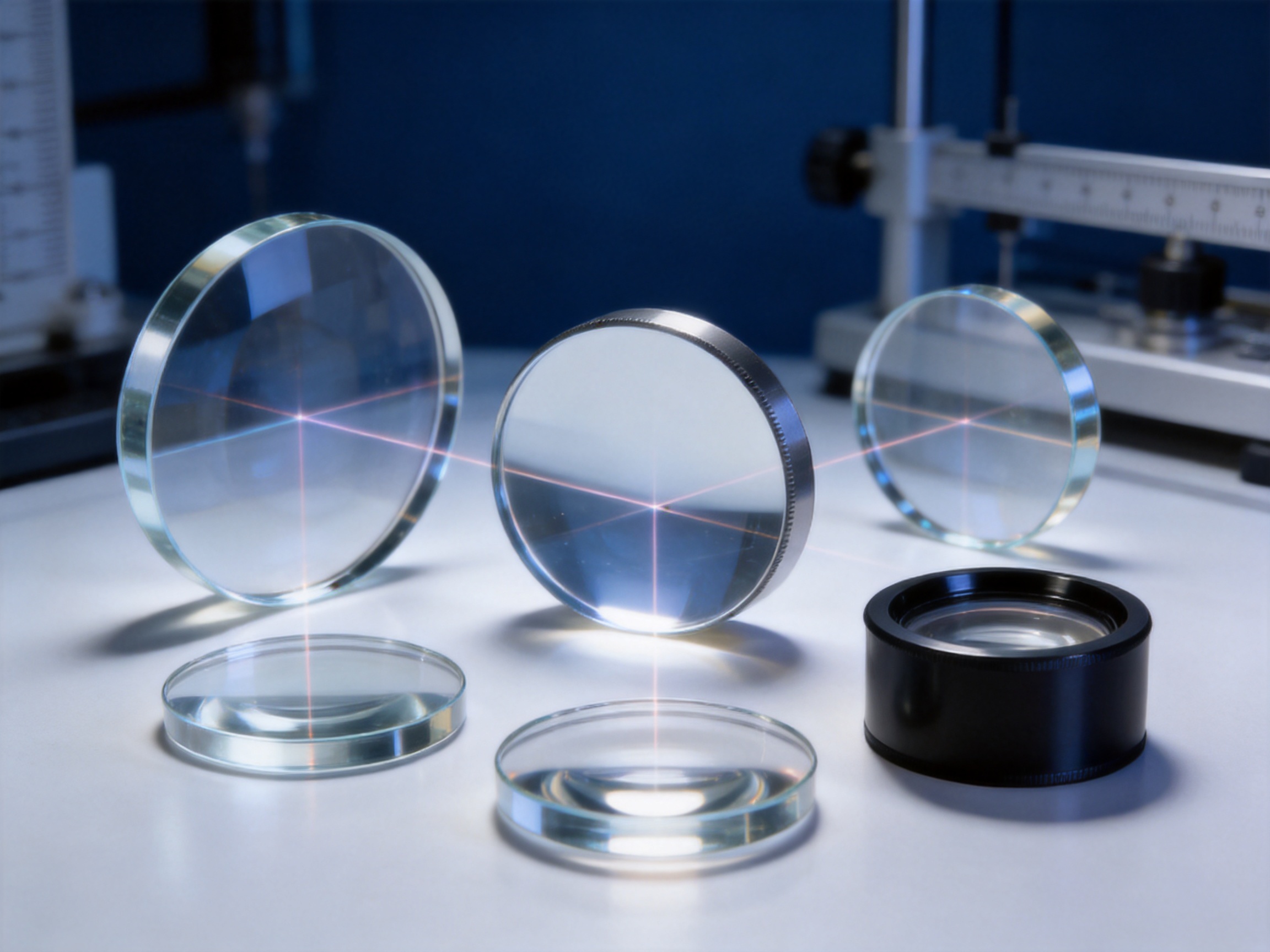
7. Edge Processing and Chamfering
After optical surfaces are completed, the lens edges may be centered, beveled, chamfered, or otherwise finished according to the drawing. Edge processing improves handling safety, reduces the risk of chipping, and helps the lens fit accurately into a mount or assembly.
The edge must be processed without reducing the clear aperture or introducing stress. For lenses used in automotive or compact optical modules, edge dimensions can be especially important because the component may need to fit within a narrow housing while maintaining a precise optical axis.
8. Centering and Alignment
Centration describes the relationship between the optical axis and the mechanical reference axis. Poor centration can cause beam deviation, image displacement, uneven focus, or assembly difficulties. Precision centering equipment is used to detect and correct axis errors through controlled edge processing or alignment adjustments.
High centration accuracy is a major advantage in multi-element optical assemblies. When each lens is properly centered, the complete system requires fewer alignment corrections and can achieve better overall performance. This is one area in which specialized optical manufacturing experience provides a clear advantage over general-purpose glass processing.
9. Cleaning and Surface Preparation
Optical surfaces must be thoroughly cleaned before inspection and coating. Particles, oils, polishing residues, and moisture can reduce coating adhesion, create cosmetic defects, or increase scattering. Cleaning procedures may involve controlled solvents, purified water, ultrasonic treatment, air filtration, and clean handling practices.
Cleanliness is particularly important for semiconductor optics, laser optics, and high-resolution imaging. Even a small particle can affect the performance of a sensitive system or become a source of laser damage when exposed to concentrated energy.
10. Optical Coating
Coatings are applied to modify surface reflection, transmission, durability, or spectral response. Common options include single-layer and multilayer anti-reflection coatings, high-reflection coatings, beam-splitting coatings, infrared coatings, and protective films.
Coating design is selected according to wavelength, incident angle, polarization, substrate material, environmental conditions, and required reflectance or transmittance. A coating intended for visible light may not be appropriate for near-infrared laser energy, and a coating optimized for normal incidence may perform differently at a large angle.
Coating quality depends on deposition uniformity, chamber cleanliness, substrate preparation, temperature control, layer thickness, and adhesion. After coating, samples or production parts may be tested for spectral performance, adhesion, abrasion resistance, humidity resistance, temperature cycling, and other requirements.
11. Final Inspection and Documentation
Final inspection verifies that the lens conforms to the approved specification. Dimensional measurement confirms diameter, thickness, radius, and edge geometry. Optical inspection evaluates surface figure, centration, transmission, reflectance, and other functional characteristics. Cosmetic inspection identifies scratches, digs, stains, chips, bubbles, and other visible defects.
Professional quality management also includes traceability. Production records may identify material batch, processing route, equipment, inspection results, coating condition, operator information, and packaging details. Traceability allows problems to be investigated efficiently and supports consistent production over time.
12. Protective Packaging
Optical lenses are vulnerable to scratches, impact, fingerprints, dust, and moisture. Protective packaging may include individual sleeves, lint-free materials, formed trays, separators, sealed bags, desiccants, and rigid shipping cartons. Packaging must be selected according to lens size, coating sensitivity, shipping distance, and customer handling procedures.
Good packaging is not merely a logistics detail. It protects the results of the entire manufacturing process and helps ensure that the product reaches the customer in the same condition in which it passed final inspection.
Manufacturing Strengths Supporting Product Quality
An experienced optical lens manufacturer combines equipment, engineering, production management, quality control, and customer service. Machinery alone cannot guarantee reliable results. Stable optical production depends on the ability to connect design data, process parameters, measurement systems, material control, and corrective action into one coordinated workflow.
Integrated Technical Capability
Changzhou Haolilai Photo-Electricity Scientific and Technical Co., Ltd. has established technical resources including the Jiangsu Precision Optical Lens Engineering Technology Center and the Jiangsu Enterprise Technology Research Center. These facilities support product development, process improvement, technical problem-solving, and the transition from prototype to production.
An integrated technical team can help customers evaluate whether an optical drawing is practical, choose an appropriate material, determine coating requirements, and identify tolerances that are necessary for performance. This engineering support is valuable when customers are developing new products or adapting an optical design for mass production.
Large-Scale and Specialized Production Environment
The company covers approximately 35,000 square meters and employs more than 300 people. This scale provides the resources needed to support multiple product categories and application markets. A larger, specialized facility can also separate production areas, inspection areas, material storage, coating operations, and packaging activities more effectively.
Optical production benefits from a controlled environment because temperature, humidity, airborne particles, vibration, and cleanliness can influence the results. Organized factory management and dedicated production areas help reduce variation and improve repeatability.
Quality and Environmental Certifications
The company has obtained ISO9001:2015 quality management certification, ISO14001:2015 environmental management certification, and IATF16949 certification. These systems demonstrate a structured approach to process control, documentation, continuous improvement, environmental responsibility, risk management, and customer satisfaction.
IATF16949 is especially relevant to automotive supply chains, where manufacturers must demonstrate robust quality planning, traceability, process capability, defect prevention, and corrective action. For automotive optical components, these requirements are essential because parts may be installed in systems that must perform reliably throughout a vehicle’s operating life.
Patent and Product Development Experience
HLL has obtained invention patents, utility model patents, and Jiangsu High and New Tech Products. Intellectual-property development indicates an ongoing effort to improve equipment, processes, product structures, or technical applications. In a competitive optical market, such development can help the manufacturer respond to demanding specifications and produce solutions that are difficult to obtain from standard suppliers.
International Supply Experience
The company exports to more than 20 countries. International business experience can support clearer technical communication, more consistent documentation, export packaging, delivery coordination, and compliance with customer requirements in different markets. It also exposes the manufacturer to a broad range of optical applications and quality expectations.
Application Advantages by Industry
Laser Optics
Laser systems require lenses with low absorption, appropriate coating performance, accurate focusing, and strong resistance to laser-induced damage. A focusing lens may need to produce a small and stable spot, while a collimating lens must maintain beam quality over the required distance.
Manufacturing cleanliness is critical because contamination can absorb laser energy and create localized heating. Surface figure and centration are also important because errors can distort the beam or reduce coupling efficiency. Precision optical lenses manufactured for laser applications can improve energy delivery, system stability, and operational safety.
Automotive Optics
Automotive optical components are used in cameras, sensing modules, lighting systems, head-up displays, driver-assistance systems, and other vehicle technologies. These applications require compact dimensions, high imaging quality, vibration resistance, thermal stability, and long-term reliability.
Automotive lenses may be exposed to temperature cycling, humidity, dust, ultraviolet radiation, mechanical shock, and chemical substances. An experienced manufacturer can support these requirements through material selection, coating development, mechanical tolerance control, environmental testing, and IATF16949-based quality processes.
Semiconductor Optics
Semiconductor manufacturing and inspection equipment depends on high-precision optical components to detect patterns, measure dimensions, align wafers, and identify defects. These systems often require excellent surface quality, low scattering, high transmission, tight dimensional tolerances, and strict cleanliness.
Optical lenses for semiconductor applications must be produced with disciplined process control. Particles, coating nonuniformity, or small geometric errors can influence measurement accuracy. A supplier with precision optical engineering capability can help meet the demanding requirements of these systems.
Consumer Optics
Consumer products such as cameras, mobile devices, projectors, scanners, sensors, and optical modules require compact, cost-effective, and consistent lenses. Large production volumes make process capability especially important. A lens that meets specifications in a prototype but varies significantly during mass production cannot support a reliable consumer product.
Advanced manufacturing helps balance performance and cost. Efficient material utilization, stable tooling, automated or semi-automated inspection, controlled coating, and standardized packaging can improve production efficiency while preserving optical quality.
Industrial Imaging and Machine Vision
Machine-vision systems use lenses to inspect products, measure dimensions, identify defects, and guide robots. Image distortion, poor focus, or uneven illumination can directly affect the accuracy of automated decisions. Precision lenses with controlled aberration and stable geometry help improve image quality and reduce calibration problems.
Scientific and Medical Equipment
Scientific instruments and medical devices often require reliable optical performance under specialized conditions. Lenses may be used in microscopes, analytical instruments, imaging equipment, diagnostic systems, or laboratory devices. Depending on the application, the lens may need high transmission, spectral selectivity, sterilization compatibility, or resistance to repeated cleaning.
Optical Lens Performance Parameters
| Parameter | Meaning | Influence on Application |
|---|---|---|
| Diameter | Overall outside dimension of the lens | Determines mechanical fit and available optical aperture |
| Clear aperture | Usable optical area without unacceptable defects | Affects light collection and effective imaging area |
| Radius of curvature | Curvature of a spherical or related optical surface | Controls focal behavior and optical power |
| Center thickness | Thickness measured through the optical axis | Influences focus, mechanical fit, and design calculations |
| Surface figure | Deviation of the actual surface from the intended form | Affects wavefront quality, imaging sharpness, and beam accuracy |
| Surface roughness | Fine-scale irregularity of the polished surface | Influences scattering, transmission, and laser performance |
| Centration | Alignment between optical and mechanical axes | Affects beam deviation, image alignment, and assembly accuracy |
| Surface quality | Visual classification of scratches, digs, chips, and marks | Indicates cosmetic condition and potential scattering sources |
| Transmittance | Percentage of incident light passing through the lens | Influences brightness, detector signal, and energy efficiency |
| Coating performance | Reflectance, adhesion, durability, and spectral behavior | Determines light loss and environmental reliability |
| Material homogeneity | Uniformity of refractive and internal material properties | Supports predictable imaging and low wavefront distortion |
Advantages Over Less Specialized Competitors
Optical lens buyers often compare suppliers based on price, but the lowest initial quotation does not always represent the lowest total cost. Variations in quality can create assembly delays, optical recalibration, field failures, customer complaints, and increased inspection expenses. A specialized manufacturer offers value through consistent performance and reduced production risk.
One important advantage is process integration. A general glass processor may be able to cut or polish simple shapes, but a precision optical manufacturer can connect optical design, material control, grinding, polishing, centering, coating, measurement, and packaging. This integrated capability reduces communication gaps and makes it easier to identify the source of a problem.
Another advantage is the ability to manage tight tolerances. Precision lenses require measurement systems and skilled personnel capable of verifying parameters that are not visible to the naked eye. Specialized equipment and established procedures provide greater confidence that production parts will meet the approved optical specification.
Engineering support is also a meaningful differentiator. Customers may need help selecting glass, adjusting a radius, improving manufacturability, specifying a coating, or balancing performance with cost. A manufacturer with research centers and experienced technical personnel can contribute during the design stage rather than only accepting a finished drawing.
Certification and traceability further distinguish professional suppliers. Documented quality systems create a framework for controlling changes, managing nonconforming products, evaluating suppliers, and implementing corrective action. This is especially important for automotive, semiconductor, and other industries where product reliability and audit readiness are essential.
Finally, a specialized company can provide more dependable support for both prototypes and volume production. The requirements for a prototype are different from those for mass production. A capable manufacturer must be able to refine the process during development and then maintain stable output through production controls, inspection, and continuous improvement.
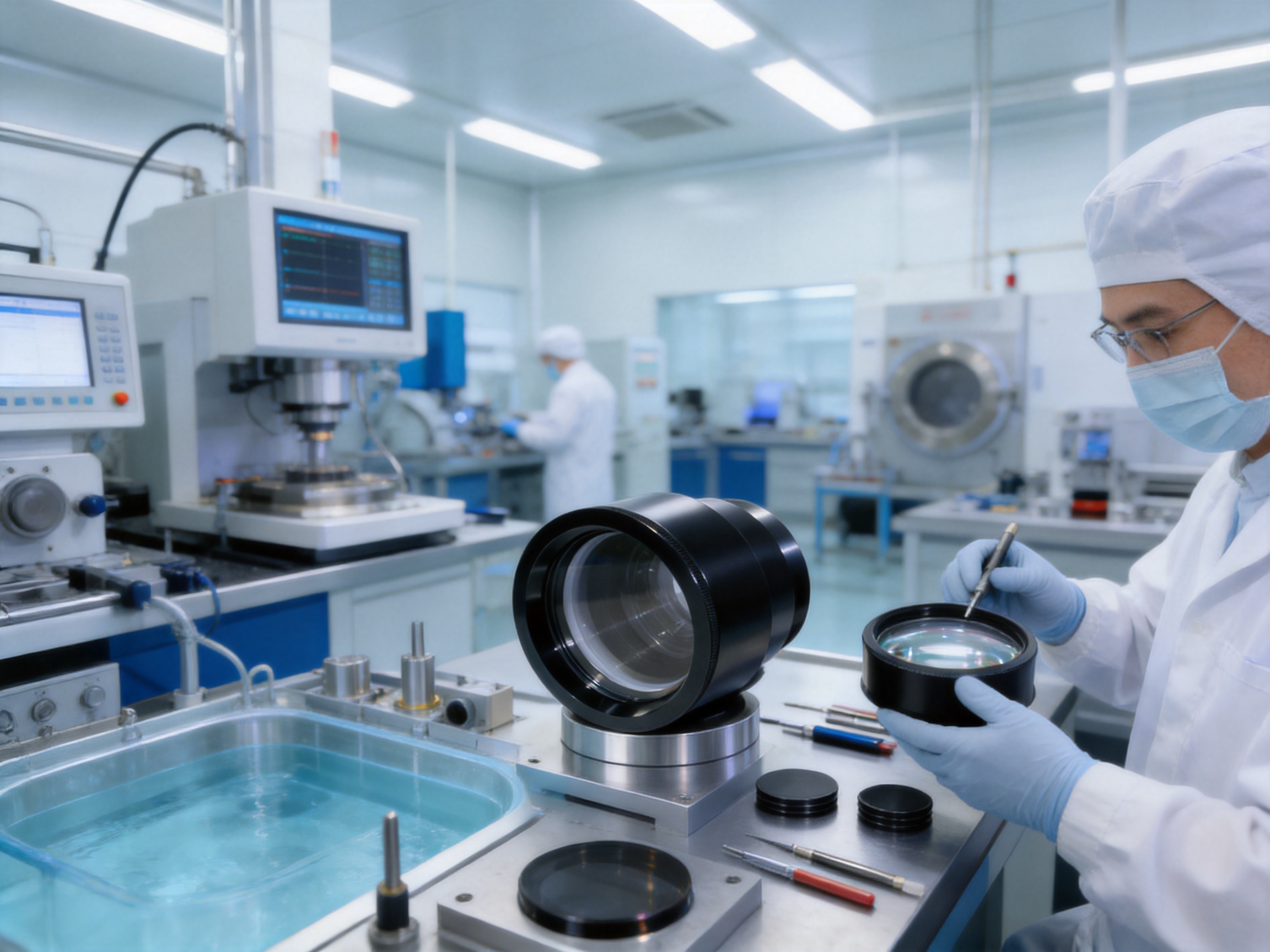
How to Select the Right Optical Lens Supplier
Review Technical Compatibility
The supplier should be able to manufacture the required lens type, material, dimensions, surface geometry, coating, and tolerance. Customers should provide complete drawings or optical data whenever possible. If the design is still under development, early technical consultation can help identify a practical production route.
Evaluate Quality-Control Capability
Ask how the supplier measures surface figure, centration, thickness, radius, transmission, coating performance, and cosmetic quality. The supplier should have documented inspection procedures and equipment suitable for the required precision. Sample inspection reports can help confirm whether the measurement data is clear and relevant.
Confirm Production Capacity
A supplier should be able to support the required quantity, delivery schedule, and future growth. Production capacity includes more than machine numbers. It also depends on material availability, engineering manpower, inspection resources, coating capacity, packaging, and the ability to manage urgent or changing requirements.
Consider Industry Certifications
Certifications such as ISO9001, ISO14001, and IATF16949 can indicate that the manufacturer has established management systems. Certifications do not replace technical evaluation, but they provide useful evidence of process discipline and organizational control.
Assess Communication and Service
Optical projects often require detailed communication. The supplier should respond clearly to questions about drawings, tolerances, testing, packaging, delivery, and changes. Effective communication reduces misunderstandings and supports faster resolution when technical issues arise.
Customer Benefits of Working with an Experienced Optical Manufacturer
Customers can benefit from shorter development cycles when the supplier provides early design feedback. Manufacturing engineers can identify dimensions that are unnecessarily difficult, recommend suitable materials, and propose process improvements without compromising optical performance.
Stable production also reduces the need for customer-side sorting and adjustment. When lens dimensions and optical parameters remain consistent, assembly lines can operate more smoothly. This can reduce labor costs, improve throughput, and make final-product performance more predictable.
Reliable documentation supports customer audits and internal quality procedures. Material certificates, inspection records, coating data, and traceability information may be required for regulated or high-reliability industries. A professional supplier can organize these records according to customer needs.
Long-term cooperation can create additional benefits. Once a manufacturing process has been validated, future orders may be produced with greater efficiency and lower risk. Process knowledge accumulated over time can support product improvements, cost optimization, and the development of related optical components.
Quality Management and Continuous Improvement
Optical lens manufacturing requires continuous improvement because customer applications and technical standards continue to evolve. New sensors, laser sources, imaging systems, and automotive functions create demand for smaller, lighter, more precise, and more durable optical components.
Continuous improvement may involve upgrading polishing technology, refining coating processes, improving measurement accuracy, reducing material waste, optimizing production flow, or developing new cleaning and packaging methods. The objective is to improve quality and efficiency at the same time.
Environmental management is also increasingly important. Optical processing uses water, abrasives, solvents, energy, and packaging materials. A manufacturer operating under an environmental management system can improve resource efficiency, manage waste responsibly, and reduce the environmental impact of production.
Employee training supports process stability. Operators must understand equipment settings, handling procedures, contamination risks, inspection criteria, and response methods for abnormal conditions. Skilled personnel are particularly important for custom lenses and complex geometries where practical experience complements automated equipment.
Future Trends in Optical Lens Manufacturing
The demand for optical lenses is expected to grow as sensing, automation, smart vehicles, industrial inspection, laser processing, and advanced consumer electronics expand. Future products will likely require higher integration, smaller dimensions, broader spectral performance, and stronger environmental durability.
Aspheric and freeform optics are expected to become more common because they can improve system performance while reducing the number of elements. Their production will require more accurate numerical control, better surface measurement, and improved data processing.
Coating technology will continue to advance toward wider spectral bands, stronger durability, lower reflection, and improved performance at changing angles of incidence. This will be especially valuable for compact sensors and multispectral systems.
Digital manufacturing and data-based quality management will also play a larger role. Production data can be used to identify trends, predict equipment maintenance needs, and improve process capability. Digital records can strengthen traceability and support faster corrective action.
Automation will increase, but human technical expertise will remain important. Optical manufacturing involves complex interactions between material behavior, machine condition, tool wear, temperature, slurry characteristics, and measurement interpretation. The strongest manufacturers will combine automation with experienced engineering judgment.
Q&A About Precision Optical Lenses
Q1: What is the difference between an ordinary glass lens and a precision optical lens?
An ordinary glass lens may be manufactured mainly for visual appearance or basic light transmission. A precision optical lens is produced according to controlled optical and mechanical specifications, including surface figure, centration, radius, thickness, surface quality, coating performance, and material homogeneity. It is intended to deliver predictable performance in a defined optical system.
Q2: Can optical lenses be customized?
Yes. Optical lenses can be customized in material, diameter, curvature, thickness, clear aperture, edge shape, coating, surface quality, centration, and environmental performance. Custom production normally begins with a technical drawing or optical data package followed by design review and process evaluation.
Q3: Why is centration important?
Centration controls the alignment between the optical axis and the mechanical axis. If centration is poor, the lens may redirect a beam, shift an image, create uneven focus, or cause difficulties during assembly. High centration accuracy is particularly important in multi-element systems and compact optical modules.
Q4: Which coating should be used for an optical lens?
The coating depends on the wavelength range, incident angle, polarization, application environment, substrate material, and required transmission or reflection. Visible-light imaging, infrared sensing, and high-power laser applications generally require different coating designs. The coating should be selected during technical review rather than added as a generic option.
Q5: Are optical lenses suitable for automotive applications?
Yes. Precision lenses are used in automotive cameras, sensing systems, lighting modules, displays, and driver-assistance equipment. Automotive applications require resistance to temperature cycling, humidity, vibration, shock, and long-term environmental exposure. A supplier with automotive quality-management experience can better support these requirements.
Q6: How can lens quality be verified?
Quality can be verified through dimensional inspection, surface-figure measurement, radius measurement, centration testing, surface-quality inspection, transmission or reflectance testing, coating adhesion testing, and environmental testing where required. The inspection method should correspond to the customer drawing and application risk.
Q7: What information should a customer provide when requesting a quotation?
Useful information includes lens type, drawing, material, diameter, thickness, radius, tolerances, clear aperture, surface quality, surface figure, centration, coating wavelength, quantity, application environment, packaging requirements, and expected delivery schedule. Complete information allows the manufacturer to provide a more accurate technical and commercial proposal.
Q8: Can the same supplier support prototypes and mass production?
An experienced precision optical manufacturer can often support both stages. Prototype production may focus on design validation and process development, while mass production requires stable tooling, documented procedures, capacity planning, automated or standardized inspection, and batch traceability. Supplier capability should be evaluated for the complete product life cycle.
Q9: Why is packaging important for optical lenses?
Optical surfaces and coatings can be damaged by scratches, particles, fingerprints, impact, and moisture. Proper packaging protects the lens during handling, storage, and transportation. Individual separation and clean packaging are especially important for coated, high-precision, or large-aperture lenses.
Q10: What makes an optical lens manufacturer competitive?
Competitiveness comes from a combination of optical engineering, material knowledge, precision processing, coating capability, inspection technology, certifications, production capacity, technical communication, and dependable delivery. Low price alone is not sufficient if inconsistent quality creates higher costs later in the customer’s production process.
Conclusion
Precision optical lenses are essential components in systems where light must be controlled accurately and reliably. Their performance depends on far more than basic transparency. Surface geometry, material quality, centration, coating, cleanliness, environmental resistance, and manufacturing consistency all influence the final result.
Changzhou Haolilai Photo-Electricity Scientific and Technical Co., Ltd. brings together long-term optical manufacturing experience, a broad application focus, engineering research centers, specialized production resources, international supply experience, and recognized quality-management certifications. Its capabilities support the development and production of optical lenses for laser, automotive, semiconductor, consumer, industrial, and other demanding applications.
Compared with less specialized suppliers, an integrated precision optical manufacturer can provide stronger control over design review, material selection, grinding, polishing, centering, coating, measurement, traceability, and packaging. This helps customers reduce optical variation, improve assembly efficiency, shorten development time, and achieve more reliable product performance.
As optical systems become smaller, smarter, and more demanding, the value of high-quality lenses will continue to increase. Selecting a supplier with advanced manufacturing processes and comprehensive technical strength is therefore an important decision for any company seeking stable, high-performance optical components.
References
1. International Organization for Standardization. ISO 9001:2015, Quality Management Systems—Requirements.
2. International Organization for Standardization. ISO 14001:2015, Environmental Management Systems—Requirements with Guidance for Use.
3. International Automotive Task Force. IATF 16949, Quality Management System Requirements for Automotive Production and Relevant Service Parts Organizations.
4. Warren J. Smith. Modern Optical Engineering: The Design of Optical Systems.
5. Daniel Malacara. Optical Shop Testing.
6. Rudolf Kingslake and R. Barry Johnson. Lens Design Fundamentals.
7. Optical Society and engineering reference materials concerning optical fabrication, surface metrology, thin-film coatings, and precision lens inspection.


 苏公网安备32041102000130号