
 Search
 en
 English
 日本語
 русский
 Español
 Deutsch
 中文简体
Content
- 1 What Is an Optical Window?
- 2 Core Performance Requirements
- 3 Material Selection for Optical Windows
- 4 Precision Manufacturing Process
- 5 Quality Management and Manufacturing Capability
- 6 Advantages over Inconsistent or General-Purpose Suppliers
- 7 Application Areas
- 8 Design Considerations for Buyers
- 9 Why Choose a Specialized Optical Component Manufacturer?
- 10 Development and Supply Process
- 11 Environmental and Organizational Responsibility
- 12 Future Development of Optical Windows
- 13 Q&A About Precision Optical Windows
- 13.1 What is the main purpose of an optical window?
- 13.2 How is an optical window different from a lens?
- 13.3 Can optical windows be customized?
- 13.4 Which materials are suitable for optical windows?
- 13.5 Why are flatness and parallelism important?
- 13.6 Are coatings necessary for every optical window?
- 13.7 What industries use precision optical windows?
- 13.8 How does surface quality affect performance?
- 13.9 What information should be included in an inquiry?
- 13.10 What certifications does the manufacturer hold?
- 13.11 Can the manufacturer support high-volume production?
- 13.12 How should optical windows be packaged?
- 14 Conclusion
- 15 References
- 16 Product: Optical Window
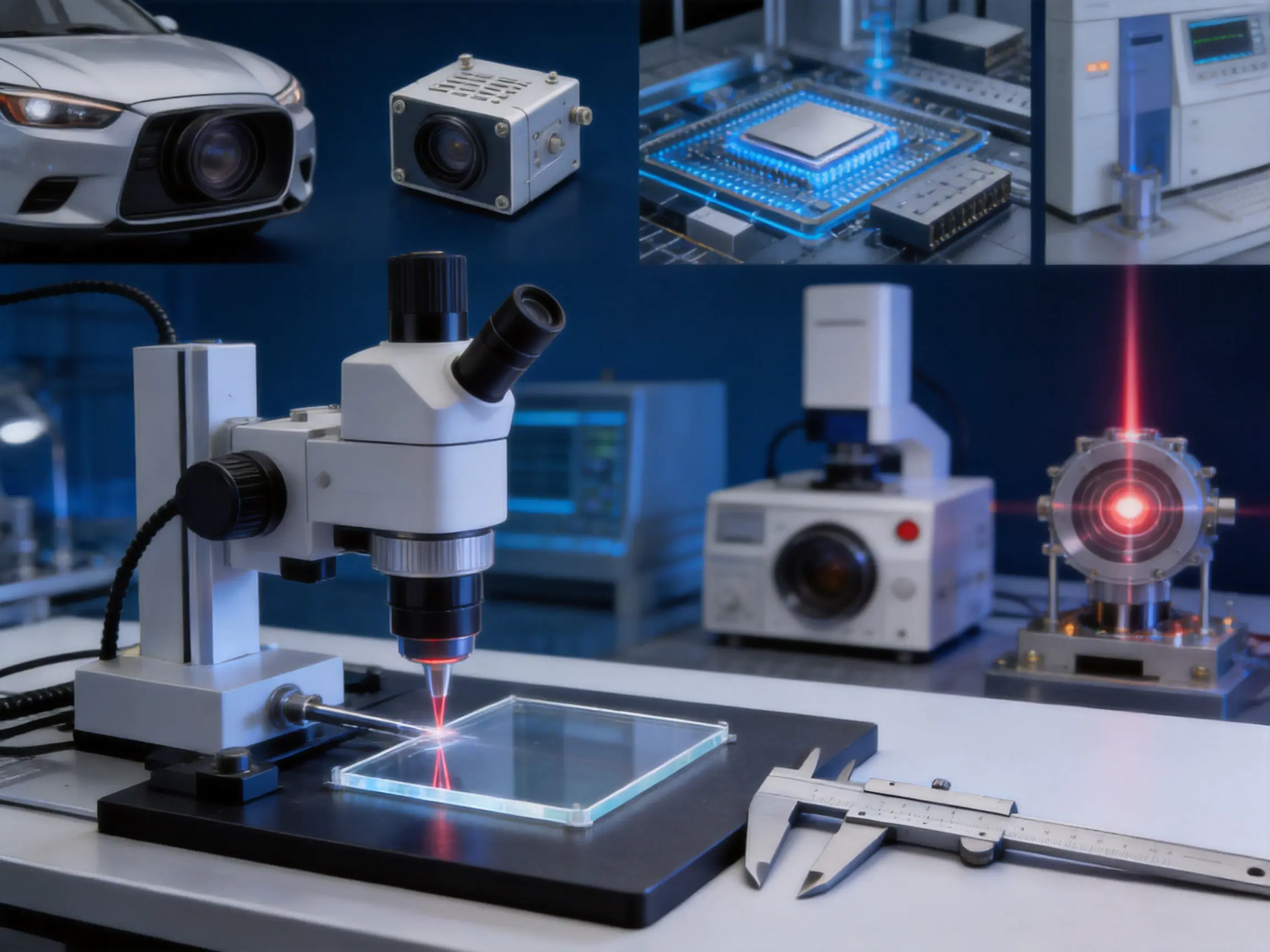
Optical windows are essential components in systems that require light to pass through a protective, stable, and optically controlled surface. Although an optical window may appear simple compared with a lens, prism, or mirror, its performance can strongly influence the accuracy, reliability, and service life of an entire optical assembly. A high-quality window must transmit the required wavelengths, maintain excellent surface quality, resist environmental damage, preserve dimensional stability, and introduce as little optical distortion as possible.
Modern optical systems are becoming more compact, more powerful, and more sensitive. Laser equipment, imaging devices, semiconductor inspection instruments, automotive optical modules, scientific systems, and consumer products all require optical windows manufactured to consistent and repeatable standards. The component is often positioned directly in front of a sensor, laser path, camera, detector, or precision imaging assembly. Any defect, contamination, coating inconsistency, edge chip, wedge error, or surface irregularity may reduce system performance.
Changzhou Haolilai Photo-Electricity Scientific and Technical Co., Ltd., also known as HLL, develops and manufactures precision optical components, including optical windows, for professional industrial applications. Founded in 1998, the company has built its capabilities around precision optical manufacturing, technical development, quality control, and application-oriented production. Its product portfolio serves laser optics, automotive optics, semiconductor optics, and consumer optics, providing a broad technical foundation for optical window production.
This article explains the structure, functions, manufacturing process, performance characteristics, application value, quality advantages, and customization possibilities of precision optical windows. It also examines how an experienced optical component manufacturer can support customers from material selection and design review through production, inspection, and delivery.
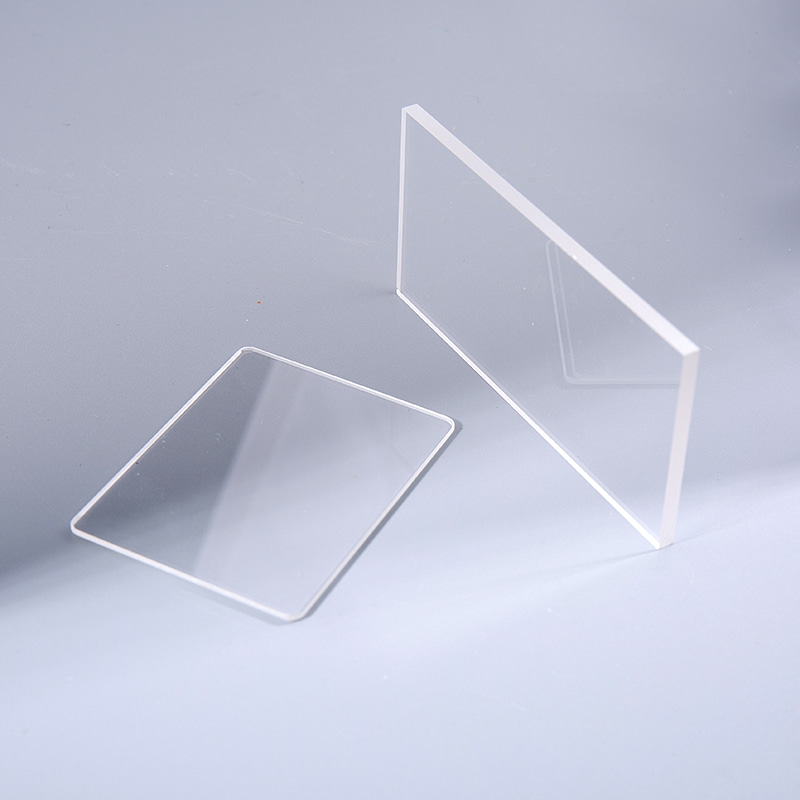
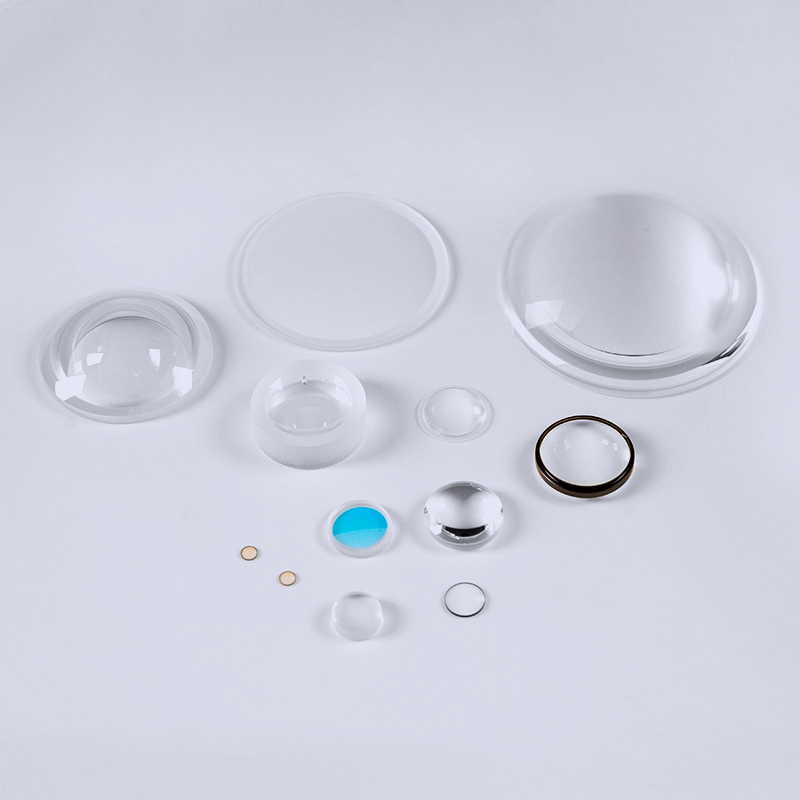
Optical Window
What Is an Optical Window?
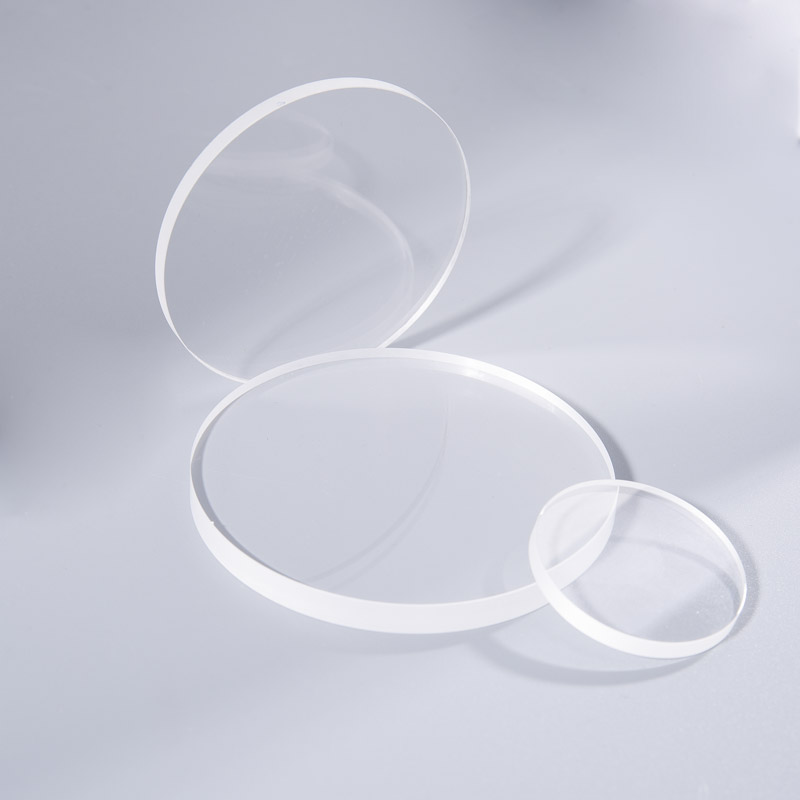
An optical window is a transparent optical component designed to transmit light while separating or protecting two environments. Unlike a focusing lens, an optical window is generally intended to provide substantially parallel transmission rather than intentional convergence or divergence. Unlike a mirror, it is designed to transmit light instead of reflecting most of the incident energy. Its primary functions may include environmental protection, pressure separation, contamination control, optical isolation, and protection of sensitive internal components.
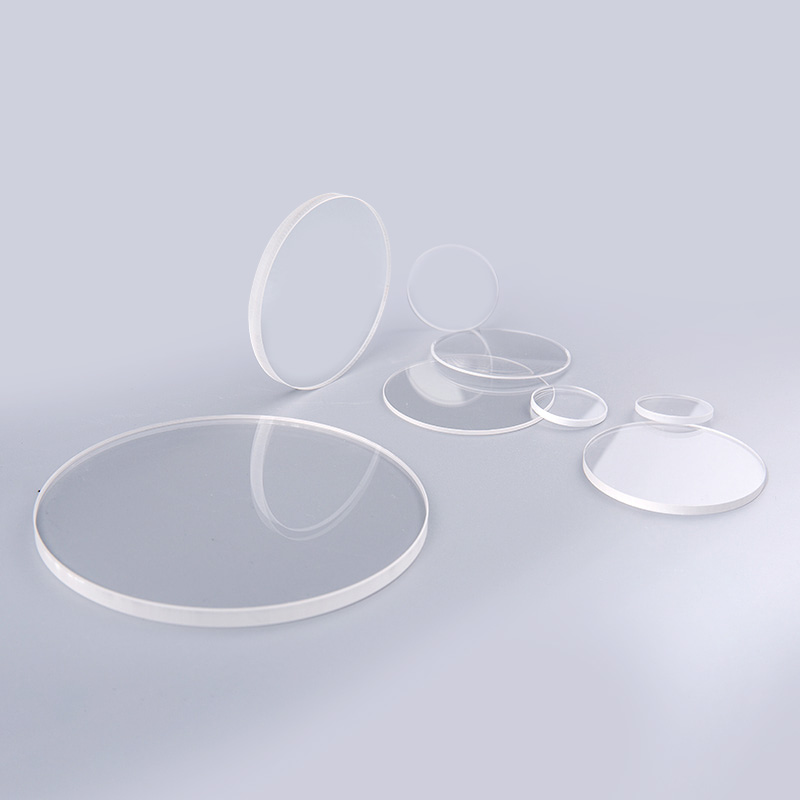
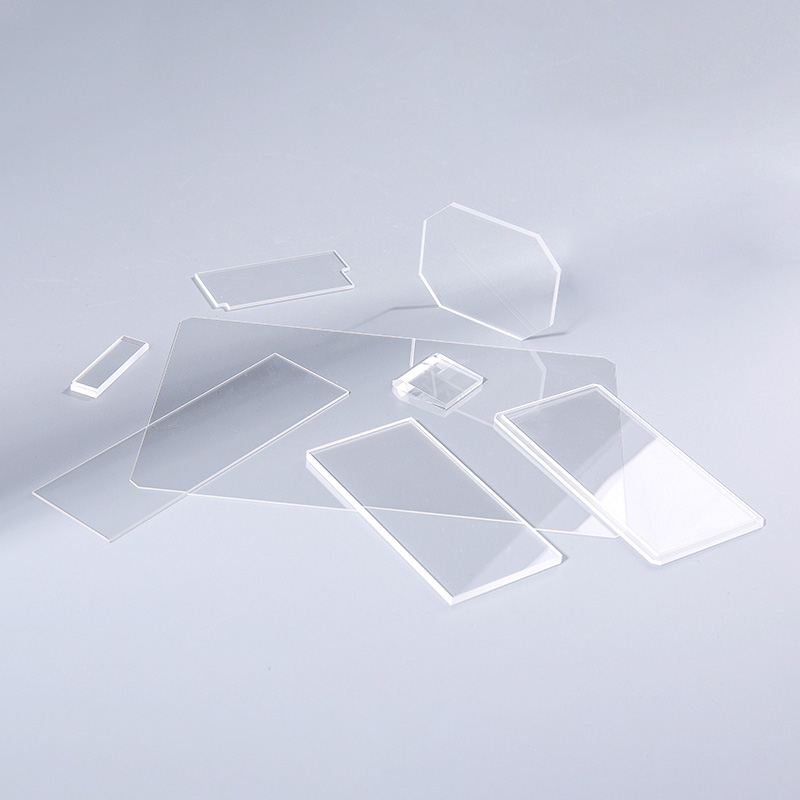
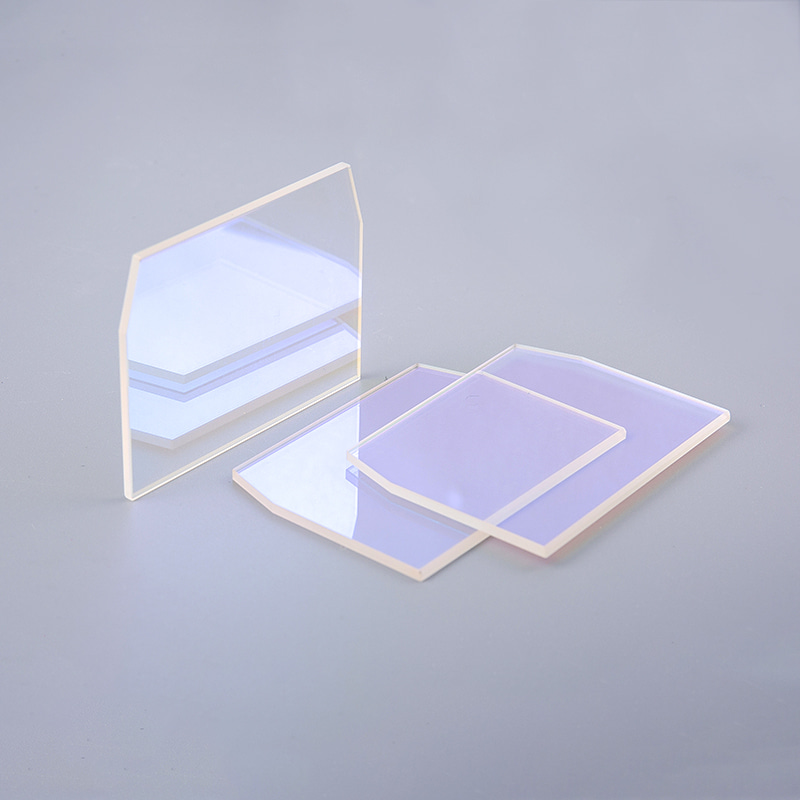
Optical windows can be manufactured from different types of optical glass, fused silica, quartz, crystal materials, or other transparent substrates. The appropriate material depends on wavelength range, operating temperature, mechanical requirements, chemical exposure, transmission performance, and cost objectives. A window may be circular, rectangular, square, or specially shaped. It may be uncoated or supplied with an antireflection coating, infrared coating, protective coating, conductive coating, or other functional treatment.
The simplest optical window has two polished, approximately parallel surfaces. However, industrial requirements may involve much more than basic transparency. Customers may specify clear aperture, thickness, diameter, flatness, parallelism, surface quality, surface accuracy, chamfer dimensions, edge treatment, coating performance, cleanliness, and packaging. These parameters must work together to ensure that the window performs reliably in the final optical system.
Optical Windows Compared with Lenses and Mirrors
A lens intentionally changes the direction of light to focus, collimate, or distribute an optical beam. A mirror reflects light, usually through a metallic or dielectric coating. An optical window generally preserves the direction of transmitted light while offering physical separation and protection. In practical applications, however, a window can still influence beam quality through refraction, residual wedge, surface curvature, internal stress, and coating behavior.
This distinction is important during system design. A window that is not sufficiently parallel may produce beam deviation. A window with inadequate flatness may introduce wavefront error. A window with poor surface quality may scatter light. A window with unsuitable coating performance may reduce transmission or create unwanted ghost images. Precision manufacturing is therefore necessary even when the component is not intended to focus or reflect light.
Core Performance Requirements
The performance of an optical window is determined by a combination of optical, mechanical, environmental, and manufacturing characteristics. The correct specification depends on the application, but several requirements are common across industries.
High Optical Transmission
Transmission is one of the most important characteristics of an optical window. The substrate must transmit the operating wavelength range with low absorption and acceptable reflection. For visible-light systems, the window should preserve brightness, color, and image contrast. For laser systems, transmission must be compatible with the laser wavelength and power density. For infrared or ultraviolet applications, the material must maintain suitable transmission outside the visible spectrum.
Optical coatings can be used to reduce reflection and increase transmission. A properly designed antireflection coating improves energy throughput and may reduce stray reflections. Coating selection must consider wavelength, angle of incidence, polarization, power level, humidity, temperature, cleaning methods, and expected service life.
Low Wavefront Distortion
Optical windows used in imaging and laser systems must preserve the quality of the transmitted wavefront. Surface flatness, parallelism, wedge, residual stress, and material homogeneity all influence wavefront behavior. A high-quality window is manufactured and inspected to minimize unwanted optical distortion.
Low distortion is especially valuable in semiconductor inspection, laser measurement, scientific imaging, and high-resolution camera systems. In these applications, even small variations may affect measurement accuracy, image sharpness, or beam alignment. Precision grinding, polishing, lapping, and inspection processes are therefore required to achieve stable optical performance.
Consistent Surface Quality
Surface quality describes the presence of scratches, digs, pits, sleeks, stains, and other visible or microscopic imperfections. A clean and properly polished surface reduces scattering and helps maintain image contrast. The appropriate surface-quality grade depends on the application. General protective windows may tolerate broader specifications, while high-power laser and precision imaging applications may require significantly more stringent control.
Surface quality is influenced by material preparation, abrasive selection, polishing conditions, equipment stability, cleaning, handling, and inspection. A controlled process is more reliable than treating polishing as a single isolated operation. Each stage must prevent contamination and avoid introducing defects that could become visible after coating or assembly.
Dimensional Accuracy and Stability
Optical windows must fit accurately into housings, barrels, sensors, camera modules, and other assemblies. Diameter, length, width, thickness, edge profile, chamfer, and tolerance requirements must be controlled according to the customer’s design. Dimensional consistency is particularly important for high-volume production because variation can increase assembly time or cause rejection during automated manufacturing.
Thickness stability also influences optical path length, mechanical positioning, thermal behavior, and system calibration. In some applications, the window must maintain tight thickness tolerance across the entire production batch. Advanced measurement and process control help manufacturers achieve repeatable results.
Environmental Resistance
Optical windows may be exposed to humidity, temperature changes, vibration, dust, chemicals, cleaning agents, pressure differences, or outdoor conditions. The substrate and coating must be selected for the expected operating environment. Protective coatings, edge treatments, appropriate packaging, and careful cleaning procedures can all contribute to long-term reliability.
Automotive and industrial applications may impose especially demanding conditions. A window used near a camera or optical sensor may experience temperature cycling, vibration, contamination, and mechanical shock. A window used in semiconductor or laser equipment may be exposed to controlled but highly sensitive process environments. The product must be designed with the complete operating context in mind.
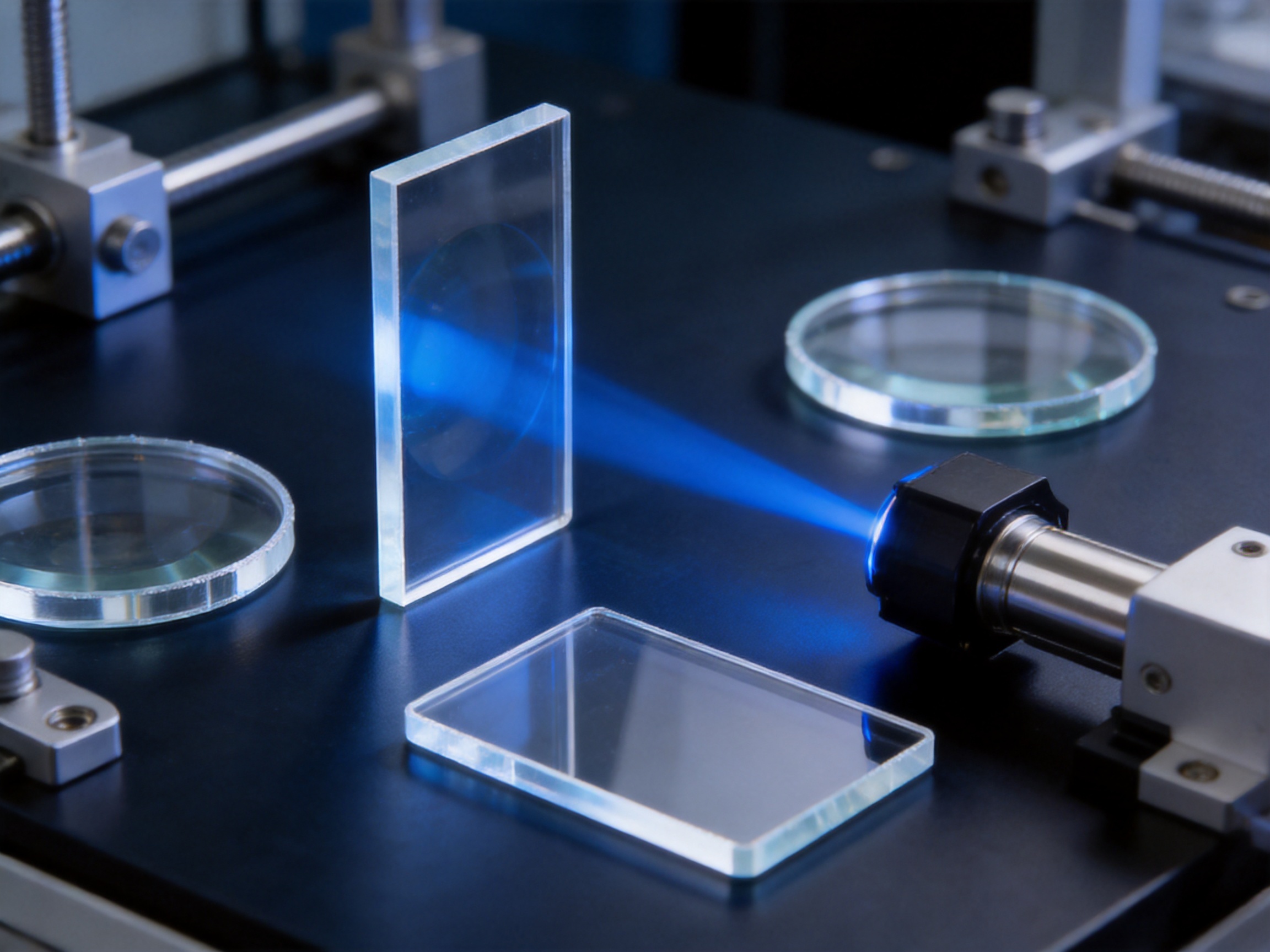
Material Selection for Optical Windows
Material selection is a fundamental step in optical window development. No single material is ideal for every application. The selected substrate must balance optical transmission, mechanical strength, thermal behavior, chemical resistance, manufacturability, availability, and cost.
Optical Glass
Optical glass is widely used for visible and near-infrared windows because it offers good optical performance, broad availability, and flexible processing options. Different glass types provide different refractive indices, transmission ranges, thermal properties, and chemical characteristics. Optical glass can be ground and polished into circular or rectangular components and can often accept a wide range of coatings.
For imaging applications, optical glass can provide excellent clarity and low scatter when properly processed. For protective windows, the material may be selected based on a balance between optical quality and mechanical requirements. The final choice depends on whether the component is intended for a camera, laser, detector, instrument, or other optical assembly.
Fused Silica and Quartz
Fused silica and quartz materials are valued for their broad spectral transmission, low thermal expansion, and suitability for demanding laser and ultraviolet applications. Their thermal stability can be beneficial where the window experiences rapid temperature changes or high optical power. These materials may require specialized processing because hardness and brittleness influence cutting, grinding, polishing, and edge treatment.
When the application involves ultraviolet transmission, high temperature, or strong resistance to thermal shock, fused silica may offer advantages over conventional optical glass. Coating design remains important because the surface reflection characteristics and operating wavelength must be considered in the final system.
Specialty and Application-Specific Materials
Some applications require materials with specific infrared transmission, high mechanical strength, low density, or resistance to harsh environments. Specialty materials can be considered for infrared imaging, protective sensor windows, laser systems, and scientific instruments. The feasibility of processing depends on material properties, geometry, tolerance requirements, and production volume.
A capable optical manufacturer can help customers compare materials rather than simply producing a drawing without technical discussion. Early evaluation can prevent unsuitable material selection, reduce development risk, and improve the balance between optical performance and production cost.
Precision Manufacturing Process
The production of an optical window involves a sequence of controlled processes. The exact route depends on material, geometry, coating requirements, tolerance level, and volume. However, the general workflow includes engineering review, material preparation, cutting or blanking, shaping, grinding, lapping, polishing, cleaning, coating when required, inspection, and packaging.
Engineering Review and Production Planning
Manufacturing begins with a review of the customer’s drawing, specifications, application conditions, and expected quantity. Engineers examine the required material, thickness, dimensions, clear aperture, parallelism, surface quality, flatness, coating, edge treatment, and inspection standards.
This stage helps identify potential manufacturing risks before production begins. For example, a very thin window may require special support during polishing. A large clear aperture may restrict clamping options. A small chamfer may be difficult to maintain during repeated handling. A coating specification may require a particular cleaning or masking method. By addressing these details early, the manufacturer can establish a practical and stable process route.
Material Preparation and Blank Processing
Raw optical material is inspected and prepared before precision processing. The material may be cut into discs, rectangles, or other basic shapes. Cutting parameters must control chipping, cracking, heat generation, and dimensional variation. Edges may be prepared to support later grinding and polishing operations.
Material traceability is important for professional production. Identifying the material batch and processing route supports quality investigation and consistent manufacturing. It also helps the production team manage repeat orders and maintain reliable product history.
Grinding and Shaping
Grinding removes material and brings the window close to its required dimensions and geometry. Coarse grinding is used to establish shape and remove saw marks or initial irregularities. Finer grinding gradually reduces subsurface damage and prepares the surfaces for lapping and polishing.
The grinding process must be carefully controlled because excessive force, unsuitable abrasive conditions, or poor support may create cracks, edge damage, or internal stress. A stable process improves the efficiency of later polishing and contributes to a better final surface.
Lapping and Surface Preparation
Lapping improves flatness, thickness consistency, and parallelism. It is an important operation for optical windows because both surfaces often need to remain highly controlled relative to each other. Lapping may be performed using controlled abrasives, fixtures, and process parameters selected for the material and geometry.
During this stage, process control helps reduce thickness variation and maintain the intended surface relationship. The objective is not simply to remove material, but to produce a stable foundation for final polishing. Proper lapping can reduce polishing time and improve consistency across a production batch.
Precision Polishing
Polishing creates the transparent, low-scatter optical surface required for final use. The polishing process removes fine subsurface damage and improves surface quality and optical accuracy. It may involve specialized polishing tools, slurries, pads, pressure control, and machine parameters.
For demanding windows, polishing must be uniform across the clear aperture. The process must avoid edge roll-off, local high spots, waviness, and nonuniform removal. The final result is influenced by machine condition, tool condition, slurry management, operator experience, and measurement feedback.
HLL’s long-term focus on precision optical components provides a technical foundation for controlling these operations. The company’s experienced technical team supports the development and production of optical components for multiple industries, enabling knowledge gained in one application area to contribute to another.
Edge Treatment and Chamfering
Edges are often chamfered or otherwise treated to reduce the risk of chipping and improve handling safety. Edge dimensions may be specified on the drawing because they influence installation, retaining-ring contact, sealing, and mechanical durability.
Edge treatment must be consistent with the clear aperture. An excessively large chamfer can reduce the usable optical area, while an insufficient or damaged chamfer may increase the risk of breakage. Controlled edge processing is therefore part of both optical and mechanical quality.
Cleaning and Handling
After polishing, optical windows must be cleaned carefully to remove abrasive residue, particles, fingerprints, oils, and other contaminants. Cleanliness is critical because a visually clear surface may still contain particles that interfere with coating adhesion, assembly, imaging, or laser performance.
Handling procedures should minimize contact with polished surfaces. Clean gloves, controlled work areas, suitable trays, protective films, and careful packaging help preserve surface quality after inspection. The final product should arrive in a condition suitable for customer assembly and further processing.
Optical Coating
Coatings can be applied when the optical system requires higher transmission, reduced reflection, improved durability, or wavelength-specific performance. An antireflection coating may be designed for a single wavelength, a narrow band, or a broader spectral range. The correct choice depends on the light source, detector, angle of incidence, polarization, and environmental conditions.
Coating quality depends on substrate cleanliness, coating design, deposition control, adhesion, thickness uniformity, and post-coating inspection. The substrate and coating process must be considered together. A high-quality polished surface provides a better foundation for consistent coating performance.
Final Inspection and Packaging
Final inspection verifies that the optical window meets the agreed technical requirements. Depending on the product, inspection may include dimensional measurement, visual examination, surface-quality evaluation, flatness measurement, parallelism or wedge measurement, coating inspection, transmission testing, cleanliness verification, and packaging review.
Inspection results support batch consistency and provide evidence of conformity. When a customer requires documentation, quality records can be prepared according to the agreed delivery requirements. Proper packaging protects the component from impact, contamination, moisture, and abrasion during storage and transport.
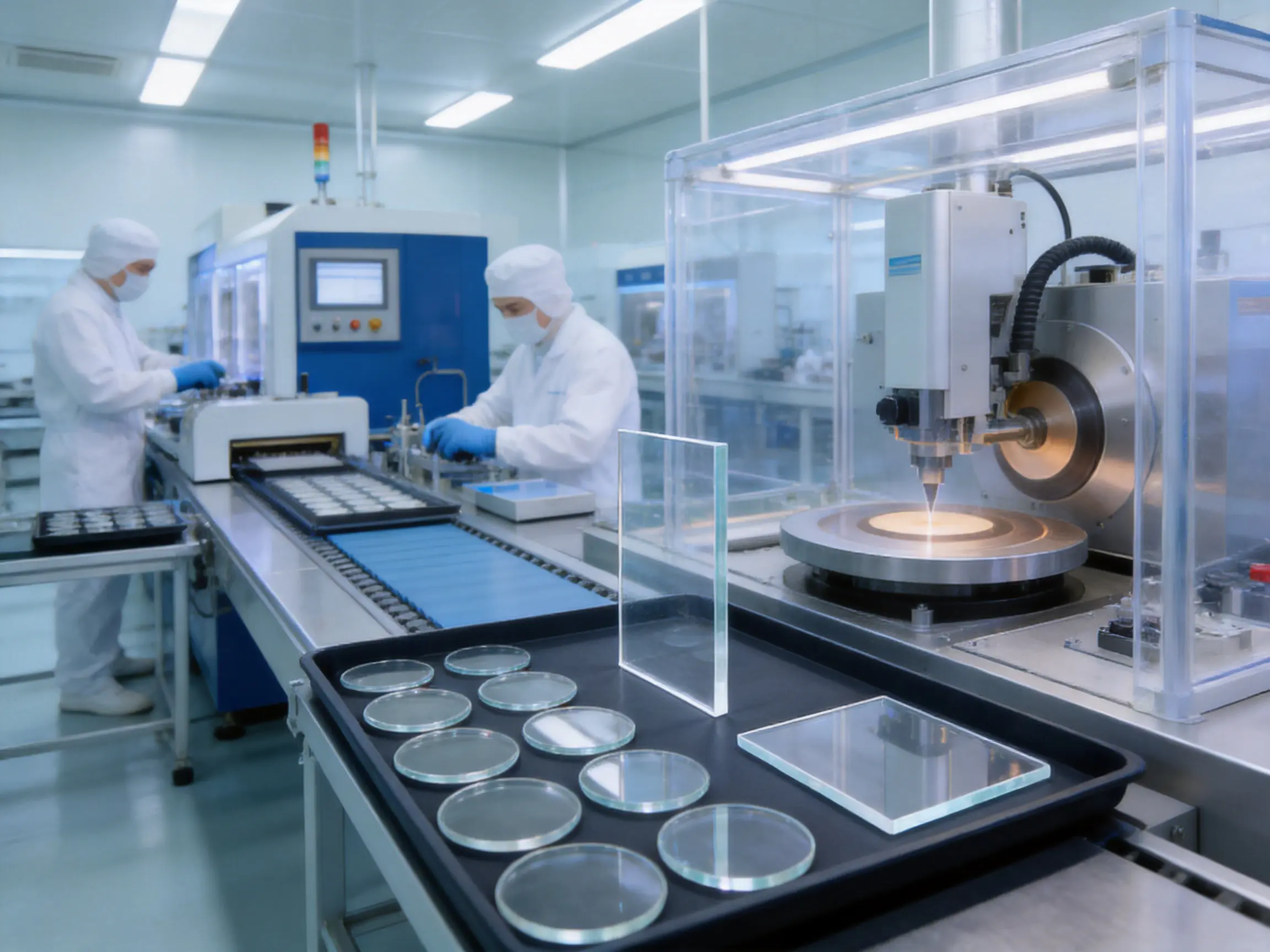
Quality Management and Manufacturing Capability
The reliability of an optical window depends not only on individual machines but also on the management system surrounding production. Process documentation, staff training, equipment maintenance, measurement control, material management, and corrective action all influence the final result.
Changzhou Haolilai Photo-Electricity Scientific and Technical Co., Ltd. has obtained ISO9001:2015 quality management certification, ISO14001:2015 environmental management certification, and IATF16949 certification. These certifications reflect the company’s focus on systematic management, controlled production, environmental responsibility, and automotive-related quality requirements.
IATF16949 experience is particularly relevant when optical windows are supplied for automotive applications. Automotive customers generally require stable processes, traceability, risk management, disciplined change control, and consistent batch performance. An optical component manufacturer familiar with these expectations can better support product development and series production.
Technical Team and Engineering Development
Precision optical manufacturing requires more than equipment investment. It also requires employees who understand optical materials, surface processing, measurement, coating, assembly interfaces, and application requirements. HLL has an experienced technical team and has established the Jiangsu Precision Optical Lens Engineering Technology Center and the Jiangsu Enterprise Technology Research Center.
These technical resources support product development, process improvement, tooling evaluation, and manufacturing problem solving. They are also valuable when customers require customized optical windows rather than standard products. Engineering collaboration can help clarify performance priorities and identify the most appropriate production method.
Production Scale and Industry Experience
HLL covers an area of approximately 35,000 square meters and has more than 300 employees. Since its founding in 1998, the company has accumulated experience in precision optical component production and international customer service. The company exports to more than 20 countries and holds more than 30 certificates and patents.
A substantial production base can support a broad range of product sizes, materials, and manufacturing requirements. It can also provide the organizational resources required for engineering, purchasing, production, inspection, packaging, and customer communication. For customers seeking a long-term supplier, this combination of scale and specialization may reduce sourcing risk.
Advantages over Inconsistent or General-Purpose Suppliers
Not all transparent parts can be used as optical windows. General glass processors may provide basic cutting and polishing, but demanding optical systems require tighter control over surface quality, flatness, parallelism, cleanliness, and inspection. The difference becomes especially important when the window is installed in a laser, sensor, imaging module, or semiconductor instrument.
Application-Focused Optical Expertise
A manufacturer dedicated to optical components understands that the finished part must perform within a complete optical system. The company can evaluate how thickness, wedge, material, coating, and surface quality influence the customer’s application. This is more valuable than treating the product as a generic transparent plate.
HLL’s experience across laser optics, automotive optics, semiconductor optics, and consumer optics gives it exposure to different performance priorities. A laser customer may emphasize power handling and low absorption. An automotive customer may emphasize durability, dimensional repeatability, and environmental stability. A semiconductor customer may emphasize cleanliness, low distortion, and consistent batch control. A consumer product customer may require high-volume consistency, attractive appearance, and cost efficiency.
Integrated Development and Manufacturing
When engineering and production capabilities are closely connected, design feedback can be incorporated more efficiently. Manufacturing engineers can identify difficult tolerances, suggest practical edge designs, recommend suitable materials, and help determine whether a coating specification is realistic for the intended volume.
Integrated production also supports faster response to process issues. If inspection identifies a recurring defect, the manufacturer can investigate material preparation, tooling, polishing, cleaning, or packaging rather than relying on a single isolated corrective action.
Stable Quality for Repeated Orders
Many optical window applications require recurring supply over an extended product life cycle. A supplier must be able to reproduce the same material, dimensions, surface condition, coating behavior, and packaging standard from one order to the next. Stable procedures, documented specifications, controlled equipment, and traceability all contribute to repeatability.
HLL’s quality certifications, technical centers, production infrastructure, and industry experience provide a foundation for managing repeat production. Customers can work with the manufacturer to establish approved samples, inspection standards, packaging requirements, and change-control expectations.
Support for Customized Products
Optical windows frequently require customization. The customer may need a nonstandard diameter, rectangular shape, thin profile, stepped edge, special chamfer, central aperture, coating band, or unusual tolerance. Custom production requires a manufacturer capable of evaluating feasibility rather than forcing every order into a standard catalog format.
Customized products can be developed from drawings, samples, specifications, or application descriptions. Engineering review is especially important when the customer is still finalizing the optical design. Early communication can prevent over-specification, reduce unnecessary cost, and ensure that the component can be assembled reliably.
Application Areas
Laser Optics
Laser systems require optical windows that can transmit the operating wavelength with low loss and withstand the expected power density. Surface defects, contamination, coating damage, and absorption may create performance or reliability problems. Proper material selection, polishing, cleaning, coating, and inspection are essential.
Windows may be used to protect laser cavities, isolate beam paths, seal optical housings, or separate a controlled environment from external equipment. The required specifications depend on wavelength, continuous or pulsed operation, beam diameter, incidence angle, and thermal conditions.
Automotive Optics
Automotive optical systems include cameras, sensing modules, lighting systems, displays, and other components that rely on controlled light transmission. A protective optical window may shield internal optics from dust, moisture, vibration, and mechanical contact while preserving image quality.
Automotive production also requires consistent dimensions, reliable assembly compatibility, environmental durability, and controlled mass production. HLL’s IATF16949 certification and experience in automotive optics support the quality expectations associated with this sector.
Semiconductor and Inspection Equipment
Semiconductor manufacturing and inspection systems depend on highly controlled optical paths. Optical windows may be positioned in front of detectors, illumination sources, imaging assemblies, or process chambers. Surface contamination, wavefront error, and transmission variation can affect inspection results or equipment calibration.
These applications often require strict cleanliness, stable dimensions, high surface quality, and carefully controlled coating performance. The ability to produce repeatable components with documented inspection is an important supplier advantage.
Scientific and Laboratory Instruments
Scientific instruments use optical windows in spectrometers, imaging systems, measurement equipment, vacuum chambers, and experimental setups. The window may need to transmit a particular spectral range while maintaining mechanical separation or environmental protection.
Because laboratory instruments are frequently customized, suppliers must be able to work with specialized drawings and lower-volume development orders. Engineering communication and flexible production are valuable in this market.
Consumer and Imaging Products
Consumer optical products may include camera modules, sensing devices, projection equipment, display systems, and other compact electronic products. These applications often combine demanding cosmetic standards with high-volume production requirements.
A suitable optical window supplier must balance appearance, dimensional consistency, optical performance, manufacturing efficiency, and cost. Consistent edge treatment and packaging are also important because small components may be assembled by automated equipment.
Design Considerations for Buyers
Customers can improve product performance and shorten development time by defining the optical window requirements clearly. A complete inquiry should include the material, shape, dimensions, thickness, tolerances, clear aperture, surface quality, flatness, parallelism, coating, operating wavelength, environmental conditions, quantity, and packaging needs.
Define the Optical Function
The supplier should understand whether the window is used for visible imaging, laser transmission, ultraviolet work, infrared sensing, environmental protection, or another function. The same dimensions may require different materials and coatings depending on the wavelength and operating conditions.
Specify Clear Aperture
The clear aperture identifies the usable optical area. It should be distinguished from the overall dimensions and edge chamfer. Defining the clear aperture helps the manufacturer determine how much of the surface must meet the optical specification and how the part should be supported during processing.
Consider Incidence Angle
A window used near normal incidence may have different coating and wedge requirements from a window used at a significant angle. Angled transmission can increase polarization effects, reflection, and beam displacement. The intended mounting orientation should therefore be included in the design review.
Balance Tolerances and Cost
Tighter tolerances can improve optical performance, but they may also increase processing time, inspection requirements, tooling complexity, and cost. A practical specification should distinguish between parameters that are genuinely critical and those that can use broader tolerances without affecting system performance.
Plan for Cleaning and Assembly
The final application should determine how the window will be cleaned, handled, bonded, sealed, or retained. A coating that performs well optically may require special cleaning methods. A thin window may need mechanical support. An exposed surface may require enhanced durability. Discussing assembly conditions early can prevent damage after delivery.
| Specification Area | Typical Considerations | Why It Matters |
|---|---|---|
| Material | Optical glass, fused silica, quartz, or specialty substrate | Determines transmission, thermal behavior, durability, and process suitability |
| Geometry | Round, rectangular, square, thin, thick, or custom shape | Influences mounting, processing method, and clear aperture |
| Thickness | Nominal size and allowable variation | Affects optical path, mechanical fit, and system calibration |
| Surface quality | Scratch, dig, pit, and contamination requirements | Controls scatter, appearance, and imaging performance |
| Flatness and parallelism | Surface accuracy, wedge, and beam deviation limits | Influences wavefront quality and alignment |
| Coating | Wavelength range, reflectance, durability, and angle of incidence | Controls transmission and environmental performance |
| Edge treatment | Chamfer, radius, edge finish, and allowable chips | Supports safe handling and reliable assembly |
| Inspection | Dimensional, visual, optical, coating, and cleanliness checks | Confirms conformity and supports repeat production |
| Packaging | Individual protection, trays, films, and shipping conditions | Prevents contamination and damage before assembly |
Why Choose a Specialized Optical Component Manufacturer?
Choosing a specialized optical component manufacturer can improve the reliability of the complete product. The supplier understands the relationship between material, processing, inspection, and application. This reduces the possibility that an apparently acceptable window will cause unexpected problems during system integration.
A specialized manufacturer is also more likely to maintain suitable inspection equipment, trained personnel, optical process knowledge, and documented production methods. These capabilities are important when the product must be supplied repeatedly or integrated into a regulated industry.
For international customers, supplier stability and communication are equally important. HLL’s export experience in more than 20 countries indicates familiarity with international orders, technical documentation, production coordination, and overseas delivery requirements. Its location in Changzhou, Jiangsu, provides access to a strong manufacturing and technology environment in China.
Development and Supply Process
A typical customer project begins with technical communication. The customer provides a drawing, sample, specification, or application description. The manufacturer reviews the requirements and may suggest adjustments to material, tolerances, coating, edge treatment, or packaging.
After the specification is confirmed, the supplier prepares a process plan and quotation. For a new product, a prototype or sample stage may be used to verify dimensions, optical performance, assembly fit, and appearance. Customer feedback can then be incorporated before formal mass production.
During production, the manufacturer controls material preparation, machining, polishing, cleaning, coating, inspection, and packaging. The final delivery should follow the approved technical and quality requirements. For repeat orders, production history and approved standards can support consistent reproduction.
This structured approach is valuable for both simple and complex projects. It helps customers identify risks earlier, avoid unnecessary changes during mass production, and establish a reliable supply relationship.
Environmental and Organizational Responsibility
Modern optical manufacturing must consider both product quality and environmental responsibility. Grinding, polishing, cleaning, coating, packaging, and waste management all require appropriate control. ISO14001:2015 certification demonstrates a formal commitment to environmental management practices.
Responsible production can also improve process efficiency. Better slurry management, equipment maintenance, material utilization, energy control, and packaging design may reduce waste while supporting stable manufacturing. Environmental management is therefore connected to both sustainability and operational discipline.
Future Development of Optical Windows
Optical windows are likely to become more important as optical systems expand into autonomous vehicles, advanced inspection, intelligent manufacturing, medical equipment, laser processing, industrial automation, and high-performance consumer electronics. These systems demand smaller components, tighter tolerances, wider spectral performance, improved durability, and greater production consistency.
Future optical windows may incorporate advanced coatings, multifunctional surfaces, conductive features, hydrophobic properties, enhanced scratch resistance, or integration with mechanical and electronic structures. Manufacturing processes will need to support increasingly complex geometries and more demanding inspection requirements.
Research and engineering capability will remain central to this development. Companies with established optical production experience, technical centers, patents, process knowledge, and cross-industry application expertise are well positioned to support new requirements. HLL’s long-term focus on precision optical components provides a foundation for continued development in these areas.
Q&A About Precision Optical Windows
What is the main purpose of an optical window?
The main purpose is to transmit light while protecting or separating an optical system from its surrounding environment. It may protect sensors, cameras, lasers, detectors, and instruments from dust, moisture, pressure, contamination, or mechanical contact.
How is an optical window different from a lens?
A lens is designed to change the direction of light for focusing, collimating, or imaging. An optical window is generally designed to transmit light without intentionally focusing it. However, its flatness, parallelism, and material properties must still be controlled to minimize unwanted optical effects.
Can optical windows be customized?
Yes. Optical windows can be customized in material, shape, diameter, length, width, thickness, clear aperture, edge treatment, surface quality, flatness, parallelism, coating, and packaging. Customization should be discussed with the manufacturer before production so that the design is practical and manufacturable.
Which materials are suitable for optical windows?
Common choices include optical glass, fused silica, quartz, and specialty optical materials. The best material depends on wavelength, temperature, power level, chemical exposure, mechanical requirements, and budget.
Why are flatness and parallelism important?
Flatness influences wavefront quality, while parallelism affects beam deviation and optical path consistency. Poor control of either parameter can reduce image quality, cause alignment problems, or affect measurement accuracy.
Are coatings necessary for every optical window?
No. Some applications can use an uncoated window, while others require antireflection or specialized coatings to improve transmission, reduce reflections, or enhance durability. The decision depends on wavelength, incidence angle, power, environmental exposure, and system performance requirements.
What industries use precision optical windows?
Precision optical windows are used in laser equipment, automotive cameras and sensors, semiconductor inspection equipment, scientific instruments, laboratory systems, imaging products, consumer electronics, and industrial optical assemblies.
How does surface quality affect performance?
Surface defects can scatter light, reduce contrast, create unwanted artifacts, or become failure points under high optical power. A properly polished and inspected surface supports better transmission, imaging, and system reliability.
What information should be included in an inquiry?
An inquiry should include the material, dimensions, thickness, tolerances, clear aperture, surface quality, flatness, parallelism, coating requirements, operating wavelength, environmental conditions, quantity, inspection documentation, and packaging expectations.
What certifications does the manufacturer hold?
Changzhou Haolilai Photo-Electricity Scientific and Technical Co., Ltd. has obtained ISO9001:2015, ISO14001:2015, and IATF16949 certifications. These certifications support its quality management, environmental management, and automotive-industry production capabilities.
Can the manufacturer support high-volume production?
The company has more than 300 employees, a production area of approximately 35,000 square meters, and experience supplying customers in more than 20 countries. Its manufacturing and technical resources support both customized development and repeat production.
How should optical windows be packaged?
Optical windows should be individually protected or placed in suitable trays to prevent contact between polished surfaces. Packaging should also control dust, moisture, impact, and abrasion during storage and transportation. The exact packaging method should reflect the component size, coating, sensitivity, and customer assembly process.
Conclusion
Precision optical windows are fundamental components in modern optical systems. Their role extends beyond simple light transmission: they protect internal assemblies, preserve beam quality, separate environments, support imaging accuracy, and contribute to the reliability of the finished product. To perform effectively, they require suitable materials, controlled dimensions, high-quality surfaces, stable parallelism, appropriate coatings, careful cleaning, and reliable packaging.
Changzhou Haolilai Photo-Electricity Scientific and Technical Co., Ltd. combines long-term optical manufacturing experience with technical development, certified management systems, application knowledge, and production resources. Founded in 1998, the company serves laser, automotive, semiconductor, consumer, and other optical markets. Its 35,000-square-meter facility, workforce of more than 300 employees, technical centers, patents, certifications, and international export experience provide a strong foundation for precision optical component production.
For customers seeking optical windows, the most valuable supplier is not simply the one that can produce a transparent part. It is the supplier that can understand the application, select an appropriate material, establish a stable process, verify critical parameters, communicate clearly, and reproduce the required quality over time. Through engineering collaboration and disciplined manufacturing, a precision optical component manufacturer can help customers achieve improved optical performance, lower integration risk, and more reliable long-term supply.
References
1. ISO 9001:2015, Quality Management Systems—Requirements.
2. ISO 14001:2015, Environmental Management Systems—Requirements with Guidance for Use.
3. IATF 16949, Quality Management System Requirements for Automotive Production and Relevant Service Parts Organizations.
4. International Organization for Standardization, Optics and Photonics—Preparation of Drawings for Optical Elements and Systems.
5. International Organization for Standardization, Optics and Photonics—Surface Imperfections of Optical Elements.
6. Optical Society and engineering references on optical materials, surface quality, wavefront distortion, and optical coating design.
7. Technical documentation and manufacturing information provided for Changzhou Haolilai Photo-Electricity Scientific and Technical Co., Ltd.
8. General engineering references concerning precision grinding, lapping, polishing, cleaning, coating, and inspection of optical components.


 苏公网安备32041102000130号