
 Search
 en
en English
 日本語
日本語 русский
 Español
 Deutsch
 中文简体
中文简体Content
- 1 Understanding Automotive Interior Glass Structural Components
- 2 Why Glass Is Valuable in Modern Vehicle Interiors
- 3 Key Product Advantages
- 4 Advanced Manufacturing Process
- 4.1 1. Engineering Review and Material Selection
- 4.2 2. Incoming Material Inspection
- 4.3 3. Precision Cutting and Shaping
- 4.4 4. Edge Grinding, Chamfering, and Polishing
- 4.5 5. Surface Finishing
- 4.6 6. Optical Coating and Functional Treatment
- 4.7 7. Printing, Marking, or Decorative Integration
- 4.8 8. Cleaning and Controlled Handling
- 4.9 9. Inspection and Measurement
- 4.10 10. Packaging and Shipment Protection
- 5 Quality Management and Automotive Manufacturing Strength
- 6 Research and Technical Development Capabilities
- 7 Advantages Over General-Purpose Glass Suppliers
- 8 Applications in Automotive Interior Systems
- 9 Development Process for Customized Components
- 10 How Precision Manufacturing Improves Total Value
- 11 Reliability Considerations
- 12 Quality Inspection Priorities
- 13 Choosing a Supplier for Automotive Interior Glass
- 14 Company Strengths Supporting Automotive Applications
- 15 Future Development of Automotive Interior Glass
- 16 Conclusion
- 17 Questions and Answers
- 17.1 What are automotive interior glass structural components?
- 17.2 How are these components different from ordinary glass panels?
- 17.3 Can the components be customized?
- 17.4 Why is optical manufacturing experience valuable for automotive interior glass?
- 17.5 What quality certifications does the manufacturer hold?
- 17.6 Can the supplier support prototype and mass production?
- 17.7 What information should customers provide when requesting a quotation?
- 17.8 How can customers reduce manufacturing risks during design?
- 17.9 How are glass components protected during transportation?
- 17.10 What industries besides automotive does the company serve?
- 18 References
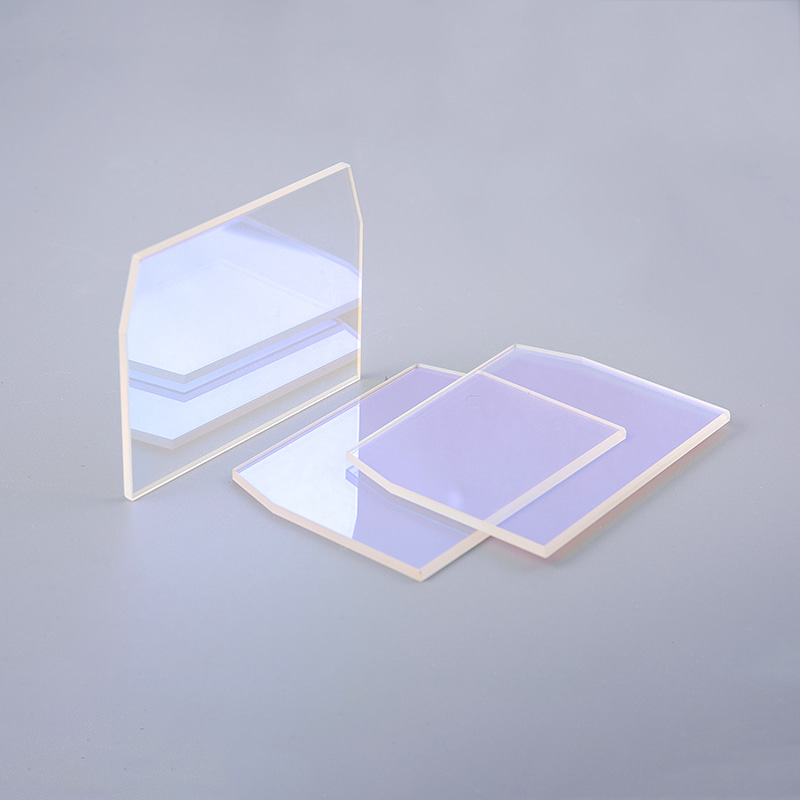
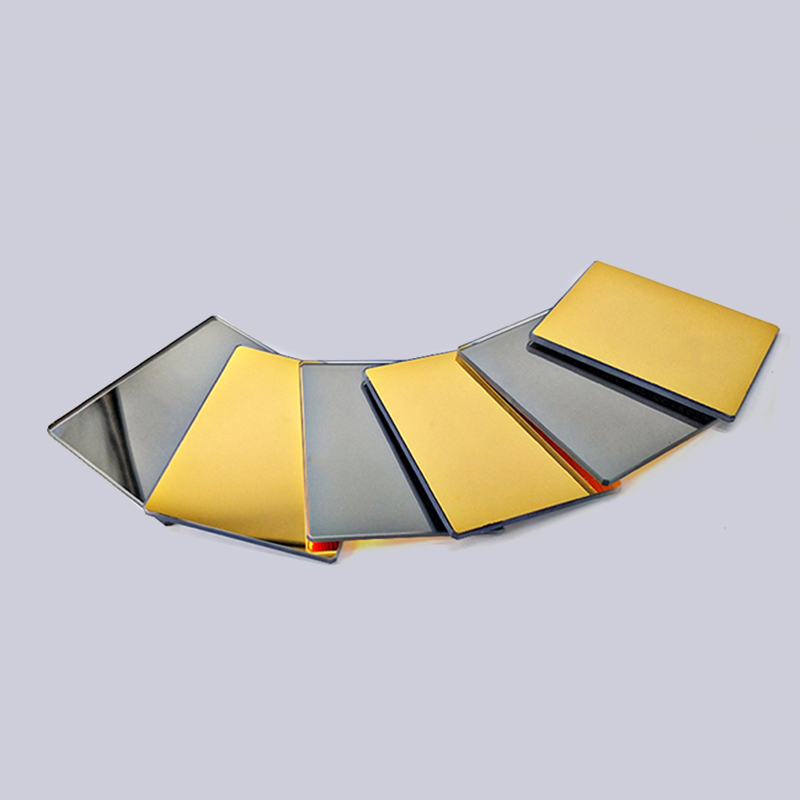
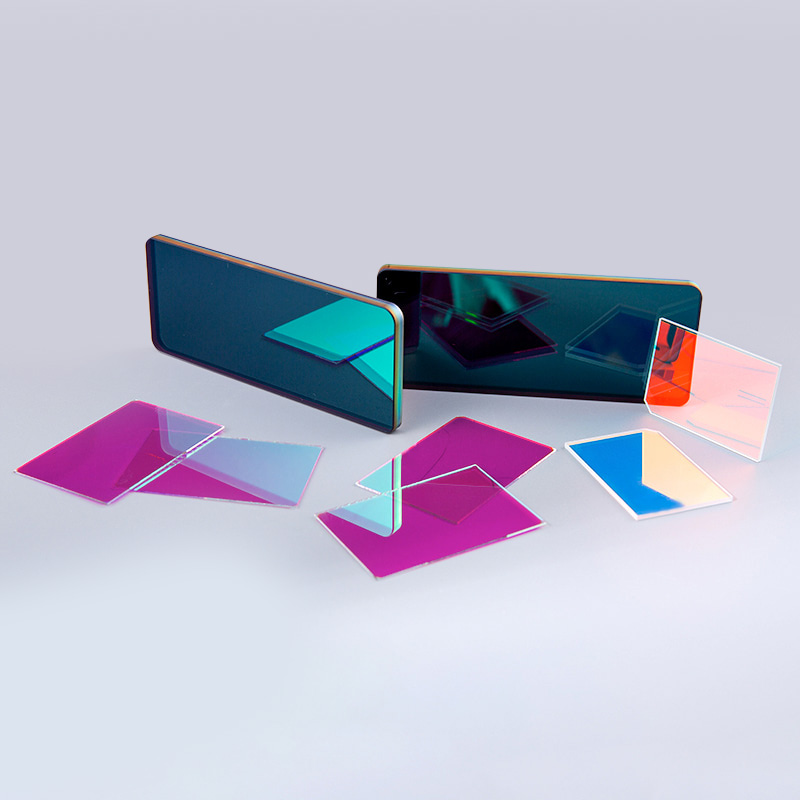
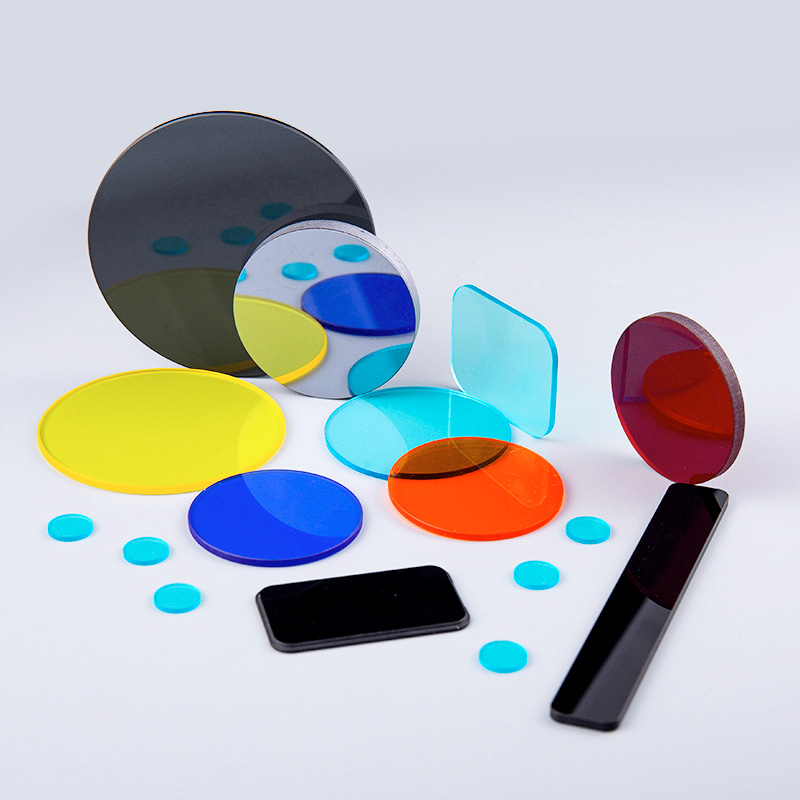
- 19 Product: Automotive Interior Glass Structural Components
Automotive interior glass structural components are becoming increasingly important as vehicle manufacturers pursue lighter, safer, more intelligent, and more visually refined cabin designs. These components are not simply decorative pieces. They can support displays, organize optical pathways, protect sensitive sensors, provide transparent or semi-transparent interfaces, and contribute to the structural integrity and functional reliability of interior assemblies.
As automotive interiors evolve from conventional dashboards and instrument panels into integrated human-machine interfaces, the requirements placed on glass components have become significantly more demanding. A component may need to combine optical clarity, dimensional accuracy, chemical resistance, mechanical strength, thermal stability, surface quality, and compatibility with bonding or assembly processes. It may also need to maintain its appearance after exposure to vibration, temperature changes, cleaning agents, sunlight, and repeated user contact.
Precision manufacturing is therefore essential. A high-quality automotive interior glass structural component must be designed and produced according to the specific requirements of the vehicle platform, display system, optical module, and installation environment. Materials, edge geometry, flatness, surface finish, coating performance, inspection standards, and packaging methods all influence final performance.
Changzhou Haolilai Photo-Electricity Scientific and Technical Co., Ltd. is an experienced Chinese manufacturer of precision optical components. Founded in 1998, the company serves automotive optics as well as laser optics, semiconductor optics, and consumer optics. Its technical experience, manufacturing infrastructure, quality systems, and research capabilities provide a strong foundation for producing automotive interior glass structural components for demanding industrial applications.
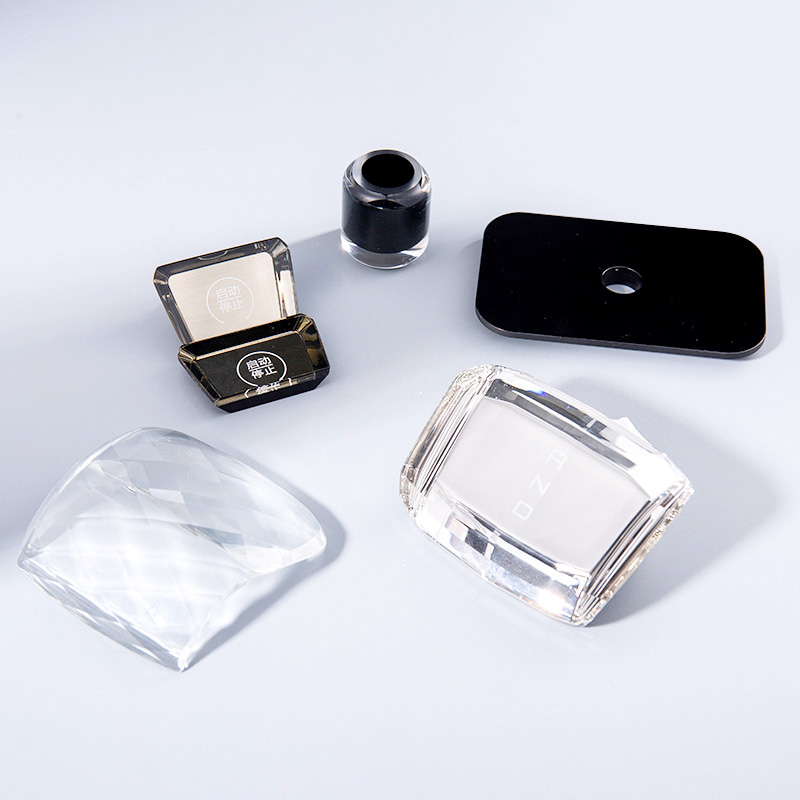
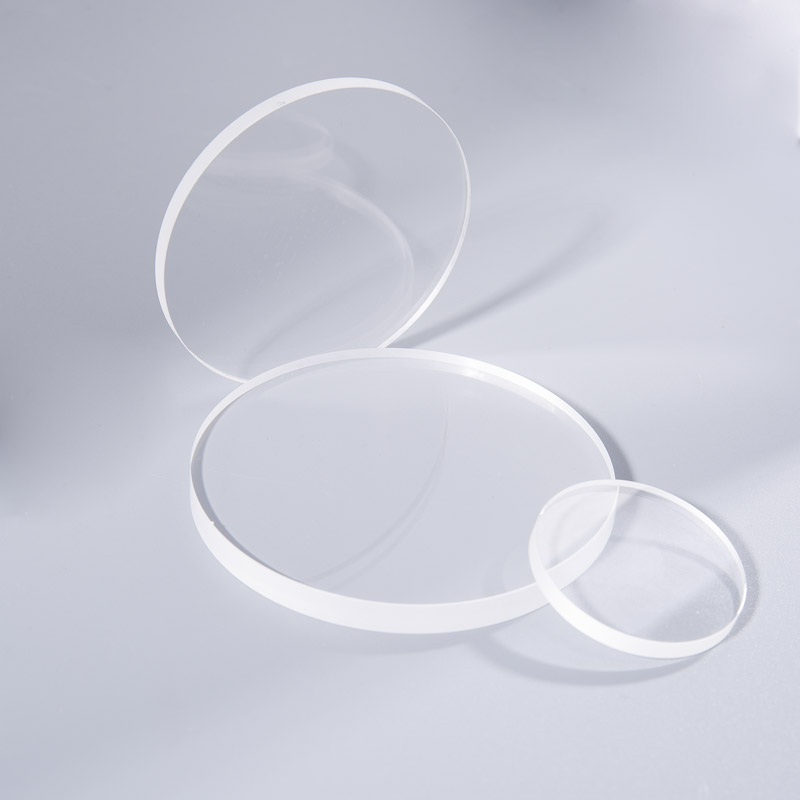
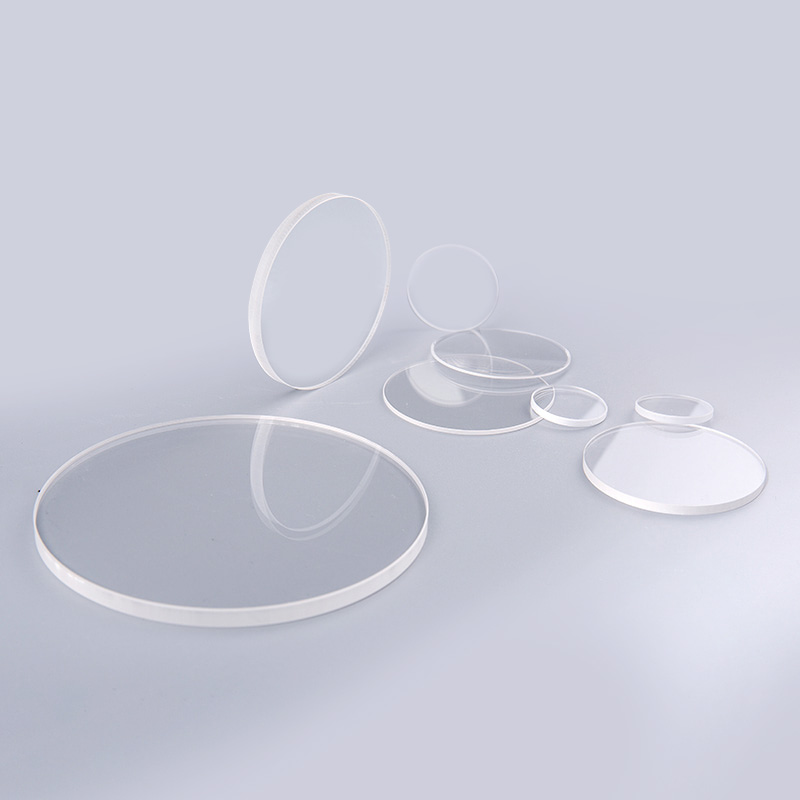
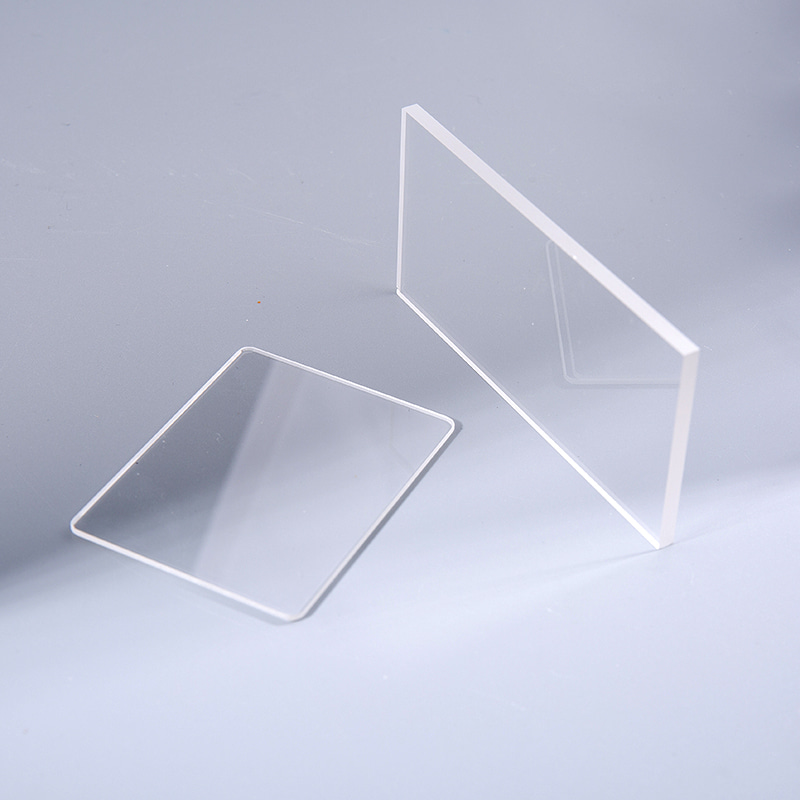
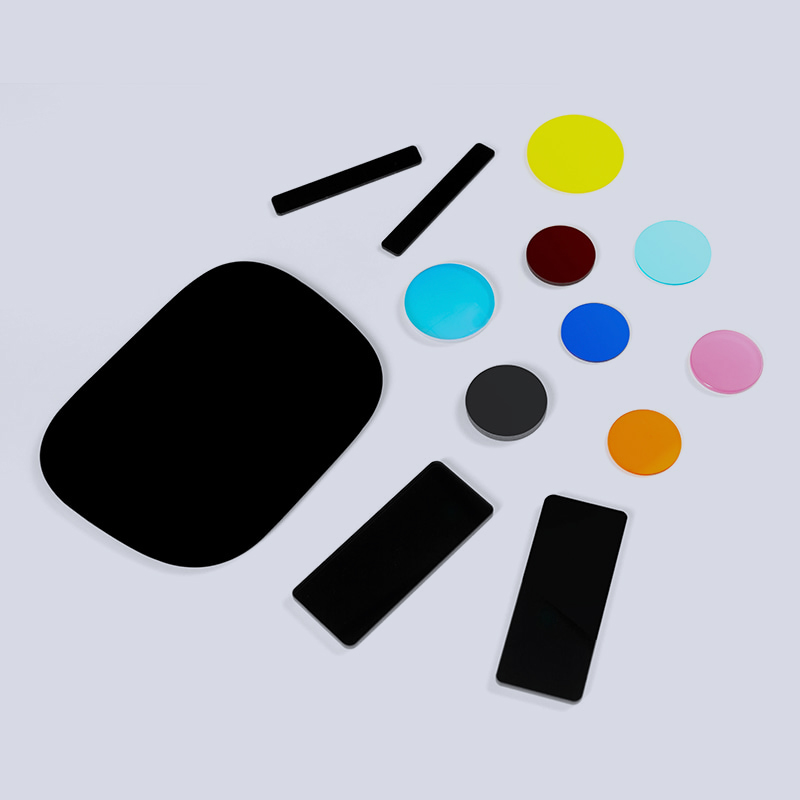
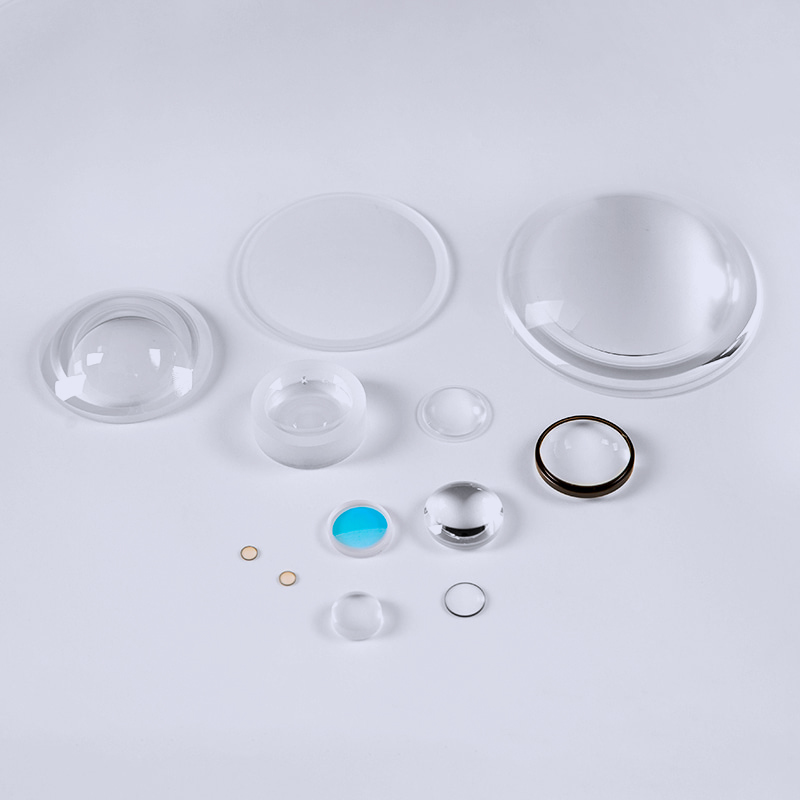
Automotive Interior Glass Structural Components
Understanding Automotive Interior Glass Structural Components
Automotive interior glass structural components are precision glass parts used within the passenger compartment or within interior electronic and optical assemblies. Their applications may include display covers, optical windows, protective glass panels, sensor interfaces, projection modules, transparent support elements, and specialized components integrated into instrument panels, center consoles, door systems, overhead modules, or advanced driver information interfaces.
The word “structural” refers to more than the physical shape of the part. In many applications, the component helps define the position, protection, alignment, or stability of another interior system. It may act as a supporting window for an optical sensor, a protective layer over a display, a precisely positioned interface for a projection system, or a rigid transparent element within a multilayer assembly.
Unlike ordinary architectural or decorative glass, automotive interior glass must satisfy a combination of optical and engineering requirements. The part may be visually prominent, meaning that small defects can be noticeable to the driver or passengers. At the same time, it may be installed near electronics, adhesives, illumination sources, or sensors, where even slight dimensional variation can affect assembly and performance.
Typical requirements can include:
High surface quality with limited scratches, digs, particles, stains, and cosmetic imperfections.
Controlled thickness and dimensional tolerances for accurate installation.
Good flatness and parallelism to support display, optical, or bonding performance.
Stable performance under changing temperature and humidity conditions.
Resistance to cleaning chemicals, skin oils, interior materials, and common automotive contaminants.
Compatibility with optical coatings, anti-reflection treatments, hard coatings, printing, bonding, or lamination.
Reliable edge quality to reduce the risk of chipping, cracking, and assembly damage.
Consistent appearance across production batches and vehicle programs.
These requirements make the product a precision engineered component rather than a simple piece of cut glass.
Why Glass Is Valuable in Modern Vehicle Interiors
Glass offers several characteristics that make it attractive for automotive interior systems. It can provide excellent optical transmission, stable dimensional behavior, a premium appearance, and a smooth surface suitable for touch interfaces and visual displays. Properly selected and processed glass can also withstand many environmental conditions encountered inside a vehicle.
Modern vehicle interiors increasingly incorporate large displays, transparent controls, optical projection systems, digital instrument clusters, ambient lighting, and sensor-based interfaces. These systems require protective and positioning elements that do not interfere with image quality, light transmission, or user interaction. Precision glass can provide a stable and visually clean interface for these technologies.
Glass also has a strong visual association with quality. A well-finished glass component can create a high-end appearance while maintaining a thin and integrated form. Its surface can be combined with anti-reflective treatments, decorative printing, functional coatings, or laminated structures to meet both design and performance objectives.
Compared with less stable transparent materials, glass can offer superior resistance to scratching, aging, and dimensional change when the material and processing method are properly selected. This is especially important in areas that are frequently touched, cleaned, or exposed to sunlight through the windshield and side windows.
However, glass performance depends heavily on manufacturing quality. Raw material selection alone does not guarantee a reliable finished part. Cutting, grinding, polishing, cleaning, coating, inspection, and packaging must all be controlled. A supplier with optical manufacturing experience is better positioned to manage these interconnected processes.
Key Product Advantages
Precision Dimensional Control
Automotive interior assemblies often have limited installation space and complex three-dimensional interfaces. A glass component that is slightly oversized, undersized, warped, or incorrectly chamfered may create assembly stress or affect the position of neighboring parts.
Precision dimensional control helps ensure that the component fits the designated housing, frame, bracket, or bonded interface. Controlled thickness can also support consistent adhesive layers and predictable optical spacing. Accurate hole positions, notches, radii, and edges can simplify automated assembly and reduce adjustment work during vehicle production.
A precision optical component manufacturer typically approaches dimensional control with a combination of controlled machining parameters, calibrated measurement equipment, process documentation, and inspection records. This approach is more reliable than relying only on final visual inspection.
High Optical and Cosmetic Quality
Interior glass is often located in the driver’s field of view or near a prominent display. Surface defects can therefore affect perceived quality even when the component remains technically functional. Optical quality includes transparency, haze, distortion, reflectivity, surface uniformity, and the control of localized defects.
Cosmetic quality includes the appearance of edges, corners, printed areas, coatings, and visible surfaces. A controlled production environment helps reduce contamination and prevents particles from becoming trapped during processing or assembly. Careful washing, drying, handling, and packaging are also necessary to preserve the finished surface.
The experience gained from optical components is valuable because optical manufacturing places strong emphasis on cleanliness, surface finish, measurement accuracy, and defect control. These same principles apply to automotive interior glass structural components.
Stable Performance in Automotive Environments
The passenger compartment is exposed to repeated heating and cooling cycles. A vehicle may be parked in direct sunlight, operated in cold weather, or subjected to rapid changes in temperature. Interior components can also experience vibration, mechanical loading, humidity, dust, cleaning agents, and contact with other materials.
A suitable glass component must retain its dimensional stability and visual appearance throughout its service life. The design should account for the coefficient of thermal expansion, mounting method, edge condition, adhesive selection, and possible interaction with adjacent materials.
Although the specific environmental requirements depend on the application, a controlled manufacturing process provides a stronger basis for reliable performance. Consistent thickness, smooth edges, limited residual stress, and appropriate surface treatment can reduce the possibility of failure during assembly or service.
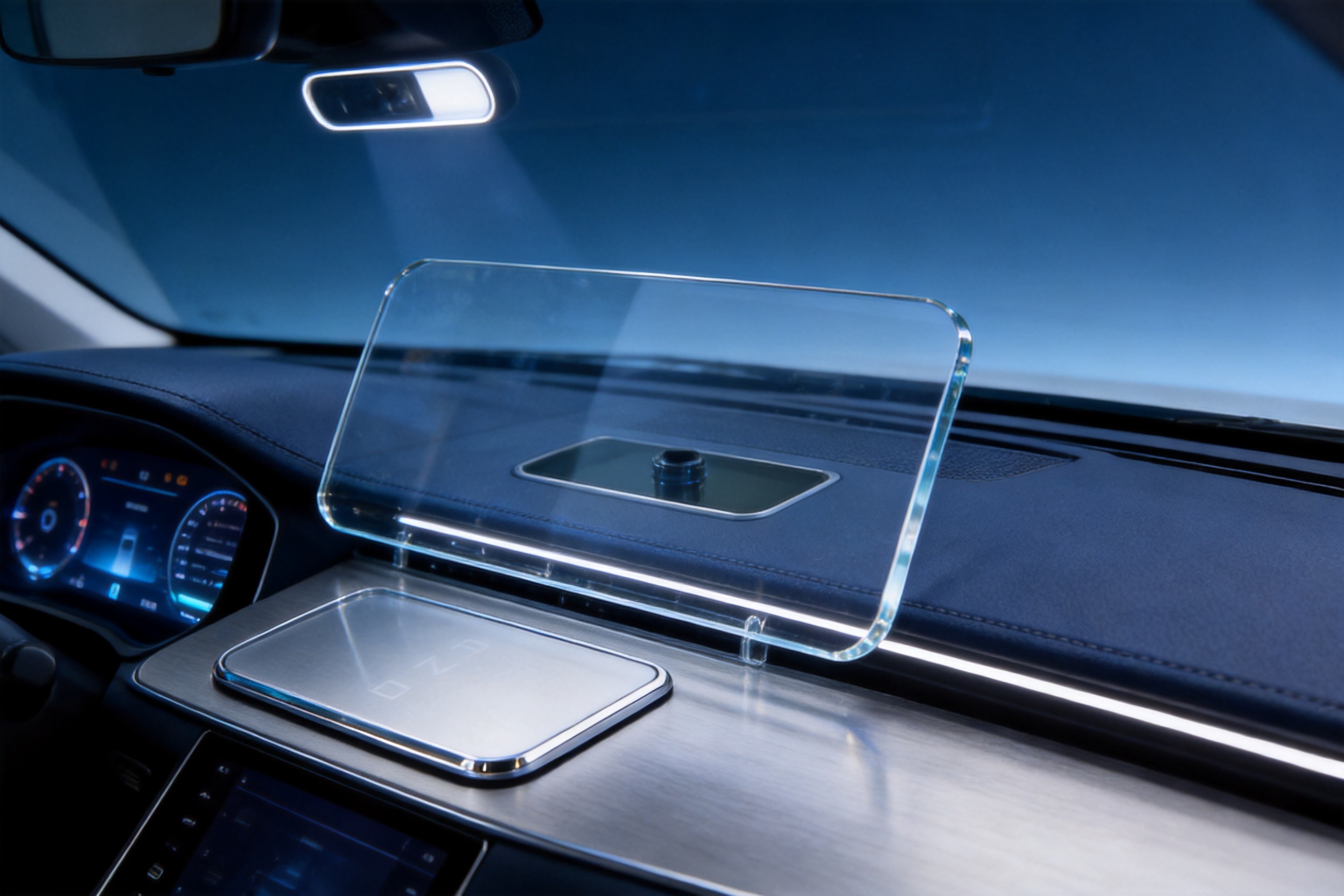
Design Flexibility
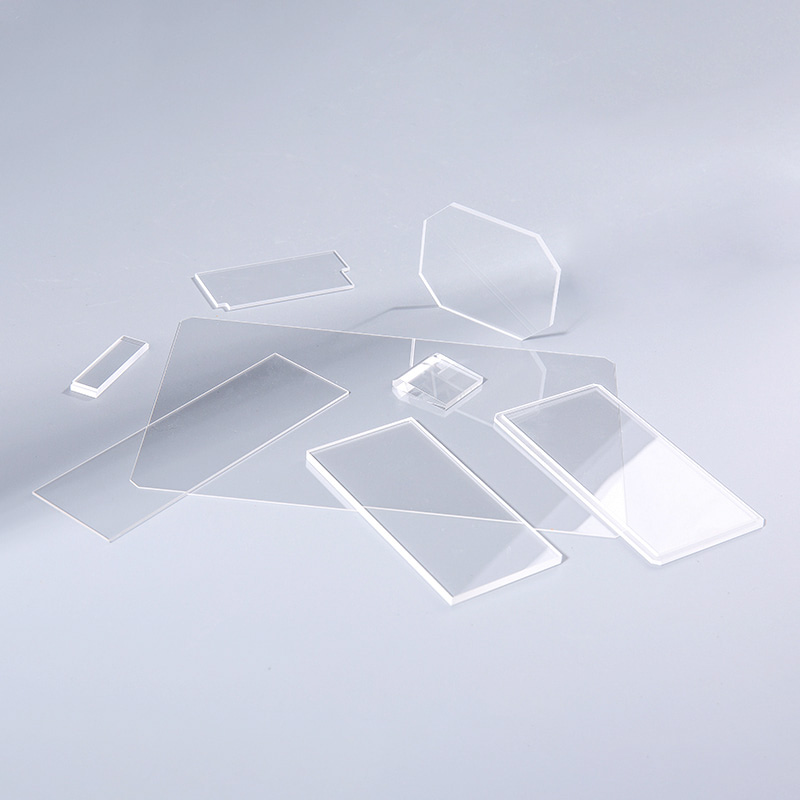
Automotive interior glass is rarely limited to simple rectangular shapes. Components may include curved profiles, rounded corners, stepped sections, slots, apertures, printed borders, or special edge treatments. Different display and sensor systems may require different sizes, thicknesses, and optical properties.
Design flexibility allows manufacturers to develop parts according to the vehicle architecture rather than forcing the design to fit a standard catalog item. It also supports the development of new interior concepts, including seamless displays, integrated optical windows, and concealed interfaces.
Customization may involve the glass substrate, geometry, surface finish, coatings, printing, inspection criteria, packaging, or delivery format. Close cooperation between the component manufacturer, vehicle supplier, display producer, and design engineering team is essential when the part forms part of a larger system.
Compatibility with Advanced Optical Functions
Some automotive interior glass structural components are required to transmit, redirect, filter, or protect light. In these cases, optical properties become central to the design. The part may be used with backlighting, projection, infrared sensing, imaging, or display technologies.
Optical manufacturing experience helps address requirements such as controlled transmission, reduced unwanted reflections, uniform appearance, and accurate positioning. Depending on the application, the component may be suitable for additional optical coatings or treatments. These can be evaluated according to the intended wavelength range, viewing angle, environmental conditions, and assembly method.
Careful control of surface geometry is particularly important. Even minor irregularities can produce visible distortion, nonuniform reflections, or inconsistent illumination. For this reason, optical glass processing methods can provide an advantage over general-purpose glass fabrication.
Advanced Manufacturing Process
1. Engineering Review and Material Selection
Manufacturing begins with a review of the technical drawing, three-dimensional data, application environment, and inspection requirements. Engineers assess the required glass type, thickness, geometry, tolerances, optical properties, surface finish, edge treatment, coating compatibility, and packaging needs.
Material selection depends on the intended function. A visible display cover may prioritize optical clarity, scratch resistance, and appearance. A sensor window may require controlled transmission within a particular wavelength range. A structural transparent element may require a balance of strength, weight, thermal stability, and bonding compatibility.
At this stage, engineers also identify potential manufacturing risks. Tight corner radii, narrow edges, deep slots, large aspect ratios, thin sections, and complex stepped geometries can influence yield and cost. Early technical communication helps transform a demanding design into a stable production process.
2. Incoming Material Inspection
Consistent raw material is fundamental to a consistent finished product. Incoming glass sheets, blanks, or preforms can be inspected for thickness, surface condition, internal defects, dimensions, and batch identification.
Material traceability supports process control and customer quality requirements. If a finished component shows an unexpected variation, production records can help identify the relevant material batch, equipment, process parameters, and inspection results.
Good incoming inspection also prevents unsuitable material from entering later operations. This reduces wasted machining time and lowers the risk of producing large quantities of parts that cannot meet final requirements.
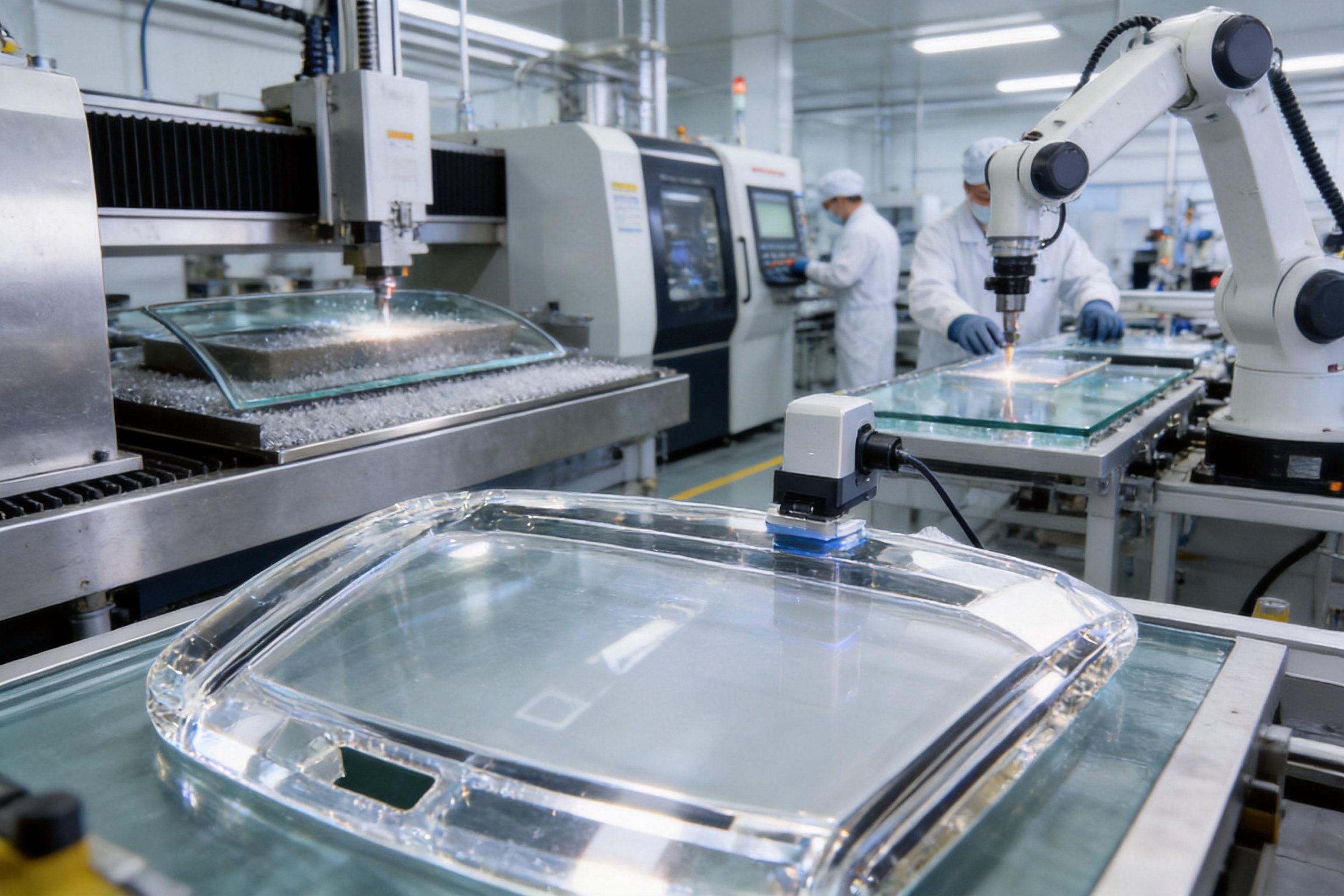
3. Precision Cutting and Shaping
The initial geometry is created through controlled cutting and shaping operations. Depending on the design, this may involve precision cutting, drilling, slotting, contouring, or other specialized machining processes. The objective is to achieve the required outline while limiting chipping, cracking, thermal damage, and residual stress.
For automotive applications, edge quality is especially important. Glass edges may be enclosed in a housing, bonded to another material, or positioned near electronic components. Excessive edge damage can reduce strength and create assembly risks. Proper machining parameters and tool condition are therefore critical.
Computer-controlled equipment can support repeatability for complex profiles and tight dimensional requirements. Production staff must still monitor tool wear, coolant or processing conditions, workholding, and part handling. Automated equipment improves consistency, but process discipline remains essential.
4. Edge Grinding, Chamfering, and Polishing
After cutting, edges may be ground, chamfered, rounded, or polished according to the drawing and assembly requirements. Edge treatment can improve safety during handling, support accurate installation, and reduce stress concentration.
A smooth and controlled edge is also important when the glass is bonded or laminated. Sharp defects or uneven edge profiles may create local stress in the adhesive layer or adjacent component. In some designs, a visible edge must meet strict cosmetic standards, making the appearance of the edge as important as its mechanical function.
Grinding and polishing must be controlled to avoid removing excessive material or changing the geometry of the part. The process should achieve the required edge profile while maintaining thickness, flatness, and corner dimensions.
5. Surface Finishing
Surface finishing may include fine polishing, cleaning, coating preparation, or other treatments. The correct surface condition depends on whether the part will be used as a display cover, optical window, bonded element, or structural interface.
Surface quality affects light transmission, reflection, touch performance, coating adhesion, and visual appearance. A surface that appears acceptable under general lighting may still produce unwanted reflections or optical artifacts when placed over a bright display. Inspection should therefore reflect the actual application environment whenever possible.
Cleaning is a critical part of surface finishing. Fine particles, machining residues, fingerprints, and organic contamination can interfere with coatings, adhesives, printing, or final appearance. Controlled washing and drying processes help protect the surface before inspection and packaging.
6. Optical Coating and Functional Treatment
Depending on the product specification, glass may receive an optical or functional treatment. Potential objectives include reducing reflections, improving transmission, increasing surface durability, controlling light behavior, or creating a specific visual effect.
Coating performance depends on substrate preparation, surface cleanliness, coating uniformity, process conditions, and post-treatment handling. A coating that performs well in laboratory conditions must also be evaluated for adhesion, appearance, environmental stability, and compatibility with the final assembly.
Not every automotive interior glass component requires a coating. However, when coatings are needed, the manufacturer must integrate them into the overall process rather than treating them as an isolated operation. Dimensional changes, edge masking, handling marks, and inspection criteria should all be considered.
7. Printing, Marking, or Decorative Integration
Some interior glass components include borders, symbols, reference marks, light-control areas, or decorative elements. These features can help conceal adhesive lines, define a display boundary, control illumination, or support the visual design of the interior.
Printed areas require accurate registration and stable appearance. The location, width, opacity, color, and edge definition may influence both appearance and optical performance. The process must also account for adhesion and resistance to cleaning or environmental exposure.
Where printing is included, the glass supplier must coordinate the printing process with machining, coating, cleaning, and inspection. Handling the part incorrectly after printing can cause scratches, contamination, or visual defects.
8. Cleaning and Controlled Handling
Precision glass requires careful handling throughout production. Operators may use protective films, clean gloves, dedicated trays, and controlled contact points to prevent scratches and contamination. Workstations should be organized to reduce accidental impact and unnecessary movement.
Final cleaning removes particles and residues before inspection. The cleaning method must be effective without damaging coatings, printed surfaces, or delicate edges. Drying is equally important because water spots and residual moisture can affect appearance and bonding.
Controlled handling is a practical advantage of an experienced optical manufacturer. Optical components are often sensitive to surface damage and contamination, so the organization of the production environment can directly influence automotive component quality.
9. Inspection and Measurement
Inspection confirms whether the finished component meets its specification. Depending on the project, inspection may cover dimensions, thickness, flatness, parallelism, edge geometry, surface quality, optical transmission, haze, coating condition, printed features, and cleanliness.
Measurement equipment must be suitable for the tolerance and feature being evaluated. Dimensional inspection may use precision gauges, optical measurement systems, coordinate equipment, or specialized fixtures. Surface inspection can combine controlled lighting, magnification, automated systems, and trained visual assessment.
Inspection standards should be defined clearly before mass production. Terms such as “minor scratch” or “acceptable edge” can lead to inconsistent decisions if they are not supported by written criteria, reference samples, or agreed inspection conditions. A clear quality agreement strengthens communication among all parties.
10. Packaging and Shipment Protection
Glass quality can be compromised after it leaves the production line if packaging is inadequate. Automotive components may pass through several transportation and storage stages before reaching the final assembly plant. Packaging should protect the part from impact, abrasion, dust, moisture, and uncontrolled movement.
Suitable packaging may include separators, protective films, custom trays, edge protection, moisture control, and clear labeling. The packaging design should support efficient unpacking while reducing the risk of damage during handling.
Batch identification and traceability labels can help customers manage incoming inspection, inventory, and production records. For long-term vehicle programs, stable packaging design also reduces variation in logistics operations.
Quality Management and Automotive Manufacturing Strength
Automotive supply chains require more than a capable machine shop. They require documented processes, stable quality management, corrective action systems, traceability, production planning, and a culture of continuous improvement. Suppliers must be able to maintain quality across repeated orders and changing production volumes.
Changzhou Haolilai Photo-Electricity Scientific and Technical Co., Ltd. has obtained ISO9001:2015 and ISO14001:2015 certifications, as well as IATF16949 certification. These systems are significant for automotive-related production because they support structured quality control, environmental management, risk awareness, process documentation, and customer-focused improvement.
IATF16949 is particularly relevant to automotive manufacturing environments. It emphasizes preventive quality planning, process control, supplier management, traceability, measurement, and systematic handling of nonconformities. Certification alone does not replace technical capability, but it provides a framework for organizing that capability in a repeatable manner.
ISO9001:2015 supports a quality management approach built around controlled processes, customer requirements, data-based decisions, and continual improvement. ISO14001:2015 reflects attention to environmental management and responsible operational practices. Together, these systems help create a more disciplined manufacturing environment.
For customers, the practical benefit is greater confidence in production consistency. A component should not only meet requirements during sample development; it should continue to meet them throughout regular production, engineering changes, and future replenishment orders.
Research and Technical Development Capabilities
Automotive interior glass applications continue to change as vehicle electronics, displays, and optical systems become more integrated. A supplier must therefore be able to support development rather than only reproduce an existing drawing.
HLL has established the Jiangsu Precision Optical Lens Engineering Technology Center and the Jiangsu Enterprise Technology Research Center. These facilities reflect the company’s focus on technical development and precision optical engineering. The company has also obtained invention patents, utility model patents, and Jiangsu High and New Tech Product designations.
Research capability can benefit automotive customers in several ways. It can support material evaluation, process optimization, tolerance analysis, optical performance development, and the creation of new manufacturing methods. It can also help address difficult problems such as edge chipping, coating uniformity, optical distortion, contamination, and assembly stress.
A technically involved supplier can participate earlier in the product development cycle. Instead of waiting until a design is finalized, the manufacturer can provide feedback on manufacturability, tolerance allocation, inspection methods, and production risks. This often reduces later redesign and accelerates the transition from prototype to mass production.
Engineering cooperation is especially important for structural glass components because their performance depends on the relationship between the glass, adhesive, housing, display, sensor, and surrounding interior materials. The best result is achieved when these interfaces are considered together.
Advantages Over General-Purpose Glass Suppliers
Optical Engineering Experience
General-purpose glass processing may be adequate for simple protective panels, but automotive optical and display applications often require more precise control. A supplier with optical component experience understands the relationship between surface geometry, reflection, transmission, haze, and visual performance.
This knowledge can reduce the risk of producing parts that meet basic dimensions but fail in actual use. Optical engineering experience is valuable when the glass is placed over a display, in front of a sensor, or within a light-guiding assembly.
Integrated Process Control
Automotive glass quality depends on the complete process chain. A supplier that can coordinate material selection, machining, polishing, cleaning, coating, inspection, and packaging provides a more coherent solution than a fragmented supply chain.
Integrated control can reduce transfer damage, improve traceability, simplify communication, and make it easier to identify the source of a problem. It can also support faster engineering changes because fewer external interfaces need to be coordinated.
Experience Across Multiple Optical Markets
HLL develops and produces precision optical components for laser optics, automotive optics, semiconductor optics, and consumer optics. Each field has different requirements, but experience across these markets can strengthen manufacturing knowledge.
Laser optics can contribute expertise in surface quality and optical performance. Semiconductor optics can reinforce requirements for cleanliness, dimensional accuracy, and process stability. Consumer optics can contribute experience with appearance, compact design, and production efficiency. Automotive optics adds the discipline of long-term reliability and structured supply requirements.
This cross-market experience can support innovation while maintaining attention to manufacturing practicality.
Scalable Production Organization
With a production and operating area of approximately 35,000 square meters and more than 300 employees, the company has an organizational base suitable for supporting development projects and recurring production programs. Scale does not automatically guarantee quality, but it can provide access to specialized personnel, production planning resources, engineering support, and dedicated quality functions.
A larger organization can also be better positioned to manage multiple customer programs, maintain equipment, implement process improvements, and support export logistics. These factors are relevant when automotive customers require stable supply over an extended product life cycle.
International Supply Experience
HLL exports to more than 20 countries. International customer experience can strengthen communication, documentation, packaging, shipment coordination, and understanding of different technical expectations.
For overseas automotive and optical customers, dependable communication is as important as manufacturing capability. Drawings, specifications, inspection reports, packaging standards, and change notifications must be handled accurately. Familiarity with international business practices can reduce misunderstanding and support smoother project execution.
Applications in Automotive Interior Systems
Display Protection and Interface Panels
Large center displays, instrument clusters, passenger displays, and rear-seat entertainment systems require protective surfaces that preserve image clarity and resist everyday wear. Precision glass can act as a rigid cover over the display while contributing to the premium appearance of the interior.
Important considerations include visible-area quality, reflection control, thickness, flatness, edge treatment, touch compatibility, and bonding. If the glass is laminated or bonded to a display module, the supplier must also consider adhesive uniformity and the possibility of bubbles, stress marks, or optical nonuniformity.
Head-Up Display and Projection-Related Modules
Projection systems require carefully controlled optical paths. Interior glass or optical windows associated with these systems may need specific transmission and reflection characteristics. Small changes in surface geometry or coating performance can influence the projected image.
For these applications, the glass component should be evaluated as part of the complete optical system. The position, angle, thickness, and surface condition may all affect image quality and alignment.
Sensor and Camera Windows
Automotive interiors increasingly include cameras and sensors for driver monitoring, gesture recognition, occupant detection, and other intelligent functions. A glass window may protect the sensor while allowing the required light or infrared radiation to pass through.
The component must provide a clean optical path and stable mounting position. Surface contamination, unwanted reflection, coating defects, or dimensional variation can affect sensor performance. Precision manufacturing and careful cleanliness control are therefore essential.
Ambient Lighting and Light Management
Glass components can be used in conjunction with interior lighting systems. They may help create a smooth visible surface, conceal light sources, or control the appearance of illuminated areas. In such applications, uniformity and surface appearance are particularly important.
Printing, coatings, surface textures, and controlled transmission may be combined to create the desired visual effect. Manufacturing tolerances must be controlled so that adjacent components appear consistent across the interior.
Transparent Controls and Premium Interior Features
Some vehicle designs use glass for touch controls, transparent switches, decorative interfaces, or specialized trim. These applications place emphasis on tactile quality, appearance, durability, and integration with electronic functions.
Precision glass can provide a stable and elegant surface while allowing designers to create thin, seamless, and visually integrated components. The final design must still consider impact resistance, mounting stress, cleaning, and long-term surface durability.
Development Process for Customized Components
A successful project usually begins with a detailed exchange of technical information. The customer may provide drawings, three-dimensional models, samples, performance specifications, environmental requirements, inspection standards, and expected annual volumes.
The supplier reviews the design for manufacturability. Questions may include whether the selected thickness is suitable, whether the corner radii can be processed reliably, whether the edge treatment is adequate, and whether the stated tolerances are necessary for function.
Prototype production allows both parties to evaluate the component in the actual assembly. Dimensional fit, appearance, optical performance, bonding behavior, and handling can be reviewed before production tooling or process capacity is finalized.
After prototype approval, the production process is documented. Key characteristics are identified, inspection methods are confirmed, and packaging is validated. Initial production may receive additional inspection while process capability is established.
For long-term programs, engineering change control is essential. Changes to material, equipment, tooling, coating, packaging, or process parameters should be evaluated and communicated according to the customer’s requirements. This protects the consistency of the component throughout its production life.
How Precision Manufacturing Improves Total Value
The purchase price of a glass component is only one part of its total cost. Poor dimensional control can increase assembly labor. Surface defects can create rejection or rework. Inconsistent optical performance can cause failures during module testing. Inadequate packaging can result in transport damage. A supplier that prevents these problems can deliver greater value even if the unit price is not the lowest available.
Stable production also supports more predictable planning. Customers can reduce incoming inspection effort when quality records and process performance are reliable. They can lower the risk of line stoppages and improve confidence in their own product launch schedules.
Design-for-manufacturing support can provide additional savings. An experienced supplier may identify a feature that is unnecessarily difficult to process, recommend a more stable tolerance, or suggest an edge treatment that improves yield without affecting function. These improvements can benefit both the customer and the manufacturer.
Environmental management can also contribute to total value. Efficient material use, responsible process control, reduced waste, and proper management of production resources support long-term operational sustainability. ISO14001:2015 certification reflects a structured approach to these concerns.
Reliability Considerations
Reliability begins with the relationship between design and manufacturing. A glass component may be strong enough as a standalone part but still fail if it is installed with excessive stress. The design should therefore consider mounting points, adhesive distribution, housing tolerances, thermal expansion, and vibration.
Edge quality is a major factor. Chips, sharp transitions, and residual damage can act as stress concentrators. Proper grinding and polishing help reduce these risks, but the final assembly must also avoid point loading or uneven clamping.
Surface treatments should be selected according to the actual environment. A coating may need to withstand cleaning, handling, humidity, temperature cycling, and repeated contact. Coating adhesion and appearance should be verified using agreed test methods.
Optical stability is equally important. A part that performs correctly at room temperature should be evaluated under the expected temperature range if it forms part of a display or sensor system. Dimensional change, reflection behavior, and bonding stress can influence performance after environmental exposure.
Packaging and logistics should be included in reliability planning. A well-manufactured part can still be damaged by unsuitable separators, excessive vibration, or poor storage conditions. Packaging validation helps ensure that quality is maintained until the customer receives the product.
Quality Inspection Priorities
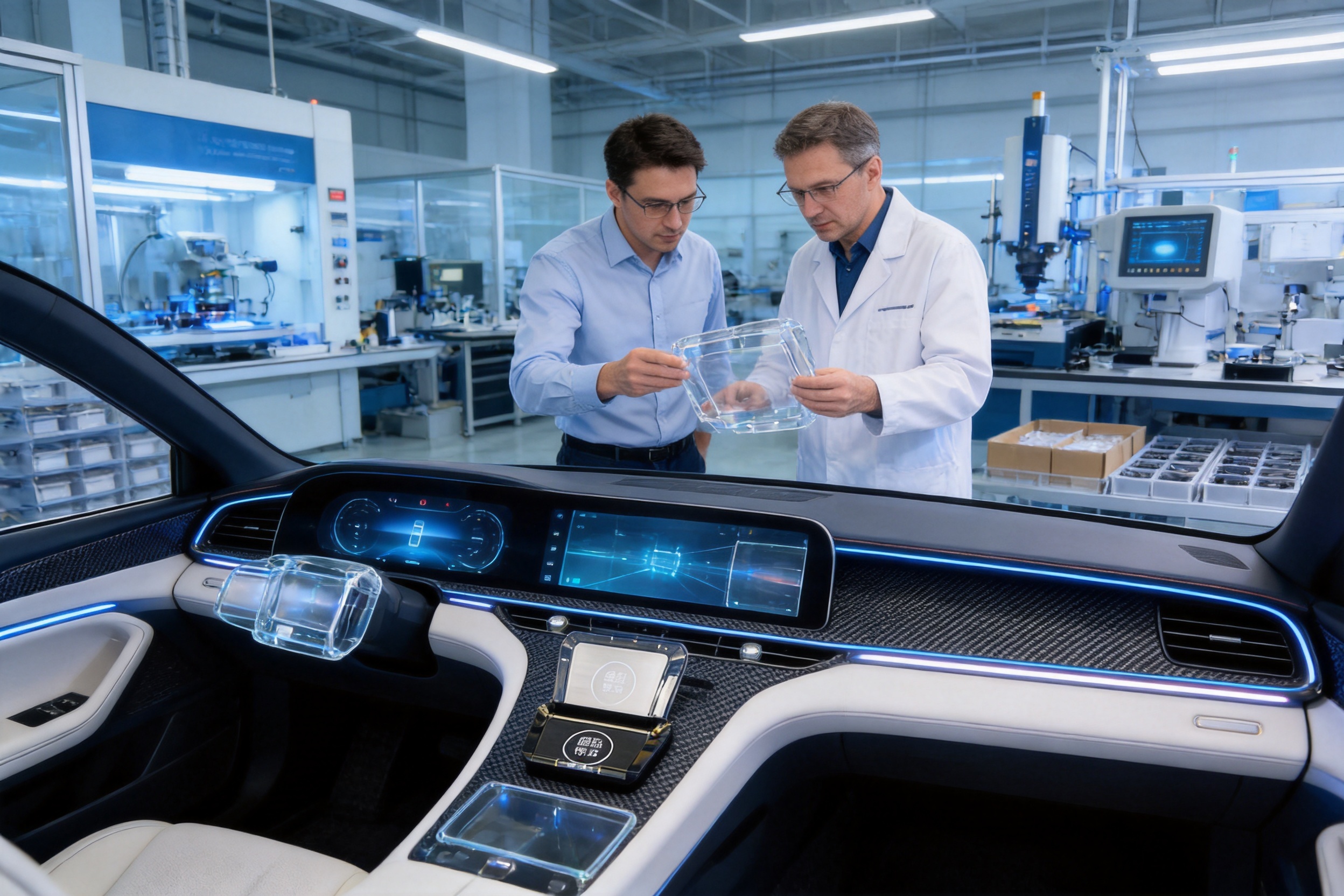
Inspection criteria should be tailored to the specific component, but several categories are common across automotive interior glass applications.
Dimensional inspection confirms length, width, thickness, radii, holes, slots, steps, and other geometric features. These measurements ensure that the part fits the assembly and maintains the required optical position.
Flatness and parallelism inspection is important for display covers, bonded panels, and optical windows. Excessive variation may cause local stress, uneven adhesive thickness, or visible distortion.
Edge inspection evaluates chips, cracks, roughness, chamfers, polishing, and corner condition. This can be performed using defined visual standards and measurement methods.
Surface inspection evaluates scratches, digs, particles, stains, haze, coating defects, and other cosmetic or optical conditions. The inspection environment should be controlled so that decisions are repeatable.
Optical testing may include transmission, reflection, haze, distortion, or wavelength-specific performance. The exact tests depend on the application and the customer’s technical requirements.
Packaging inspection confirms that the parts are protected, correctly labeled, and arranged according to shipping and handling requirements. Packaging should not itself create marks, pressure points, or contamination.
Choosing a Supplier for Automotive Interior Glass
When evaluating a supplier, customers should consider more than equipment lists or sample appearance. A reliable supplier should be able to explain how the product will be controlled from material receipt through shipment.
Important evaluation questions include:
Does the supplier understand automotive and optical quality requirements?
Can the supplier review drawings and provide manufacturability feedback?
Are dimensional, cosmetic, and optical inspection standards clearly defined?
Can the supplier provide traceability for materials and production batches?
Does the supplier have appropriate quality and environmental management systems?
Can the supplier support prototypes, pilot production, and mass production?
Is the supplier experienced with coatings, printing, bonding preparation, or specialized edge treatments when required?
Can the supplier maintain consistent packaging and international shipment procedures?
Does the supplier have technical personnel capable of supporting engineering changes and problem resolution?
These questions help distinguish a precision component partner from a basic glass processing vendor.
Company Strengths Supporting Automotive Applications
Changzhou Haolilai Photo-Electricity Scientific and Technical Co., Ltd. was founded in 1998 and has developed long-term experience in the precision optical component field. Its location in Changzhou, Jiangsu, places the company within an important industrial and technology region of China.
The company covers approximately 35,000 square meters and employs more than 300 people. Its product and technical focus includes laser optics, automotive optics, semiconductor optics, and consumer optics. This range reflects experience with different combinations of optical performance, mechanical precision, cleanliness, appearance, and production requirements.
HLL has obtained ISO9001:2015, ISO14001:2015, and IATF16949 certifications. It is also recognized as a High-Tech enterprise in Jiangsu Province. Its technical organization includes the Jiangsu Precision Optical Lens Engineering Technology Center and Jiangsu Enterprise Technology Research Center.
The company has obtained multiple invention patents, utility model patents, and Jiangsu High and New Tech Product recognitions. These achievements indicate ongoing investment in technical development and process improvement.
Its export experience covers more than 20 countries, allowing the company to support customers with international project communication and shipment coordination. For automotive interior glass structural components, this combination of technical experience, formal quality systems, production scale, and international service capability can provide a solid foundation for cooperation.
Future Development of Automotive Interior Glass
Vehicle interiors are moving toward greater digital integration. Displays are becoming larger, interfaces are becoming more seamless, and sensors are being incorporated into areas that were previously used only for decoration or storage. This trend will increase demand for precision transparent and semi-transparent components.
Future products may require thinner structures, more complex shapes, improved optical control, integrated coatings, and higher levels of functional integration. Some components may combine display protection, touch interaction, light management, and structural support in a single assembly.
Manufacturers will need to improve process capability while maintaining flexibility for customized designs. Digital inspection, automated handling, advanced coating methods, and more detailed production data may become increasingly important. Environmental considerations will also influence material selection, waste reduction, packaging, and energy use.
Suppliers with a foundation in precision optics will be well positioned to support these developments. Their understanding of surface quality, optical behavior, dimensional control, and technical documentation can help bridge the gap between interior design concepts and mass production.
Conclusion
Automotive interior glass structural components are precision products that combine visual quality, optical function, mechanical stability, and assembly reliability. Their performance depends on the entire manufacturing chain, including material selection, cutting, edge treatment, surface finishing, coating, cleaning, inspection, and packaging.
The main advantages of a well-manufactured component include accurate fit, high optical and cosmetic quality, stable performance, design flexibility, and compatibility with advanced display and sensor systems. Compared with general-purpose glass suppliers, an experienced optical component manufacturer can offer stronger control of surface quality, geometry, cleanliness, optical behavior, and engineering development.
Changzhou Haolilai Photo-Electricity Scientific and Technical Co., Ltd. brings more than two decades of precision optical manufacturing experience to automotive applications. Its production scale, technical research centers, patent achievements, international customer experience, and certifications including IATF16949, ISO9001:2015, and ISO14001:2015 support its ability to serve demanding automotive and optical programs.
For vehicle manufacturers, display suppliers, sensor integrators, and interior system developers, selecting the right glass component partner is an important step toward reliable product performance. A supplier that combines engineering knowledge, process discipline, quality management, and responsive technical support can contribute not only to the component itself but also to the success of the complete vehicle interior system.
Questions and Answers
What are automotive interior glass structural components?
They are precision glass parts used inside vehicle interior assemblies to protect, support, align, or provide an optical interface for displays, sensors, projection systems, lighting modules, controls, and other electronic or decorative functions.
How are these components different from ordinary glass panels?
They require tighter control of dimensions, flatness, surface quality, edge condition, optical performance, cleanliness, and environmental stability. They are usually designed to work as part of a specific automotive module rather than as standalone decorative panels.
Can the components be customized?
Yes. Customization may include dimensions, thickness, contours, holes, slots, corner radii, edge treatments, surface finishes, optical coatings, printing, inspection standards, and packaging. The final possibilities depend on the application and technical drawings.
Why is optical manufacturing experience valuable for automotive interior glass?
Optical manufacturing experience supports better control of surface quality, transmission, reflection, haze, distortion, cleanliness, and dimensional accuracy. These characteristics are important for display covers, sensor windows, projection modules, and other visually sensitive applications.
What quality certifications does the manufacturer hold?
Changzhou Haolilai Photo-Electricity Scientific and Technical Co., Ltd. has obtained ISO9001:2015, ISO14001:2015, and IATF16949 certifications. These certifications support structured quality management, environmental management, and automotive-oriented process control.
Can the supplier support prototype and mass production?
The company’s technical team, production organization, and experience in precision optical components provide a basis for supporting development samples, pilot production, and recurring manufacturing. The exact production plan should be confirmed according to the product design and expected volume.
What information should customers provide when requesting a quotation?
Useful information includes drawings or three-dimensional files, glass material, thickness, dimensions, tolerances, surface and edge requirements, coatings, printing, optical specifications, expected quantities, inspection standards, packaging requirements, and the intended automotive application.
How can customers reduce manufacturing risks during design?
Customers can involve the supplier during the design review stage. Early discussion of tolerances, corner radii, edge profiles, bonding surfaces, coating requirements, and inspection methods can improve manufacturability and reduce redesign, rework, and production delays.
How are glass components protected during transportation?
Packaging may use protective films, separators, custom trays, edge protection, moisture control, and batch identification. The exact packaging design should be validated according to component geometry, surface sensitivity, shipment distance, and customer handling procedures.
What industries besides automotive does the company serve?
The company develops and produces precision optical components for laser optics, semiconductor optics, consumer optics, and other optical applications in addition to automotive optics.
References
1. ISO 9001:2015, Quality Management Systems — Requirements.
2. ISO 14001:2015, Environmental Management Systems — Requirements with Guidance for Use.
3. IATF 16949, Quality Management System Requirements for Automotive Production and Relevant Service Parts Organizations.
4. Automotive industry guidance on product quality planning, production part approval, measurement systems, and process capability.
5. General engineering principles for precision glass machining, optical surface finishing, coating preparation, and dimensional inspection.
6. Technical information supplied for Changzhou Haolilai Photo-Electricity Scientific and Technical Co., Ltd., including company history, certifications, research centers, product fields, production scale, and international market experience.


 苏公网安备32041102000130号