
 Search
 en
 English
 日本語
 русский
 Español
 Deutsch
 中文简体
Content
- 1 Understanding the Role of an Optical Lens
- 2 Why Precision Matters in Optical Lens Production
- 3 Key Advantages of Precision Optical Lenses
- 4 Manufacturing Process for Precision Optical Lenses
- 5 Advanced Manufacturing Strengths
- 6 Optical Lens Applications
- 7 How Precision Lenses Compare with Lower-Grade Alternatives
- 8 Quality Control Considerations for Optical Lens Buyers
- 9 Customer-Oriented Development and Customization
- 10 Environmental and Operational Responsibility
- 11 Global Supply and Production Experience
- 12 Why Choose a Specialized Optical Lens Manufacturer?
- 13 Recommended Selection Process for Buyers
- 14 Frequently Asked Questions
- 14.1 What is the primary function of an optical lens?
- 14.2 What types of optical lenses can be manufactured?
- 14.3 Why is lens centration important?
- 14.4 How do coatings improve lens performance?
- 14.5 What industries use precision optical lenses?
- 14.6 What certifications are relevant when selecting an optical lens supplier?
- 14.7 Can optical lenses be customized?
- 14.8 What information should a customer provide for a quotation?
- 14.9 Why should optical and mechanical requirements be evaluated together?
- 14.10 How can a buyer compare two optical lens manufacturers?
- 15 Conclusion
- 16 References
- 17 Product: Optical Lens
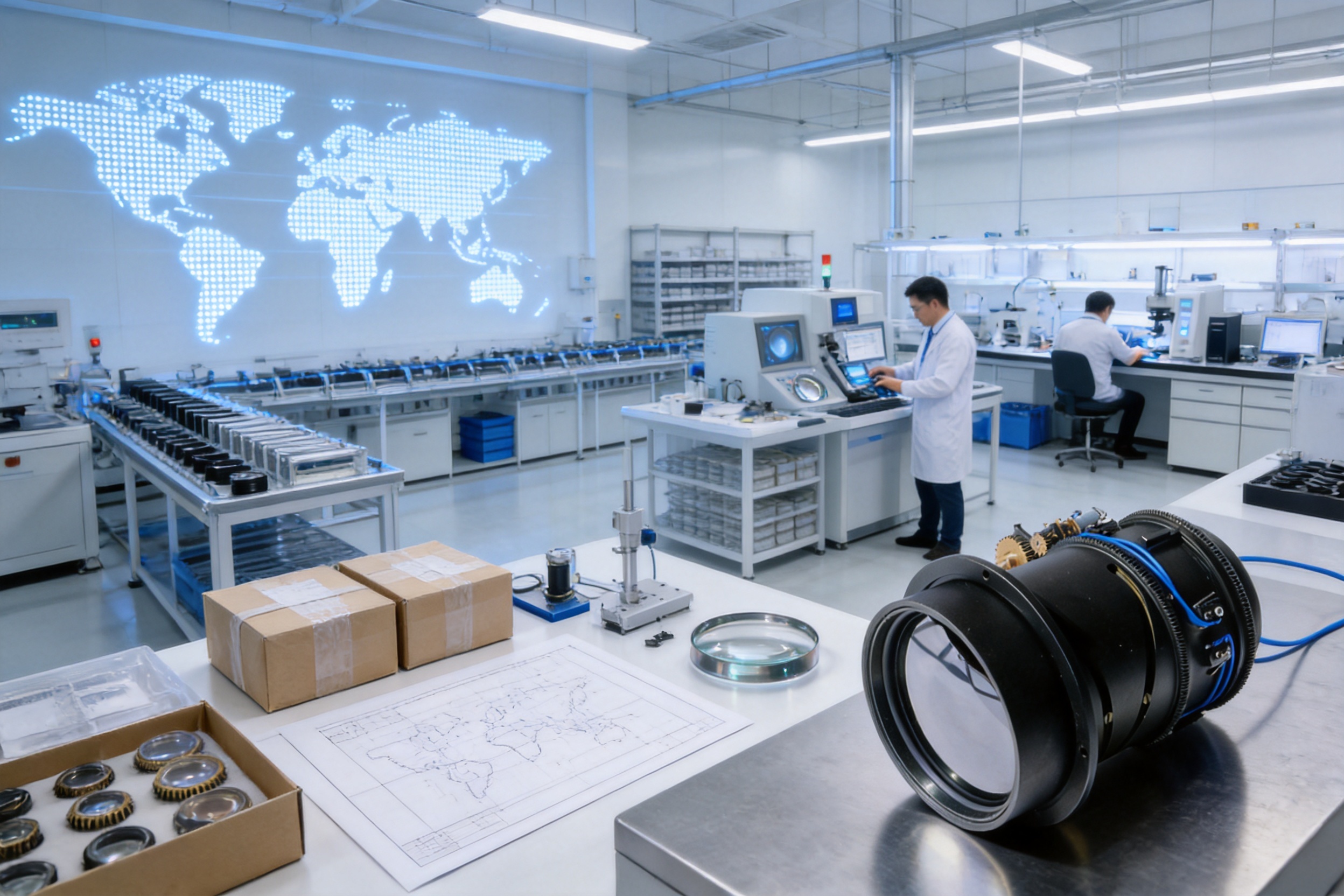
Optical lenses are essential components in systems that transmit, focus, collimate, magnify, reduce, or otherwise control light. From laser processing equipment and semiconductor inspection tools to automotive sensing systems and consumer imaging devices, the performance of an optical lens can influence the accuracy, reliability, efficiency, and service life of the complete product. A lens that appears simple from the outside may involve demanding design requirements, tightly controlled materials, precision grinding and polishing, advanced coating technology, and rigorous inspection.
Modern optical applications increasingly require components that combine high optical performance with stable dimensions, reliable environmental resistance, consistent production quality, and competitive cost. For this reason, buyers are not simply purchasing a transparent element. They are selecting a manufacturing partner capable of converting technical requirements into repeatable optical components for volume production and specialized applications.
Changzhou Haolilai Photo-Electricity Scientific and Technical Co., Ltd., also known as HLL, is a professional manufacturer of precision optical components established in 1998. Located in Changzhou, Jiangsu, China, the company develops and produces optical components for laser optics, automotive optics, semiconductor optics, consumer optics, and related fields. Its optical lens production capabilities are supported by an experienced technical team, dedicated research centers, certified management systems, and a manufacturing site covering approximately 35,000 square meters.
Understanding the Role of an Optical Lens
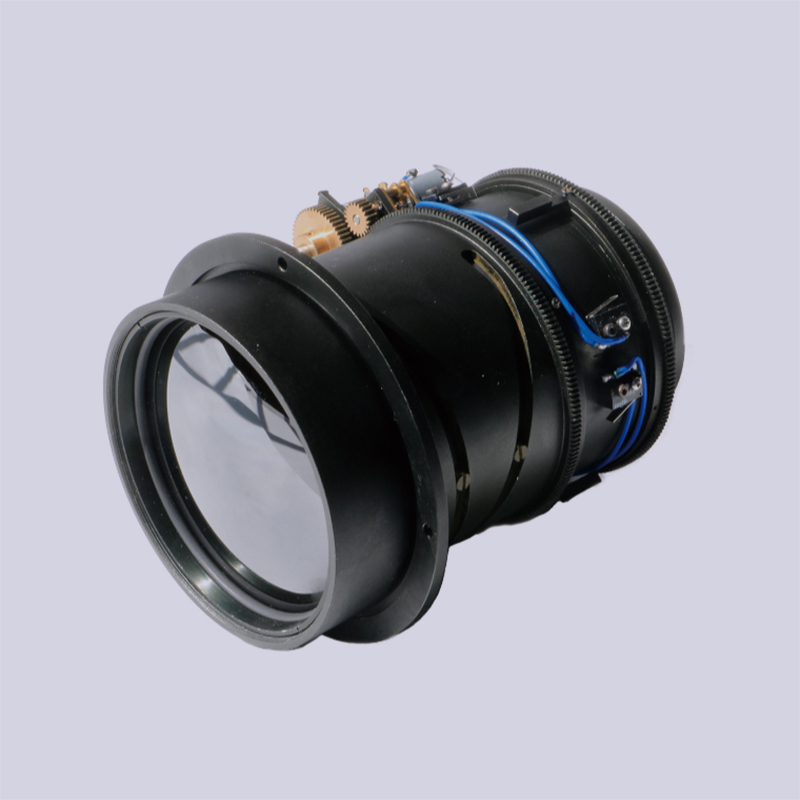
An optical lens is a transparent component with one or more curved surfaces designed to refract light. Depending on its geometry and optical specification, a lens may converge light toward a focal point, diverge light away from an apparent focal point, form an image, correct optical aberration, or distribute energy in a controlled pattern. Lenses can be manufactured in many forms, including plano-convex, plano-concave, bi-convex, bi-concave, meniscus, cylindrical, aspherical, spherical, and custom geometries.
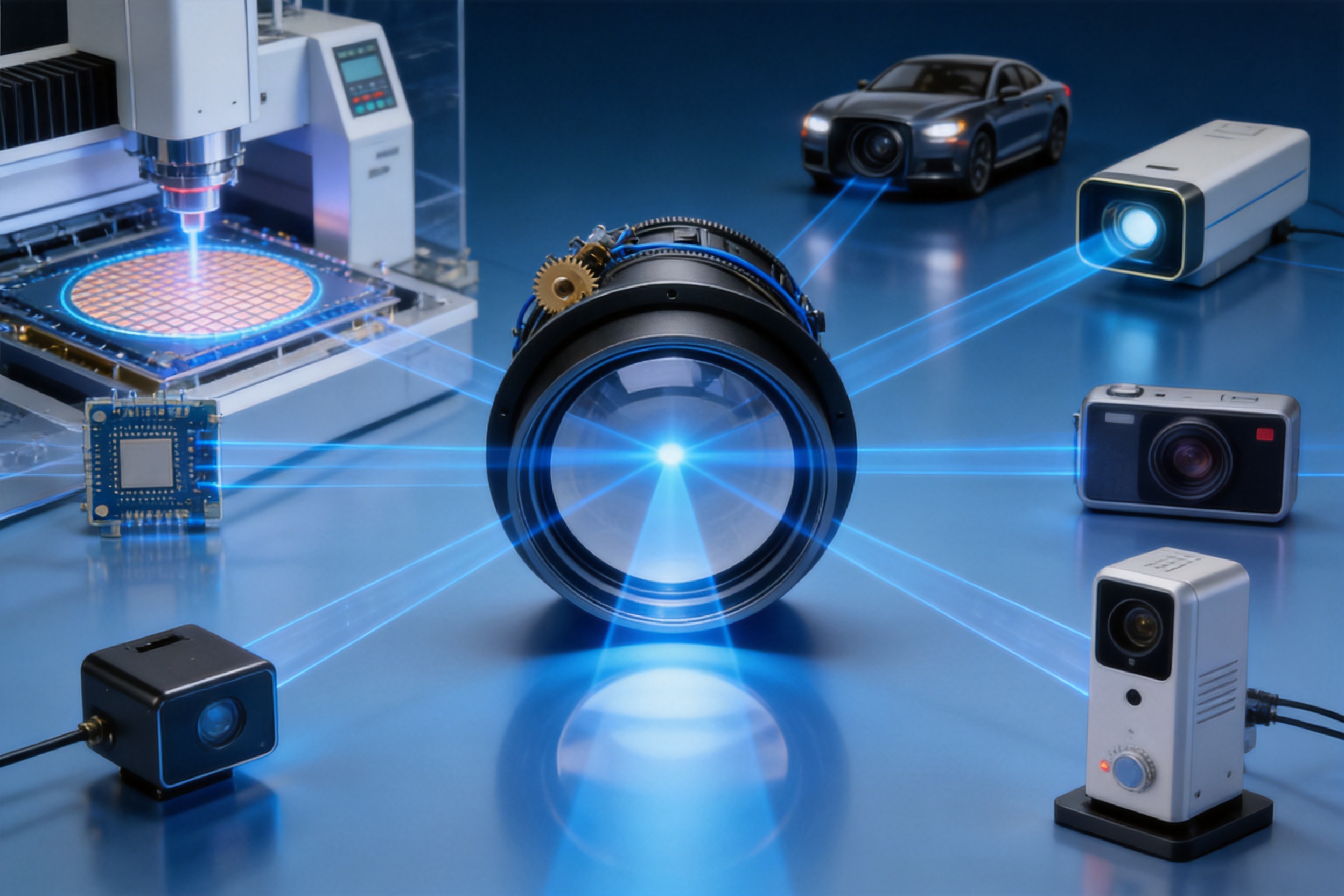
The correct lens design depends on the intended application. A laser system may require a lens with high transmission at a specific wavelength, excellent surface quality, and resistance to laser-induced damage. An automotive optical module may prioritize compactness, thermal stability, environmental durability, and long-term dimensional consistency. A semiconductor inspection system may require extremely low wavefront distortion and precise control of surface irregularities. A consumer optical device may require a combination of compact size, efficient mass production, cosmetic quality, and cost control.
Although the basic function of a lens is to control light, its actual performance is determined by many interconnected factors. These include substrate material, refractive index, dispersion, surface radius, center thickness, edge thickness, wedge, centration, surface accuracy, surface roughness, coating performance, cleanliness, and assembly compatibility. A professional manufacturer must therefore control the entire process rather than focusing on one isolated production stage.
Why Precision Matters in Optical Lens Production
Small deviations in an optical lens can create visible or measurable effects in the final system. A minor radius error may shift the focal position. Excessive wedge may cause beam deviation. Poor centration can introduce optical axis errors. Surface defects may scatter light or reduce contrast. Inconsistent coating thickness may produce nonuniform transmission or reflection. These problems can become especially serious in laser, imaging, sensing, and measurement applications.
Precision is also important for production efficiency. When lenses are manufactured consistently, they can be assembled with fewer adjustments and lower rejection rates. Stable component dimensions simplify mechanical design and reduce the need for complex compensation structures. In high-volume manufacturing, repeatability can be as important as the performance of an individual sample.
For this reason, the quality of an optical lens should be evaluated through a combination of optical, mechanical, material, environmental, and process criteria. A lens is not fully qualified simply because it looks clear. Professional inspection must verify that the component complies with the technical requirements established for its application.
Key Advantages of Precision Optical Lenses
Reliable Optical Performance
A precision optical lens is designed and manufactured to deliver stable light transmission and predictable imaging or focusing behavior. Controlled surface geometry helps maintain the specified focal length and optical power. Carefully managed surface quality reduces unwanted scattering and improves image clarity, beam quality, and system efficiency.
In comparison with ordinary transparent components or lower-grade lenses, precision lenses offer better consistency from part to part. This consistency is particularly valuable when multiple lenses are used in the same optical system or when components must be replaced during maintenance without changing system performance.
Application-Specific Design Flexibility
Optical systems rarely share identical requirements. A standard lens may be suitable for a general imaging product, while a custom lens may be needed for a laser module, automotive sensor, semiconductor tool, or specialized instrument. A professional optical manufacturer can support different shapes, sizes, materials, surface specifications, and coating requirements.
Design flexibility allows customers to optimize their systems rather than adapting the system around an unsuitable component. The lens can be developed according to wavelength, numerical aperture, working distance, field of view, packaging limitations, temperature range, and expected operating environment.
Improved System Integration
Precision lenses can be produced with controlled mechanical dimensions that help them fit accurately into holders, barrels, modules, and automated assembly equipment. Appropriate control of diameter, thickness, edge profile, and centration reduces alignment difficulties and supports more efficient assembly.
Better integration can lower total system cost even when the individual lens has a higher technical specification. Reduced adjustment time, fewer assembly failures, and improved production yield can provide a meaningful economic advantage over low-cost components with inconsistent dimensions.
Long-Term Stability
Optical components used in industrial, automotive, semiconductor, and outdoor environments may be exposed to temperature changes, vibration, humidity, dust, chemicals, and repeated operating cycles. Material selection, coating design, cleaning processes, and packaging all contribute to long-term stability.
A high-quality lens is selected not only for its initial optical performance but also for its ability to retain that performance during service. Stable manufacturing processes and appropriate inspection help reduce the risk of dimensional drift, coating failure, contamination, and premature replacement.
Compatibility with Advanced Optical Systems
Contemporary optical equipment often combines lenses with mirrors, prisms, filters, detectors, emitters, mechanical mounts, and electronic control systems. The lens must work as part of this complete architecture. Its wavelength range, transmission characteristics, optical power, and physical dimensions must be compatible with adjacent components.
Manufacturers with experience in multiple optical product categories are better positioned to understand these integration requirements. Experience with optical flat mirrors, prisms, spherical mirrors, and other components can support a broader understanding of complete optical paths.
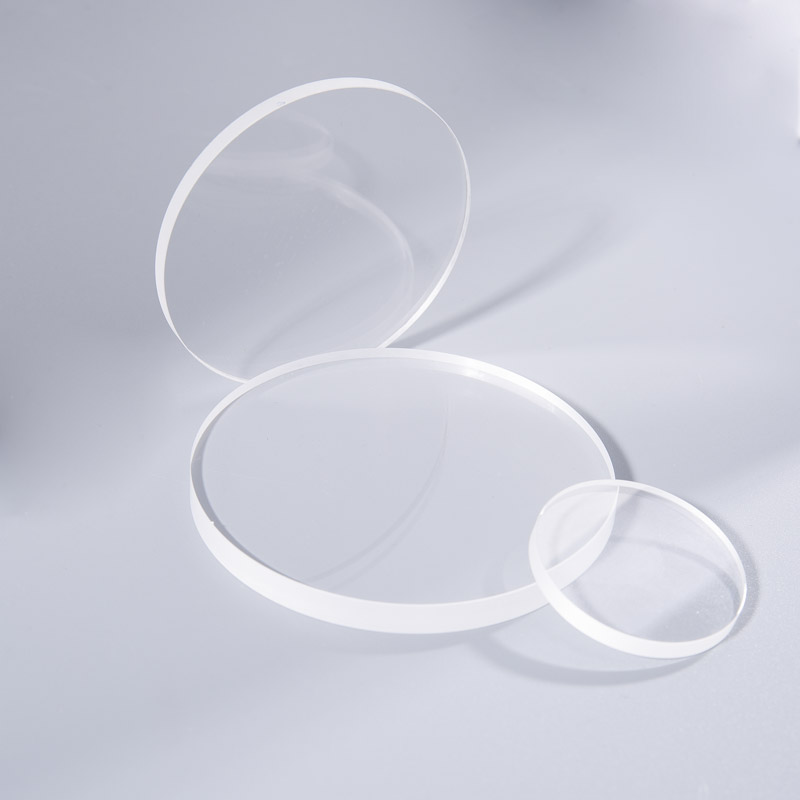
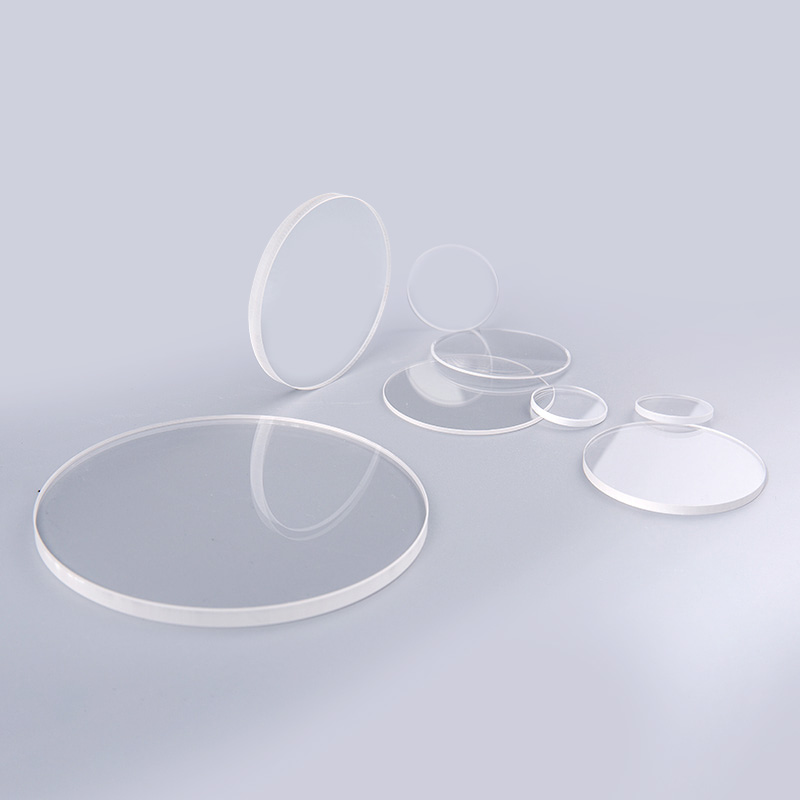
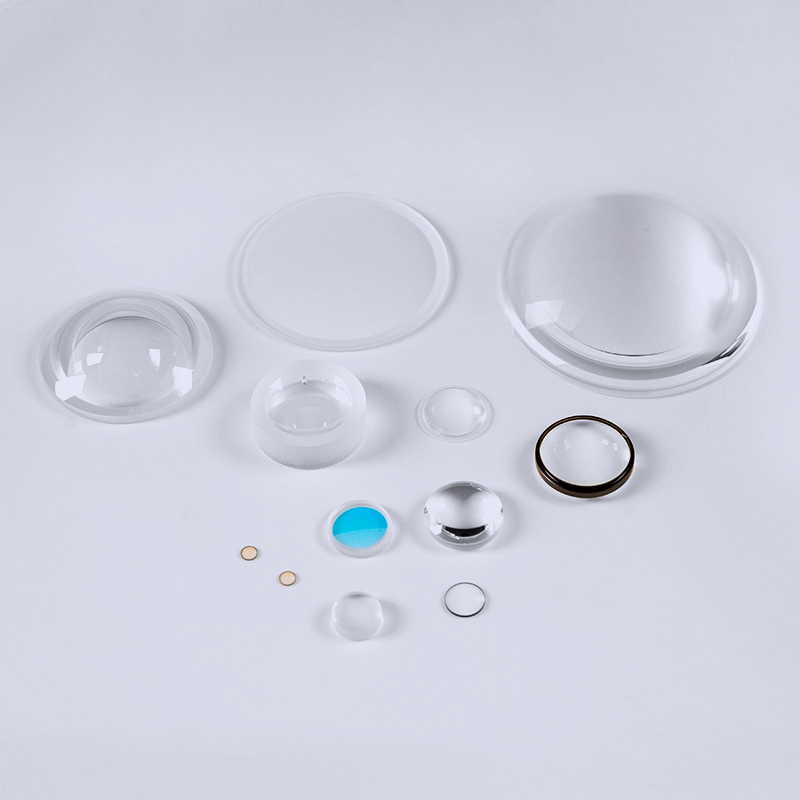
Optical Lens
Manufacturing Process for Precision Optical Lenses
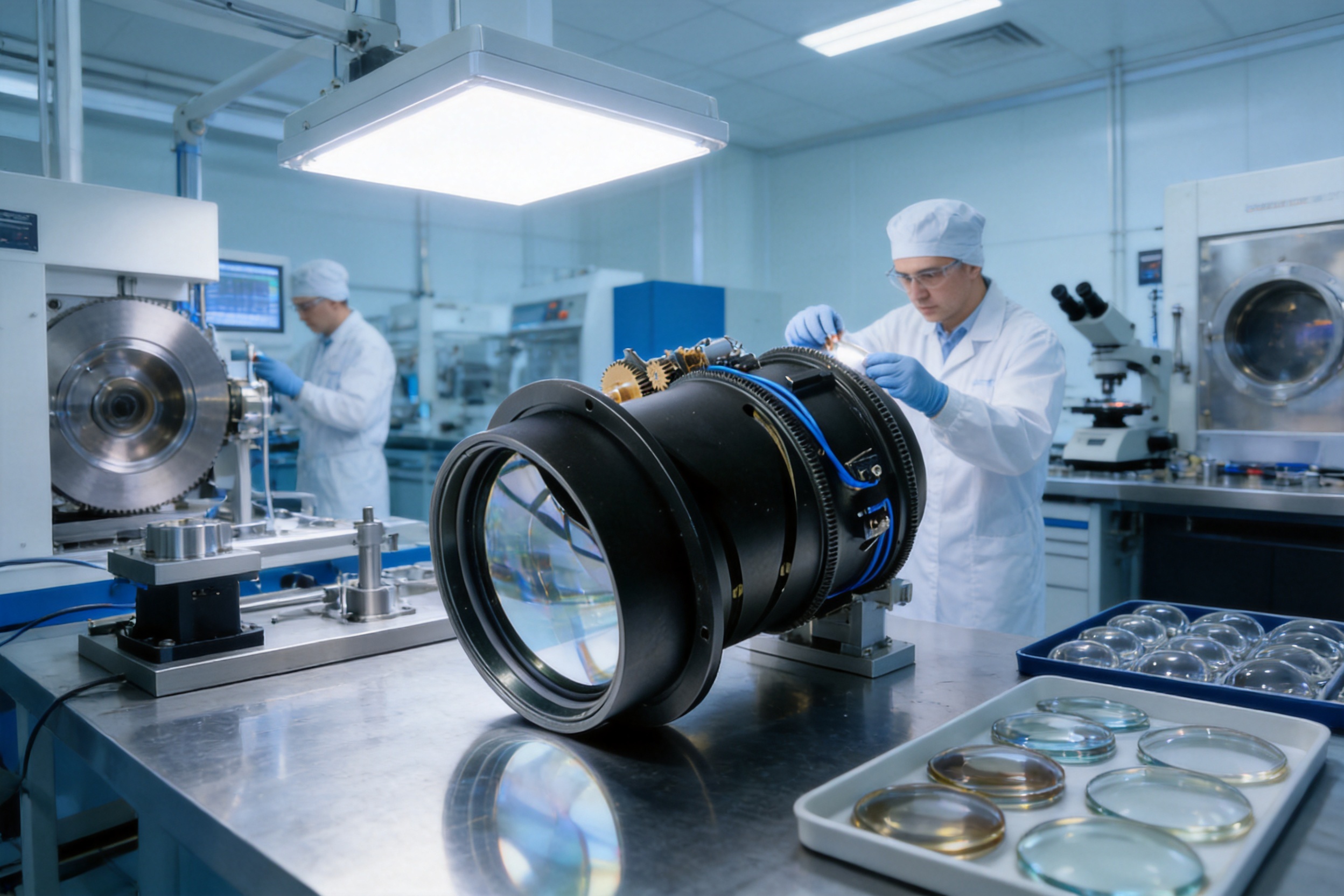
The manufacture of a precision optical lens involves a series of controlled operations. The exact process varies according to material, geometry, quantity, coating, and performance requirements, but the general workflow includes technical review, material preparation, shaping, grinding, polishing, centering, coating, cleaning, inspection, and packaging.
1. Technical Requirement Review
Production begins with an evaluation of the customer’s drawings, specifications, samples, or application requirements. Important information may include lens type, material, diameter, thickness, radius, focal length, wavelength range, surface quality, surface accuracy, coating requirements, environmental conditions, and allowable tolerances.
This stage is essential because an optical specification must be understood in relation to the complete system. For example, a lens used for laser transmission may need a coating optimized for a specific wavelength and a high laser damage threshold. A lens used in automotive optics may require a different balance of transmission, environmental resistance, thermal stability, and dimensional control.
Technical review also helps identify manufacturing risks before production starts. Engineers may evaluate whether the requested geometry is suitable for the selected material, whether the tolerance is compatible with the intended process, and whether inspection methods can verify the final requirements.
2. Optical Material Selection
Material selection affects refractive power, transmission, chromatic behavior, thermal response, chemical resistance, and manufacturability. Optical glass is commonly selected for applications requiring stable optical performance and broad material options. Other materials may be considered when weight, impact resistance, infrared transmission, or special environmental performance is important.
The selected material must be suitable for the intended wavelength range and operating conditions. Internal inclusions, bubbles, striae, stress, and other material imperfections can affect the final optical result. Effective incoming material control is therefore an important part of precision production.
A professional manufacturer evaluates material characteristics together with lens geometry. A material that is appropriate for one lens shape or application may not be ideal for another. The objective is to achieve the required optical performance while maintaining production stability and economic feasibility.
3. Blanking and Initial Shaping
After material selection, the lens blank is prepared through cutting, pressing, molding, or other suitable shaping methods. Initial shaping establishes the approximate diameter, thickness, and curvature needed for later operations.
Proper control at this stage reduces material waste and supports stable downstream processing. Excessive variation in the blank can increase grinding time, create uneven material removal, or affect the ability to reach the final geometry. For high-volume production, consistent blanks also improve process scheduling and reduce variation among production batches.
4. Grinding and Curve Generation
Grinding removes material and forms the required optical surfaces. Coarse grinding establishes the basic radius and geometry, while finer grinding prepares the surface for polishing. The process must be controlled to avoid excessive subsurface damage, edge chipping, deformation, and unwanted shape errors.
Different lens geometries require different production strategies. Spherical lenses may be processed using established curve-generation methods, while aspherical or special-profile lenses may require more advanced machining and inspection approaches. The chosen process must be matched to the optical design and the required production volume.
During grinding, the manufacturer must control the relationship between the two optical surfaces and the mechanical reference features. Inaccurate positioning at this stage can later contribute to thickness errors, wedge, or centration problems.
5. Fine Grinding and Polishing
Fine grinding reduces the roughness and damage left by earlier operations. Polishing then improves the surface condition to the level required for optical use. The polishing process must remove microscopic irregularities while preserving the intended radius, form, and edge condition.
Polishing quality affects transmission, scattering, imaging contrast, and laser performance. A lens with poor surface quality may create stray light, reduce contrast, or introduce defects into a focused laser beam. A lens with excessive polishing-induced form error may have a smooth appearance but still fail to meet optical performance requirements.
The balance between surface finish and surface figure is therefore critical. Advanced optical manufacturing relies on controlled polishing parameters, suitable tooling, stable slurry management, clean working conditions, and frequent measurement. Process experience is especially important for maintaining the same performance across different lens sizes and geometries.
6. Centering and Edge Processing
Centering aligns the optical axis with the mechanical axis of the lens. This is a critical operation for components that will be mounted in precision barrels or combined with other optical elements. Poor centering can lead to beam deviation, image displacement, uneven focus, and assembly difficulties.
Edge processing may include beveling, chamfering, edging, or other finishing operations. These features help protect the lens during handling and installation and may provide clearance within the mounting structure. The edge design must be compatible with the customer’s holder or assembly method.
Mechanical dimensions should be controlled together with optical dimensions. A lens that meets its optical requirements but cannot be installed reliably may still create problems for the customer. This is why integrated manufacturing and inspection capabilities are important advantages.
7. Cleaning and Coating
Optical surfaces must be thoroughly cleaned before coating. Even small particles, residues, fingerprints, or organic contamination can reduce coating adhesion and create visible defects. Controlled cleaning and handling procedures help maintain surface quality throughout the process.
Coatings are applied to modify reflection and transmission characteristics. Anti-reflection coatings can improve throughput and reduce unwanted reflections. Other coating designs may be used for laser wavelengths, broadband transmission, protection, or specialized optical functions. The coating must be selected according to the wavelength range, angle of incidence, substrate material, power level, and environmental conditions.
Coating performance includes more than nominal transmission. Adhesion, abrasion resistance, humidity resistance, temperature stability, spectral uniformity, and cosmetic appearance may all be relevant. A coating that performs well in a laboratory but fails under real operating conditions is not a suitable industrial solution.
8. Final Inspection
Final inspection confirms whether the finished lens satisfies the agreed technical requirements. Depending on the product, inspection may include dimensional measurement, radius measurement, center thickness measurement, surface quality evaluation, surface figure testing, centration measurement, transmission testing, coating inspection, cleanliness inspection, and visual examination.
Inspection data supports product traceability and process improvement. When measurements are recorded systematically, manufacturing teams can identify trends and correct deviations before they become widespread. This approach is more effective than relying only on final sorting.
For demanding applications, inspection should be planned at multiple stages rather than performed only after completion. In-process verification can detect problems earlier, reduce waste, and improve production efficiency.
Advanced Manufacturing Strengths
Integrated Technical Capability
HLL has developed its business around precision optical components rather than general-purpose glass processing. This focus supports a deeper understanding of optical design requirements, precision machining, surface treatment, inspection, and application integration.
The company’s product fields include laser optics, automotive optics, semiconductor optics, and consumer optics. These sectors require different combinations of precision, volume capability, environmental performance, and cost control. Experience across several markets can help manufacturing teams apply lessons from one application area to another while still tailoring the product to the specific customer requirement.
Research and Engineering Resources
HLL has established the Jiangsu Precision Optical Lens Engineering Technology Center and the Jiangsu Enterprise Technology Research Center. These technical platforms reflect the company’s emphasis on engineering development and continuous improvement.
Research capability is important for optical lens production because customer requirements are continually changing. New systems may require smaller components, improved transmission, more complex shapes, tighter alignment, better environmental durability, or compatibility with new wavelengths. A manufacturer with engineering resources can participate earlier in the product development process and help convert application goals into manufacturable specifications.
Experienced Technical Team
Precision optical manufacturing depends heavily on process knowledge. Equipment is important, but experienced engineers and technicians are needed to establish suitable parameters, manage material behavior, interpret inspection results, and solve production problems.
HLL’s long operating history since 1998 provides an extended foundation for developing manufacturing experience. Over time, a company can build knowledge related to optical materials, grinding behavior, polishing stability, coating preparation, inspection methods, packaging, and customer application requirements.
Certified Management Systems
HLL has obtained ISO9001:2015, ISO14001:2015, and IATF16949 certifications. These certifications are relevant to different aspects of operational control. ISO9001:2015 is associated with quality management, ISO14001:2015 with environmental management, and IATF16949 with quality requirements for the automotive supply chain.
For optical lens customers, certified management systems can provide greater confidence in documented procedures, process control, corrective actions, supplier management, and continual improvement. Certification does not replace product-specific technical verification, but it indicates that the company has established structured management practices.
IATF16949 is particularly relevant to automotive optical applications, where suppliers are expected to demonstrate consistent quality, traceability, risk management, and disciplined production control. Automotive customers often require components capable of reliable performance over long service periods and under demanding environmental conditions.
Large and Specialized Manufacturing Site
HLL operates on an approximately 35,000-square-meter site. A substantial manufacturing area can support dedicated production zones, inspection areas, storage, engineering activities, and process organization. Suitable facility planning also helps manage cleanliness, material flow, equipment placement, and production scalability.
Facility size alone does not determine product quality, but it can provide a foundation for organized manufacturing and future capacity development. When combined with technical management and process discipline, it supports the production of optical components for both specialized and higher-volume requirements.
Patent and Technology Development
HLL has obtained invention patents, utility model patents, and Jiangsu high and new technology products. Intellectual property activity indicates an effort to improve equipment, processes, structures, or product solutions through internal technical development.
In optical manufacturing, technological improvements may involve better tooling, more stable polishing, enhanced inspection, improved coating processes, production automation, or application-specific component design. Such improvements can help a manufacturer deliver more consistent products and respond to technically demanding customer requirements.
Optical Lens Applications
Laser Optics
Laser systems require optical lenses that can manage concentrated light energy without excessive absorption, scattering, or surface damage. Depending on the system, lenses may be used for beam expansion, focusing, collimation, beam shaping, or imaging.
Important requirements may include wavelength-specific transmission, low absorption, high surface quality, precise focal length, controlled centration, and suitable coating durability. A lens used in industrial laser processing must also be compatible with thermal loading, repeated operation, and the mechanical stability of the optical assembly.
In laser applications, manufacturing quality can influence processing spot size, energy distribution, cutting accuracy, marking contrast, welding stability, and equipment reliability. This makes precision control essential.
Automotive Optics
Automotive optical systems may include cameras, lighting modules, sensing devices, projection units, driver assistance systems, and other electronic or optical assemblies. These products often operate across a wide temperature range and may be exposed to vibration, humidity, dust, road chemicals, and long-term mechanical stress.
Automotive lenses must therefore combine optical performance with environmental durability and production consistency. Mechanical compatibility is also important because automotive modules are generally designed for compact packaging and automated assembly.
The IATF16949-certified management environment of HLL is relevant to customers seeking optical components for automotive supply chains. The certification supports a structured approach to quality planning, process monitoring, traceability, and continual improvement.
Semiconductor Optics
Semiconductor manufacturing and inspection equipment depends on precise optical paths. Lenses may be used in imaging, alignment, inspection, measurement, wafer handling, laser processing, and defect detection systems.
These applications can be sensitive to wavefront error, stray light, contamination, dimensional variation, and thermal drift. The optical component must perform reliably within a system where even a small error may affect measurement accuracy or process yield.
Clean manufacturing practices, controlled handling, careful inspection, and application-specific material selection are important factors for semiconductor optical components.
Consumer Optics
Consumer optical products often require high-volume manufacturing, compact dimensions, attractive cosmetic quality, competitive pricing, and stable performance. Examples may include imaging devices, optical sensors, compact projection systems, and electronic products with integrated cameras or light management functions.
The challenge is to maintain precision while producing efficiently at scale. Repeatable process control, optimized material usage, efficient inspection, and reliable packaging all contribute to commercial success.
Scientific and Industrial Instruments
Optical lenses are also used in measuring instruments, laboratory equipment, machine vision systems, analytical devices, and industrial inspection tools. These systems may require custom focal lengths, special coatings, unusual geometries, or close cooperation between the component manufacturer and the equipment designer.
For these applications, engineering communication is especially important. The best lens is not necessarily the one with the most extreme specification; it is the one that satisfies the actual optical, mechanical, environmental, and economic requirements of the instrument.
How Precision Lenses Compare with Lower-Grade Alternatives
Consistency from Batch to Batch
One of the main differences between professional precision lenses and low-cost alternatives is production consistency. Lower-grade components may show greater variation in radius, thickness, centration, surface quality, or coating appearance. This variation can create problems during assembly and calibration.
Precision manufacturing uses defined processes, controlled equipment, inspection standards, and documented quality practices to reduce variation. The result is a more predictable component that can be used with greater confidence in repeatable production.
Better Control of Optical Axis
Optical axis alignment is often overlooked when comparing lenses. A component may have acceptable surface appearance but still cause problems if the optical axis is not properly centered relative to its mechanical reference.
Precision centering and edge processing help ensure that the lens behaves correctly when mounted. This provides an advantage in systems with narrow alignment tolerances or multiple optical elements.
More Suitable Coating Performance
Basic or poorly controlled coatings may provide limited optical improvement and may not withstand the required environmental conditions. Professional coating development considers the actual wavelength, angle, power, substrate, and operating environment.
Proper coating selection can improve transmission, reduce reflection, and protect the optical surface. It can also reduce the risk of premature failure in demanding applications.
Improved Documentation and Traceability
Industrial customers often require inspection records, material information, lot identification, process documentation, and corrective action procedures. These requirements can be difficult for suppliers without established management systems.
A manufacturer with structured quality systems is better prepared to support customer audits, production qualification, engineering changes, and long-term supply. This creates value beyond the physical lens itself.
Stronger Engineering Support
When a product involves custom dimensions or specialized optical performance, engineering support can significantly reduce development risk. A capable supplier can review drawings, identify manufacturing concerns, suggest practical tolerances, and assist with sample evaluation.
This collaborative approach is generally more effective than selecting a component solely according to price. A small improvement in design or process planning can prevent expensive changes later in the customer’s production line.
Quality Control Considerations for Optical Lens Buyers
Customers evaluating an optical lens supplier should consider more than catalog availability. The supplier should be able to explain how materials are controlled, how surfaces are generated and polished, how centering is measured, how coatings are verified, and how finished products are protected during packaging and shipment.
It is also important to establish clear technical definitions. Terms such as surface quality, surface accuracy, transmission, centration, and coating durability should be connected to measurable acceptance criteria. Clear specifications reduce misunderstandings and make supplier comparison more meaningful.
Sample evaluation should ideally include both optical testing and assembly testing. A lens may meet individual component specifications but still create issues when installed in a real module. Testing the component in the intended optical and mechanical environment provides more useful information.
For volume programs, customers should evaluate process capability and production scalability. Questions may include whether the supplier can maintain the required tolerance across multiple lots, whether inspection capacity is sufficient, whether material supply is stable, and whether change control procedures are established.
Packaging is another important consideration. Optical surfaces are vulnerable to scratches, contamination, moisture, and impact. Appropriate protective films, separators, containers, labeling, and transport methods help preserve quality after final inspection.
Customer-Oriented Development and Customization
Optical lens development is most successful when the supplier and customer communicate early. The customer can provide information about the optical path, operating wavelength, mounting method, expected environment, production quantity, and performance priorities. The manufacturer can then assess manufacturability and recommend an appropriate process route.
Customization may involve lens diameter, thickness, radius, focal length, edge geometry, material, coating, surface quality, or packaging. In some cases, the best solution may involve modifying a mechanical dimension while preserving the optical function. In other cases, a different material or coating structure may improve system performance.
Engineering collaboration can also help balance performance and cost. Not every application needs the tightest possible tolerance or the most complex coating. By matching the specification to actual system sensitivity, customers can avoid unnecessary cost while retaining the required performance.
HLL’s focus on precision optical components and its engineering technology centers provide a foundation for this type of cooperation. Its experience in multiple sectors can support customers from initial feasibility evaluation through sample development and production supply.
Environmental and Operational Responsibility
Modern manufacturing must consider both product quality and environmental responsibility. ISO14001:2015 certification reflects the implementation of an environmental management framework. In an optical manufacturing environment, environmental management may involve resource usage, chemical handling, waste control, emissions management, energy efficiency, and process improvement.
Responsible environmental practices can also support stable manufacturing. Efficient resource use, controlled chemical processes, and organized waste management can reduce operational risks and contribute to consistent production conditions.
Customers increasingly evaluate suppliers according to environmental, social, and governance expectations. A manufacturer with formal environmental management practices is better positioned to respond to these requirements and support responsible supply chains.
Global Supply and Production Experience
HLL has more than 300 employees and exports products to over 20 countries. International supply experience requires attention to technical communication, packaging, documentation, shipping protection, customs requirements, customer service, and delivery coordination.
Global customers may operate under different technical standards and quality expectations. A supplier serving international markets must be able to manage communication across development, sampling, qualification, mass production, and after-sales support.
International experience also exposes a manufacturer to diverse application requirements. This can strengthen its ability to support customers in laser, automotive, semiconductor, consumer, and industrial optical markets.
Why Choose a Specialized Optical Lens Manufacturer?
A specialized manufacturer offers advantages that are difficult to obtain from a general glass supplier. Optical lens production requires knowledge of light behavior, optical materials, precision geometry, surface treatment, contamination control, and inspection technology. These requirements are interconnected, and weakness in one area can affect the complete product.
A specialist is more likely to understand how a lens specification relates to system performance. It can also provide more relevant suggestions during design review, sample development, process qualification, and production improvement.
Specialization may also support better communication. Customers can discuss focal length, optical axis, coating range, surface form, environmental durability, and assembly requirements with engineers familiar with these terms and their practical manufacturing implications.
For long-term projects, the relationship between customer and supplier is particularly important. Stable technical support, consistent quality, and controlled production changes help reduce supply risk and simplify product maintenance.
Recommended Selection Process for Buyers
Define the Application
Begin by identifying how the lens will be used. Determine whether it will focus a laser, form an image, collect light, correct aberration, transmit a particular wavelength, or serve another function. Clarify the operating environment and expected service life.
Establish Optical Requirements
Specify the relevant optical parameters, such as focal length, refractive behavior, wavelength range, transmission, numerical aperture, field of view, and allowable aberration. Avoid specifying unnecessary tolerances that do not affect system performance.
Establish Mechanical Requirements
Provide the lens diameter, thickness, mounting method, edge profile, reference surfaces, and allowable dimensional variation. Mechanical requirements should be considered at the same time as optical requirements.
Review Materials and Coatings
Select a material suitable for the wavelength, temperature, durability, and weight requirements. Define coating performance according to the actual application rather than selecting a generic anti-reflection coating without further analysis.
Evaluate the Manufacturer
Review the supplier’s experience, certifications, engineering resources, manufacturing capacity, inspection capability, international supply record, and ability to support custom development. A supplier’s process and management strength can be as important as its quoted unit price.
Validate Samples
Test samples under realistic optical, mechanical, and environmental conditions. Confirm not only the component measurements but also the performance of the lens within the complete assembly.
Confirm Mass Production Controls
Before placing a large production order, establish inspection plans, lot traceability, packaging requirements, change control procedures, and quality documentation. This helps protect the project as volumes increase.
Frequently Asked Questions
What is the primary function of an optical lens?
An optical lens controls the direction and distribution of light through refraction. It may focus, collimate, diverge, magnify, reduce, or form an image depending on its geometry and optical design.
What types of optical lenses can be manufactured?
Common types include plano-convex, plano-concave, bi-convex, bi-concave, meniscus, cylindrical, spherical, aspherical, and custom-profile lenses. The suitable type depends on the optical path and application requirements.
Why is lens centration important?
Centration controls the relationship between the optical axis and the mechanical axis. Poor centration can cause beam deviation, image displacement, alignment errors, and assembly problems, especially in precision optical systems.
How do coatings improve lens performance?
Coatings can reduce reflection and increase transmission over a selected wavelength range. They may also provide protection against abrasion, humidity, temperature changes, or other environmental influences when properly designed and applied.
What industries use precision optical lenses?
Precision lenses are used in laser equipment, automotive optical modules, semiconductor inspection and processing equipment, consumer electronics, scientific instruments, industrial imaging systems, and many other photonics applications.
What certifications are relevant when selecting an optical lens supplier?
ISO9001:2015 is relevant to quality management, ISO14001:2015 addresses environmental management, and IATF16949 is associated with automotive quality management requirements. Certifications should be considered together with product-specific technical capability.
Can optical lenses be customized?
Yes. Customization may involve material, shape, diameter, thickness, focal length, surface specifications, centration, coating, edge geometry, and packaging. The final specification should be developed according to the optical system and manufacturing feasibility.
What information should a customer provide for a quotation?
Useful information includes drawings or samples, lens type, dimensions, material, focal length, wavelength, surface requirements, coating requirements, quantity, application environment, packaging expectations, and delivery schedule.
Why should optical and mechanical requirements be evaluated together?
A lens must perform optically and fit mechanically. A component with excellent optical characteristics may still be unsuitable if it cannot be mounted accurately or consistently. Integrated evaluation helps prevent assembly and alignment problems.
How can a buyer compare two optical lens manufacturers?
Compare their technical experience, process controls, inspection equipment, certifications, material management, coating capability, production scalability, engineering support, delivery performance, packaging methods, and experience in the relevant application field.
Conclusion
Precision optical lenses are fundamental to the performance of modern photonic, imaging, sensing, laser, automotive, semiconductor, and consumer systems. Their value depends on far more than transparency or basic shape. Optical geometry, material quality, polishing, centration, coating, cleanliness, inspection, and packaging must all be controlled to achieve dependable results.
Compared with lower-grade alternatives, professionally manufactured optical lenses provide stronger consistency, more reliable optical axis control, better coating performance, improved assembly compatibility, and greater long-term stability. These advantages can reduce system adjustment, improve production yield, and support reliable operation in demanding environments.
Changzhou Haolilai Photo-Electricity Scientific and Technical Co., Ltd. brings together experience established since 1998, a manufacturing site of approximately 35,000 square meters, a technical team, dedicated engineering technology centers, international supply experience, and certifications including ISO9001:2015, ISO14001:2015, and IATF16949. Its focus on laser optics, automotive optics, semiconductor optics, consumer optics, and other precision optical components provides a strong foundation for customized lens development and stable production.
For customers seeking an optical lens supplier, the most effective approach is to evaluate the entire manufacturing capability. A suitable partner should be able to understand the application, recommend a practical specification, control the production process, verify performance with appropriate inspection, and support the product throughout its development and supply life.
References
ISO 9001:2015, Quality Management Systems—Requirements.
ISO 14001:2015, Environmental Management Systems—Requirements with Guidance for Use.
IATF 16949, Quality Management System Requirements for Automotive Production and Relevant Service Parts Organizations.
International Organization for Standardization, Geometrical Product Specifications and Verification Standards.
Optical Society and Photonics Engineering Literature, Fundamentals of Lens Design and Optical System Performance.
Standard References for Optical Glass, Surface Quality, Surface Accuracy, Coatings, and Precision Optical Manufacturing.


 苏公网安备32041102000130号