
 Search
 en
en English
 日本語
日本語 русский
 Español
 Deutsch
 中文简体
中文简体Content
- 1 Understanding the Role of a Precision Optical Lens
- 2 Product Characteristics of Precision Optical Lenses
- 3 Key Performance Requirements
- 4 Manufacturing Process for Optical Lenses
- 4.1 1. Technical Review and Optical Requirement Analysis
- 4.2 2. Material Selection and Preparation
- 4.3 3. Rough Shaping and Grinding
- 4.4 4. Fine Grinding
- 4.5 5. Precision Polishing
- 4.6 6. Edge Processing and Beveling
- 4.7 7. Cleaning
- 4.8 8. Optical Coating
- 4.9 9. Dimensional and Optical Inspection
- 4.10 10. Final Handling and Packaging
- 5 Advanced Manufacturing Strengths of a Specialized Supplier
- 6 Advantages Compared with Less Specialized Competitors
- 7 Optical Lenses for Laser Applications
- 8 Optical Lenses for Automotive Systems
- 9 Optical Lenses for Semiconductor Equipment
- 10 Optical Lenses for Consumer Devices
- 11 How to Select the Right Optical Lens Supplier
- 12 Quality Management in Optical Lens Production
- 13 Design Considerations for Better Manufacturing Results
- 14 Why Long-Term Manufacturing Experience Matters
- 15 Product Advantages at a Glance
- 16 Purchasing and Project Cooperation
- 17 Q&A About Precision Optical Lenses
- 17.1 Q1: What is the main function of an optical lens?
- 17.2 Q2: What information is needed to select a suitable lens?
- 17.3 Q3: Why is centering accuracy important?
- 17.4 Q4: Are coated lenses always better than uncoated lenses?
- 17.5 Q5: What is the difference between a spherical and an aspherical lens?
- 17.6 Q6: What makes automotive optical lenses demanding?
- 17.7 Q7: Can a precision optical lens be customized?
- 17.8 Q8: Why should a buyer consider a supplier with multiple application areas?
- 17.9 Q9: How does ISO9001:2015 benefit an optical lens customer?
- 17.10 Q10: Why is IATF16949 relevant to automotive optics?
- 17.11 Q11: What should be checked during incoming inspection?
- 17.12 Q12: How should optical lenses be stored?
- 17.13 Q13: What is the value of an optical engineering technology center?
- 17.14 Q14: How can a customer reduce optical lens costs without reducing quality?
- 17.15 Q15: What is the best way to begin a new optical lens project?
- 18 Conclusion
- 19 References
- 20 Product: Optical Lens
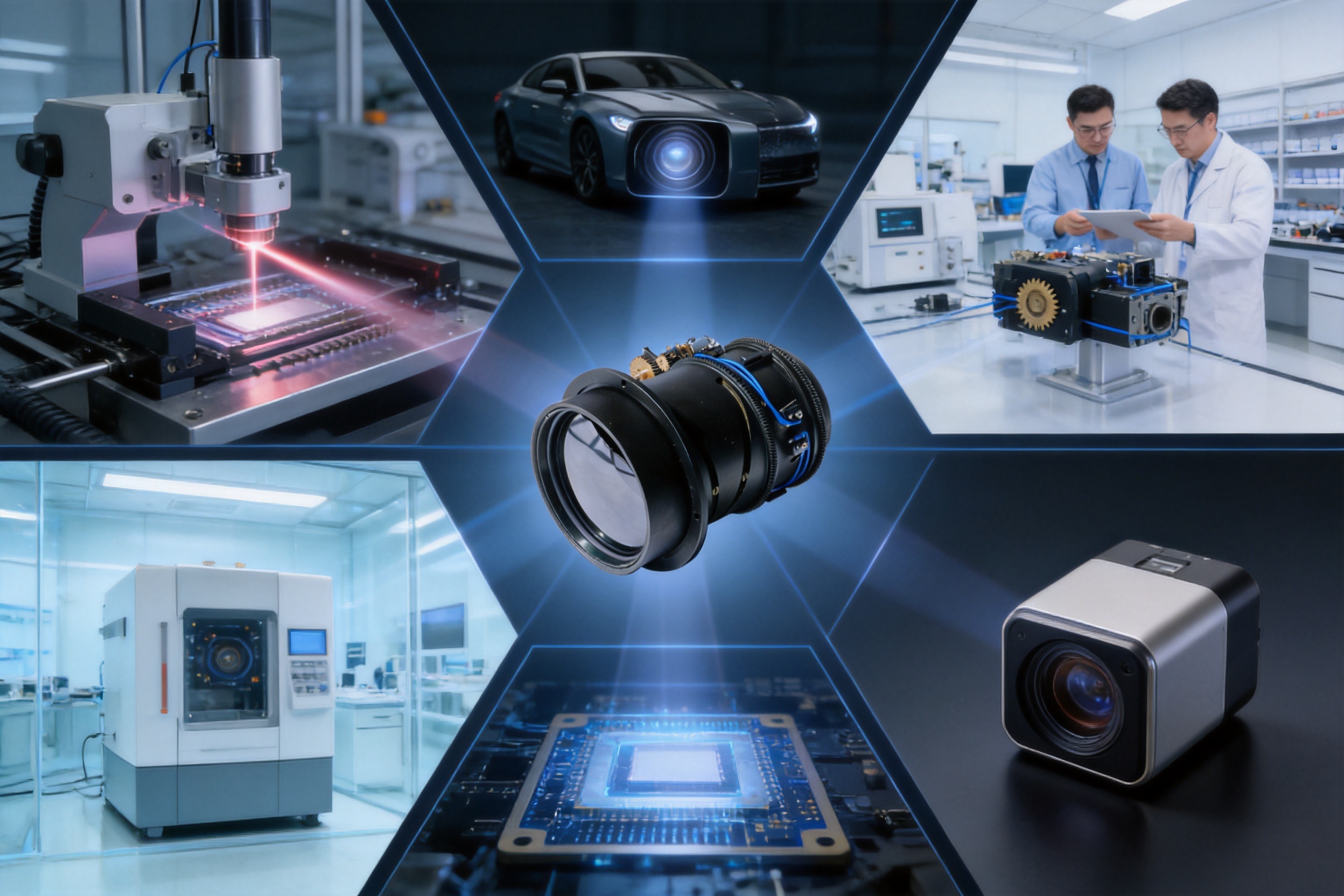
Optical lenses are precision components designed to control the direction, focus, magnification, and distribution of light. They are used in laser systems, automotive cameras, semiconductor equipment, imaging devices, sensing instruments, consumer electronics, and many other applications in which optical performance and dimensional consistency are essential. Although a lens may appear simple in its final form, its performance depends on a complex combination of material selection, optical design, precision machining, polishing, coating, inspection, and process control.
For buyers, engineers, and original equipment manufacturers, choosing an optical lens supplier involves much more than comparing nominal diameter or price. A reliable supplier must be able to maintain optical accuracy across repeated production batches, support different application requirements, manage complex geometries, and provide consistent quality from prototype development to mass production. Changzhou Haolilai Photo-Electricity Scientific and Technical Co., Ltd. is an established manufacturer of precision optical components with experience in laser optics, automotive optics, semiconductor optics, and consumer optics.
This article explains the characteristics of precision optical lenses, the manufacturing strengths that influence their performance, and the reasons a specialized optical component manufacturer can provide advantages over less focused or less integrated competitors.
Understanding the Role of a Precision Optical Lens
An optical lens is a transparent component with one or more curved surfaces that refract light. Depending on its design, a lens can converge light toward a focal point, spread light outward, form an image, correct optical aberrations, or control the beam path within a larger optical assembly. Lenses may be convex, concave, plano-convex, plano-concave, meniscus, aspherical, cylindrical, or specially shaped for a particular optical system.
The basic purpose of a lens is to produce a predictable optical result. In practical applications, this may mean focusing a laser beam onto a target, forming a sharp image for a camera, directing light through a sensing module, correcting distortion in an imaging system, or ensuring that a semiconductor inspection instrument receives a stable and accurate optical signal.
Precision optical lenses must meet both optical and mechanical requirements. Optical requirements may include focal length, refractive power, transmitted wavefront accuracy, surface quality, coating performance, and low scatter. Mechanical requirements may include diameter, center thickness, edge thickness, bevel dimensions, mounting tolerances, and compatibility with the surrounding housing.
A lens that meets only its basic shape specification may still fail in a demanding system. Small errors in curvature, centering, surface finish, or coating uniformity can reduce image contrast, create stray light, increase laser losses, or shift the focal position. For this reason, optical lens production requires carefully managed processes rather than simple cutting and polishing.
Product Characteristics of Precision Optical Lenses
Precision optical lenses can be manufactured in many sizes, shapes, and material types. The appropriate design depends on the wavelength of light, working environment, required optical performance, installation method, and expected service life.
Convex Lenses
Convex lenses are thicker at the center than at the edges and are commonly used to converge light. They may be used as focusing lenses, collimating lenses, condenser lenses, imaging elements, or beam-shaping components. Plano-convex lenses are suitable for many applications in which one surface is flat and the other is curved. Bi-convex lenses are often selected when a symmetrical optical arrangement is beneficial.
Concave Lenses
Concave lenses are thinner at the center and thicker near the edges. They diverge incoming light and are used in beam expansion, optical correction, imaging systems, and specialized laser assemblies. Plano-concave and bi-concave designs can be combined with other lenses to achieve a required focal length or correct optical errors.
Meniscus Lenses
Meniscus lenses have one convex surface and one concave surface. They are frequently used to control spherical aberration and improve the performance of compact optical systems. Their geometry requires careful control because the two curved surfaces interact to produce the intended optical effect.
Aspherical Lenses
Aspherical lenses use a non-spherical surface profile to reduce optical aberrations. They can replace multiple spherical lenses in some optical designs, helping reduce system size, weight, and component count. Their non-standard geometry presents more demanding manufacturing and inspection challenges, making supplier experience particularly important.
Cylindrical and Special-Purpose Lenses
Cylindrical lenses focus light in one direction rather than two. They are used for line generation, beam shaping, laser scanning, machine vision, and image correction. Other specialized lenses may be designed for automotive camera modules, semiconductor inspection systems, laser processing equipment, or compact consumer devices.
| Lens Type | Typical Optical Function | Common Application Areas |
|---|---|---|
| Plano-convex lens | Converging or focusing light | Laser modules, imaging systems, sensors |
| Bi-convex lens | Converging light with a symmetrical profile | Optical instruments, projection, imaging |
| Plano-concave lens | Diverging or expanding a light beam | Beam expansion, optical correction |
| Bi-concave lens | Strong beam divergence | Laser systems and optical assemblies |
| Meniscus lens | Focusing with reduced aberration | Compact imaging and optical correction |
| Aspherical lens | Aberration reduction and compact design | Automotive optics, semiconductor optics, consumer devices |
| Cylindrical lens | One-axis focusing or beam shaping | Laser scanning, line illumination, machine vision |
Key Performance Requirements
The performance of an optical lens is determined by a combination of measurable characteristics. Different applications place different priorities on these characteristics, but a professional supplier should understand how they interact.
Surface Accuracy
Surface accuracy describes how closely the actual lens surface matches the intended optical shape. A deviation from the designed curvature can alter focal length, introduce aberration, and reduce image quality. High-precision polishing and inspection are essential for applications that require accurate imaging or stable laser focusing.
Surface Quality
Surface quality generally concerns visible defects such as scratches, digs, pits, stains, and localized damage. These defects can increase scattering, reduce transmission, or create undesirable artifacts. In laser applications, surface defects may also become sites of localized heating or optical damage when the component is exposed to high energy density.
Centering and Alignment
Centering accuracy describes the relationship between the optical axis and the mechanical reference axis. A lens may have excellent surface quality but still perform poorly if it is decentered. Decentering can cause image displacement, uneven sharpness, beam deviation, and alignment difficulties during assembly.
Focal Length and Optical Power
Focal length determines how strongly a lens converges or diverges light. Maintaining the specified focal length is particularly important when a lens is used in a fixed optical system with limited adjustment capability. Consistent focal length also supports repeatable performance across production batches.
Transmission and Coating Performance
Uncoated optical surfaces reflect a portion of incident light. Anti-reflection coatings can reduce this reflection and improve transmission over a selected wavelength range. Coating requirements depend on the light source, operating wavelength, angle of incidence, environmental conditions, and expected power level. A suitable coating can improve efficiency and reduce unwanted reflections, but it must be deposited and inspected consistently.
Environmental Stability
Lenses used in automotive, industrial, semiconductor, or outdoor environments may experience vibration, thermal cycling, humidity, dust, or chemical exposure. The lens material, coating, edge treatment, and packaging must be selected with these conditions in mind. Environmental stability is not achieved by the optical surface alone; it depends on the entire component design and manufacturing process.
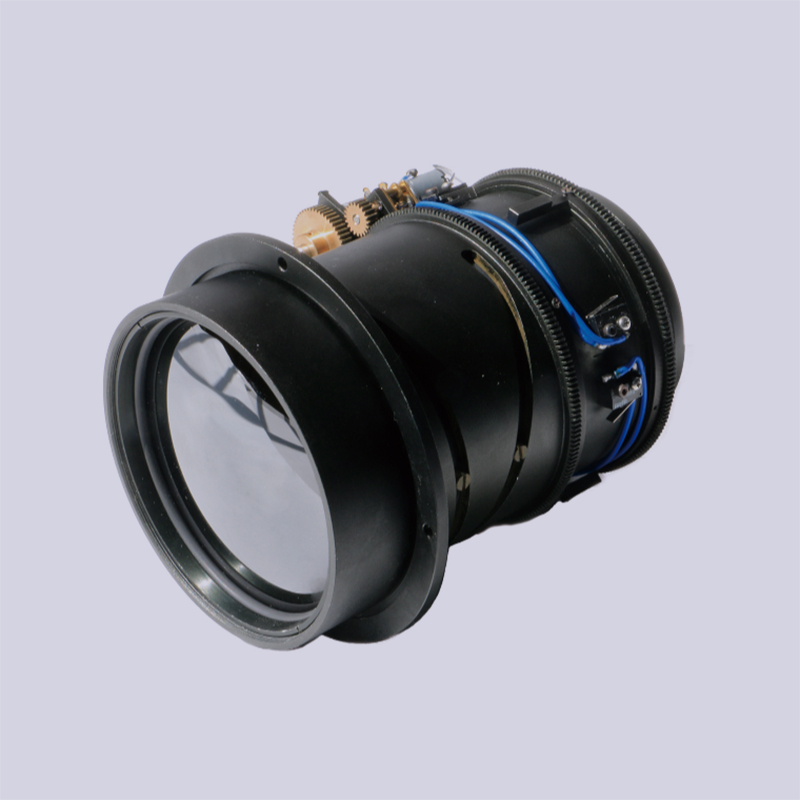
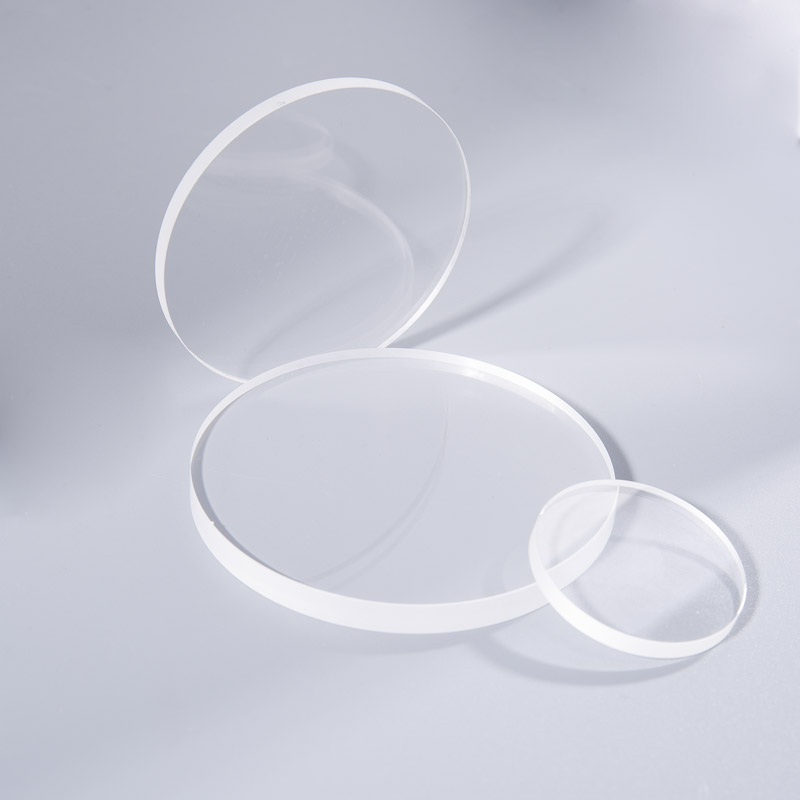
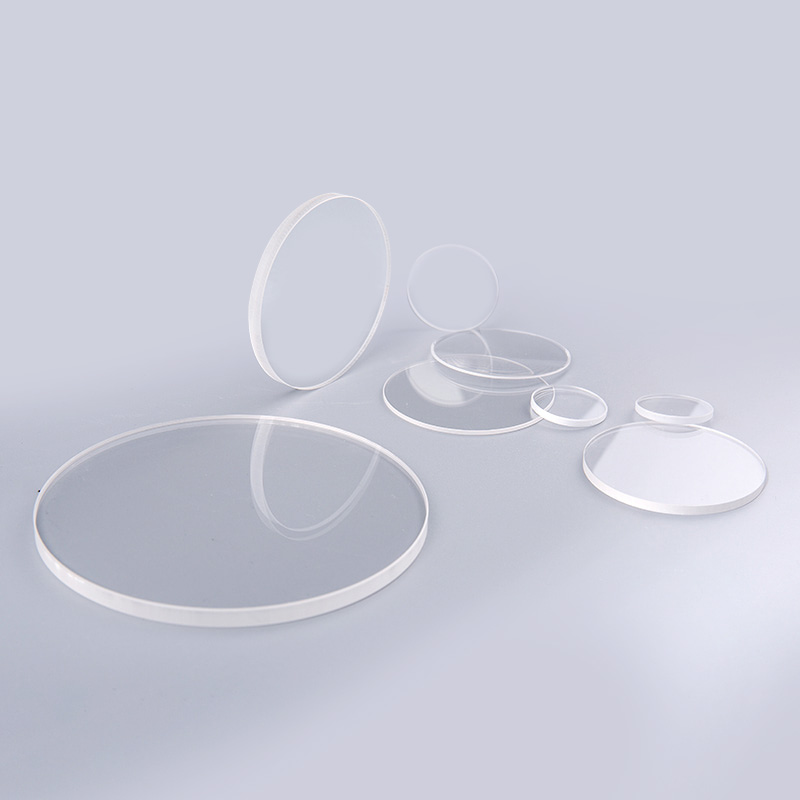
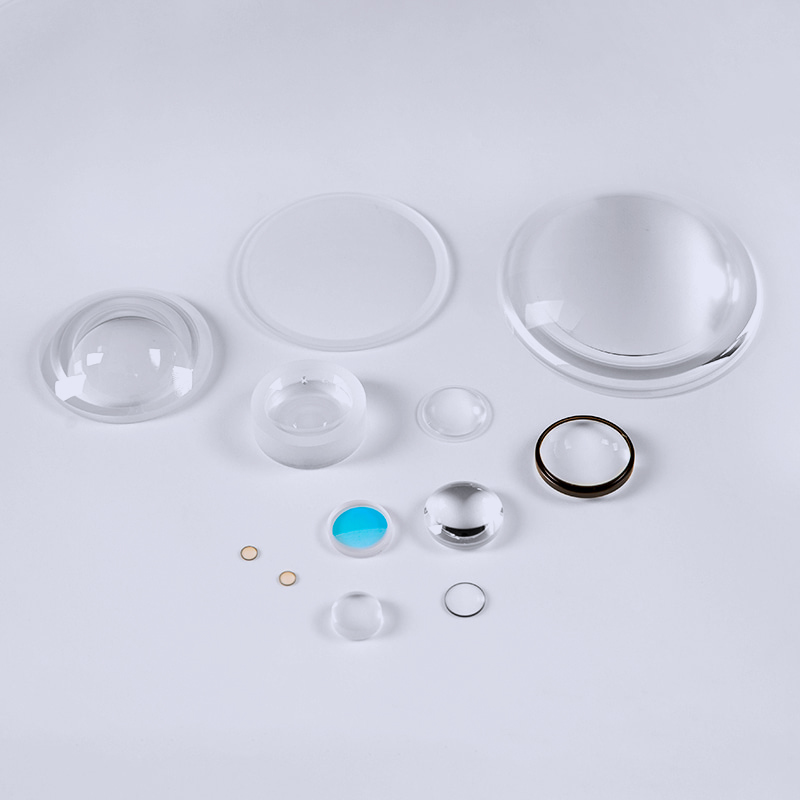
Optical Lens
Manufacturing Process for Optical Lenses
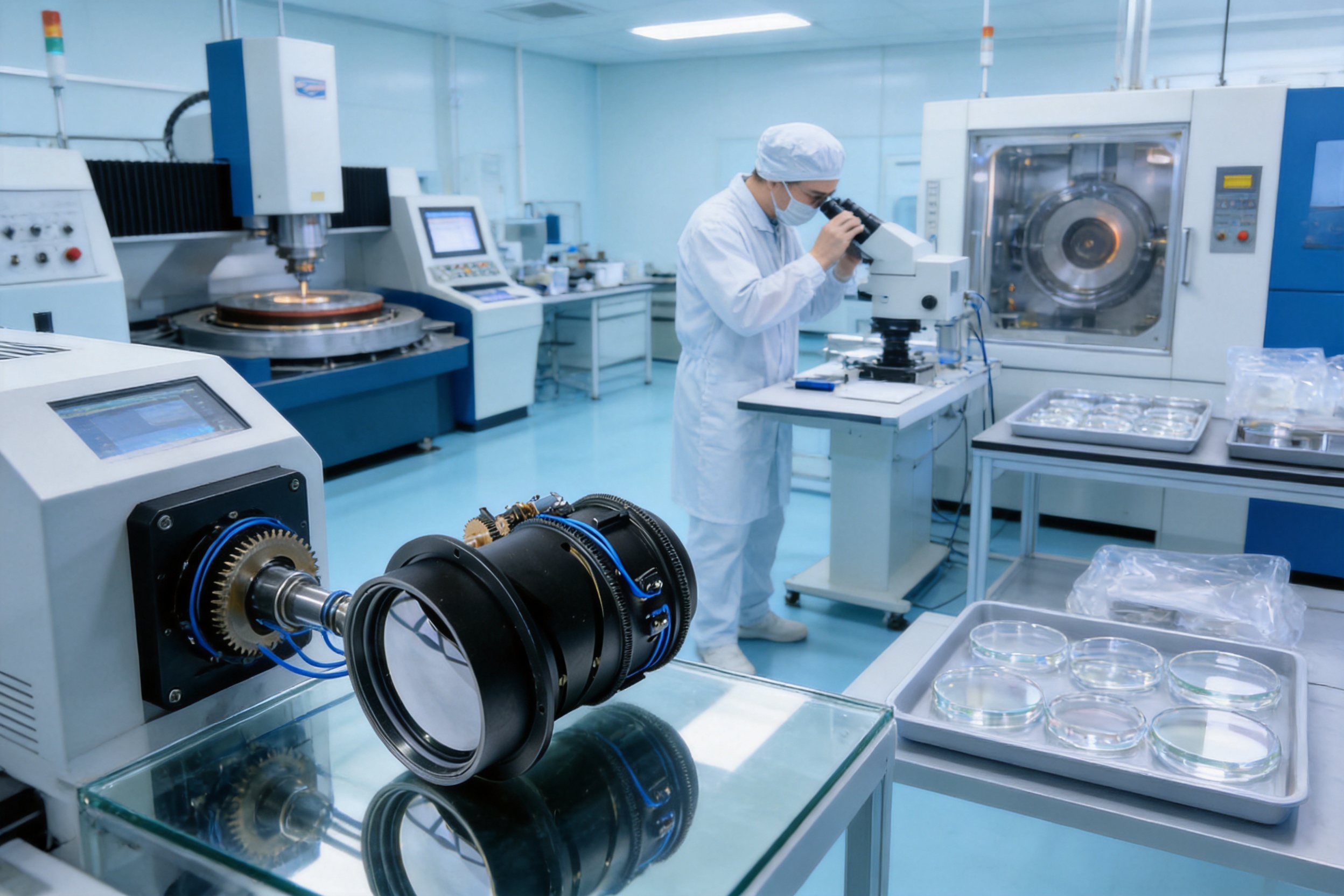
The manufacture of a precision optical lens normally begins with engineering review and continues through material preparation, shaping, grinding, polishing, cleaning, coating, inspection, and packaging. Each stage influences the next. A defect introduced during early processing may become more difficult or costly to correct later, which is why process discipline is essential.
1. Technical Review and Optical Requirement Analysis
Before production begins, the lens specification should be reviewed in relation to the intended application. Important information includes the lens type, diameter, thickness, radius or aspherical profile, wavelength range, clear aperture, surface quality, surface accuracy, centering tolerance, coating requirements, operating temperature, and mounting conditions.
A technically capable supplier can identify potential conflicts within the specification. For example, an extremely small edge thickness may create handling difficulties, while a demanding coating requirement may require a specific substrate material or cleaning approach. Early engineering communication can reduce the risk of redesign and improve production efficiency.
2. Material Selection and Preparation
Optical material selection affects transmission, refractive index, thermal behavior, durability, and compatibility with the intended wavelength. Different optical glasses and other transparent materials are suitable for different spectral ranges and applications. Material consistency is important because variations in composition or internal quality can affect optical performance.
Material preparation may include cutting blanks to an appropriate size, marking, cleaning, and confirming that the material is suitable for the required processing route. The blank must provide sufficient allowance for grinding and polishing while minimizing unnecessary waste.
3. Rough Shaping and Grinding
During rough shaping, the lens blank is brought closer to its required geometry. Grinding removes material and establishes the approximate curvature of each optical surface. This stage must balance removal rate and geometric control. Excessive grinding force may generate subsurface damage, while insufficient removal may leave too much material for later polishing.
Controlled grinding is particularly important for lenses with tight curvature tolerances, thin profiles, or multiple surfaces. A stable process helps maintain consistent geometry from one batch to another and creates a suitable foundation for fine grinding and polishing.
4. Fine Grinding
Fine grinding reduces the roughness and geometric variation left by rough shaping. It prepares the surface for polishing by removing or minimizing subsurface damage. Abrasive selection, processing time, pressure, tool condition, and cleaning all influence the result.
For a high-quality optical lens, fine grinding is not simply a cosmetic step. It contributes to the ability of the subsequent polishing process to achieve the required surface accuracy. A poorly controlled fine-grinding stage can result in extended polishing time, uneven material removal, or residual defects.
5. Precision Polishing
Polishing produces the smooth optical surface required for light transmission and controlled refraction. It removes the microscopic irregularities remaining after grinding and brings the surface closer to the intended optical figure.
The polishing process must be adjusted according to the lens geometry, material, diameter, and performance requirements. Tool condition, polishing medium, pressure, speed, temperature, and process duration must be managed carefully. For curved or special-shaped components, maintaining a stable contact relationship between the tool and the lens is critical.
Precision polishing is one of the areas in which experienced optical manufacturers can distinguish themselves from general-purpose glass processors. The objective is not merely to make the surface appear clear. It is to achieve a controlled optical figure, low scatter, acceptable surface quality, and stable results across the usable aperture.
6. Edge Processing and Beveling
After the optical surfaces have been processed, the outer edge may be ground, beveled, or otherwise finished to meet assembly requirements. Proper edge treatment helps reduce chipping during handling and installation. It also enables the lens to fit securely into a mount or housing.
Edge dimensions must be controlled because an excessive bevel can reduce the clear aperture, while an insufficient bevel may increase the risk of damage. The correct edge profile depends on the lens size, mounting design, and mechanical environment.
7. Cleaning
Cleaning removes particles, polishing residue, oils, and other contaminants from the optical surface. It is especially important before coating and final inspection. Even very small particles can affect coating adhesion, create visible defects, or produce scattering in the finished component.
Cleaning procedures must be compatible with the substrate and any existing coatings. Handling practices are equally important. Clean gloves, suitable packaging materials, controlled work areas, and appropriate protection against fingerprints help preserve the surface after cleaning.
8. Optical Coating
Coatings are applied when the application requires improved transmission, reduced reflection, beam splitting, filtering, or environmental protection. Anti-reflection coatings are common for lenses used in imaging and laser systems, while other coating types may be selected for specialized optical functions.
The coating design must correspond to the operating wavelength and angle range. A coating optimized for one wavelength may not offer the same performance at another wavelength. For multi-wavelength systems, a broadband design may be considered, provided it is compatible with the application and material.
Coating quality depends on surface preparation, chamber cleanliness, deposition control, layer thickness accuracy, and post-coating inspection. A professional manufacturer integrates coating requirements into the full production plan rather than treating coating as an isolated final operation.
9. Dimensional and Optical Inspection
Inspection verifies whether the lens meets its specification. Dimensional checks may include diameter, thickness, radius, edge dimensions, and other mechanical features. Optical checks may include focal length, surface accuracy, centering, transmission, surface quality, and coating performance.
Inspection equipment and methods must be selected according to the required accuracy. Measurement results should be traceable to the relevant production batch and linked to documented acceptance criteria. This supports consistent quality control and helps identify process trends before they become significant problems.
10. Final Handling and Packaging
After inspection, optical lenses must be handled and packaged in a way that prevents scratches, contamination, impact, and moisture-related damage. Packaging design should reflect the lens size, fragility, coating type, transportation conditions, and customer assembly requirements.
Good packaging is part of product quality. A lens that passes inspection but is damaged during shipment does not provide value to the customer. Protective separators, clean containers, labeling, and batch identification contribute to reliable delivery.
Advanced Manufacturing Strengths of a Specialized Supplier
A specialized optical component manufacturer offers advantages that are difficult to obtain from a supplier focused only on basic glass processing or general mechanical production. The main advantage is the ability to connect optical engineering, production technology, quality management, and application knowledge within one organization.
Integrated Technical Capability
Changzhou Haolilai Photo-Electricity Scientific and Technical Co., Ltd. was founded in 1998 and focuses on precision optical components. Its product and technology areas include laser optics, automotive optics, semiconductor optics, and consumer optics. This range indicates experience with different optical challenges, from beam control and laser transmission to compact imaging and automotive sensing.
The company has established the Jiangsu Precision Optical Lens Engineering Technology Center and the Jiangsu Enterprise Technology Research Center. These technical platforms support product development, process improvement, engineering analysis, and the practical conversion of optical requirements into manufacturable components.
Large-Scale Manufacturing Foundation
The company covers approximately 35,000 square meters and employs more than 300 people. A substantial manufacturing base provides room for organized production areas, quality control, engineering functions, material management, and process development. It also supports the ability to serve both development projects and larger production programs.
Scale alone does not guarantee quality, but an established facility and experienced workforce can improve production stability when combined with disciplined process management. For customers, this may reduce dependence on a single individual or a small workshop and provide greater continuity during long-term supply programs.
Quality and Environmental Management
The company has obtained ISO9001:2015 and ISO14001:2015 certifications, as well as IATF16949 certification. ISO9001 is associated with quality management systems, ISO14001 addresses environmental management, and IATF16949 is widely used in the automotive supply chain.
These certifications do not replace product-specific inspection, but they demonstrate that the company has formal systems for documenting processes, managing responsibilities, controlling nonconformities, and supporting continual improvement. IATF16949 is particularly relevant for automotive optical components because automotive customers typically require strong traceability, process discipline, risk management, and consistent production performance.
Automotive Application Experience
Automotive optical components must perform under vibration, temperature variation, humidity, contamination, and long service periods. Camera and sensing systems also require consistent image quality and accurate alignment. Experience in automotive optics helps a manufacturer understand the importance of dimensional stability, repeatability, documentation, and production control.
For buyers developing automotive interior glass structural components, camera-related optics, or other vehicle-mounted optical assemblies, a supplier familiar with automotive quality expectations may offer a more suitable development and production environment than a general optical workshop.
Research and Intellectual Property
The company has obtained invention patents, utility model patents, and Jiangsu High and New Tech Products. It also holds more than 30 certificates and patents according to the supplied company information. These achievements reflect an ongoing investment in technology development and process improvement.
Research capability is valuable in optical manufacturing because customer requirements often involve competing priorities. A lens may need to be compact but highly accurate, lightweight but durable, or economical but suitable for demanding environmental conditions. Engineering development and intellectual property can support the creation of practical solutions rather than relying only on standard catalog designs.
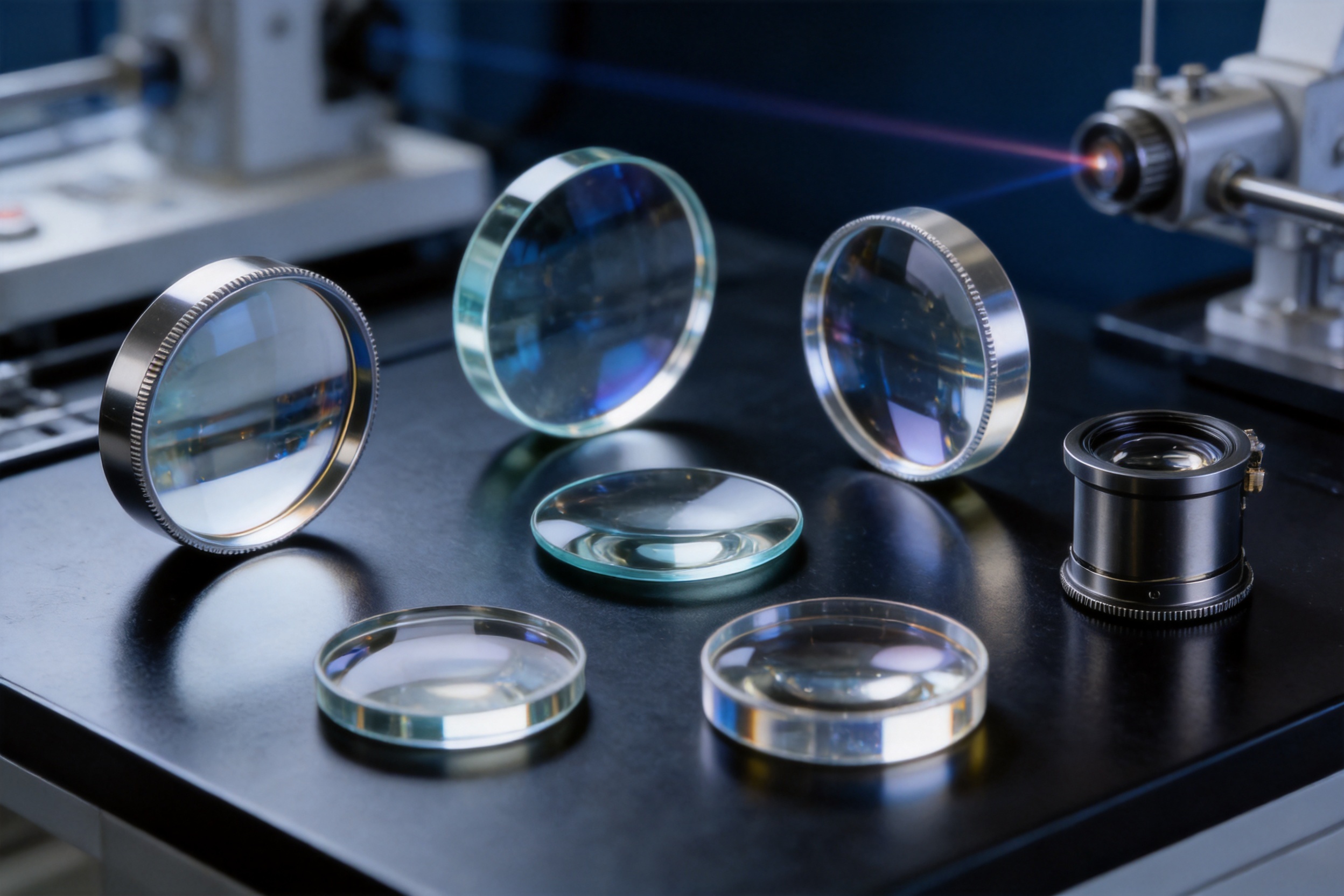
Advantages Compared with Less Specialized Competitors
Better Control of Optical Consistency
A major advantage of a dedicated optical manufacturer is the ability to control the complete optical production chain. When design review, grinding, polishing, coating, inspection, and quality documentation are managed within a coordinated system, process feedback can be faster and more effective.
Less specialized competitors may outsource critical steps or use general-purpose processes that are not optimized for optical accuracy. Outsourcing is not automatically a problem, but it can make responsibility less clear and increase the number of variables affecting the final product. An integrated supplier can usually respond more directly when a customer needs a process adjustment or tighter control.
Greater Product Customization
Optical systems frequently require customized dimensions, surface profiles, coatings, or mounting features. A supplier with engineering capability can review drawings, suggest manufacturability improvements, and develop production methods for non-standard parts.
Customization is especially important for automotive and semiconductor applications, where the lens may need to fit into a compact module or work with a proprietary optical architecture. A standard catalog lens may not provide the required performance or mechanical compatibility.
Stronger Support for High-Volume Programs
Prototype production and mass production require different types of capability. A prototype supplier may produce a small number of acceptable lenses but struggle to maintain consistency during higher-volume manufacturing. A mature manufacturer must control material flow, tooling, inspection frequency, operator training, process parameters, and batch records as production volume increases.
The combination of a long operating history, a large facility, an experienced technical team, and more than 300 employees gives the company a foundation for supporting continuing production programs. The company exports to more than 20 countries, which also indicates experience with international customer requirements and cross-border supply.
Improved Traceability and Quality Communication
In precision optics, customers often need more than a pass-or-fail result. They may require batch identification, inspection records, material information, coating data, and corrective action support. Formal management systems help establish the procedures needed to organize this information.
Clear communication is particularly important when a lens is part of a larger assembly. If a customer experiences image variation, alignment difficulty, or coating-related reflection, the supplier must be able to review the manufacturing history and identify possible causes. Traceability improves the efficiency of this technical response.
Application-Oriented Engineering
A lens should be evaluated in relation to the complete optical system. The correct choice depends on wavelength, numerical aperture, working distance, sensor characteristics, beam size, mounting tolerance, and environmental conditions. A supplier with experience across laser, automotive, semiconductor, and consumer optics can bring broader application awareness to the project.
This application-oriented approach can help customers avoid selecting a lens based only on a single parameter such as focal length or diameter. It also supports more effective design-for-manufacturing discussions before production begins.
Optical Lenses for Laser Applications
Laser systems place strict demands on optical lenses. The lens must transmit the intended wavelength efficiently, maintain beam quality, and withstand the thermal and optical conditions associated with the laser source. Surface defects, contamination, coating imperfections, or incorrect centering can influence beam performance.
Laser lenses may be used for focusing, collimation, beam expansion, beam shaping, scanning, or coupling. The required lens design depends on beam diameter, divergence, wavelength, power density, working distance, and desired spot size.
For a focusing lens, the focal position must be stable and accurately defined. For a collimating lens, the surface geometry and alignment are important because small errors can produce residual divergence. In high-power systems, coating selection and surface quality become especially significant because reflected or absorbed energy can lead to heating.
A manufacturer experienced in laser optics can help match the lens geometry and coating requirements to the application. It can also identify practical risks related to handling, cleanliness, clear aperture, and assembly alignment.
Optical Lenses for Automotive Systems
Automotive optical systems may include cameras, illumination modules, sensing systems, interior monitoring equipment, and driver-assistance technologies. These systems require stable performance despite vibration, temperature variation, humidity, and long operating periods.
Automotive lenses often need to meet strict dimensional and optical tolerances while remaining compatible with compact module designs. The lens may also need to work with a specific image sensor, housing, adhesive, or alignment structure. Consistent center thickness, diameter, centering, and surface quality can affect the final performance of the camera or sensing module.
Supplier qualification is also important in automotive programs. Customers typically evaluate manufacturing processes, quality systems, traceability, change control, risk management, and long-term production capability. The company’s IATF16949 certification and experience in automotive optics provide a relevant foundation for such requirements.
Optical Lenses for Semiconductor Equipment
Semiconductor manufacturing and inspection equipment rely on accurate optical systems to observe, measure, align, or process extremely small features. Optical lenses in these systems must support high resolution, stable imaging, and repeatable performance.
Semiconductor applications may be sensitive to even minor variations in surface accuracy, coating transmission, particulate contamination, or dimensional alignment. The manufacturing environment therefore requires careful cleaning, controlled handling, and reliable inspection. In addition, the lens may be part of a multi-element assembly in which the performance of every component contributes to the total system result.
Experience in semiconductor optics can help a supplier understand the importance of cleanliness, consistency, and process documentation. It also encourages close communication between the optical manufacturer and the equipment developer during qualification and production ramp-up.
Optical Lenses for Consumer Devices
Consumer optical products often place emphasis on compact size, appearance, cost efficiency, and high-volume consistency. Examples include imaging modules, projection devices, sensing products, display-related equipment, and other compact electronic systems.
In these applications, the lens may be small but still require precise geometry and stable optical performance. The supplier must balance manufacturing efficiency with the need to maintain clear images, acceptable distortion, reliable coating performance, and clean cosmetic appearance.
A company with experience serving several optical markets can apply lessons from high-precision industrial products to consumer production. At the same time, it can adapt process planning to support higher volumes and cost-sensitive designs without losing control of critical optical parameters.
How to Select the Right Optical Lens Supplier
When evaluating an optical lens manufacturer, buyers should consider the supplier’s engineering experience, manufacturing scope, quality systems, inspection capability, application knowledge, and ability to provide long-term support.
Review the Technical Specification Process
Ask whether the supplier can review drawings and optical data before quoting. A strong supplier should be able to identify unclear tolerances, recommend practical specifications, and explain how design choices affect cost and manufacturability.
Confirm Material and Coating Capability
Material selection must match the wavelength and environment. Coating capability should be evaluated according to the required spectral range, reflection target, durability, and power level. Customers should also clarify whether the supplier can manage special coating requirements or coordinate them within the overall production process.
Evaluate Quality Certifications and Documentation
Certifications such as ISO9001:2015, ISO14001:2015, and IATF16949 can provide useful evidence of formal management systems. Buyers should also ask about inspection records, batch traceability, change control, nonconforming product handling, and corrective action procedures.
Assess Prototype-to-Production Capability
A supplier should be able to support the project beyond the first samples. Important questions include whether the same process can be scaled, how production consistency will be maintained, what inspection frequency will be used, and how the supplier manages engineering changes.
Consider Communication and International Support
For overseas customers, communication, packaging, documentation, and delivery coordination are important. A supplier that exports to multiple countries is more likely to be familiar with international business processes, although each customer should still confirm the specific commercial and logistics arrangements required for the project.
Quality Management in Optical Lens Production
Quality management begins with clear specifications and continues through every process stage. It is not enough to inspect only the finished product because some process variations are easier to prevent than to detect later.
Incoming material control helps ensure that the optical substrate is suitable for production. In-process inspection can identify problems with curvature, thickness, or surface condition before additional processing is performed. Final inspection confirms the finished lens, while statistical review of production data can reveal gradual process drift.
Operator training is also important. Optical components are sensitive to fingerprints, dust, impact, and improper storage. Personnel must understand how to handle the parts, recognize defects, operate equipment, and follow documented procedures.
Equipment maintenance and calibration support measurement reliability. If inspection equipment is not properly maintained, a manufacturer may receive inaccurate data and make incorrect decisions about product quality. A disciplined calibration program helps ensure that measured results remain meaningful.
For automotive and other regulated or high-reliability markets, risk-based quality methods are valuable. Potential failure modes can be considered during design and process planning, allowing preventive controls to be established before production begins.
Design Considerations for Better Manufacturing Results
Customers can improve project outcomes by considering manufacturability at the design stage. A technically possible lens may not be the most efficient or robust design for production. Early cooperation between the optical designer and manufacturer can identify improvements without compromising system performance.
Clear aperture should be defined carefully. Increasing the clear aperture may improve system flexibility but can also affect material usage, polishing time, and inspection difficulty. Tolerances should be tight enough to achieve the desired optical result but not unnecessarily restrictive, because excessive tolerances can increase cost and reduce production yield.
Edge geometry should be compatible with the mounting method. The lens should have sufficient protection against chipping during handling and assembly. If the component will be bonded, the design should account for the adhesive area and avoid interference with the active optical surface.
Coating requirements should be specified by wavelength, angle of incidence, polarization conditions, and environmental needs whenever possible. A general request for “high transmission” may not provide enough information for an optimized coating design.
Packaging and inspection requirements should also be discussed early. If the customer needs individual protective packaging, special labeling, or specific inspection reports, these requirements should be included in the production plan rather than added after manufacturing is complete.
Why Long-Term Manufacturing Experience Matters
Optical manufacturing involves many practical details that are not always visible in a product drawing. Experienced suppliers understand how material behavior, tool condition, polishing parameters, cleanliness, coating preparation, and packaging affect the final component.
Changzhou Haolilai Photo-Electricity Scientific and Technical Co., Ltd. has operated since 1998 and has developed an experienced technical team. More than two decades of industry involvement can support the accumulation of process knowledge, application understanding, supplier relationships, and customer service experience.
Long-term experience is particularly valuable when a customer encounters a difficult optical problem. The solution may involve changing the lens profile, adjusting a tolerance, selecting another material, improving the coating design, modifying the mounting method, or changing the inspection approach. A supplier with broad experience can evaluate these options more effectively than one limited to a narrow range of standard parts.
Product Advantages at a Glance
| Advantage | Value to Customers |
|---|---|
| Precision optical manufacturing focus | Supports demanding requirements for imaging, laser transmission, sensing, and beam control |
| Application coverage across multiple industries | Provides broader engineering insight for automotive, semiconductor, laser, and consumer projects |
| Established manufacturing facility | Creates a foundation for organized production, engineering support, and volume supply |
| ISO9001:2015 certification | Supports structured quality management and process documentation |
| ISO14001:2015 certification | Demonstrates a formal environmental management framework |
| IATF16949 certification | Relevant to automotive supply chain quality and process expectations |
| Technical research centers | Supports product development, process improvement, and engineering innovation |
| Patents and high-technology products | Reflects investment in technical development and manufacturing know-how |
| International export experience | Supports cooperation with customers in multiple global markets |
Purchasing and Project Cooperation
For a successful optical lens project, customers should provide as much technical information as possible. Useful details include drawings, three-dimensional files, optical prescriptions, material requirements, wavelength range, clear aperture, coating specifications, tolerances, expected quantity, application environment, and required delivery schedule.
If the design is still under development, the customer can provide the intended optical function and system constraints instead of a completed drawing. An experienced manufacturer may then help evaluate suitable lens types and manufacturing approaches.
Sample approval should include both optical and mechanical evaluation. Customers should test the lens in the intended assembly whenever possible, because the final system result depends on alignment, mounting stress, neighboring components, and operating conditions. Feedback from sample testing can be used to refine the production specification before volume manufacturing.
For recurring orders, customers should establish a clear process for engineering changes, material substitutions, coating updates, packaging changes, and inspection revisions. Formal change control helps preserve consistency throughout the product life cycle.
Q&A About Precision Optical Lenses
Q1: What is the main function of an optical lens?
An optical lens controls the path of light through refraction. Depending on its shape and optical design, it can focus, diverge, collimate, magnify, reduce, redirect, or otherwise condition light for imaging, sensing, laser, or illumination applications.
Q2: What information is needed to select a suitable lens?
Important information includes the lens type, diameter, thickness, focal length, wavelength range, clear aperture, surface accuracy, surface quality, centering tolerance, coating requirement, operating temperature, mounting method, and expected quantity. The application and surrounding optical system should also be considered.
Q3: Why is centering accuracy important?
Centering accuracy determines how closely the mechanical axis matches the optical axis. Poor centering can cause beam deviation, image displacement, uneven sharpness, and assembly difficulties. It is especially important when several optical components must be aligned within a compact system.
Q4: Are coated lenses always better than uncoated lenses?
Not always. The correct choice depends on the application. Coatings can reduce reflection and improve transmission for selected wavelengths, but they add process requirements and cost. A coating should be specified when its optical or environmental benefits are needed.
Q5: What is the difference between a spherical and an aspherical lens?
A spherical lens uses surfaces based on a constant-radius spherical profile. An aspherical lens uses a more complex profile designed to reduce specific optical aberrations. Aspherical lenses can improve performance or reduce the number of elements in a system, but they usually require more demanding manufacturing and inspection.
Q6: What makes automotive optical lenses demanding?
Automotive lenses may need to maintain performance under vibration, thermal cycling, humidity, contamination, and long service periods. They must also meet dimensional and optical requirements for compact camera or sensing modules. Stable production processes, traceability, and automotive-oriented quality management are important.
Q7: Can a precision optical lens be customized?
Yes. Lenses can be customized in geometry, size, material, coating, surface specifications, edge treatment, and packaging. Customization should be discussed during the design stage so that optical performance and manufacturability can be considered together.
Q8: Why should a buyer consider a supplier with multiple application areas?
A supplier experienced in laser, automotive, semiconductor, and consumer optics may have broader knowledge of optical performance, environmental requirements, compact assembly, cleanliness, and volume production. This experience can help identify practical solutions for complex or non-standard projects.
Q9: How does ISO9001:2015 benefit an optical lens customer?
ISO9001:2015 supports a structured quality management system. It can help organize documented procedures, responsibilities, inspection activities, corrective actions, and continual improvement. Customers should still evaluate product-specific capabilities, but certification provides useful evidence of formal quality management.
Q10: Why is IATF16949 relevant to automotive optics?
IATF16949 is designed for quality management in the automotive supply chain. It emphasizes process control, risk management, traceability, customer-specific requirements, and continual improvement. These principles are relevant when optical lenses are supplied for automotive camera, sensing, or related systems.
Q11: What should be checked during incoming inspection?
Incoming inspection may include packaging condition, part identification, quantity, visible surface condition, dimensions, coating appearance, and selected optical characteristics. The exact inspection plan should be based on the lens specification and the importance of the component within the customer’s system.
Q12: How should optical lenses be stored?
Lenses should be kept in clean protective packaging in a controlled environment suitable for the substrate and coating. They should be protected from dust, moisture, impact, excessive temperature, and direct contact with skin. Customer-specific storage requirements should be followed when provided.
Q13: What is the value of an optical engineering technology center?
An engineering technology center can support optical design review, process development, prototype evaluation, problem solving, and manufacturing improvement. It helps connect research and production so that new ideas can be converted into practical components.
Q14: How can a customer reduce optical lens costs without reducing quality?
Cost can often be improved by reviewing unnecessary tolerances, optimizing the lens geometry, selecting a practical material, standardizing dimensions where possible, improving batch size, and planning coating and inspection requirements early. Reducing quality-critical specifications without technical review may create system failures, so cost optimization should be engineering-based.
Q15: What is the best way to begin a new optical lens project?
Begin by sharing the application, optical requirements, mechanical drawing, wavelength, annual demand, environmental conditions, and quality expectations. The supplier can then review feasibility, recommend a manufacturing route, prepare samples, and establish a production specification for qualification.
Conclusion
Precision optical lenses are essential components in systems that depend on accurate light control. Their value comes from more than transparency or basic shape. Optical accuracy, surface quality, centering, coating performance, dimensional stability, cleanliness, and long-term consistency all contribute to the result achieved by the finished system.
A specialized manufacturer can provide important advantages over less focused competitors by combining optical engineering, precision processing, quality management, application experience, and production scale. Changzhou Haolilai Photo-Electricity Scientific and Technical Co., Ltd. has operated since 1998, focuses on precision optical components, and serves laser, automotive, semiconductor, and consumer optics markets. Its approximately 35,000-square-meter facility, experienced technical team, more than 300 employees, technical research centers, patents, international export experience, and certifications including ISO9001:2015, ISO14001:2015, and IATF16949 provide a strong foundation for optical lens development and supply.
For customers seeking optical lenses, the most reliable approach is to evaluate the entire manufacturing capability rather than a single product parameter. A supplier that can support design review, material selection, precision shaping, polishing, coating, inspection, documentation, and long-term production is better positioned to deliver consistent value. By working with an experienced optical component manufacturer from the earliest design stage, customers can improve manufacturability, manage quality risks, and develop lenses suited to demanding industrial and commercial applications.
References
1. ISO 9001:2015, Quality Management Systems — Requirements.
2. ISO 14001:2015, Environmental Management Systems — Requirements with Guidance for Use.
3. IATF 16949, Quality Management System Requirements for Automotive Production and Relevant Service Parts Organizations.
4. Optical Society and engineering literature on lens design, optical aberrations, surface accuracy, and imaging performance.
5. Technical literature on precision grinding, polishing, cleaning, coating, and inspection of optical components.
6. General manufacturing guidance for laser optics, automotive optical systems, semiconductor inspection optics, and consumer imaging components.


 苏公网安备32041102000130号