
 Search
 en
en English
 日本語
日本語 русский
 Español
 Deutsch
 中文简体
中文简体Content
- 1 Understanding the Role of an Optical Lens
- 2 Key Performance Characteristics
- 3 Applications of Precision Optical Lenses
- 4 Manufacturing Process for Precision Optical Lenses
- 4.1 1. Technical Review and Optical Requirement Confirmation
- 4.2 2. Material Selection and Preparation
- 4.3 3. Blocking and Centering Preparation
- 4.4 4. Rough Grinding
- 4.5 5. Fine Grinding
- 4.6 6. Polishing
- 4.7 7. Edge Processing and Chamfering
- 4.8 8. Cleaning
- 4.9 9. Coating
- 4.10 10. Inspection and Verification
- 4.11 11. Packaging and Delivery
- 5 Quality Management and Manufacturing Strengths
- 6 Advantages Over Less Specialized Competitors
- 7 How to Select the Right Optical Lens Supplier
- 8 Design Considerations for Better Lens Performance
- 9 Importance of Continuous Improvement
- 10 Why Precision Matters in the Finished System
- 11 Frequently Asked Questions
- 11.1 What is an optical lens used for?
- 11.2 What types of optical lenses can be manufactured?
- 11.3 Why is surface quality important?
- 11.4 What is the difference between surface accuracy and surface quality?
- 11.5 Do all optical lenses require an anti-reflection coating?
- 11.6 Can optical lenses be customized?
- 11.7 What should be provided when requesting a quotation?
- 11.8 Why is centering important?
- 11.9 What certifications does the manufacturer have?
- 11.10 Does the company support international customers?
- 11.11 How does a precision supplier differ from a general glass processor?
- 11.12 How should optical lenses be handled after delivery?
- 12 Conclusion
- 13 References
- 14 Product: Optical Lens
Optical lenses are among the most important components in modern optical systems. They control the direction, focus, magnification, transmission, and distribution of light, making them essential in cameras, laser equipment, automotive vision systems, semiconductor tools, medical instruments, industrial inspection devices, and consumer electronics. Although a lens may appear to be a relatively small part of a finished product, its quality can determine the accuracy, reliability, service life, and commercial value of the entire optical assembly.
As optical systems become more compact and demanding, lens manufacturers must achieve increasingly precise control over geometry, surface quality, material performance, coating behavior, and cleanliness. Customers are no longer looking only for a transparent glass element. They require optical components that can perform consistently under temperature changes, vibration, humidity, illumination variation, and continuous operation. They also expect stable production, dependable quality control, responsive engineering support, and delivery capability for both prototypes and volume orders.
Precision optical lenses manufactured by Changzhou Haolilai Photo-Electricity Scientific and Technical Co., Ltd. are designed for these demanding requirements. Founded in 1998, the company has developed into a professional manufacturer of precision optical components, serving laser optics, automotive optics, semiconductor optics, and consumer optics. Its manufacturing base covers approximately 35,000 square meters, and its technical capabilities are supported by experienced personnel, engineering centers, certifications, patents, and an established export business.
This article examines the structure and function of optical lenses, the factors that distinguish high-quality components from ordinary alternatives, and the manufacturing strengths that support reliable optical performance. It also explains how a specialized supplier can provide advantages over less experienced competitors through process control, engineering depth, application knowledge, and quality management.
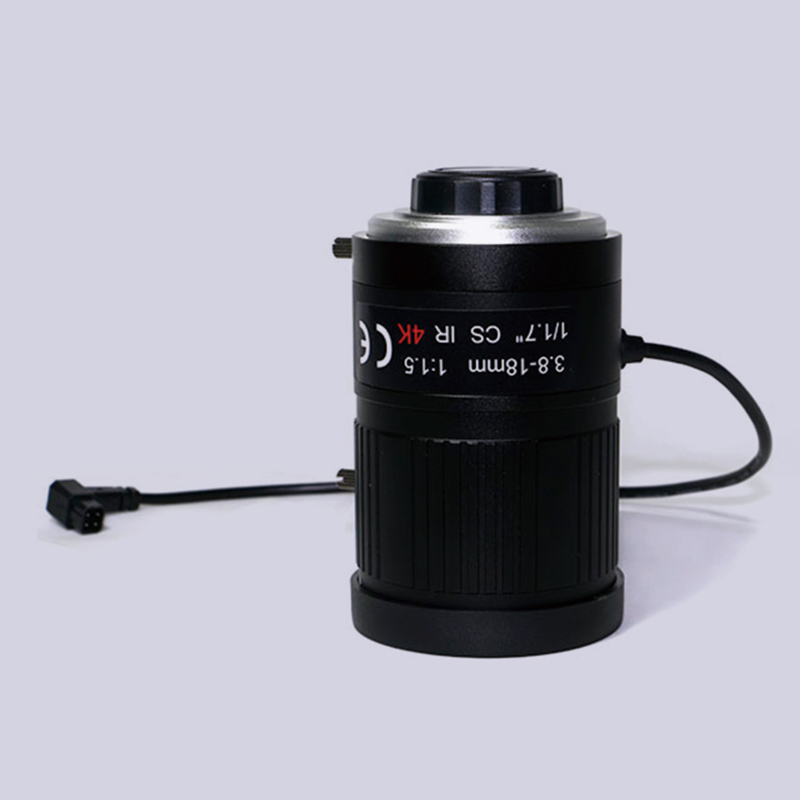
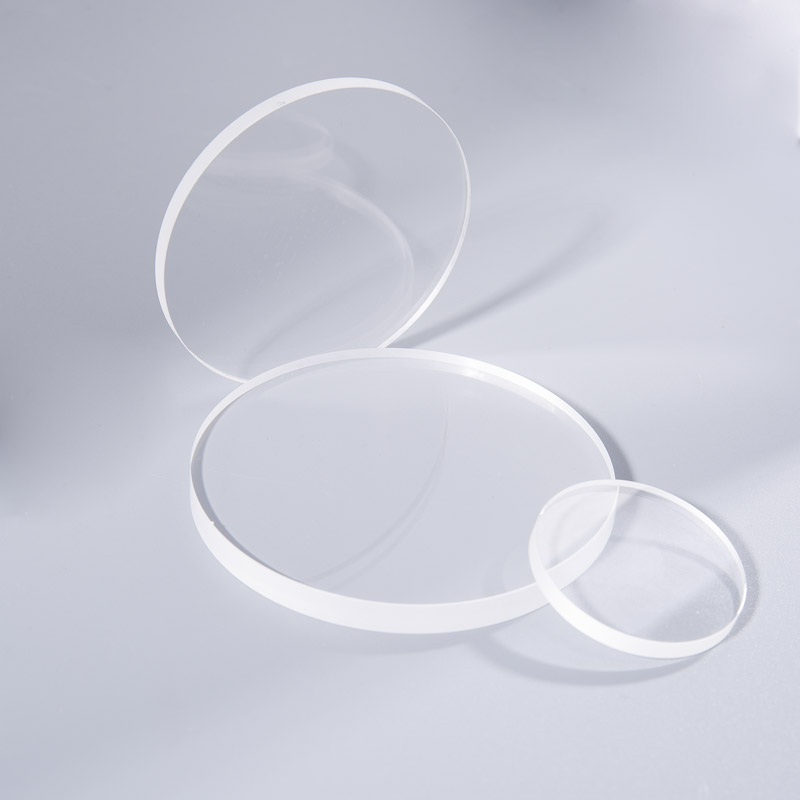
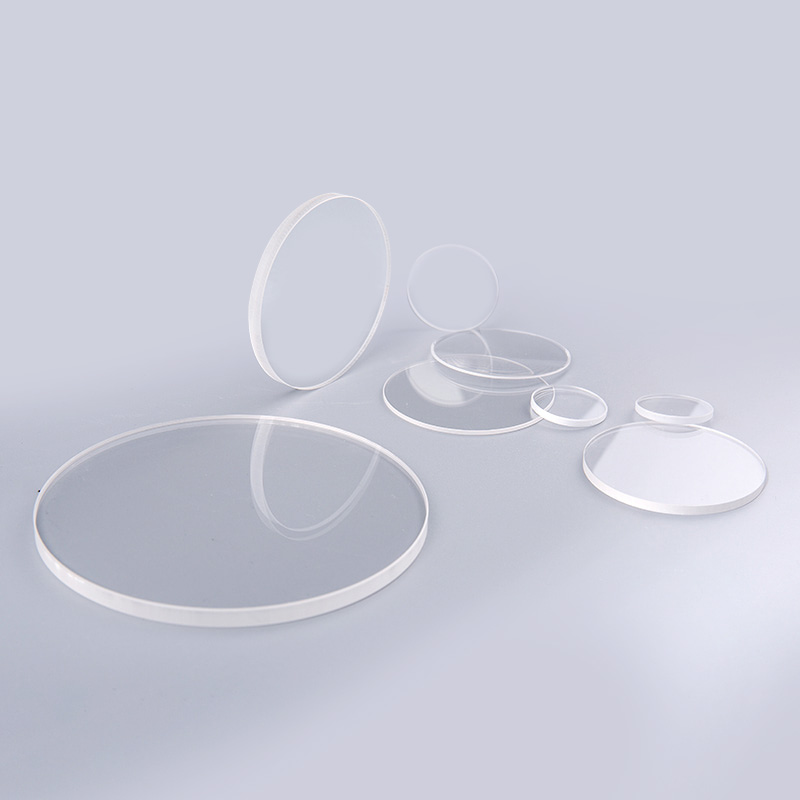
Optical Lens
Understanding the Role of an Optical Lens
An optical lens is a precisely shaped transparent component that changes the path of light through refraction. Depending on its design, a lens may converge light toward a focal point, diverge light away from a focal point, form an image, expand or reduce a beam, or correct optical aberrations. It may be used alone or together with mirrors, prisms, filters, windows, sensors, illumination sources, and mechanical mounts.
The basic performance of a lens is determined by several interacting properties. These include the refractive index of the material, the radius of curvature of each optical surface, the center thickness, the clear aperture, the wedge angle, the surface quality, and the alignment of the optical axis. Even a small deviation in one of these features can affect focusing accuracy, image sharpness, laser beam quality, or system calibration.
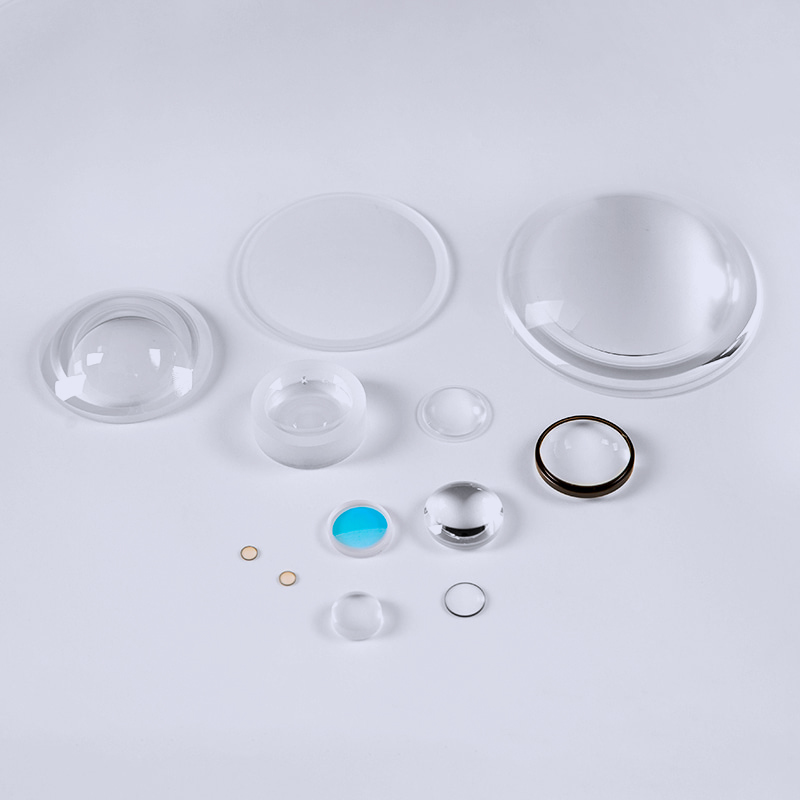
Optical lenses are available in many forms. Plano-convex lenses have one flat surface and one convex surface and are often used for focusing or collimation. Bi-convex lenses have two outward-curved surfaces and are suitable for converging light in many general optical arrangements. Plano-concave and bi-concave lenses are commonly used for beam expansion and divergence. Meniscus lenses can reduce certain aberrations while maintaining a compact optical path. Cylindrical lenses focus light in one direction and are useful in line generation, scanning, and laser shaping.
More advanced systems may require aspheric lenses, achromatic lens elements, compound optical groups, or application-specific geometries. These products demand close control of both optical design and manufacturing execution. A lens can meet a nominal dimensional requirement while still failing to deliver the expected optical result if the surface form, coating, material homogeneity, or assembly interface is not properly controlled.
Key Performance Characteristics
Optical Power and Focal Length
Focal length describes the distance between the principal plane of a lens and the focal point under defined conditions. It influences magnification, field of view, working distance, and beam convergence. In imaging systems, a deviation in focal length can cause focus errors or changes in image scale. In laser systems, it can affect spot size, energy density, and working distance.
Precision manufacturing is important because focal length is affected by more than the nominal curvature of the lens. Refractive index variation, center thickness, temperature, wavelength, and surface form all contribute to the final optical behavior. A reliable manufacturer therefore considers the complete optical specification rather than treating each dimension as an isolated value.
Surface Accuracy
Surface accuracy refers to how closely an optical surface conforms to its specified shape. For spherical lenses, this is commonly related to the deviation from the intended spherical profile. For aspheric or specially shaped lenses, the evaluation may involve a more complex comparison with the design reference.
High surface accuracy supports improved image quality and more predictable beam control. Poor surface form may introduce wavefront distortion, reduce resolution, create unwanted scattering, or produce nonuniform illumination. In high-power laser applications, surface errors can also affect local energy distribution and increase the risk of optical damage.
Surface Roughness and Cosmetic Quality
Surface roughness describes fine-scale irregularities that remain after polishing. A smooth surface reduces scattering and supports higher transmission. Cosmetic defects such as scratches, digs, pits, stains, edge chips, and polishing marks can also influence performance, especially in systems that operate with high intensity or require high contrast.
Cosmetic inspection is not simply an appearance check. It is part of optical reliability management. Defects may become locations for contamination, coating weakness, localized heating, or mechanical failure. Consistent cleaning and inspection procedures are therefore essential throughout the production process.
Transmission and Coating Compatibility
The transmission of an optical lens depends on the base material, wavelength range, surface reflection, absorption, coating design, and environmental conditions. Uncoated optical surfaces reflect a portion of incident light. Anti-reflection coatings can significantly improve transmission and reduce stray reflections, but the coating must be matched to the intended wavelength band and application environment.
Different applications may require coatings for visible light, near-infrared radiation, ultraviolet radiation, laser wavelengths, or broad spectral ranges. Coating durability is also important. A lens used inside an automotive camera, semiconductor instrument, or industrial machine may encounter vibration, thermal cycling, humidity, cleaning processes, or repeated operation. The coating must therefore be considered together with the substrate and the complete system design.
Dimensional and Mechanical Compatibility
An optical lens must fit accurately within its mount or optical assembly. Diameter, thickness, edge geometry, chamfers, clear aperture, and positional tolerances all influence installation. If the lens is difficult to mount or requires excessive adjustment, the cost of the complete system can increase even when the optical element itself is inexpensive.
Dimensional consistency is especially valuable in volume production. A stable lens geometry allows automated or semi-automated assembly, reduces alignment time, and limits the need for selective matching. This is one reason why process capability and production repeatability can provide a major advantage over suppliers that rely heavily on manual correction.
Applications of Precision Optical Lenses
Laser Optics
Laser systems require optical elements capable of controlling concentrated, coherent light. Lenses may be used for collimation, beam focusing, beam expansion, coupling, shaping, and scanning. The required performance depends on wavelength, power level, pulse duration, beam diameter, numerical aperture, and operating environment.
In laser processing equipment, lens quality influences cutting precision, welding stability, marking clarity, and energy distribution. In measurement systems, it affects the accuracy of beam positioning and signal collection. In communication or laboratory systems, it may influence coupling efficiency and overall optical loss.
A lens for laser use must be manufactured with careful attention to surface quality, cleanliness, absorption, coating performance, and damage resistance. Small particles or polishing defects can become critical when exposed to high optical power. A professional component manufacturer can help customers select appropriate materials, surface treatments, and inspection requirements according to the laser application.
Automotive Optical Systems
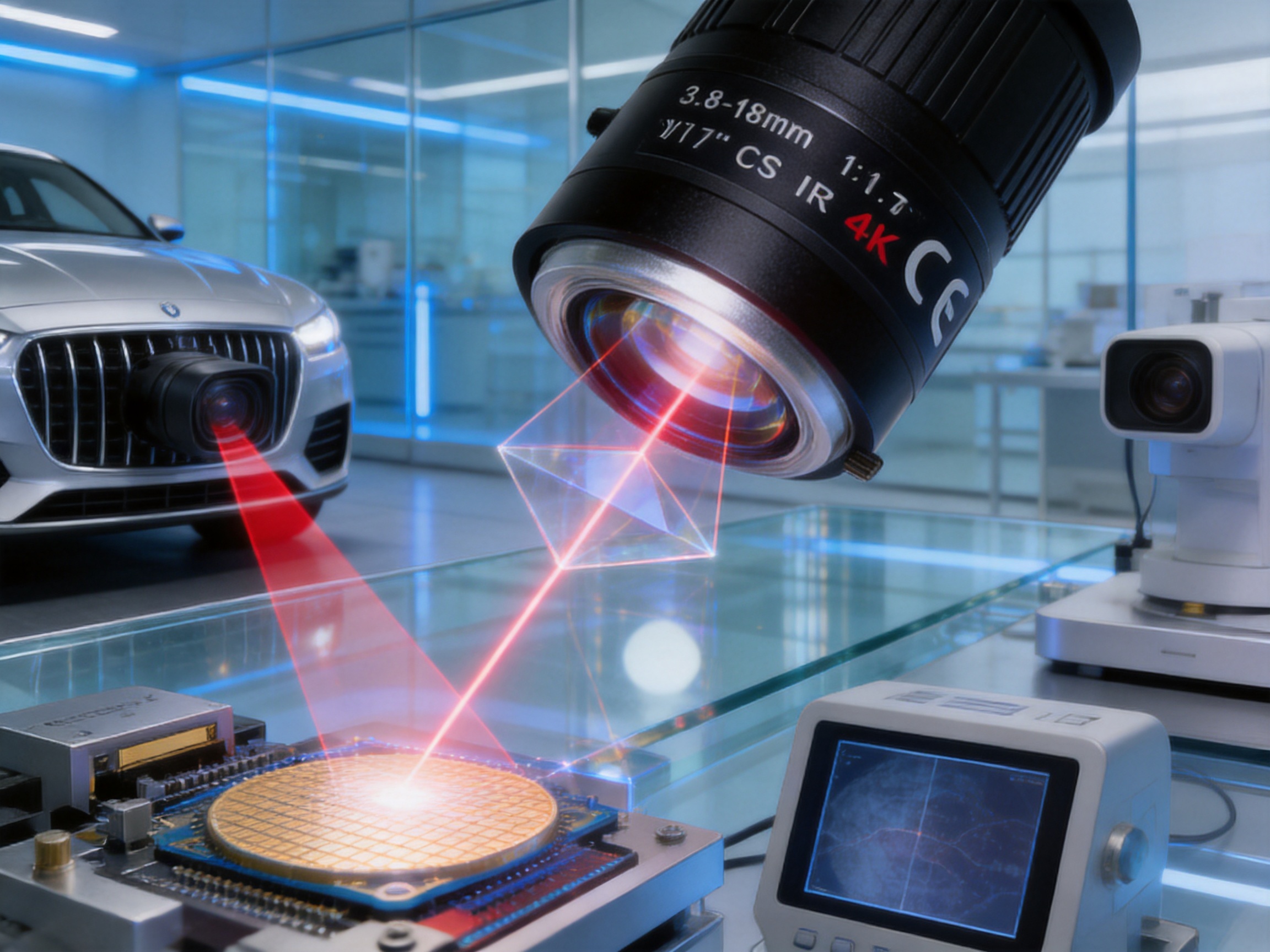
Automotive optics have become increasingly important as vehicles adopt cameras, driver-assistance functions, interior monitoring, night vision, sensing systems, and other intelligent features. Automotive optical components must perform consistently across a wide temperature range and under vibration, dust, humidity, and changing illumination conditions.
Automotive lenses may be used in imaging modules, sensing units, headlamp systems, interior monitoring equipment, and specialized optical assemblies. The lens must provide stable image quality while meeting strict dimensional, environmental, and reliability requirements. Production traceability, process consistency, and long-term supply capability are also important because automotive programs often operate for many years.
Changzhou Haolilai Photo-Electricity Scientific and Technical Co., Ltd. has obtained IATF16949 certification, which is relevant to quality management in the automotive supply chain. This certification does not replace product-specific qualification, but it demonstrates that the company has established a management framework suitable for demanding automotive manufacturing environments.
Semiconductor and Industrial Equipment
Semiconductor manufacturing and inspection equipment depend on precise control of light. Optical lenses may be used in alignment systems, inspection modules, imaging units, laser processing stations, metrology instruments, and wafer-related equipment. These environments often require high cleanliness, dimensional stability, low defect rates, and dependable repeatability.
In industrial inspection, a lens directly affects resolution, contrast, depth of field, and measurement accuracy. An optical component with inconsistent curvature or poor centering may create distortion that is incorrectly interpreted as a product defect. Stable lens production helps equipment manufacturers maintain calibration and improve the consistency of automated inspection.
Consumer Optics
Consumer optical products include imaging devices, projection equipment, sensing modules, smart devices, visual instruments, and compact electronic systems. These products typically require a combination of small size, competitive cost, reliable performance, and attractive production efficiency.
Consumer applications may involve high production volumes and short product development cycles. A supplier must therefore be able to support rapid engineering communication, controlled process changes, and consistent production at scale. Precision does not necessarily mean excessive complexity; rather, it means producing the required optical result consistently within an efficient manufacturing process.
Medical and Measurement Instruments
Although each medical or measurement application has its own qualification requirements, optical lenses are widely used in imaging, illumination, analysis, and observation equipment. These products may demand high transmission, low distortion, strict cleanliness, stable alignment, and dependable operation over long service periods.
For instruments that produce quantitative results, optical stability is particularly important. Variations in lens performance can influence measurement repeatability, calibration intervals, and user confidence. A precision supplier can contribute by controlling material selection, polishing quality, inspection records, and product traceability.
Manufacturing Process for Precision Optical Lenses
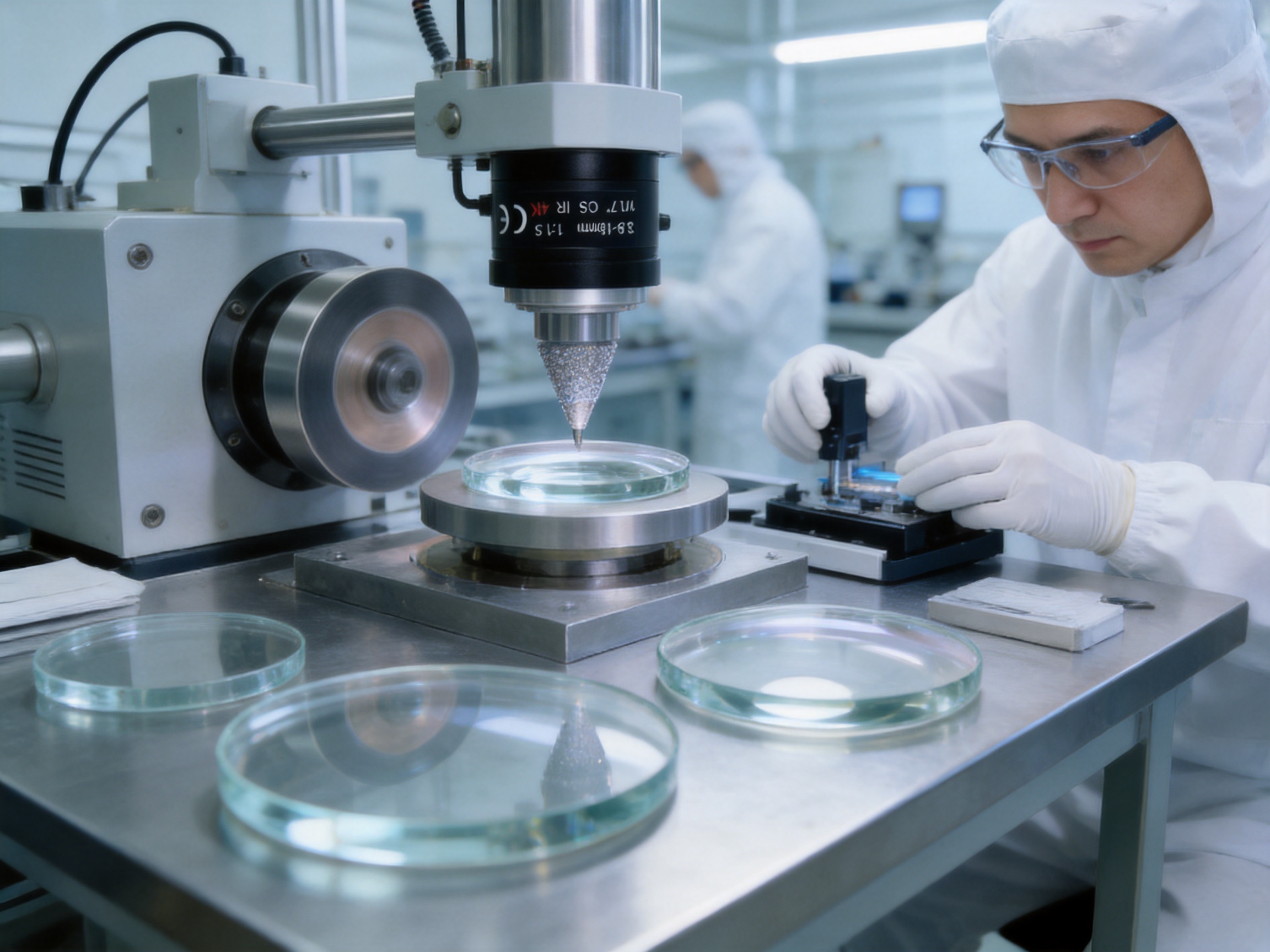
The manufacture of a precision optical lens is a sequence of interconnected operations. Each stage influences the next, and quality cannot be created only at the final inspection point. A strong process begins with clear technical requirements and continues through material preparation, shaping, grinding, polishing, cleaning, coating, inspection, packaging, and continuous improvement.
1. Technical Review and Optical Requirement Confirmation
Before production begins, the supplier reviews the drawing, optical data, material requirements, tolerances, coating specifications, packaging expectations, and intended application. This stage is essential because optical drawings may contain requirements that are not obvious from a simple dimensional view.
Important questions may include the working wavelength, focal length tolerance, clear aperture, surface accuracy, centering, wedge, edge treatment, environmental conditions, and inspection standard. For volume production, the review may also address process capability, measurement methods, sampling plans, and change-control expectations.
A manufacturer with an experienced technical team can identify potential conflicts early. For example, an extremely tight edge tolerance may not improve optical performance but could make assembly more difficult. Conversely, a seemingly moderate centering tolerance may be critical in a high-numerical-aperture system. Engineering review helps align the component specification with the actual system objective.
2. Material Selection and Preparation
Optical materials are selected according to wavelength range, refractive index, dispersion, thermal behavior, chemical resistance, mechanical requirements, and cost. Glass types and other optical materials may differ significantly in polishing behavior and environmental performance.
Material preparation may include cutting blanks, inspecting the raw material, checking dimensions, and preparing reference surfaces. Internal inclusions, bubbles, striae, or other material irregularities can affect transmission and image quality. Proper incoming inspection helps prevent unsuitable material from entering later production stages.
3. Blocking and Centering Preparation
During optical processing, a lens blank may be mounted or blocked to support stable grinding and polishing. The blocking arrangement must maintain the correct relationship between the part and the processing equipment. Improper blocking can lead to thickness variation, wedge, deformation, or centering errors.
For precision products, the relationship between the mechanical outside diameter and the optical axis is especially important. A lens may have acceptable surface curvature but still perform poorly if the optical axis is not properly centered relative to the mounting reference.
4. Rough Grinding
Rough grinding removes material and establishes the approximate radius and shape of the optical surface. The purpose is to achieve efficient material removal while maintaining enough control for later fine grinding and polishing.
At this stage, process parameters must be selected according to the material, part size, curvature, and production volume. Excessive mechanical stress can create subsurface damage that is difficult to remove later. Insufficient removal may leave the part outside the correction range of subsequent operations.
5. Fine Grinding
Fine grinding refines the surface geometry and reduces the damage created during rough processing. It brings the lens closer to the final form and prepares the surface for polishing.
The quality of fine grinding has a direct influence on polishing efficiency. A uniform and controlled fine-ground surface allows the polishing operation to achieve the required smoothness and accuracy more consistently. Poorly controlled grinding may lead to extended polishing time, localized defects, or shape instability.
6. Polishing
Polishing is one of the most critical operations in optical manufacturing. It removes the remaining fine-scale damage and produces a transparent, smooth surface with the required form accuracy. Polishing conditions include tool characteristics, polishing media, pressure, speed, temperature, part support, and process duration.
The challenge is to remove material uniformly without introducing edge roll, zonal errors, astigmatism, or other form deviations. Optical polishing is therefore both a scientific and an experiential process. Manufacturing data, equipment capability, operator skill, and process discipline all contribute to the final result.
For complex or high-precision components, process monitoring and intermediate inspection are important. Measuring the part before it reaches the final stage can prevent unnecessary processing and allow corrective action while the component remains within an adjustable range.
7. Edge Processing and Chamfering
After optical surfaces are completed, the lens edge may be ground, beveled, chamfered, or otherwise finished according to the drawing. Edge treatment improves handling safety, reduces the risk of chipping, and supports proper mounting.
Edge dimensions must be controlled carefully because an oversized chamfer can reduce the clear aperture, while an insufficient edge treatment may create handling or assembly problems. The edge must also remain clean and free from damage that could spread into the optical area.
8. Cleaning
Cleaning removes polishing residues, particles, oils, fingerprints, and other contaminants. It is a vital stage before coating, inspection, and packaging. Even a high-quality optical surface can fail to meet performance expectations if it is contaminated during handling.
Cleaning procedures should be compatible with the material and any applied coating. Controlled handling, suitable protective equipment, appropriate packaging materials, and clean working areas all help reduce the risk of recontamination.
9. Coating
Coating technology is selected according to the intended wavelength, angle of incidence, polarization requirements, transmission target, reflection limit, durability expectations, and operating environment. Anti-reflection coatings are common, but other treatments may be required for special optical functions or environmental protection.
Coating quality depends on substrate preparation, chamber conditions, layer design, deposition control, adhesion, and post-coating inspection. The coating should be evaluated as part of the finished optical component rather than as an isolated feature.
10. Inspection and Verification
Inspection confirms whether the finished lens meets the agreed requirements. Typical evaluation areas may include dimensions, radius, center thickness, surface accuracy, surface quality, centering, wedge, transmission, coating appearance, and cleanliness.
The exact inspection method depends on the product specification. A professional manufacturer uses appropriate measuring equipment, calibrated procedures, trained personnel, and documented records. Inspection data can also support process improvement by revealing trends before they become major quality problems.
11. Packaging and Delivery
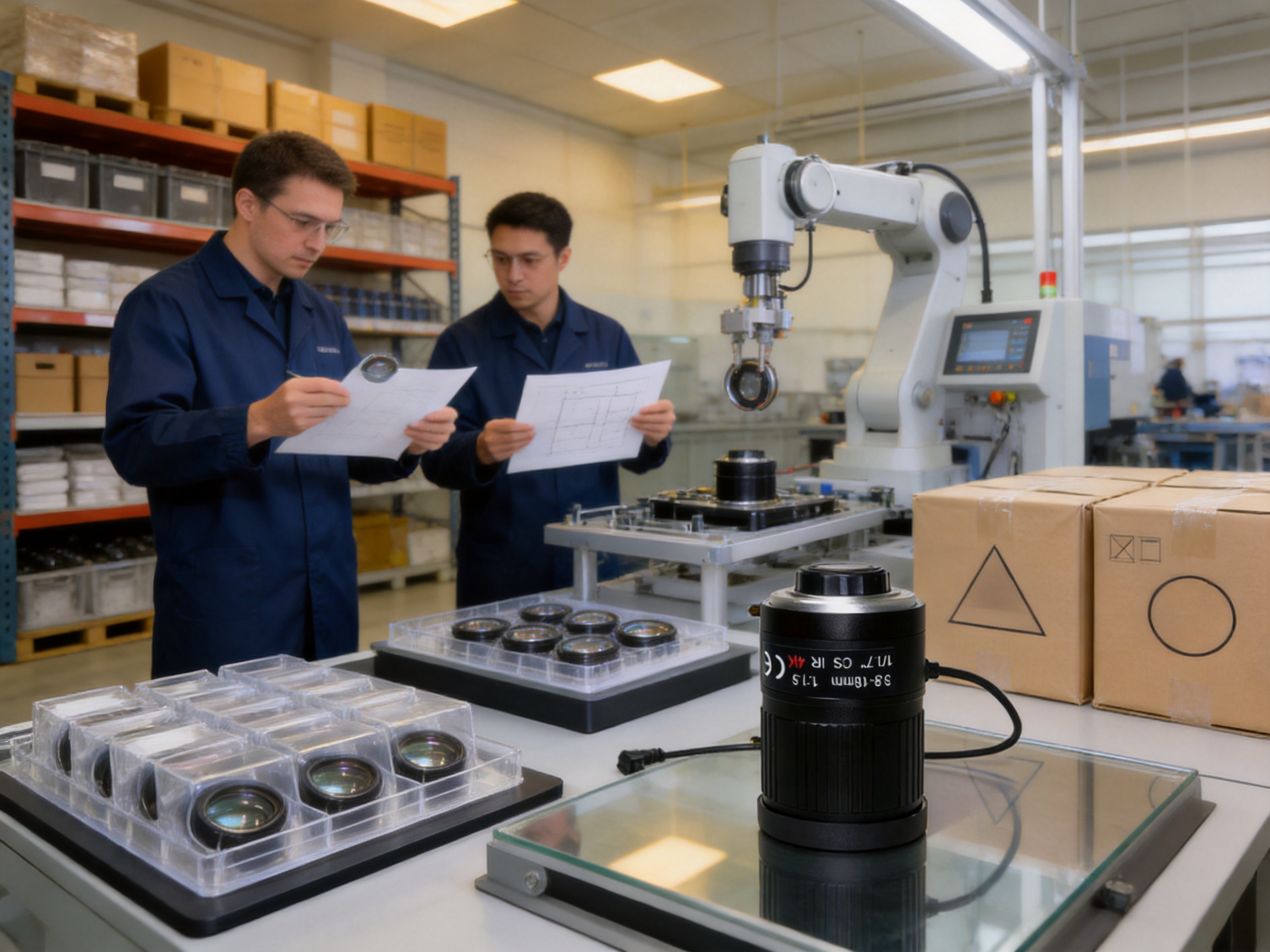
Optical lenses require packaging that protects the surface, edge, coating, and alignment reference during storage and transport. Packaging may include individual protective materials, separated compartments, moisture control, dust protection, and clearly identified batch information.
Good packaging is part of product quality. A lens that leaves the factory in excellent condition can still be damaged by vibration, abrasion, or contamination during delivery if the packaging is not appropriate for its shape and sensitivity.
Quality Management and Manufacturing Strengths
Changzhou Haolilai Photo-Electricity Scientific and Technical Co., Ltd. has operated in the precision optical component field since 1998. More than two decades of focused experience provide a foundation for understanding optical materials, production risks, customer qualification requirements, and the practical challenges of maintaining consistency across different product categories.
The company covers approximately 35,000 square meters and has more than 300 employees. This scale supports the organization of engineering, production, quality, and customer service functions while maintaining a specialized focus on optical components. The company exports to more than 20 countries, indicating experience with international communication, documentation, packaging, and supply coordination.
HLL has obtained ISO9001:2015 and ISO14001:2015 certifications, as well as IATF16949 certification. ISO9001 provides a framework for quality management and controlled processes. ISO14001 addresses environmental management. IATF16949 is associated with quality management expectations in the automotive industry. Together, these certifications demonstrate attention to structured management, process responsibility, and continuous improvement.
The company has also established the Jiangsu Precision Optical Lens Engineering Technology Center and the Jiangsu Enterprise Technology Research Center. These engineering resources support product development, process optimization, technical problem solving, and the introduction of new optical component capabilities.
As a High-Tech enterprise in Jiangsu Province, HLL has obtained invention patents, utility model patents, and Jiangsu High and New Tech Products. Intellectual property and technical development are valuable in optical manufacturing because many performance improvements depend on better process design, tooling, inspection, automation, and material handling rather than on the lens shape alone.
Advantages Over Less Specialized Competitors
Application-Focused Technical Support
One important advantage of a specialized optical manufacturer is the ability to connect component specifications with application requirements. A general glass processor may be able to produce a transparent shaped part, but an experienced optical supplier understands how curvature, centering, surface form, coating, and cleanliness influence the final system.
This application-focused approach can help customers avoid over-specification and under-specification. Over-specification may increase cost without improving performance, while under-specification may lead to image errors, laser instability, or premature failure. Technical review helps establish a balanced specification that is realistic to manufacture and appropriate for the intended use.
Experience Across Multiple Optical Markets
HLL focuses on laser optics, automotive optics, semiconductor optics, and consumer optics. These sectors have different priorities. Laser optics emphasize wavefront quality, transmission, and damage resistance. Automotive optics require environmental stability and supply-chain discipline. Semiconductor optics demand precision and cleanliness. Consumer optics emphasize compactness, repeatability, and cost efficiency.
Experience across these markets can create useful manufacturing knowledge. A process developed for one application may provide insight into another, while the company’s broad product exposure helps its technical team understand different customer expectations and qualification procedures.
Integrated Engineering and Production Capabilities
Optical quality is most reliable when engineering decisions and production execution are closely connected. A company with internal technical centers and experienced manufacturing personnel can evaluate design-for-manufacturing issues before mass production. It can also respond more efficiently when a customer requests a tolerance adjustment, coating change, material substitution, or packaging modification.
Integrated capabilities may shorten communication cycles and reduce the risk of technical information being lost between separate organizations. This is especially useful for customized lenses, where drawings, samples, inspection reports, and production approvals must remain consistent.
Stable Process Management
Precision lenses require repeatable operations rather than occasional successful results. A stable process manages equipment condition, tooling, working materials, inspection frequency, operator training, and documented procedures. It also uses corrective and preventive action when an abnormal trend is identified.
Formal quality systems support this kind of consistency. They encourage clear responsibilities, controlled documents, traceability, internal audits, and continual improvement. For customers, the benefit is lower variation between batches and a reduced risk of unexpected changes during long-term supply.
Support for Custom Products
Many optical systems use customized components rather than standard catalog lenses. Customization may involve diameter, focal length, curvature, material, coating, edge profile, tolerances, or packaging. A supplier with engineering and production experience can help transform a concept or drawing into a manufacturable product.
Custom optical components may be developed through sample production, dimensional verification, optical testing, process adjustment, and customer approval. Once the design is confirmed, the supplier can establish a repeatable production route for larger quantities.
International Supply Experience
Exporting optical components to more than 20 countries requires attention to communication, documentation, product identification, packaging, and delivery planning. International customers often require clear inspection reports, consistent terminology, controlled revisions, and reliable response to quality questions.
Experience with global customers can make cooperation more efficient, particularly when projects involve multiple time zones, technical reviews, approval samples, and recurring orders. A supplier’s ability to maintain clear communication is an important complement to its manufacturing capability.
How to Select the Right Optical Lens Supplier
When evaluating an optical lens manufacturer, buyers should consider more than unit price. The most appropriate supplier is one that can meet optical, mechanical, environmental, commercial, and delivery requirements over the complete life of the project.
| Evaluation Area | Important Questions | Why It Matters |
|---|---|---|
| Technical capability | Can the supplier manufacture the required geometry, tolerance, material, and coating? | Determines whether the component can meet system performance requirements. |
| Process control | Are grinding, polishing, cleaning, coating, and inspection procedures documented and repeatable? | Reduces batch-to-batch variation and unexpected quality problems. |
| Quality certification | Does the manufacturer maintain recognized quality and environmental management systems? | Provides evidence of structured management and controlled operations. |
| Application experience | Has the supplier served relevant fields such as laser, automotive, semiconductor, or consumer optics? | Improves technical communication and application-specific problem solving. |
| Customization support | Can the supplier assist with drawings, prototypes, samples, and design-for-manufacturing reviews? | Helps convert special requirements into practical production solutions. |
| Inspection capability | Can the supplier provide appropriate dimensional, surface, optical, and coating verification? | Confirms that delivered products meet agreed specifications. |
| Supply reliability | Can the company support both development quantities and ongoing production? | Reduces the risk of supply interruptions during product commercialization. |
| Communication | Are engineering changes, quality concerns, and delivery plans handled clearly? | Supports efficient cooperation throughout the project lifecycle. |
Buyers should also request samples when appropriate. A sample evaluation can reveal whether the lens integrates correctly with the customer’s optical system, whether the coating performs as expected, and whether mounting or cleaning procedures are suitable. Sample approval should be supported by clear documentation so that the approved characteristics are maintained during production.
Design Considerations for Better Lens Performance
Define the Operating Wavelength
The wavelength or wavelength range should be defined at the beginning of the project. A lens optimized for visible light may not provide the same transmission or coating performance in the ultraviolet or infrared range. Material selection and coating design must be based on the actual operating spectrum.
Consider Temperature and Environment
Temperature can influence refractive index, dimensions, focal length, coating behavior, and mounting stress. Automotive and industrial products may experience larger temperature changes than laboratory instruments. Humidity, dust, vibration, chemical exposure, and cleaning procedures should also be considered during material and coating selection.
Balance Optical and Mechanical Tolerances
Not every tolerance contributes equally to system performance. For some lenses, centering may be more critical than outer diameter. For others, surface accuracy or thickness may dominate. A balanced tolerance analysis can achieve the required optical performance without adding unnecessary manufacturing cost.
Plan for Assembly
The lens should be designed with its mounting and alignment process in mind. Edge chamfers, reference surfaces, diameter tolerances, and orientation marks may simplify assembly. A component that is easy to locate and secure can reduce labor, prevent damage, and improve the repeatability of the finished optical module.
Specify Inspection Requirements Clearly
Drawings and purchase documents should identify the inspection standards, measurement conditions, acceptance criteria, and reporting expectations. Terms such as surface quality, clear aperture, centering, and coating durability should be defined in a way that is understood by both supplier and customer.
Importance of Continuous Improvement
Optical manufacturing is not static. New applications require smaller components, higher numerical apertures, broader spectral performance, greater laser power, more durable coatings, and tighter environmental reliability. Manufacturers must continually improve equipment, tooling, process knowledge, inspection methods, and personnel capability.
HLL’s engineering technology centers, patents, technical team, and high-tech enterprise status provide a foundation for ongoing development. Continuous improvement may involve optimizing polishing methods, improving process stability, reducing material waste, enhancing cleanliness, developing more efficient inspection procedures, or creating new component designs.
Environmental responsibility is also becoming more significant in precision manufacturing. ISO14001 certification reflects the importance of managing environmental aspects in a structured way. Efficient resource use, waste reduction, controlled chemical handling, and responsible production practices can benefit both the manufacturer and its customers.
Why Precision Matters in the Finished System
The performance of an optical lens is rarely evaluated in isolation. It is part of a larger optical path that may include several lenses, filters, mirrors, sensors, illumination sources, and mechanical components. Errors from individual components can accumulate. A small deviation in one lens may be acceptable by itself but become important when combined with other tolerances.
High-quality lenses help improve system resolution, focusing consistency, transmission efficiency, measurement accuracy, and operating stability. They can also reduce the need for field adjustment and compensate for fewer defects elsewhere in the assembly. In production, consistent lenses simplify calibration and reduce rejection rates.
For manufacturers of complete optical devices, choosing a capable lens supplier is therefore a strategic decision. The supplier’s quality affects not only the optical output but also assembly time, warranty exposure, customer satisfaction, and the ability to scale production.
Frequently Asked Questions
What is an optical lens used for?
An optical lens is used to focus, diverge, collimate, magnify, reduce, redirect, or otherwise control light. Typical applications include cameras, laser equipment, automotive sensing, semiconductor tools, industrial inspection, medical instruments, measurement systems, and consumer electronics.
What types of optical lenses can be manufactured?
Common types include plano-convex, bi-convex, plano-concave, bi-concave, meniscus, cylindrical, aspheric, and customized spherical lenses. The appropriate type depends on the optical design, wavelength, focal length, aperture, image requirements, and mechanical interface.
Why is surface quality important?
Surface quality affects light scattering, transmission, image contrast, and laser durability. Scratches, digs, pits, and polishing defects may reduce optical performance or create damage risks in high-intensity applications.
What is the difference between surface accuracy and surface quality?
Surface accuracy describes how closely the lens surface matches its intended geometric form. Surface quality generally refers to fine defects and cosmetic conditions such as scratches, digs, pits, and polishing marks. Both are important, but they describe different aspects of the optical surface.
Do all optical lenses require an anti-reflection coating?
No. The need for a coating depends on the wavelength, transmission target, reflection limits, system design, and operating environment. Some applications can use uncoated lenses, while others require specialized single-band, broadband, ultraviolet, infrared, or laser coatings.
Can optical lenses be customized?
Yes. Optical lenses can be customized in material, diameter, thickness, curvature, focal length, clear aperture, edge treatment, coating, tolerance, and packaging. A technical review is recommended to confirm that the requested specifications are practical for the intended application.
What should be provided when requesting a quotation?
Useful information includes a technical drawing, lens type, material, dimensions, focal length, wavelength, coating requirements, surface accuracy, surface quality, centering, clear aperture, quantity, packaging expectations, and application environment. Providing complete information helps the manufacturer offer a more accurate solution.
Why is centering important?
Centering describes the alignment between the optical axis and the mechanical reference of the lens. Poor centering can cause image decentering, beam deviation, distortion, or alignment difficulty, particularly in systems with tight optical tolerances.
What certifications does the manufacturer have?
Changzhou Haolilai Photo-Electricity Scientific and Technical Co., Ltd. has obtained ISO9001:2015, ISO14001:2015, and IATF16949 certifications. These certifications relate to quality management, environmental management, and automotive quality management, respectively.
Does the company support international customers?
The company exports to more than 20 countries and has experience serving international markets. Customers can contact the company for technical discussions, product requirements, quotations, and supply arrangements.
How does a precision supplier differ from a general glass processor?
A precision optical supplier combines material knowledge, optical design understanding, controlled grinding and polishing, coating capability, specialized inspection, cleanliness management, and application support. A general glass processor may not provide the same level of control over optical performance or long-term repeatability.
How should optical lenses be handled after delivery?
Lenses should be handled in a clean environment with suitable gloves or finger cots. Optical surfaces should not be touched directly, and components should remain in protective packaging until installation. Cleaning should follow an approved method compatible with the lens material and coating.
Conclusion
Precision optical lenses are essential to the performance of many advanced products and systems. Their value depends on much more than transparency or basic shape. Focal length, surface form, surface quality, centering, transmission, coating, cleanliness, mechanical compatibility, and environmental stability must all be controlled as part of an integrated manufacturing process.
Changzhou Haolilai Photo-Electricity Scientific and Technical Co., Ltd. brings more than 20 years of experience to the production of precision optical components. Its approximately 35,000-square-meter facility, workforce of more than 300 employees, technical centers, certifications, patents, and international customer experience provide a strong foundation for optical lens manufacturing.
The company’s focus on laser optics, automotive optics, semiconductor optics, and consumer optics enables it to address different performance and production requirements. Its quality management systems support repeatability, while its engineering capabilities support customized development and process improvement. These strengths can provide customers with advantages over less specialized competitors, including more effective technical communication, better production consistency, improved application support, and stronger long-term supply confidence.
For customers seeking optical lenses, the best purchasing decision is based on total performance rather than price alone. A capable manufacturer should be able to understand the application, review the design, control the manufacturing process, verify the finished component, and support stable delivery. When these factors are combined, the optical lens becomes not merely a purchased part but a dependable foundation for the performance of the entire optical system.
References
1. ISO 9001:2015, Quality Management Systems—Requirements.
2. ISO 14001:2015, Environmental Management Systems—Requirements with Guidance for Use.
3. IATF 16949, Quality Management System Requirements for Automotive Production and Relevant Service Parts Organizations.
4. International Organization for Standardization, Geometrical Product Specifications and Related Dimensional Measurement Principles.
5. Optical Society and engineering reference materials concerning geometric optics, lens design, refraction, aberration control, and optical testing.
6. Technical literature on optical glass properties, precision grinding, polishing, coating technology, and optical component inspection.
7. Company information supplied for Changzhou Haolilai Photo-Electricity Scientific and Technical Co., Ltd., including product categories, certifications, technical centers, patents, manufacturing area, workforce, and application fields.


 苏公网安备32041102000130号