
 Search
 en
en English
 日本語
日本語 русский
 Español
 Deutsch
 中文简体
中文简体Content
- 1 Understanding the Role of an Optical Lens
- 2 Product Positioning: Precision Optical Lens
- 3 Key Advantages of High-Quality Optical Lenses
- 4 Materials Used in Optical Lens Manufacturing
- 5 Manufacturing Process of Precision Optical Lenses
- 5.1 1. Optical Design Review and Technical Evaluation
- 5.2 2. Material Preparation and Cutting
- 5.3 3. Curve Generation and Grinding
- 5.4 4. Fine Grinding and Pre-Polishing
- 5.5 5. Precision Polishing
- 5.6 6. Centering and Edge Processing
- 5.7 7. Cleaning and Surface Preparation
- 5.8 8. Coating Application
- 5.9 9. Inspection and Metrology
- 5.10 10. Packaging and Delivery
- 6 Technical Parameters Commonly Considered for Optical Lenses
- 7 Applications of Precision Optical Lenses
- 8 Advantages Over General Optical Lens Suppliers
- 9 How Precision Manufacturing Improves System-Level Value
- 10 Design Considerations for Selecting an Optical Lens
- 11 Quality Control: The Foundation of Optical Reliability
- 12 Environmental and Sustainability Considerations
- 13 Why Customers Choose a Precision Optical Lens Partner
- 14 Comparing Precision Optical Lenses with Standard Commodity Lenses
- 15 Customization Workflow for Optical Lens Projects
- 16 Q&A: Common Questions About Precision Optical Lenses
- 16.1 Q1: What is the main function of an optical lens?
- 16.2 Q2: Why is surface quality important for optical lenses?
- 16.3 Q3: How does coating improve lens performance?
- 16.4 Q4: What makes a precision optical lens different from a standard lens?
- 16.5 Q5: Which industries use precision optical lenses?
- 16.6 Q6: Why is centration important?
- 16.7 Q7: Can optical lenses be customized?
- 16.8 Q8: Why is IATF16949 certification relevant for automotive optical lenses?
- 16.9 Q9: What information should be provided when requesting an optical lens quotation?
- 16.10 Q10: How does a good optical lens reduce total system cost?
- 17 Conclusion
- 18 References
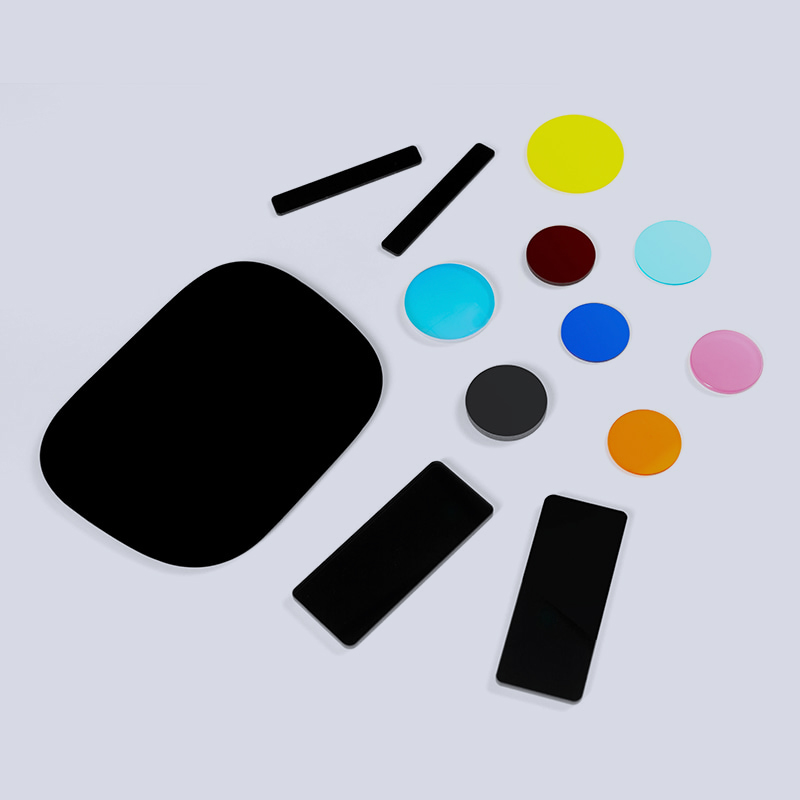
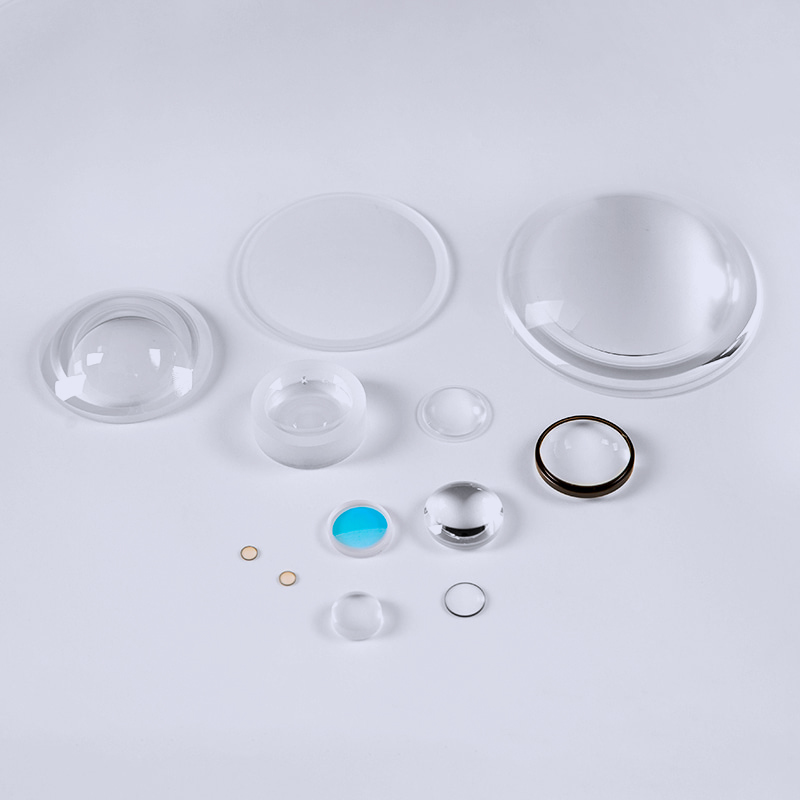
- 19 Product: Optical Lens
Optical lenses are among the most important precision components in modern photonics. From laser processing and machine vision to automotive sensing, semiconductor inspection, medical instruments, consumer electronics, and scientific imaging, a lens determines how light is collected, transmitted, focused, expanded, corrected, or shaped. A well-designed optical lens is not simply a transparent part with a curved surface; it is a carefully engineered component that combines optical design, material science, ultra-precision machining, coating technology, metrology, and strict quality management.
As demand increases for smaller devices, higher imaging resolution, better laser stability, improved environmental durability, and more consistent optical performance, the quality of optical lenses has become a decisive factor in the performance of complete optical systems. A lens with excellent surface quality, controlled curvature, accurate centering, low wavefront distortion, reliable coating, and stable mechanical dimensions can reduce system error, improve product life, and simplify downstream assembly. By contrast, an ordinary lens with unstable specifications may cause image blur, signal loss, ghost reflections, laser hot spots, focus drift, and increased maintenance costs.
Changzhou Haolilai Photo-Electricity Scientific and Technical Co., Ltd. focuses on the development and production of precision optical components, including optical lenses for laser optics, automotive optics, semiconductor optics, consumer optics, and other demanding applications. Founded in 1998 and located in Changzhou, Jiangsu, China, the company has built extensive capabilities in optical processing, inspection, coating coordination, engineering development, and quality assurance. With certifications such as ISO9001:2015, ISO14001:2015, and IATF16949, as well as a technical team supported by provincial engineering and research centers, the company is positioned to supply optical lenses that meet the requirements of both custom projects and volume manufacturing.
Understanding the Role of an Optical Lens
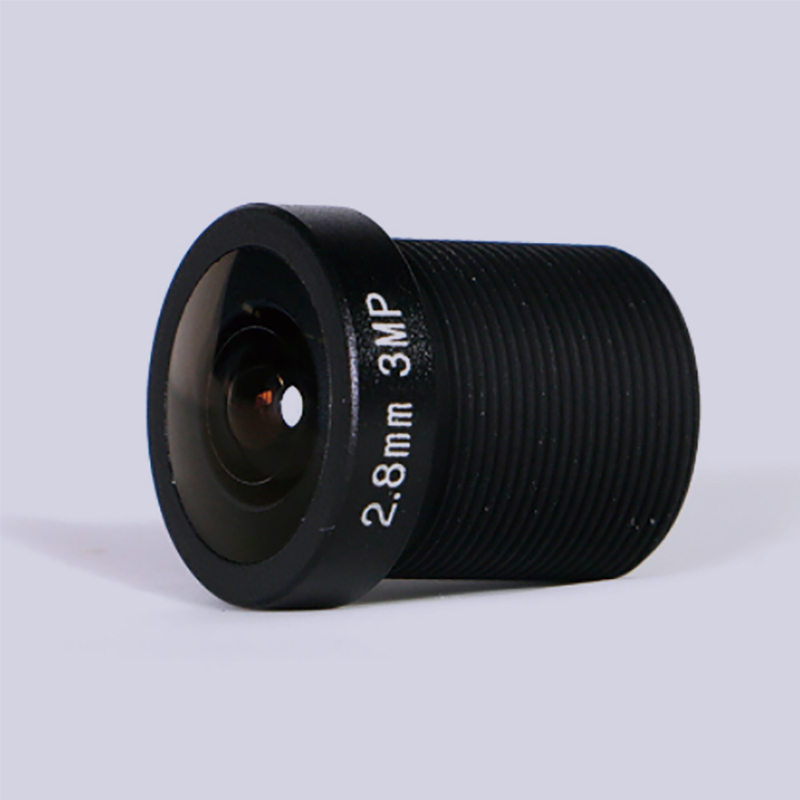
An optical lens works by refracting light through one or more curved surfaces. Depending on its shape, material, coating, and system placement, it may converge light, diverge light, correct aberrations, magnify an image, collimate a beam, couple light into a fiber, or form an image on a sensor. The same basic principle can be adapted into many lens types, including plano-convex lenses, biconvex lenses, plano-concave lenses, biconcave lenses, meniscus lenses, aspheric lenses, cylindrical lenses, achromatic lenses, and custom lens assemblies.
In industrial use, optical lenses are often required to operate under strict conditions. A laser lens must withstand high optical power and maintain beam quality. A semiconductor inspection lens must provide high resolution and low distortion. An automotive optical lens must endure vibration, temperature changes, humidity, and long service life. A consumer optical lens may need compact geometry, stable appearance, and cost-effective volume production. The challenge for a manufacturer is to translate diverse optical requirements into repeatable physical products.
The core value of a high-quality optical lens lies in accuracy and consistency. Curvature radius determines focusing behavior. Center thickness influences optical path length and mechanical compatibility. Surface roughness affects scattering. Surface figure influences wavefront quality. Diameter and edge geometry influence mounting precision. Coating performance controls reflection, transmission, environmental resistance, and spectral behavior. Each parameter may seem small, but together they define the final optical performance.
Product Positioning: Precision Optical Lens
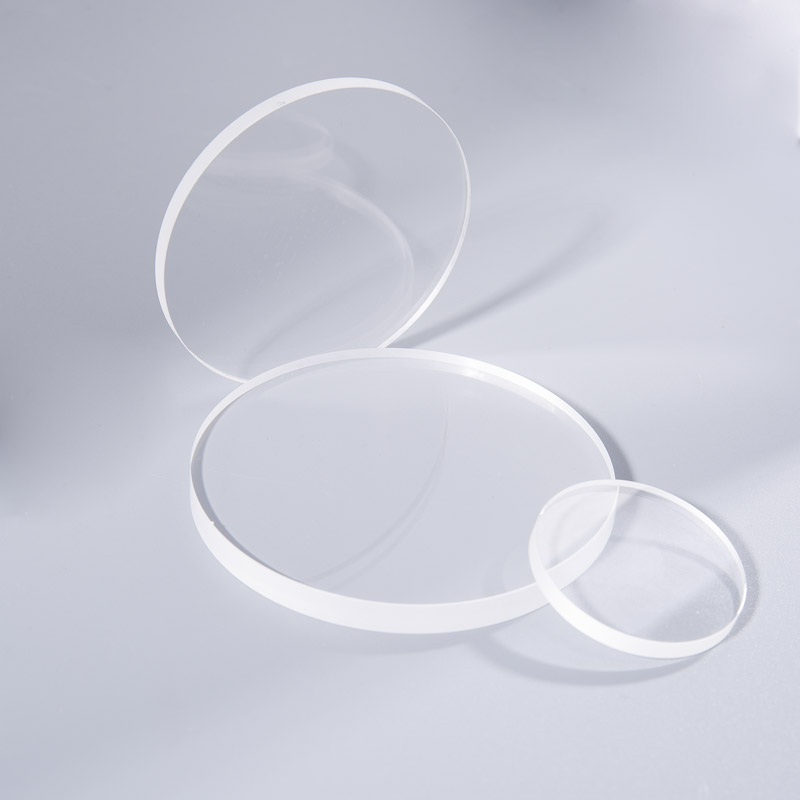
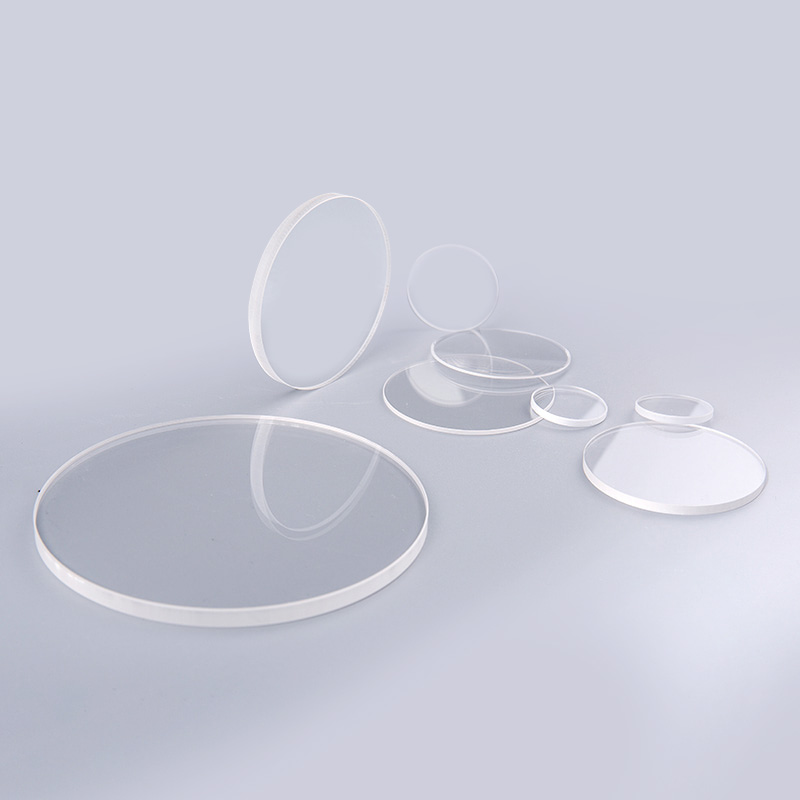
The optical lens discussed in this article is designed for customers that need reliable precision components rather than generic transparent parts. It can be applied in optical instruments, laser equipment, imaging systems, sensing modules, automotive interior optical structures, semiconductor tools, measurement equipment, and other optical platforms. Its value lies in its adaptable design, controlled manufacturing quality, stable dimensional accuracy, and compatibility with demanding industrial supply chains.
For many projects, a lens must be customized according to wavelength, aperture, focal length, material, coating, tolerance grade, and application environment. The manufacturer must understand not only how to grind and polish glass, but also how the lens will be used in a complete system. This includes thermal environment, mechanical fixation method, light source type, sensor characteristics, beam diameter, incidence angle, and expected product life. A strong optical component supplier can provide practical manufacturing feedback during the design stage, helping customers balance performance, cost, yield, and production schedule.
Changzhou Haolilai Photo-Electricity Scientific and Technical Co., Ltd. has developed capabilities for precision optical components through more than two decades of experience. Its optical lenses benefit from accumulated knowledge in optical processing, quality control, automotive-grade discipline, and project engineering. This combination is especially important for customers who require not only prototype samples, but also stable mass production with traceable quality.
Key Advantages of High-Quality Optical Lenses
Superior Light Transmission and Controlled Reflection
A precision optical lens can achieve high transmission when the correct material and coating are selected. Optical glass, fused silica, and other substrate materials each offer different spectral transmission, thermal expansion, hardness, and chemical stability. Anti-reflective coatings can reduce surface reflection, increase energy throughput, improve image brightness, and reduce ghost images. In laser systems, coatings must also manage power density and minimize absorption to prevent thermal damage.
Compared with lower-grade lenses, a high-quality optical lens provides more predictable spectral performance. This is critical in systems that depend on specific wavelength bands, such as near-infrared sensing, ultraviolet inspection, visible imaging, or laser beam delivery. Poor coating uniformity can create inconsistent transmission across the aperture, while inadequate adhesion can lead to degradation in humid or high-temperature environments. Carefully controlled coating specifications help the lens maintain stable performance throughout its service life.
Improved Image Quality and Reduced Aberration
Image quality depends on both optical design and manufacturing precision. Even a well-designed lens can perform poorly if surface figure, centration, or thickness tolerances are not controlled. High-quality lenses reduce wavefront error and help minimize blur, astigmatism, coma, spherical aberration, and distortion. In imaging systems, this contributes to sharper edges, higher contrast, better measurement accuracy, and more reliable image recognition.
In machine vision and semiconductor inspection, small errors can be magnified into significant measurement deviations. A precision lens helps ensure that optical data is accurate and repeatable. This is especially important for automated production lines, where a vision system may make thousands of decisions per hour. Stable lens quality reduces false detection, improves process control, and supports higher production efficiency.
Reliable Performance in Harsh Environments
Optical lenses used in automotive and industrial environments must resist thermal cycling, vibration, humidity, dust, and mechanical stress. Environmental reliability depends on material selection, coating durability, edge treatment, cleanliness control, and packaging. A lens used in an automotive interior optical system, for example, may experience long-term exposure to temperature variation, sunlight, and mechanical vibration. A lens used in industrial laser equipment may face heat, contamination, and repeated operation cycles.
Compared with suppliers that focus only on basic optical polishing, a manufacturer with automotive quality management experience can provide stronger process control and documentation. IATF16949 certification reflects a quality system oriented toward risk management, traceability, defect prevention, and continuous improvement. For customers in automotive optics, this discipline is a major advantage because optical components must meet both performance and reliability expectations.
Customization for Diverse Optical Systems
Different applications demand different lens geometries and tolerances. A laser collimation system may require a specific focal length and low absorption coating. A sensor module may need a compact lens with accurate diameter and edge geometry. A laboratory instrument may need high surface accuracy and strict wavefront control. A consumer optical device may need high-volume production, stable cosmetic quality, and cost efficiency.
A capable manufacturer can support customized optical lenses according to drawings, samples, or performance requirements. Customization may include diameter, radius of curvature, center thickness, edge thickness, clear aperture, surface quality, coating type, bevel, wedge, centration, and packaging format. The ability to convert optical specifications into manufacturable processes is one of the main advantages of an experienced optical component factory.
Materials Used in Optical Lens Manufacturing
Material selection is one of the first and most important decisions in optical lens development. Optical glass is widely used because of its stable refractive index, good homogeneity, and availability in many grades. Fused silica is preferred for ultraviolet transmission, high thermal resistance, and low thermal expansion. Specialty glass may be chosen for high refractive index, low dispersion, infrared transmission, or other optical properties. In some cases, crystalline materials may be used for specialized wavelength ranges or extreme environments.
The material affects optical performance, manufacturability, coating compatibility, and cost. For example, a high-index glass can reduce lens curvature and make a system more compact, but it may be more expensive or harder to polish. Low-expansion materials improve thermal stability but may require special processing methods. A manufacturer must evaluate both optical design requirements and production feasibility before finalizing the substrate.
Changzhou Haolilai Photo-Electricity Scientific and Technical Co., Ltd. serves fields such as laser optics, semiconductor optics, automotive optics, and consumer optics. These markets demand different material strategies. Laser optics often emphasize low absorption and high damage threshold. Semiconductor optics may prioritize surface precision and cleanliness. Automotive optics require stability, durability, and consistent production quality. Consumer optics may focus on visual performance, compactness, and cost-effective output.
Manufacturing Process of Precision Optical Lenses
The manufacturing of optical lenses is a multi-step process requiring both advanced equipment and experienced technicians. Each step influences the final optical quality. A small deviation early in the process can become difficult to correct later, which is why process planning and in-process inspection are essential.
1. Optical Design Review and Technical Evaluation
Before production begins, engineers review drawings, optical requirements, application conditions, and tolerance demands. This stage may include evaluation of material availability, processing difficulty, coating feasibility, inspection methods, and expected production yield. If a tolerance is unnecessarily strict, the engineering team may suggest alternatives that maintain performance while reducing cost and lead time. If a design presents potential manufacturing risks, the team can identify them before tooling and production begin.
This technical review is a major advantage for customers developing new systems. Optical components are often part of complex assemblies, and the lens manufacturer’s experience can prevent hidden problems such as insufficient edge thickness, difficult coating geometry, excessive wedge sensitivity, or unrealistic surface quality requirements. Early collaboration improves project success.
2. Material Preparation and Cutting
Once the material is selected, glass blanks are prepared according to the required diameter and thickness. Cutting must minimize waste while preventing cracks, chips, and subsurface damage. Proper material handling is important because optical substrates may be sensitive to mechanical shock, contamination, or thermal stress. The initial blank quality influences grinding efficiency and final yield.
For high-precision lenses, material traceability can be important. Refractive index data, batch consistency, internal defects, bubbles, striae, and stress characteristics may affect performance. A strong supplier controls incoming material inspection and maintains process records to support stable production.
3. Curve Generation and Grinding
Curve generation forms the approximate lens surface geometry. Grinding removes material and brings the lens closer to its target radius, thickness, and shape. This step requires control of pressure, tool condition, abrasive size, process time, and cooling. Excessive grinding damage can increase polishing time or reduce surface quality. Insufficient control may cause radius variation, wedge, or thickness inconsistency.
Precision grinding is especially important for lenses with strict curvature or centering requirements. Modern optical production combines equipment accuracy with skilled process adjustment. Experienced operators can identify subtle issues such as tool wear, abnormal sound, or inconsistent removal behavior, while engineers use measurement data to refine process parameters.
4. Fine Grinding and Pre-Polishing
Fine grinding reduces surface roughness and prepares the lens for polishing. The goal is to remove deeper subsurface damage and create a uniform surface that can be polished efficiently. Fine abrasive control is important because polishing cannot always correct deep grinding marks or uneven material removal. Pre-polishing may be used to transition from abrasive grinding to final surface finishing.
This step directly affects final surface quality and production efficiency. A stable fine grinding process reduces polishing time, improves yield, and helps maintain consistent geometry. For high-volume production, repeatability at this stage is essential.
5. Precision Polishing
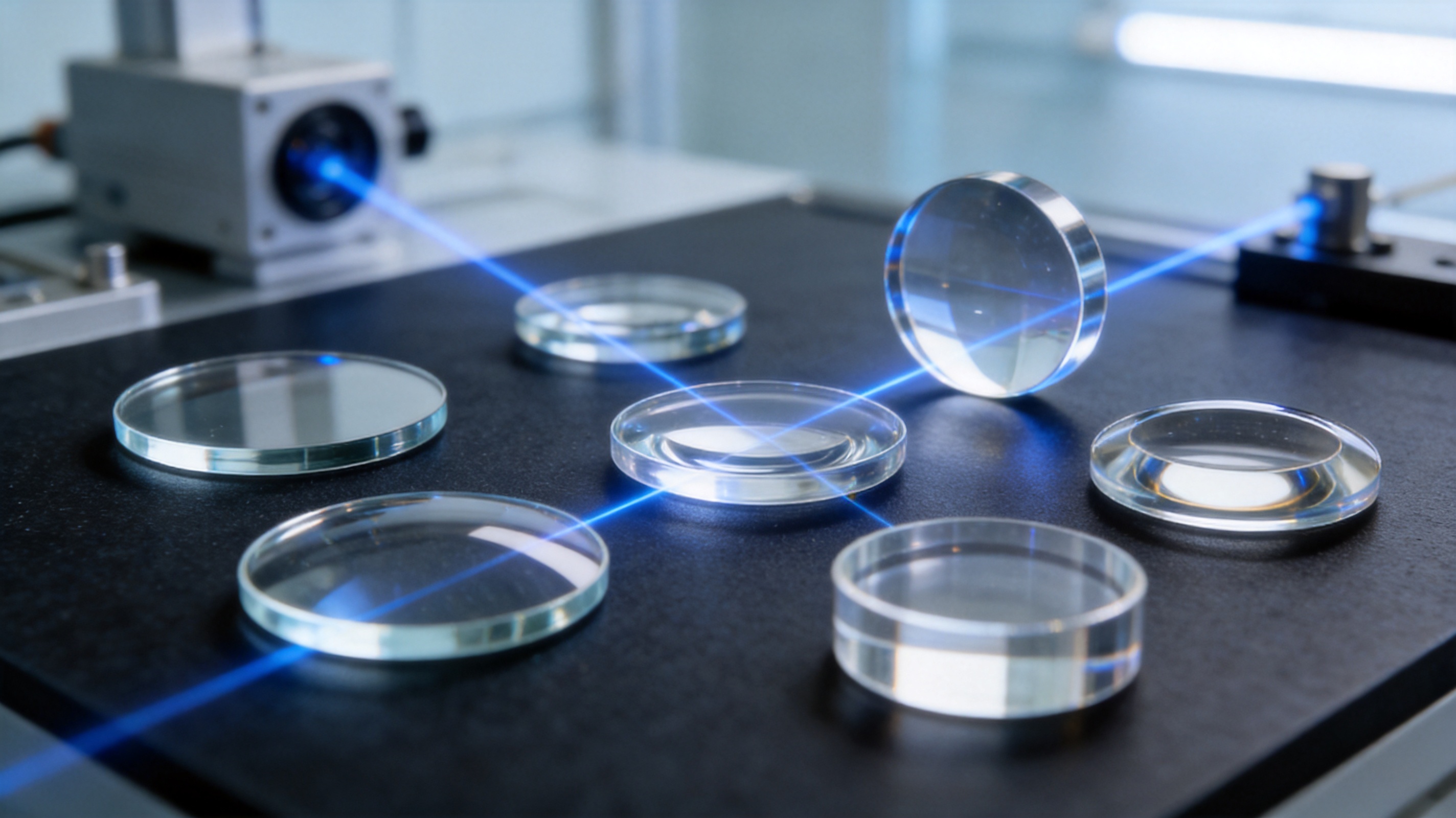
Polishing gives the optical lens its final transparent surface and controls surface figure. The process uses polishing pads, slurry, pressure, speed, and time to remove microscopic material. The challenge is to achieve excellent smoothness while preserving the specified radius and figure. Different materials require different polishing strategies because hardness, chemical behavior, and thermal properties vary.
High-quality polishing reduces scatter and improves transmission. It also supports better coating adhesion because a clean, smooth surface allows coating layers to form uniformly. For laser optics, polishing quality is particularly important because surface defects can initiate damage under high power. For imaging optics, polishing accuracy supports wavefront quality and image sharpness.
6. Centering and Edge Processing
After both surfaces are generated and polished, the lens may require centering and edging. Centering aligns the optical axis with the mechanical axis, which is essential for assembly. If centration is poor, the lens may introduce beam deviation, image displacement, asymmetric aberration, or assembly difficulty. Edge processing also creates the final diameter, bevel, and edge profile needed for safe handling and mounting.
Compared with low-cost lenses that may only meet basic dimensional requirements, precision lenses maintain tighter relationships between optical and mechanical references. This makes them easier to integrate into lens barrels, sensor modules, laser heads, and optical instruments. Better centering reduces the need for adjustment during system assembly and supports automated production.
7. Cleaning and Surface Preparation
Cleaning is not a simple cosmetic step. Optical surfaces must be free from particles, oil, slurry residue, fingerprints, and chemical contamination. Any residue can interfere with coating adhesion, inspection accuracy, or optical performance. Cleaning methods may include ultrasonic cleaning, deionized water rinsing, solvent processes, filtered drying, and controlled handling.
Cleanliness is particularly important for semiconductor optics and laser optics. Particles can scatter light, absorb energy, or contaminate downstream systems. A manufacturer serving advanced optical markets must maintain disciplined cleaning and handling procedures throughout production and packaging.
8. Coating Application
Optical coatings are designed to modify reflection, transmission, polarization, spectral behavior, or environmental durability. Common coatings include anti-reflective coatings, high-reflection coatings, beam splitter coatings, filter coatings, and protective coatings. For optical lenses, anti-reflective coating is one of the most common requirements because it improves light throughput and reduces stray reflections.
Coating design must match the lens material, wavelength range, incidence angle, and environmental requirements. A coating for visible imaging may differ greatly from a coating for a near-infrared laser or ultraviolet inspection system. Coating uniformity is affected by lens curvature and coating chamber configuration. The manufacturer must ensure that coated lenses meet spectral specifications and adhesion requirements.
9. Inspection and Metrology
Precision optical lens manufacturing depends on accurate inspection. Typical inspection items may include diameter, center thickness, radius of curvature, surface quality, surface figure, flatness where applicable, centration, wedge, focal length, transmission, coating performance, and cosmetic quality. Advanced metrology tools can include interferometers, autocollimators, spectrophotometers, profilometers, surface quality standards, coordinate measuring equipment, and thickness gauges.
Inspection must be integrated into the process rather than limited to final sorting. In-process control helps detect problems early and reduce scrap. Final inspection verifies that products meet customer requirements before shipment. For customers in regulated or high-reliability sectors, inspection records and traceability can be as important as the physical product.
10. Packaging and Delivery
Optical lenses must be packaged to prevent scratches, chips, contamination, and vibration damage during transportation. Packaging may include individual compartments, clean wrapping, protective trays, vacuum or dust-proof bags, cushioning materials, and clear labeling. Proper packaging preserves the quality achieved during manufacturing and reduces customer handling problems.
For export customers, stable packaging is especially important because products may travel long distances through varying humidity, temperature, and handling conditions. A supplier with international shipping experience can reduce risks and ensure that lenses arrive ready for assembly or inspection.
Technical Parameters Commonly Considered for Optical Lenses
| Parameter | Meaning | Why It Matters |
|---|---|---|
| Material | Optical glass, fused silica, specialty glass, or other substrates | Determines transmission range, refractive index, thermal stability, and processing behavior |
| Diameter | Outer mechanical size of the lens | Affects mounting compatibility, clear aperture, and system integration |
| Radius of Curvature | Curvature of one or both optical surfaces | Controls focal length and optical power |
| Center Thickness | Thickness through the optical center | Influences optical path, mechanical design, and assembly spacing |
| Surface Quality | Scratch and dig or comparable surface defect standard | Impacts scattering, imaging clarity, laser reliability, and cosmetic acceptance |
| Surface Figure | Deviation from ideal optical surface shape | Affects wavefront quality, focus accuracy, and system resolution |
| Centration | Alignment of optical axis and mechanical axis | Reduces beam deviation, image shift, and assembly error |
| Coating | Anti-reflective, reflective, filter, or protective thin film | Improves transmission, controls reflection, and enhances durability |
| Clear Aperture | Usable optical area of the lens | Ensures effective light passage without edge defects affecting performance |
| Environmental Reliability | Resistance to humidity, temperature, abrasion, and adhesion failure | Ensures long-term performance in industrial, automotive, and outdoor conditions |
Applications of Precision Optical Lenses
Laser Optics
In laser systems, lenses are used for beam focusing, collimation, expansion, shaping, and delivery. Laser processing equipment relies on lenses to concentrate energy accurately onto a workpiece. If the lens surface quality is poor or the coating absorbs too much energy, the system may experience power loss, thermal lensing, unstable focus, or coating damage. Precision optical lenses reduce these risks by providing controlled surface quality, reliable coatings, and stable geometry.
Laser applications may include cutting, welding, marking, medical laser equipment, scientific instruments, and optical communication. Each application has its own wavelength, power density, beam diameter, and environmental conditions. A reliable lens manufacturer must adapt material and coating choices to the operating wavelength and power level.
Automotive Optics
Automotive optical systems increasingly depend on lenses for sensing, illumination, display, comfort, and safety-related functions. Lenses may be used in interior optical modules, driver monitoring systems, ambient sensing, camera modules, heads-up display systems, and other structures. Automotive lenses must meet strict durability and consistency requirements because vehicles operate for many years under changing environmental conditions.
A supplier with IATF16949 certification has a significant advantage in automotive optical projects. This certification reflects a management system that emphasizes defect prevention, process control, documentation, corrective action, and continuous improvement. For automotive customers, the ability to provide stable quality over repeated production batches is essential.
Semiconductor Optics
Semiconductor manufacturing and inspection require optical lenses with high precision, low contamination, and stable performance. Lenses may be used in wafer inspection, alignment systems, lithography support equipment, metrology instruments, and machine vision platforms. Even minor optical defects can affect inspection accuracy or system stability.
Semiconductor optics often demand tight tolerances, clean surfaces, and carefully selected materials. A lens must transmit the required wavelength efficiently while maintaining surface figure and minimizing scatter. Advanced inspection and cleaning procedures help ensure that each lens supports the demanding requirements of semiconductor production environments.
Consumer Optics
Consumer products such as smart devices, projection equipment, cameras, wearable devices, sensors, and display systems use lenses to create compact and reliable optical functions. In this field, the challenge is often to combine performance with miniaturization and cost-effective volume manufacturing. Consistency is critical because consumer products may be produced in large quantities, and small variations can affect user experience.
A manufacturer with both engineering experience and production capacity can help customers optimize lens designs for manufacturability. This includes selecting suitable materials, avoiding unnecessary tolerance costs, and designing packaging that supports efficient assembly.
Scientific and Industrial Instruments
Optical lenses are widely used in microscopes, telescopes, spectrometers, laboratory instruments, metrology equipment, endoscopic systems, and industrial monitoring devices. These applications often require accurate optical behavior and reliable long-term stability. In scientific instruments, lens performance can directly influence experimental accuracy. In industrial instruments, lens reliability affects productivity and maintenance frequency.
Precision optical lenses used in these instruments must be manufactured with careful control of surface figure, surface quality, coating, and mechanical dimensions. The ability to customize lenses for specialized instruments is an important advantage for research and industrial customers.
Advantages Over General Optical Lens Suppliers
Integrated Precision Component Experience
Some suppliers may specialize only in simple lens production, while advanced customers need a broader understanding of optical components. Changzhou Haolilai Photo-Electricity Scientific and Technical Co., Ltd. develops and produces various precision optical components, including lenses, mirrors, prisms, wafers, and optical structural parts. This wider product experience helps the company understand how lenses interact with other optical elements in a complete system.
For example, a lens used with a mirror or prism must maintain optical alignment within the full assembly. A lens used in semiconductor optics may need compatibility with wafer inspection requirements. A lens used in automotive interior optical structures must meet mechanical and environmental expectations. Broad component expertise supports better engineering communication and more practical manufacturing solutions.
Long-Term Manufacturing Experience
Founded in 1998, the company has accumulated decades of optical manufacturing experience. Long-term experience matters because optical processing is not entirely theoretical. Even with advanced machines, stable production requires practical knowledge of materials, polishing behavior, coating risks, inspection interpretation, and process troubleshooting. Experienced teams can identify potential problems faster and improve production reliability.
Compared with newer or less specialized suppliers, a long-established optical manufacturer is more likely to have refined its process standards, built a stable technical workforce, and developed internal quality culture. This reduces risk for customers who need dependable supply.
Certified Quality Management
Quality certifications such as ISO9001:2015, ISO14001:2015, and IATF16949 demonstrate structured management systems. ISO9001:2015 supports consistent quality control and customer satisfaction. ISO14001:2015 reflects environmental management awareness. IATF16949 is especially relevant to automotive customers because it emphasizes risk prevention, process stability, and supply chain discipline.
For optical lenses, certification alone does not replace technical capability, but it strengthens the reliability of the entire manufacturing process. Customers benefit from documented procedures, traceable production, corrective action systems, and continuous improvement practices. This is particularly valuable in mass production projects, where consistency over time is more important than one-time sample success.
Research and Engineering Strength
The company has established the Jiangsu Precision Optical Lens Engineering Technology Center and Jiangsu Enterprise Technology Research Center. These engineering platforms reflect investment in research, product development, technical training, and process improvement. For customers, this means the supplier is not merely processing drawings but can participate in engineering discussions and support new optical solutions.
Research and engineering strength are important for customized lenses because each new project may involve different materials, dimensions, coatings, and inspection requirements. A strong technical team can evaluate design risks, propose process routes, and help customers achieve practical performance targets.
Patent and Product Development Capability
The company has obtained multiple invention patents, utility model patents, and Jiangsu High and New Tech Products. Patent activity indicates continued innovation and technical accumulation. In optical manufacturing, innovation may involve processing methods, tooling, inspection techniques, assembly solutions, or product structures. These capabilities improve the supplier’s ability to solve difficult customer requirements.
Customers benefit when a supplier can go beyond standard catalog parts. Many modern optical systems require custom components that must fit tight spaces, unusual wavelengths, special environmental conditions, or demanding assembly workflows. Product development capability gives customers more flexibility.
Export Experience and Global Service Orientation
With exports to more than 20 countries, the company has experience serving international customers. Export experience supports better understanding of documentation, packaging, communication, shipment coordination, and quality expectations. International customers often require clear specifications, stable lead times, and reliable after-sales communication.
A global service orientation is important in optical component purchasing because optical parts are often used in long-term production programs. Customers need suppliers who can maintain consistent quality across multiple orders, respond to engineering changes, and support quality improvement when needed.
How Precision Manufacturing Improves System-Level Value
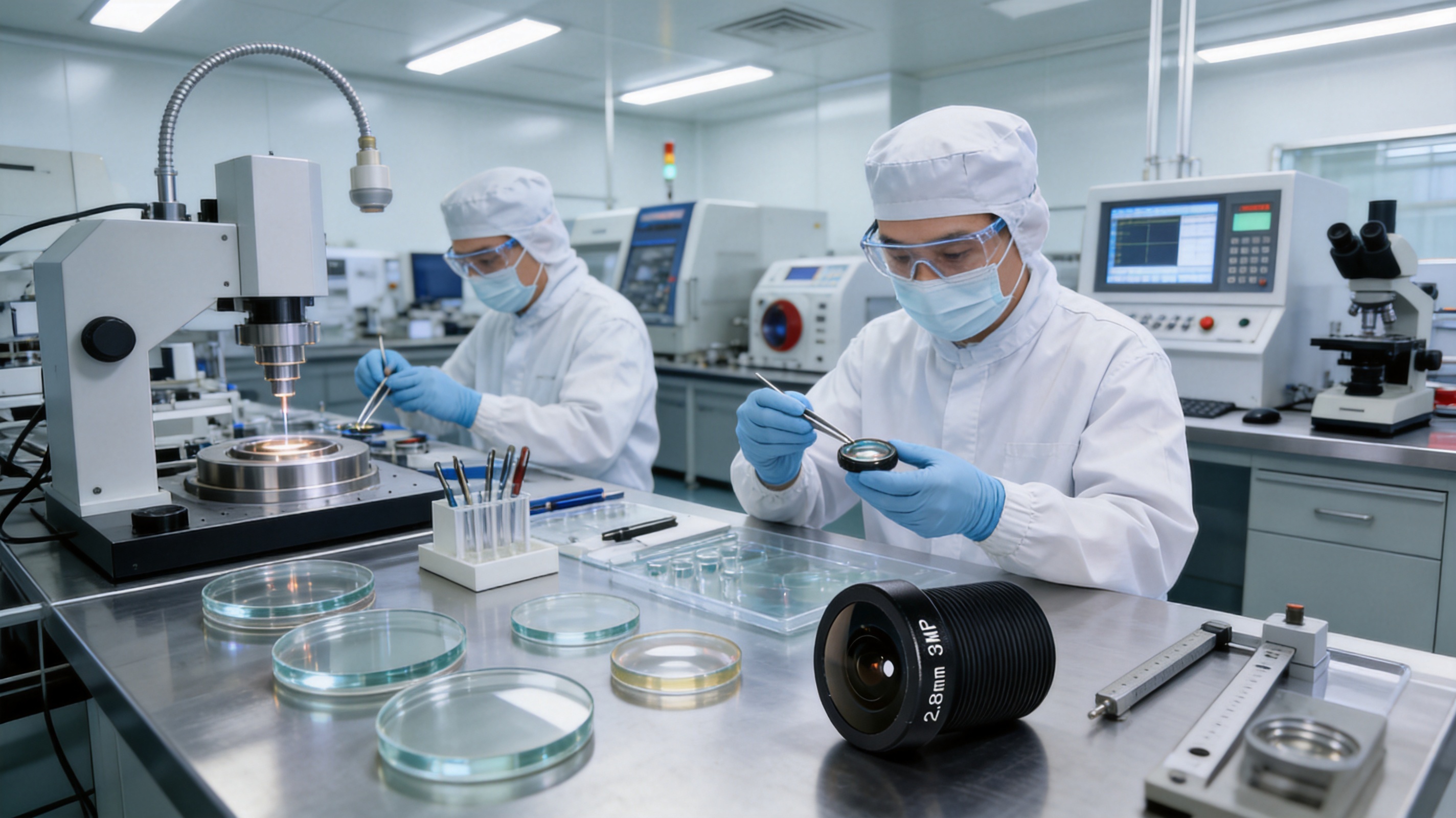
The true value of an optical lens is measured not only by its own specifications but also by the performance it enables in the final system. A precision lens can reduce system alignment time, improve imaging accuracy, increase optical efficiency, and lower failure rates. These benefits often outweigh the difference between low-cost lenses and higher-quality precision lenses.
In a laser system, a stable lens can reduce energy loss and maintain focus consistency, improving processing quality. In a machine vision system, a sharper lens can increase detection accuracy and reduce false rejects. In an automotive optical module, a durable lens can support long-term reliability and reduce warranty risk. In semiconductor inspection, a precise lens can improve measurement confidence and process yield.
When customers compare suppliers, they should consider total cost of ownership rather than only unit price. A lens that is slightly cheaper but causes alignment difficulty, coating failure, or inconsistent optical performance can become more expensive in the long run. A high-quality lens supplier helps reduce hidden costs by providing consistent parts, reliable documentation, and responsive engineering support.
Design Considerations for Selecting an Optical Lens
Wavelength Range
The first design consideration is the operating wavelength. Materials and coatings must be selected according to whether the system uses ultraviolet, visible, near-infrared, short-wave infrared, or laser-specific wavelengths. A material that performs well in visible light may not transmit ultraviolet efficiently. A coating optimized for one wavelength may reflect too much light at another wavelength.
Focal Length and Optical Power
Focal length determines how strongly the lens focuses or diverges light. It depends on curvature and refractive index. The designer must consider working distance, sensor size, beam diameter, field of view, and system magnification. Manufacturing tolerances on radius and thickness influence focal length accuracy, so the specification must match system sensitivity.
Aperture and Beam Size
The lens diameter and clear aperture must accommodate the required light beam or image field. If the aperture is too small, the system may lose light or introduce vignetting. If it is unnecessarily large, cost and size may increase. The clear aperture specification also defines the area where surface quality and coating performance must meet requirements.
Surface Quality Requirements
Surface defects such as scratches, digs, chips, and stains may scatter light or create cosmetic problems. Laser applications often require stricter surface quality because defects can absorb energy and create damage sites. Imaging applications require surface quality that supports clarity and contrast. Overly strict specifications can increase cost, so requirements should be chosen based on actual system sensitivity.
Coating Selection
Coating selection should consider wavelength, angle of incidence, polarization, humidity, abrasion, temperature, and laser power. Anti-reflective coatings increase transmission and reduce ghost images. Protective coatings improve durability. Filter coatings select specific wavelength bands. Coating design must be matched to the final application rather than chosen as a generic option.
Mechanical Integration
The lens must fit the mechanical assembly. Diameter tolerance, edge thickness, bevel, centering, and mounting method all influence integration. Poor mechanical compatibility can cause stress, tilt, decentering, or damage during assembly. Early coordination between optical and mechanical designers helps avoid these problems.
Quality Control: The Foundation of Optical Reliability
Quality control in optical lens manufacturing requires a combination of trained inspectors, accurate instruments, controlled procedures, and data-based improvement. Inspection begins with incoming material and continues through grinding, polishing, centering, coating, final inspection, and packaging. Each stage has quality risks that must be managed.
Surface inspection identifies scratches, digs, stains, coating defects, and chips. Dimensional inspection verifies diameter, thickness, and edge geometry. Optical inspection may evaluate focal length, transmitted wavefront, surface figure, and coating spectrum. Environmental tests may evaluate coating adhesion, humidity resistance, temperature cycling, or abrasion resistance when required by the application.
Traceability is another important quality element. For high-reliability customers, the ability to track production batch, material lot, processing route, inspection result, and shipment record can be essential. Traceability supports root-cause analysis if a problem occurs and helps maintain process stability over time.
The company’s certified management systems and engineering resources support disciplined quality control. With more than 300 employees and decades of optical component production experience, it can combine human expertise with systematic management. This balance is important because optical manufacturing still requires judgment, craftsmanship, and continuous learning.
Environmental and Sustainability Considerations
Modern optical manufacturing must consider environmental responsibility in addition to technical performance. ISO14001:2015 certification indicates that environmental management is part of the company’s operating system. Optical processing may involve water use, polishing slurry, cleaning chemicals, energy consumption, and waste handling. Responsible management helps reduce environmental impact and supports customers with sustainability requirements.
Sustainable optical manufacturing also includes yield improvement and process efficiency. Higher yield means less material waste and lower energy consumption per finished part. Better process control reduces scrap. Reliable packaging reduces damage during shipment. Long-lasting optical lenses reduce replacement frequency and support the durability of final products.
Why Customers Choose a Precision Optical Lens Partner
Choosing an optical lens supplier is not only a purchasing decision; it is an engineering and quality decision. The right supplier can help customers reduce design risk, improve product performance, and stabilize production. A strong optical partner should offer technical understanding, manufacturing capability, inspection reliability, quality documentation, and responsive communication.
Changzhou Haolilai Photo-Electricity Scientific and Technical Co., Ltd. offers these strengths through its long history, precision optical component focus, certified quality systems, research centers, patents, and export experience. Its optical lenses are suitable for customers seeking reliable performance in laser, automotive, semiconductor, consumer, and industrial optical systems.
The company’s location in Changzhou, Jiangsu, China, within a national-level High-tech Development District, supports access to industrial resources and technical talent. Its 35,000 square meter facility provides a foundation for production scale, while its experienced team supports engineering and process improvement. These strengths help the company serve customers who need both customization and repeatability.
Comparing Precision Optical Lenses with Standard Commodity Lenses
Commodity lenses may be acceptable for simple educational tools, low-end instruments, or applications where optical performance is not critical. However, advanced systems require more than basic transparency and approximate focusing. Precision optical lenses provide tighter tolerances, better coatings, stronger quality control, and more reliable documentation.
The difference becomes clear when a system must operate continuously, measure accurately, or survive harsh conditions. A commodity lens may have larger variation in focal length, surface defects, coating inconsistency, or poor centration. These issues can force customers to spend more time on selection, adjustment, or replacement. Precision lenses reduce this burden by meeting defined specifications consistently.
For volume production, consistency is especially important. Even if a commodity lens performs well in one sample, it may not remain stable across thousands of pieces. A precision optical lens supplier with certified processes can provide greater batch-to-batch reliability. This supports automated assembly, predictable system calibration, and lower defect rates.
Customization Workflow for Optical Lens Projects
A typical custom optical lens project begins with customer requirements. These may include drawings, optical design files, wavelength data, mechanical constraints, coating requirements, quantity, and application information. The manufacturer reviews the requirements and may provide feedback on material, tolerance, coating, manufacturability, and inspection method.
After technical confirmation, samples or prototypes may be produced. Sample evaluation allows the customer to test optical performance, mechanical fit, coating behavior, and system compatibility. If necessary, parameters can be adjusted before mass production. Once the design is approved, the manufacturer establishes a production route, inspection plan, and packaging method.
For stable mass production, process control documents and quality standards are defined. In automotive or high-reliability projects, additional documentation may be required, such as control plans, process flow charts, inspection reports, and traceability records. A supplier experienced in IATF16949 systems is better prepared to support these requirements.
Q&A: Common Questions About Precision Optical Lenses
Q1: What is the main function of an optical lens?
An optical lens controls light by refraction. It can focus, diverge, collimate, magnify, image, or shape light depending on its geometry, material, and placement in an optical system. Its function may vary from forming a sharp image on a sensor to focusing a laser beam onto a workpiece.
Q2: Why is surface quality important for optical lenses?
Surface quality affects scattering, transmission, image clarity, and laser durability. Scratches, digs, stains, and polishing defects can reduce contrast, create stray light, or become damage points in high-power laser systems. Better surface quality helps maintain stable optical performance.
Q3: How does coating improve lens performance?
Coatings modify how a lens interacts with light. Anti-reflective coatings reduce surface reflection and improve transmission. Filter coatings select wavelength bands. Protective coatings improve environmental resistance. A properly designed coating increases system efficiency and reliability.
Q4: What makes a precision optical lens different from a standard lens?
A precision optical lens is manufactured with tighter control of curvature, thickness, surface figure, centration, surface quality, coating performance, and dimensional accuracy. It is inspected according to defined specifications and is suitable for demanding systems where consistency matters.
Q5: Which industries use precision optical lenses?
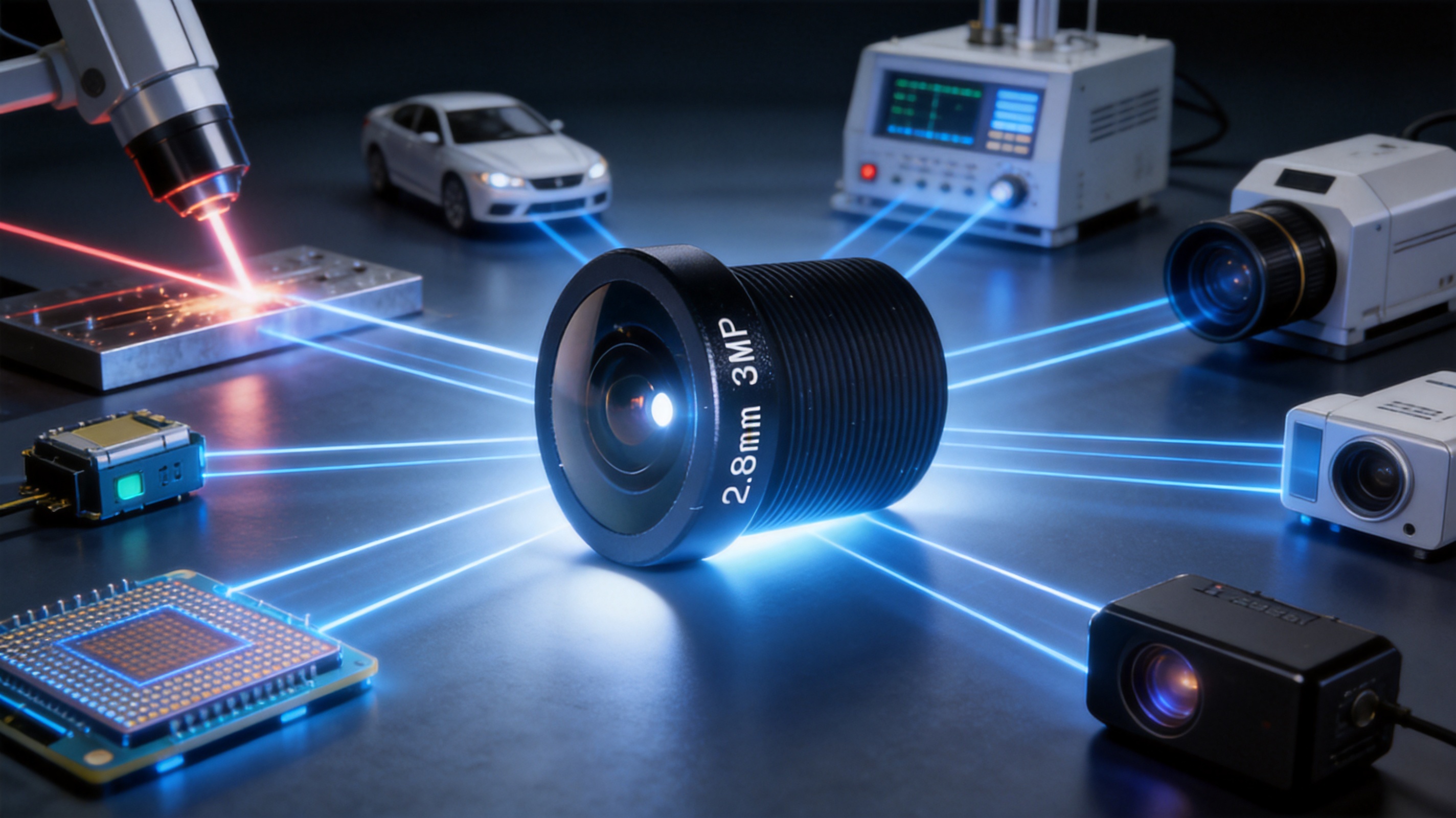
Precision optical lenses are used in laser equipment, automotive optics, semiconductor inspection, machine vision, scientific instruments, medical devices, consumer electronics, optical communication, and industrial measurement systems.
Q6: Why is centration important?
Centration defines how well the optical axis aligns with the mechanical axis. Poor centration can cause beam deviation, image shift, asymmetric aberrations, and assembly difficulty. Good centration improves system alignment and performance consistency.
Q7: Can optical lenses be customized?
Yes. Optical lenses can be customized by material, diameter, focal length, curvature, thickness, surface quality, coating, clear aperture, edge treatment, and tolerance level. Customization is often necessary for laser, automotive, semiconductor, and specialized instrument applications.
Q8: Why is IATF16949 certification relevant for automotive optical lenses?
IATF16949 is a quality management standard for the automotive industry. It emphasizes defect prevention, process control, traceability, and continuous improvement. For automotive optical lenses, this supports reliable long-term quality and stable batch production.
Q9: What information should be provided when requesting an optical lens quotation?
Useful information includes lens drawing, material, diameter, center thickness, radius or focal length, wavelength range, coating requirement, surface quality, surface figure, centration tolerance, quantity, application environment, and inspection requirements.
Q10: How does a good optical lens reduce total system cost?
A high-quality lens reduces alignment time, improves optical efficiency, lowers defect rates, reduces maintenance, and supports stable system performance. Even if the unit price is higher than a commodity lens, the total cost can be lower because fewer problems occur during assembly and operation.
Conclusion
Optical lenses are essential components in modern optical systems, and their quality directly affects imaging clarity, laser performance, sensing accuracy, environmental reliability, and system efficiency. A precision optical lens combines carefully selected material, accurate geometry, smooth surfaces, controlled coatings, reliable inspection, and disciplined manufacturing. For advanced industries such as laser processing, automotive optics, semiconductor inspection, consumer optics, and scientific instruments, these characteristics are not optional; they are fundamental to system success.
Changzhou Haolilai Photo-Electricity Scientific and Technical Co., Ltd. brings together long-term experience, certified quality systems, engineering research strength, patent-supported development, and export service capability. Founded in 1998, with a 35,000 square meter facility, more than 300 employees, and customers in more than 20 countries, the company has established itself as a professional manufacturer of precision optical components. Its optical lenses are designed to help customers achieve stable performance, reliable production, and competitive product value.
For customers seeking optical lenses with better consistency, stronger engineering support, and dependable quality management, partnering with an experienced precision optical component manufacturer is a strategic choice. A lens may appear small, but in a high-performance optical system, it can determine the difference between ordinary operation and excellent results.
References
1. Hecht, Eugene. Optics. Pearson Education.
2. Smith, Warren J. Modern Optical Engineering. McGraw-Hill Education.
3. Malacara, Daniel. Optical Shop Testing. Wiley.
4. ISO 9001:2015 Quality Management Systems Requirements.
5. ISO 14001:2015 Environmental Management Systems Requirements with Guidance for Use.
6. IATF 16949 Automotive Quality Management System Standard.
7. Kingslake, Rudolf, and R. Barry Johnson. Lens Design Fundamentals. Academic Press.


 苏公网安备32041102000130号