
 Search
 en
en English
 日本語
日本語 русский
 Español
 Deutsch
 中文简体
中文简体Content
- 1 Product Overview: What Makes a Perforated Special-Shaped Quartz Window Different
- 2 Core Material Advantages of Quartz Glass
- 3 Customization Capabilities for Shapes, Sizes, and Perforations
- 4 Optical Performance: Transmission, Flatness, and Surface Quality
- 5 Mechanical and Thermal Advantages in Real-World Environments
- 6 Advantages Over Competitors and Alternative Suppliers
- 7 Advanced Manufacturing Process
- 8 Manufacturing Strengths and Company Capabilities
- 9 Application Areas
- 10 Design Considerations for Engineers
- 11 Quality Control and Inspection
- 12 Why Precision Processing Matters More for Perforated Parts
- 13 Coating Options and Performance Enhancement
- 14 Comparison with Common Alternative Materials
- 15 Procurement Guidance
- 16 Q&A Section
- 16.1 Q1: What is a perforated special-shaped quartz window substrate?
- 16.2 Q2: What materials are used for these parts?
- 16.3 Q3: What shapes can be manufactured?
- 16.4 Q4: What size range is available?
- 16.5 Q5: Why choose quartz instead of ordinary glass?
- 16.6 Q6: Can the parts be coated?
- 16.7 Q7: What surface quality can be achieved?
- 16.8 Q8: Are these parts suitable for high-temperature environments?
- 16.9 Q9: What information is needed for a quotation?
- 16.10 Q10: What makes the manufacturer suitable for precision quartz processing?
- 17 Conclusion
- 18 References
- 19 Product: Perforated special-shaped parts
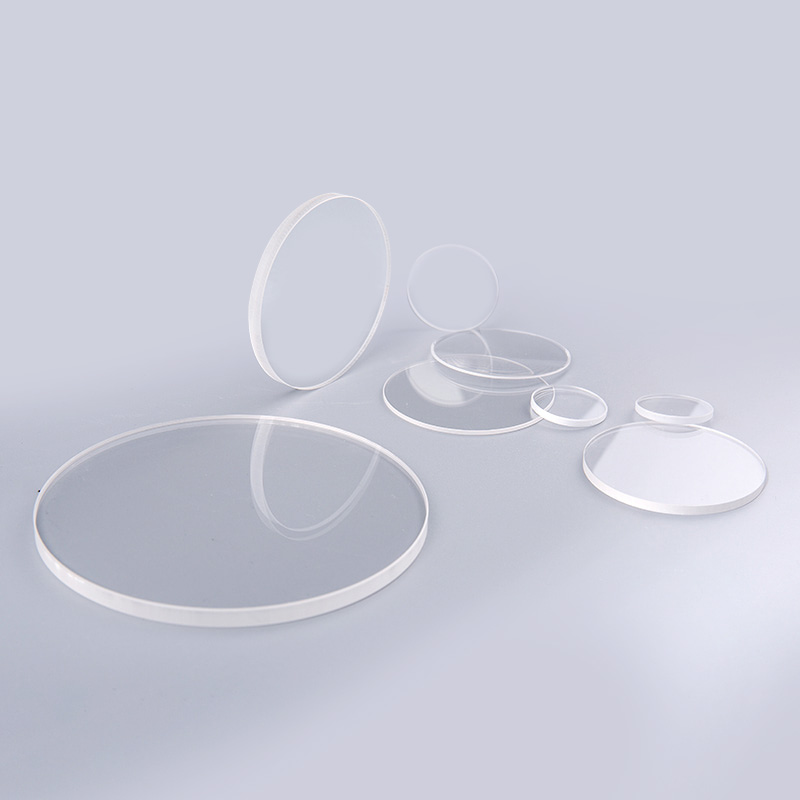
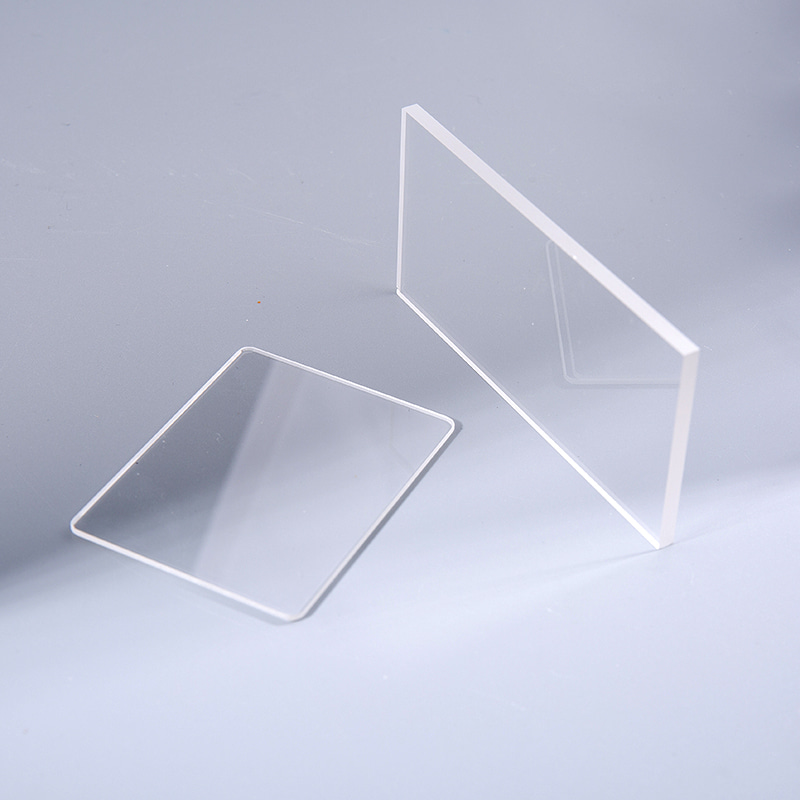
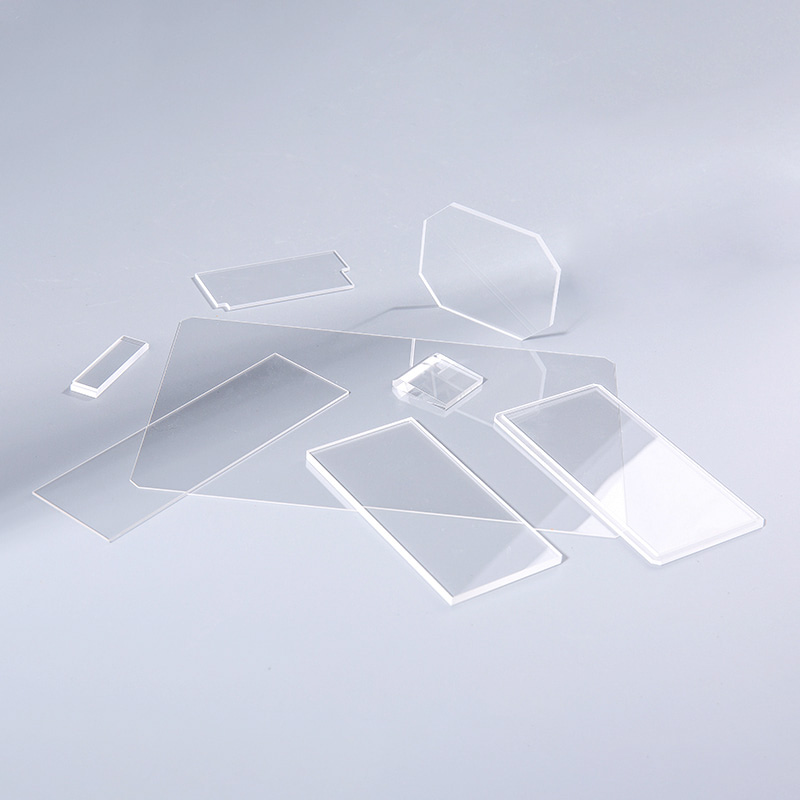
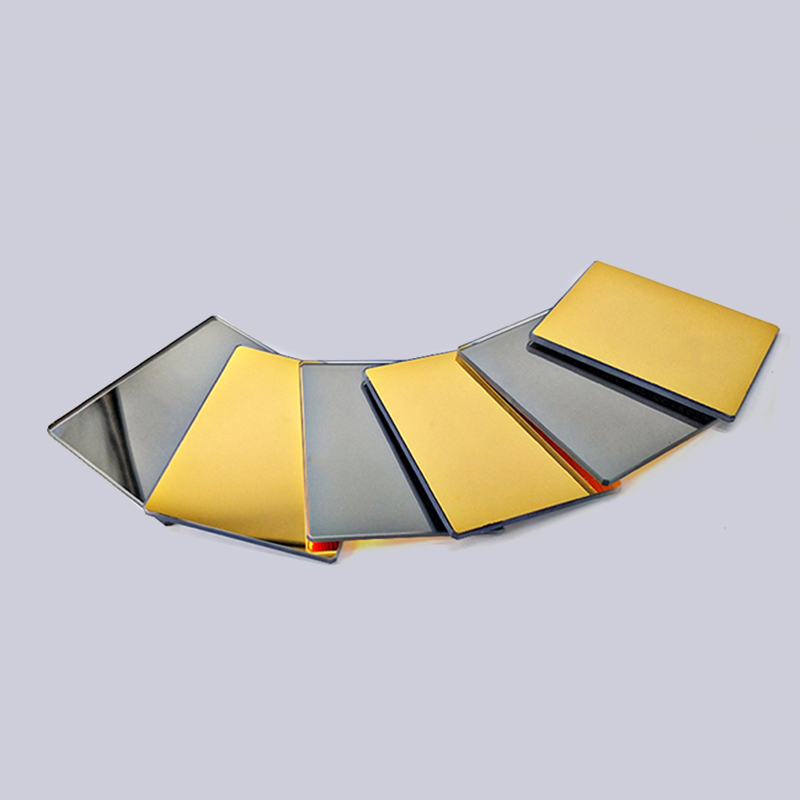
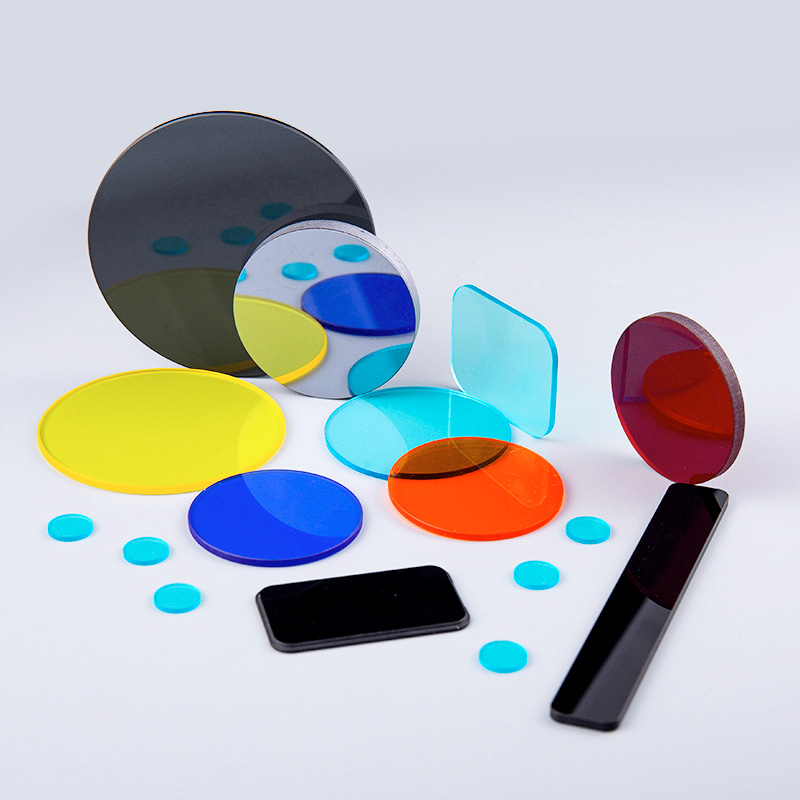
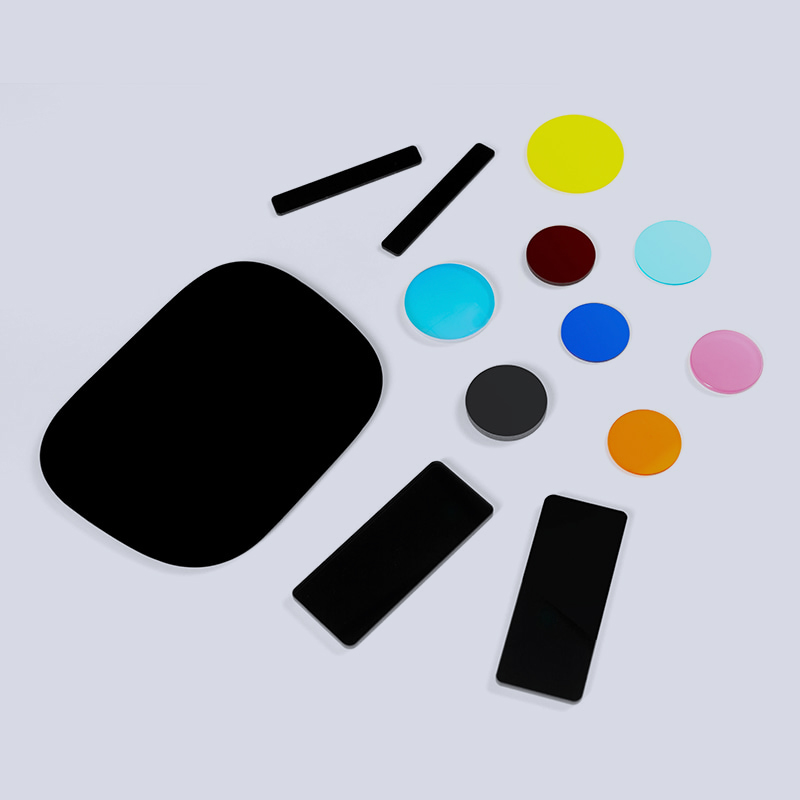
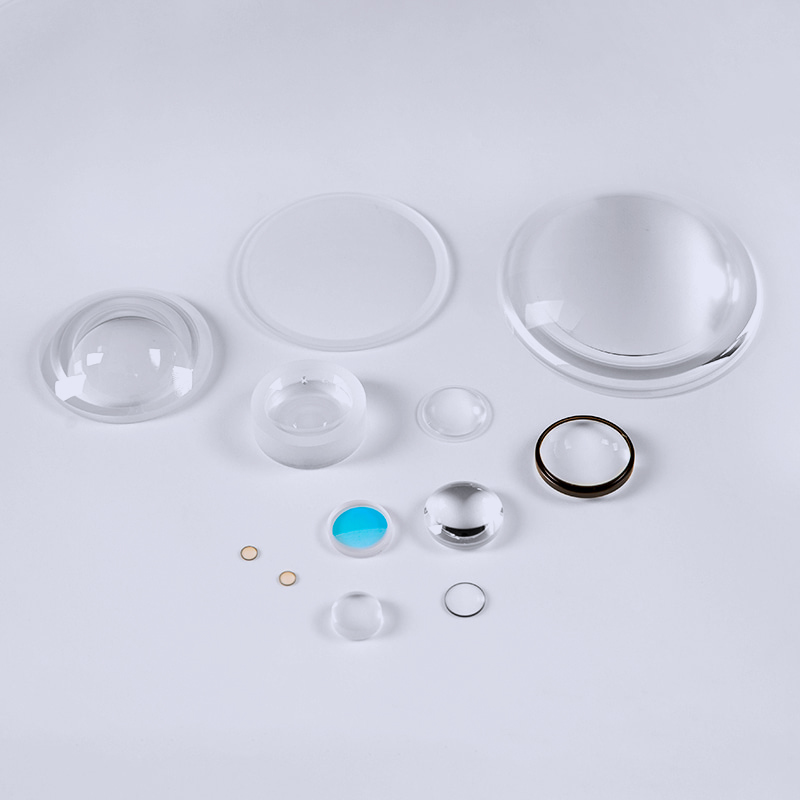
Perforated special-shaped quartz window substrates are engineered optical components designed for systems that require stable light transmission, dimensional precision, thermal resistance, electrical insulation, and custom mechanical integration. Unlike ordinary flat glass parts, these components are manufactured from high-purity quartz glass, typically containing more than 99.99% silica, and can be produced in round, square, rectangular, triangular, trapezoidal, and irregular shapes according to customer drawings. They can also be perforated, machined, polished, cleaned, and coated to meet demanding requirements in optical instruments, semiconductor equipment, laser systems, high-temperature observation ports, laboratory devices, medical equipment, automation systems, and industrial process environments.
The product is especially valuable when an optical window must do more than simply transmit light. In many advanced assemblies, the window substrate may also need to resist heat, maintain flatness, provide electrical insulation, support sealing structures, align with mechanical housings, or include holes and special contours for fastening, gas flow, sensing, or assembly clearance. Perforated and special-shaped quartz parts solve these integration challenges while preserving the optical and physical benefits of quartz glass.
Quartz glass is recognized for a Mohs hardness of approximately level seven, excellent high-temperature resistance, low thermal expansion, strong thermal shock resistance, positive electrical insulation, and broad transparency from ultraviolet to near-infrared wavelengths. Its transparency can reach over 85%, depending on material grade, thickness, wavelength, surface quality, and coating configuration. These characteristics make it a preferred substrate where ordinary soda-lime glass, many polymer windows, and some lower-grade optical materials cannot provide sufficient stability or cleanliness.
Perforated special-shaped parts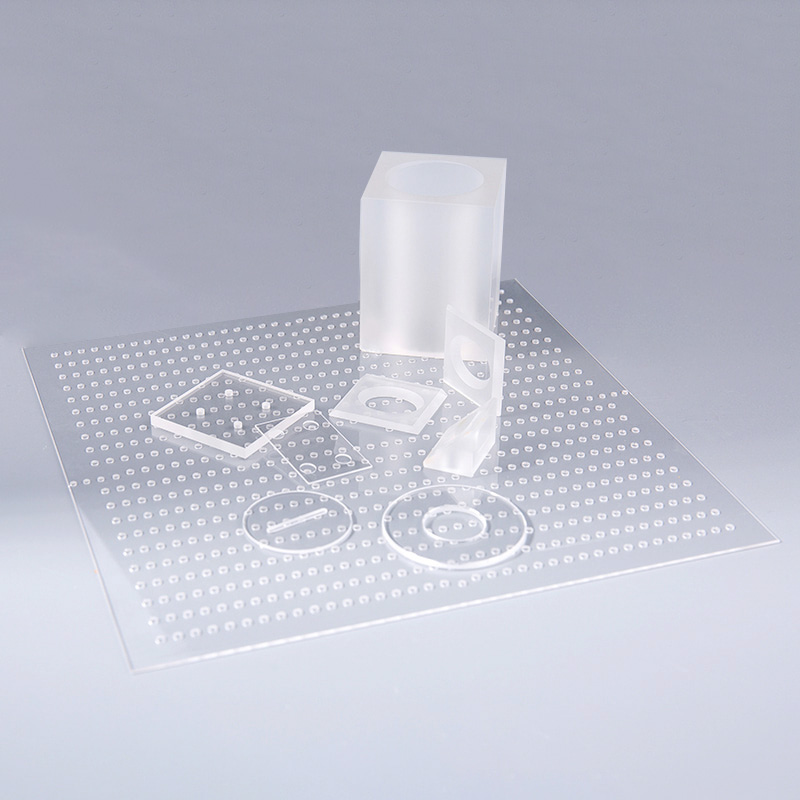
Product Overview: What Makes a Perforated Special-Shaped Quartz Window Different
A standard optical window is usually a simple circular or rectangular plate with polished surfaces. A perforated special-shaped quartz window substrate, however, is a more customized component. It may include non-standard outer profiles, precision holes, slots, notches, chamfers, bevels, or other processed features. These features allow the part to fit into complex assemblies without compromising the optical path. For example, an irregular quartz window may be used in a sensor housing where space is limited, or a perforated quartz plate may be mounted in a fixture that requires screw holes, gas-release holes, or alignment holes.
The product is generally made from fused quartz glass or synthetic quartz glass. Both materials are valued for heat resistance, optical transparency, electrical insulation, and chemical stability. Synthetic quartz is commonly chosen when higher optical consistency and purity are required, particularly in ultraviolet transmission or precision optical systems. Fused quartz is widely used where robust thermal performance and excellent general optical behavior are required. The final material selection depends on wavelength range, operating temperature, surface quality target, budget, and the mechanical design of the system.
Unlike many mass-produced glass plates, perforated special-shaped quartz windows require advanced processing control. The material is hard and brittle, which means drilling, shaping, grinding, and polishing must be performed with appropriate tools, cooling methods, edge protection, and inspection procedures. Poorly controlled machining can introduce chips, microcracks, subsurface damage, stress concentration, or surface defects. A professional optical manufacturer must therefore combine optical fabrication expertise with precision mechanical processing capability.
Core Material Advantages of Quartz Glass
Quartz glass offers a combination of properties that are difficult to obtain in ordinary glass materials. Its high silica content gives it stable chemical behavior, excellent heat resistance, and low thermal expansion. In practical use, this means a quartz window can maintain shape and optical performance under conditions that would deform, crack, haze, or chemically degrade many alternative materials.
One of the most important advantages is thermal stability. Quartz glass can tolerate high-temperature environments and frequent temperature fluctuations more effectively than common glass. This is valuable for furnace observation windows, combustion chamber monitoring, high-power light source systems, laser-related equipment, and industrial sensors installed near heated process zones. The low thermal expansion coefficient helps reduce thermal stress, keeping the component dimensionally stable even when temperatures change rapidly.
Another major advantage is broad optical transmission. Quartz glass can transmit light across a wide range from ultraviolet to near-infrared. This makes it suitable for analytical instruments, UV curing systems, spectroscopy, laser protection assemblies, imaging modules, and optical sensors. When the product is polished to high surface quality and combined with the correct coating, it can deliver reliable transmission while minimizing scattering, reflection loss, or unwanted spectral interference.
Electrical insulation is also significant. In semiconductor, laboratory, and industrial automation equipment, optical parts are sometimes placed near electrical fields, plasma sources, sensors, or high-voltage modules. Quartz glass provides strong electrical insulating behavior, helping support system reliability and safety. Its chemical stability further supports operation in environments involving acids, cleaning agents, vapors, or process gases, although specific chemical compatibility should always be evaluated for the actual application.
Customization Capabilities for Shapes, Sizes, and Perforations
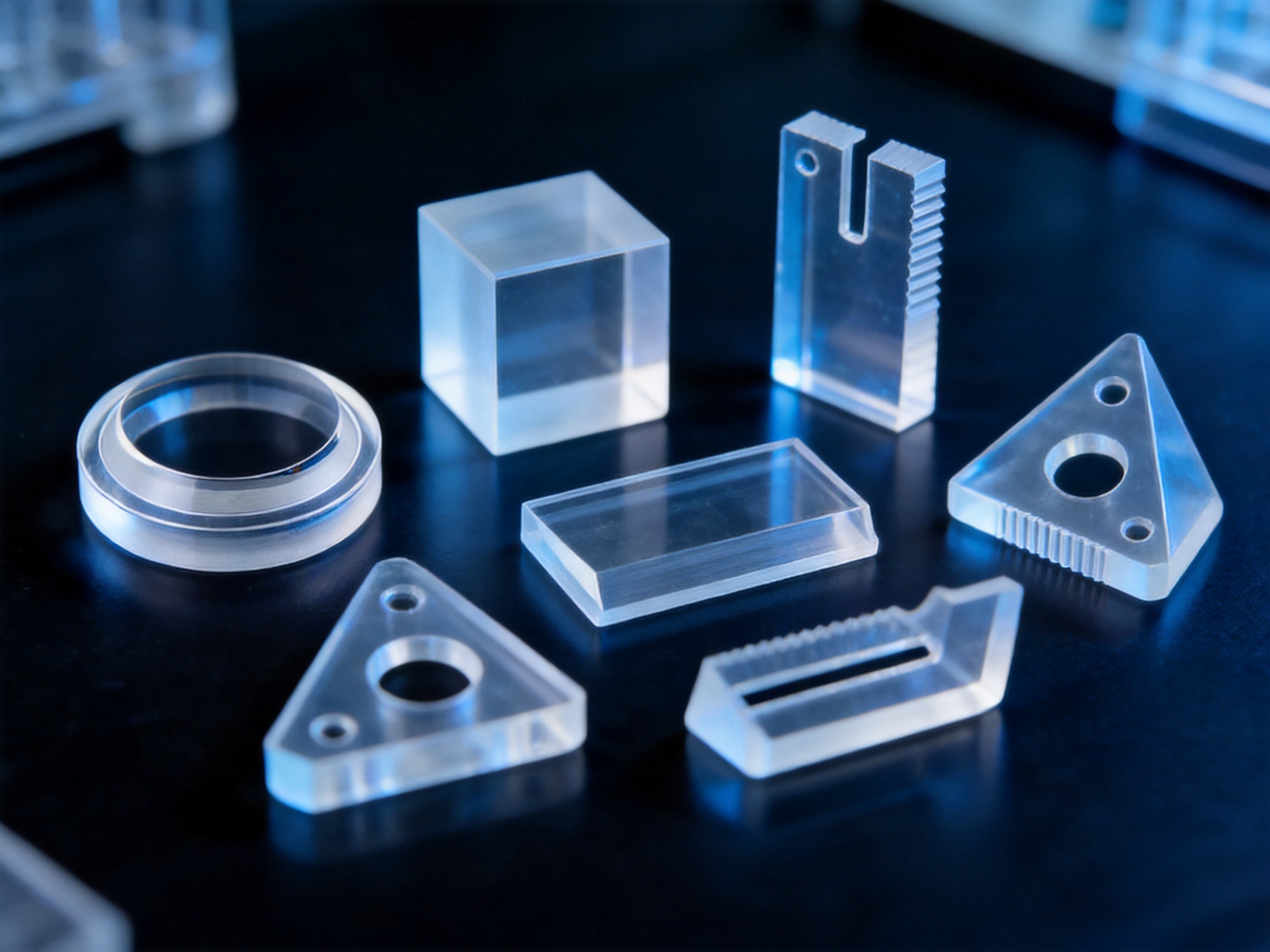
The ability to customize is one of the greatest strengths of this product. Applications in optics and industrial equipment rarely share identical installation structures. Designers may require round windows for traditional lens mounts, square or rectangular windows for sensor housings, triangular or trapezoidal pieces for compact mechanical layouts, or irregular components for proprietary systems. The product can be manufactured according to customer drawings, samples, or technical specifications.
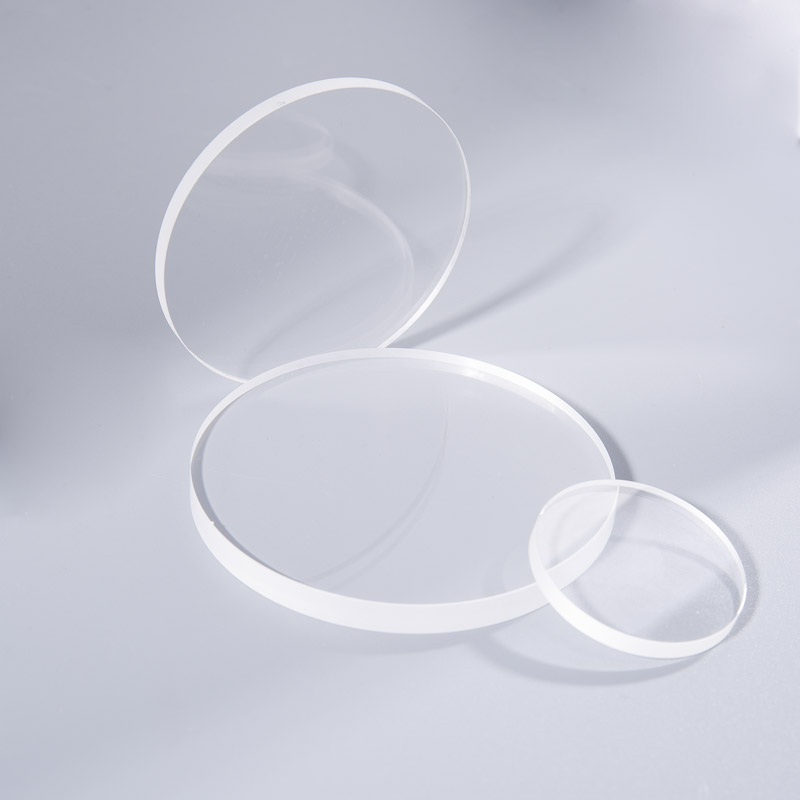
Typical processing ranges include outer diameters from 2.0 mm to 400 mm for round components, and length and width ranges from 2.0 mm to 400 mm for square and rectangular components. Thickness can range from 0.1 mm to 30 mm. This wide dimensional range enables the same manufacturing platform to support miniature precision parts as well as larger industrial quartz windows. Thin substrates may be used in lightweight optical modules, while thicker parts may provide greater mechanical strength or sealing support.
Perforation is another key capability. Holes can be introduced to serve as mounting holes, alignment holes, venting holes, fluid or gas passages, or functional apertures. Since quartz is brittle, hole-making must be controlled carefully to avoid edge chipping and crack propagation. The manufacturer’s ability to process holes while maintaining profile tolerance, thickness tolerance, surface flatness, and cleanliness is a major differentiator compared with suppliers that only provide basic cut glass blanks.
Special-shaped processing also requires reliable control of outer profiles. Corners, arcs, bevels, transitions, and thin-wall regions must be fabricated with attention to stress distribution. In high-value applications, the difference between a usable quartz window and a rejected one may depend on the quality of edges and holes as much as the quality of the optical surface. Precision profile control enables the component to fit smoothly into assemblies, reducing installation stress and improving long-term reliability.
Item |
Typical Capability or Specification |
Application Benefit |
Material |
Synthetic quartz or fused quartz glass |
High purity, thermal resistance, optical transmission, and chemical stability |
Round shape range |
Outer diameter from 2.0 mm to 400 mm |
Suitable for miniature optics, instruments, and larger observation windows |
Square and rectangular range |
Length and width from 2.0 mm to 400 mm |
Flexible integration into sensor modules and industrial housings |
Thickness range |
0.1 mm to 30 mm |
Supports lightweight, compact, or mechanically robust designs |
Profile tolerance |
Up to +/-0.03 mm depending on design and process conditions |
Improves assembly fit and positioning accuracy |
Thickness tolerance |
Up to ±0.005 mm for suitable specifications |
Supports consistent optical path length and mechanical stacking |
Surface flatness |
Up to ≤1/8λ at 632.8 nm depending on requirements |
Reduces wavefront distortion in precision optical systems |
Parallelism |
Up to ≤1 arc minute |
Helps maintain beam direction and system alignment |
Surface cleanliness options |
5/10, 10/20, 20/40, or 60/40 depending on application |
Allows cost and performance optimization for different optical grades |
Coating options |
Application-specific coating such as anti-reflection or infrared-related coating |
Improves transmission control and environmental performance |
Optical Performance: Transmission, Flatness, and Surface Quality
Optical performance is not determined by material alone. A quartz substrate with poor surface quality, weak parallelism, or excessive subsurface damage may fail in precision applications even if the raw material is excellent. The manufacturing process must control surface flatness, surface roughness, scratch-dig level, thickness, wedge, and cleanliness. The stated capability of surface flatness up to ≤1/8λ at 632.8 nm indicates suitability for demanding optical use, especially where wavefront quality is important.
Parallelism up to ≤1 arc minute is also valuable. In a simple protective window, parallelism may not be critical. In a laser path, imaging module, or precision measurement instrument, however, wedge can deflect the transmitted beam and introduce alignment errors. A well-controlled quartz window helps maintain predictable beam propagation and reduces the need for correction during system assembly.
Surface cleanliness grades such as 5/10, 10/20, 20/40, and 60/40 allow customers to select the appropriate quality level. A high-end laser or imaging system may require very low scratch-dig values, while an industrial viewing window may accept a less stringent grade. Offering multiple cleanliness and surface quality levels is an advantage because it avoids overengineering and supports cost-effective design choices.
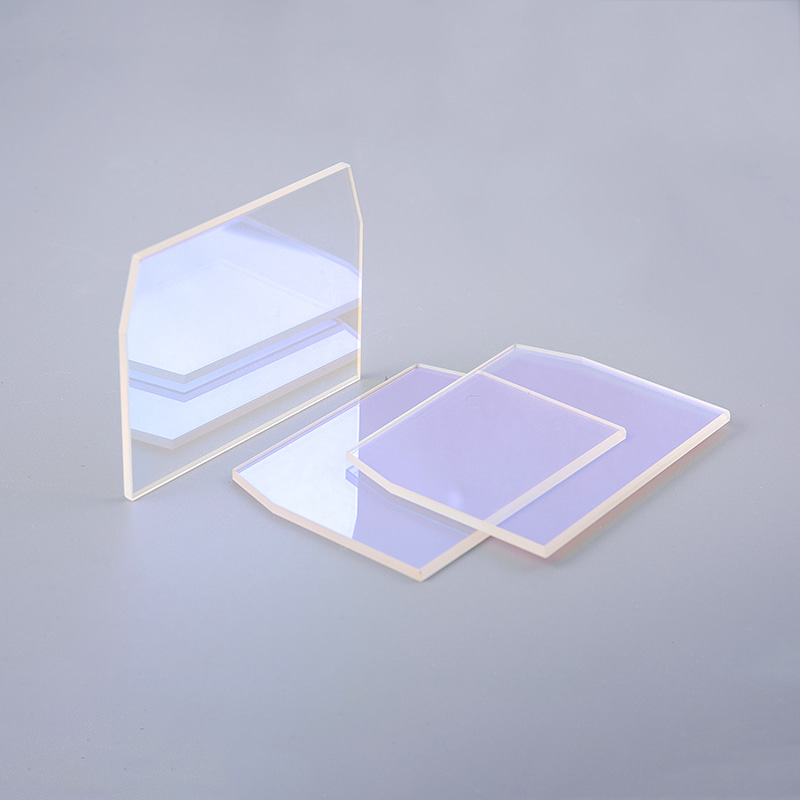
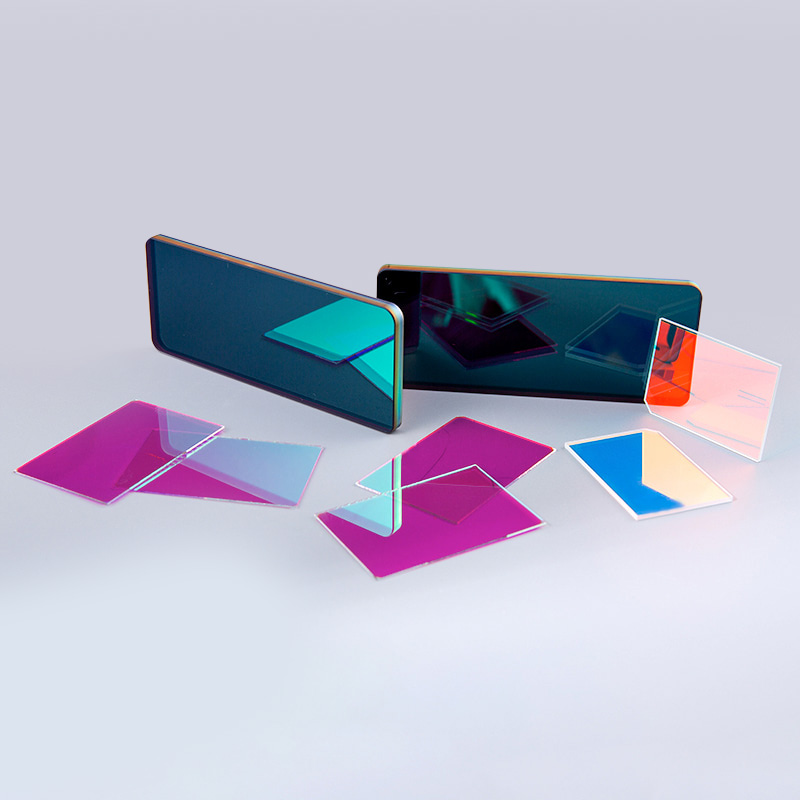
Coating further expands product performance. Anti-reflection coatings can reduce reflection loss and improve transmission at target wavelengths. Infrared-related coatings can help control thermal radiation or spectral behavior. Other custom coatings may be considered depending on wavelength, angle of incidence, environment, and durability requirements. Since quartz already has broad transmission, the right coating can fine-tune the component for ultraviolet, visible, or near-infrared applications.
Mechanical and Thermal Advantages in Real-World Environments
In many industrial systems, an optical window must survive harsh mechanical and thermal conditions. Quartz glass is well suited for these environments because of its low thermal expansion and high thermal stability. When a system heats and cools repeatedly, a material with high thermal expansion may develop stress at mounting points, seals, or holes. This can lead to cracking, deformation, leakage, or optical distortion. Quartz reduces these risks by maintaining dimensional stability over a broad temperature range.
The product’s perforated and special-shaped nature makes thermal design especially important. Holes and notches can concentrate stress if they are poorly processed. Precision edge finishing and controlled drilling help reduce microcracks and improve durability. Smooth transitions, appropriate hole spacing, and carefully designed edge geometry can significantly improve the service life of a quartz component under thermal cycling.
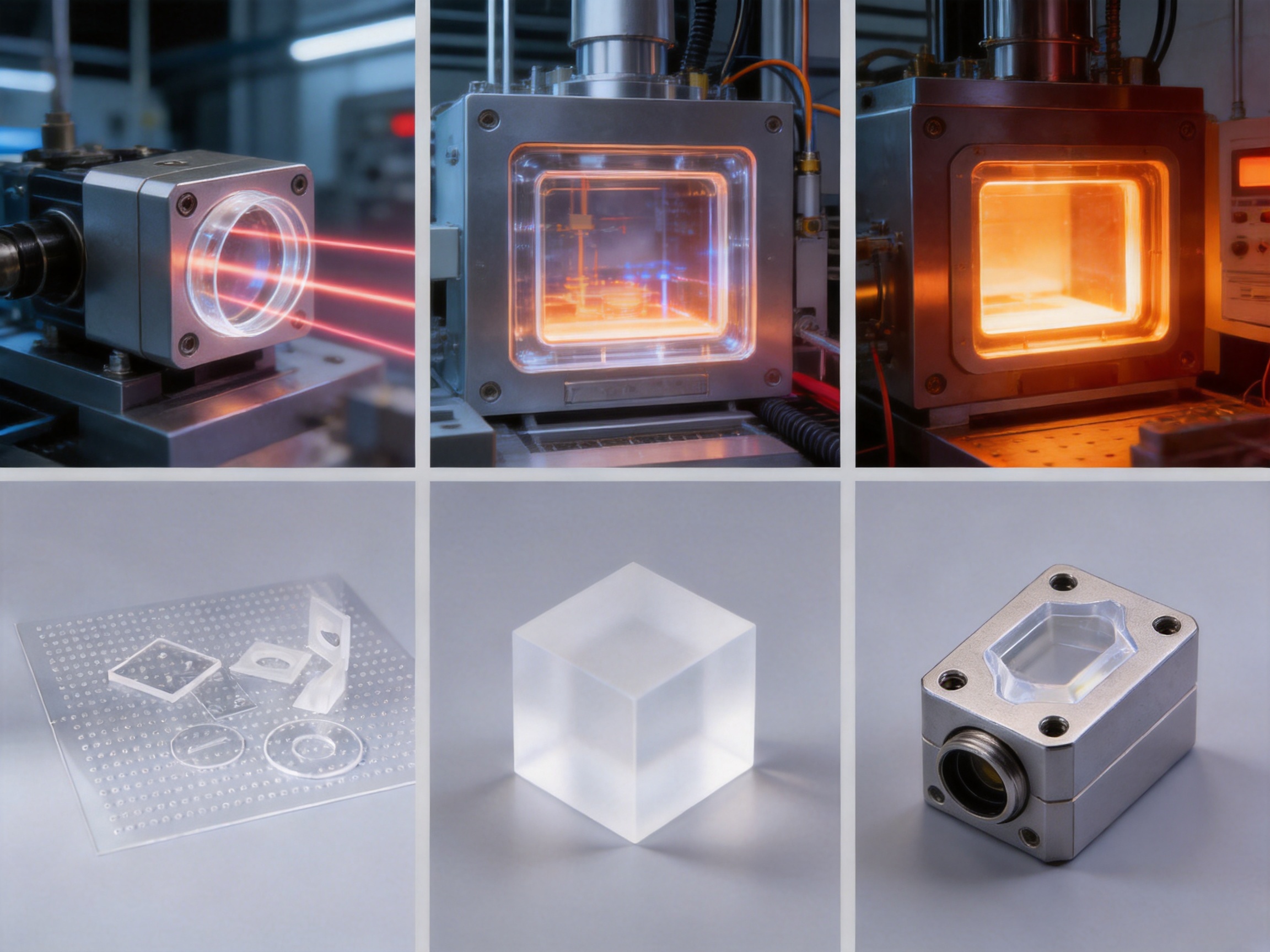
Compared with ordinary glass, quartz provides better resistance to sudden temperature changes. For example, in equipment where a window is exposed to hot gas on one side and cooler air on the other, thermal shock resistance is essential. Quartz windows are often preferred for furnace observation, combustion monitoring, lamp housings, and analytical systems because they can maintain optical access without rapid degradation.
Compared with polymer windows, quartz offers far better heat resistance, dimensional stability, hardness, and optical durability. Polymers may be lightweight and inexpensive, but they can yellow, scratch, deform, absorb moisture, or outgas. Quartz is much better suited for clean, high-temperature, or optically sensitive environments. Compared with many standard borosilicate glass products, quartz generally offers superior ultraviolet transmission, lower thermal expansion, and higher temperature capability.
Advantages Over Competitors and Alternative Suppliers
The competitive advantage of these perforated special-shaped quartz window substrates lies not only in the material, but also in the combination of precision, customization, manufacturing depth, and quality management. Some suppliers can provide standard quartz discs or plates, but they may lack the capability to produce complex shapes, tight tolerances, small holes, high flatness, or consistent batch quality. For customers developing advanced optical or industrial equipment, these limitations can delay assembly, increase rejection rates, and create hidden costs.
A key advantage is the broad processing range. The ability to manufacture parts from 2.0 mm to 400 mm, with thickness from 0.1 mm to 30 mm, allows engineers to source both prototypes and production parts from one supplier. This reduces supplier qualification workload and improves continuity from design validation to mass production.
Another advantage is tolerance control. Profile tolerance up to +/-0.03 mm and thickness tolerance up to ±0.005 mm are meaningful for assemblies where optical windows must fit precisely into holders, sealing grooves, stacked optical modules, or semiconductor fixtures. Tight dimensional control reduces the need for manual adjustment and helps ensure repeatability.
The surface quality capability is also a strong differentiator. Precision flatness, parallelism, and scratch-dig control require specialized polishing, measurement, and process know-how. Suppliers that only perform general glass cutting may produce parts that appear acceptable visually but fail in wavefront transmission, laser scatter, or high-resolution imaging. A professional optical component manufacturer can manage these requirements from raw material selection to final inspection.
Customization support is especially important. Instead of forcing customers to adapt their mechanical designs to standard stock windows, the product can be manufactured according to customer drawings. This allows designers to optimize the entire system, including mounting, airflow, sealing, optical path, and maintenance access. In many projects, the best optical part is not the simplest shape; it is the shape that best supports system performance and manufacturability.
Advanced Manufacturing Process
The production of a perforated special-shaped quartz window substrate begins with material selection. High-purity quartz glass is selected according to optical grade, transmission requirement, bubble and inclusion control, size, and thickness. Material inspection at the beginning helps prevent later process waste. A substrate intended for a precision laser or ultraviolet optical system may require stricter internal quality than a general industrial inspection window.
The next stage is cutting and shaping. Depending on the part geometry, the blank may be sliced, diced, ground, or CNC-machined. Round parts require accurate diameter control and circularity, while rectangular and irregular parts require precise edge positioning and profile accuracy. For special-shaped components, tool path planning is important because quartz can chip if sharp transitions or excessive local force are introduced.
Perforation is performed using controlled drilling or machining processes suitable for brittle optical materials. The process must account for hole diameter, depth, wall quality, entry and exit chipping, and positional accuracy. Coolant, feed rate, tool condition, and support method must be carefully controlled. When holes are near edges or close to each other, the risk of cracking increases, so experienced process planning becomes essential.
After shaping and drilling, edge finishing is applied. Edges may be chamfered, beveled, rounded, or polished according to design requirements. This step is not merely cosmetic. Proper edge finishing reduces stress concentration and improves handling safety. For perforated parts, hole edges may also need smoothing to reduce crack initiation points and improve cleanliness.
Lapping and polishing follow when optical surfaces require high flatness and smoothness. The goal is to remove machining damage, control thickness, improve parallelism, and achieve the required surface quality. The polishing process must be matched to the quartz material and target specification. Over-polishing, uneven pressure, or poor slurry control can affect flatness, while insufficient polishing can leave subsurface defects or scatter sources.
Cleaning and inspection are critical final steps. Quartz windows used in optical, semiconductor, or laboratory systems must be free from visible contamination, particles, residues, and process debris. Inspection may include dimensional measurement, visual defect inspection, surface quality evaluation, flatness testing, parallelism testing, and coating inspection if applicable. Parts are then packaged to protect surfaces and edges during transportation.
Manufacturing Strengths and Company Capabilities
Changzhou Haolilai Photo-Electricity Scientific and Technical Co., Ltd. is a professional manufacturer of precision optical components founded in 1998. Located in the national-level High-tech Development District of Changzhou, Jiangsu, China, the company has developed extensive experience in optical component manufacturing for laser optics, automotive optics, semiconductor optics, and consumer optics. This background is directly relevant to the production of perforated special-shaped quartz window substrates because the product requires both optical precision and mechanical customization.
The company covers an area of approximately 35,000 square meters and has more than 300 employees. Its certification system includes ISO9001:2015, ISO14001:2015, and IATF16949. These certifications indicate structured quality management, environmental management, and automotive-related manufacturing discipline. For customers in demanding industries, such systems are important because they support traceability, process control, corrective action, and stable production quality.
As a High-Tech enterprise in Jiangsu Province, the company has established the Jiangsu Precision Optical Lens Engineering Technology Center and Jiangsu Enterprise Technology Research Center. These platforms support technology development, process improvement, and product innovation. The company has obtained multiple invention patents, utility model patents, and Jiangsu High and New Tech Products, reflecting its investment in technical capability rather than simple commodity processing.
Its export experience to more than 20 countries also supports international customer needs. Precision optical components often require careful communication about drawings, tolerances, inspection standards, packaging, and logistics. Experience with global customers helps reduce misunderstanding and supports smoother project execution from quotation to delivery.
For perforated special-shaped quartz parts, these manufacturing strengths translate into practical advantages: more reliable process planning, better ability to interpret complex drawings, stronger tolerance control, and more consistent batch production. Customers can benefit from a supplier that understands optical requirements, not just glass cutting.

Application Areas
Semiconductor and Electronics Manufacturing
Semiconductor equipment often requires materials that combine cleanliness, thermal stability, chemical resistance, and dimensional precision. Quartz glass is widely used in semiconductor-related environments because of its purity and resistance to process conditions. Perforated quartz windows can support observation, light transmission, sensing, alignment, or process separation while matching the geometry of complex equipment. Holes and special contours may be required for fixtures, gas flow, mounting, or sensor integration.
Laser and Optical Instruments
Laser systems require windows that maintain wavefront quality and resist thermal effects. Quartz is suitable for many laser and optical applications because of its transparency and thermal stability. When the window is polished to high flatness and parallelism, it can protect internal components without significantly disturbing beam quality. Custom shapes allow integration into compact or non-standard optical paths.
Laboratory and Analytical Equipment
Laboratory instruments may use quartz windows for spectroscopy, ultraviolet transmission, reaction monitoring, sample observation, and high-temperature testing. The material’s chemical stability and transparency make it suitable for demanding measurement environments. Perforated designs can provide access for probes, flow paths, or mounting features while maintaining optical visibility.
Industrial Furnaces and Combustion Chambers
High-temperature observation windows require materials that resist heat and thermal shock. Quartz windows can be used in furnace observation ports, flame monitoring systems, and combustion process inspection equipment. The low thermal expansion coefficient helps preserve structural integrity when temperature changes occur. Special shapes may be necessary to match furnace housings or sealing assemblies.
Medical Devices and Scientific Systems
Medical and scientific devices may require optically clean, chemically stable, and precisely shaped components. Quartz substrates can be used in imaging, illumination, sterilization-related optical paths, diagnostic equipment, and controlled reaction systems. When high purity, UV transmission, or stable geometry is needed, quartz becomes a strong candidate material.
Automation and Sensor Systems
Automation systems often place sensors in challenging environments involving dust, heat, vibration, or chemical exposure. A quartz window can protect the sensor while allowing light to pass through. Custom holes and shapes make it easier to fit the window into compact sensor housings, robotic fixtures, and monitoring modules.
Design Considerations for Engineers
When specifying a perforated special-shaped quartz window, engineers should begin by defining the optical function. Is the component primarily a protective window, a precision transmission element, a UV optical path component, or a high-temperature observation window? The answer determines the required material grade, surface quality, flatness, parallelism, and coating.
The wavelength range is also essential. Quartz can transmit from ultraviolet to near-infrared, but exact transmission depends on material type, thickness, purity, surface finish, and coating. If the application involves deep ultraviolet, synthetic quartz may be preferred. If the application is in visible or near-infrared regions, fused quartz may be sufficient depending on the performance target.
Mechanical design should account for the brittle nature of quartz glass. Sharp internal corners, very thin bridges between holes, holes too close to edges, and excessive clamping force can increase fracture risk. Designers should use appropriate radii, chamfers, gasket support, and mounting methods. If holes are needed, their diameter, tolerance, spacing, and edge quality should be clearly specified.
Thermal expansion mismatch should also be considered. Although quartz has low thermal expansion, the surrounding metal or ceramic structure may expand differently. Proper mounting design should allow the quartz window to avoid excessive stress during heating and cooling. This is particularly important for furnace, lamp, laser, and semiconductor equipment.
For optical requirements, drawings should specify surface quality, flatness, parallelism, clear aperture, coating area, and inspection standards. For a perforated part, the effective optical aperture may be different from the total physical size. Engineers should clearly identify which region must meet optical specifications and which areas are mechanical support zones.
Quality Control and Inspection
Quality control for quartz window substrates must cover both optical and mechanical requirements. Dimensional inspection confirms outer diameter, length, width, thickness, hole diameter, hole position, and profile tolerance. For irregular shapes, coordinate measurement or optical measurement may be used to confirm the profile against customer drawings.
Surface quality inspection identifies scratches, digs, chips, stains, inclusions, and other defects. The required grade depends on the application. High-power laser systems may require stricter surface quality because defects can scatter light or absorb energy. Industrial viewing windows may accept more relaxed cosmetic standards if optical performance is not highly sensitive.
Flatness testing helps ensure the window does not distort transmitted wavefronts. Parallelism testing helps control beam deviation. Thickness measurement supports optical path consistency and mechanical stacking. For coated parts, coating inspection may include visual appearance, adhesion, spectral performance, and environmental durability depending on the coating type and customer requirements.
Cleanliness is especially important for semiconductor, laboratory, and high-precision optical applications. Particles or residues can contaminate equipment, scatter light, or interfere with sealing. Proper cleaning and packaging reduce the risk of contamination during transportation and storage. Protective packaging also helps prevent edge chips and surface scratches.
Why Precision Processing Matters More for Perforated Parts
Perforated quartz parts are more challenging than simple windows because every hole introduces additional risk. A hole changes the stress distribution of the component and creates surfaces that must be finished or protected. If a hole has chipped edges or microcracks, the part may fail during installation or thermal cycling. Therefore, the quality of drilling and post-processing is central to product reliability.
Special-shaped edges present similar challenges. An irregular profile may include concave corners, narrow sections, or asymmetric geometry. These features require careful processing to avoid localized damage. A supplier with advanced optical manufacturing experience is better able to manage these risks because it understands the relationship between machining, polishing, stress, and final inspection.
Precision processing also affects assembly efficiency. If hole positions or outer profiles vary, customers may face alignment problems during installation. This can slow production lines, increase labor cost, and cause inconsistent system performance. Tight profile and thickness tolerances help customers achieve predictable assembly and stable product quality.
In competitive industries, these details matter. A lower-cost part that requires rework, causes assembly failures, or produces optical errors may become more expensive than a properly manufactured precision component. The value of a high-quality quartz window is measured not only by the purchase price, but by its contribution to overall system reliability.
Coating Options and Performance Enhancement
Coatings can improve the functional performance of quartz window substrates. Anti-reflection coating is commonly used to reduce reflection at one or more wavelengths. This can increase transmission, reduce ghost images, and improve signal quality in optical instruments. For laser systems, reduced reflection can also help minimize stray light and unwanted feedback.
Infrared-related coatings may be selected when thermal radiation control is required. In high-temperature observation or illumination systems, spectral control can help protect sensors or improve measurement accuracy. Other application-specific coatings may be designed for ultraviolet transmission, visible enhancement, environmental protection, or wavelength selection.
Coating design should consider the substrate material, operating wavelength, angle of incidence, polarization, temperature, humidity, cleaning method, and mechanical handling. A coating that performs well in a laboratory may not be ideal for a hot industrial chamber unless durability is considered. Therefore, coating requirements should be discussed during the design stage rather than added as an afterthought.
For perforated special-shaped parts, coating uniformity may be more complex than for simple discs. Holes, edges, and irregular contours can affect coating handling and masking. Experienced manufacturing planning helps ensure that the coated functional area meets optical requirements while mechanical areas remain suitable for assembly.
Comparison with Common Alternative Materials
Ordinary soda-lime glass is inexpensive and widely available, but it generally cannot match quartz glass in high-temperature resistance, ultraviolet transmission, thermal shock resistance, or dimensional stability. It may be suitable for simple protective windows in mild environments, but it is not ideal for precision optical or high-temperature systems.
Borosilicate glass offers better thermal behavior than soda-lime glass and is commonly used in laboratory glassware. However, quartz typically provides lower thermal expansion, higher temperature capability, and stronger ultraviolet transmission. For demanding optical or semiconductor uses, quartz often provides a higher performance margin.
Sapphire is another high-performance window material. It offers excellent hardness and mechanical durability, but it can be more costly and may present different optical and processing considerations. For applications requiring broad UV to near-infrared transmission, low thermal expansion, and custom perforated processing, quartz can be a balanced and practical choice.
Polymer windows such as acrylic or polycarbonate are lightweight and easy to machine, but they are vulnerable to scratching, thermal deformation, chemical attack, yellowing, and outgassing. In clean, hot, or optically demanding environments, quartz provides far better stability and long-term performance.
Procurement Guidance
To obtain the best result, customers should provide a detailed drawing or specification sheet. The drawing should include material type, outer dimensions, thickness, hole diameters, hole positions, tolerances, edge treatment, surface quality, flatness, parallelism, coating requirements, clear aperture, quantity, and packaging expectations. If the application environment includes high temperature, vacuum, chemical exposure, ultraviolet light, laser energy, or pressure difference, these conditions should also be communicated.
For new designs, it is often useful to begin with prototype samples. Prototype production allows engineers to verify fit, optical performance, thermal behavior, and assembly method before moving to larger quantities. Feedback from prototype testing can be used to adjust hole size, edge radius, thickness, coating, or tolerance requirements.
Cost optimization should be based on functional requirements. Not every application needs the highest surface quality or tightest tolerance. A professional manufacturer can help balance performance and cost by identifying which specifications are critical and which can be relaxed. For example, a window used only for visual observation may not require the same flatness as a laser transmission window.
Lead time depends on material availability, part complexity, tolerance level, coating requirement, and order quantity. Special-shaped and perforated parts require more planning than standard windows, so early communication is recommended. Clear technical documentation reduces delays and improves first-pass success.
Q&A Section
Q1: What is a perforated special-shaped quartz window substrate?
It is a customized quartz glass optical component with a non-standard shape and, when required, holes or other processed features. It is used to transmit light, protect equipment, support mounting, provide observation access, or integrate with complex mechanical systems.
Q2: What materials are used for these parts?
The parts are typically made from fused quartz glass or synthetic quartz glass. Both materials provide strong thermal resistance, optical transparency, electrical insulation, and chemical stability. Synthetic quartz may be preferred for higher purity or specific ultraviolet applications.
Q3: What shapes can be manufactured?
Common shapes include round, square, rectangular, triangular, and trapezoidal components. Irregular shapes can also be processed according to customer drawings, including holes, notches, slots, chamfers, and special outer profiles.
Q4: What size range is available?
Round parts can typically be manufactured with outer diameters from 2.0 mm to 400 mm. Square and rectangular parts can typically be produced with length and width from 2.0 mm to 400 mm. Thickness can range from 0.1 mm to 30 mm, depending on the design and processing requirements.
Q5: Why choose quartz instead of ordinary glass?
Quartz provides better high-temperature resistance, lower thermal expansion, stronger thermal shock resistance, broader ultraviolet to near-infrared transmission, and better dimensional stability than ordinary glass. These advantages make it more suitable for precision optical, semiconductor, laboratory, and industrial environments.
Q6: Can the parts be coated?
Yes. Coating options can be selected according to the application, such as anti-reflection coating or infrared-related coating. The coating design should consider wavelength, angle of incidence, temperature, durability, and cleaning method.
Q7: What surface quality can be achieved?
Depending on the requirement, surface cleanliness grades such as 5/10, 10/20, 20/40, and 60/40 can be supported. Surface flatness can reach up to ≤1/8λ at 632.8 nm for suitable specifications, and parallelism can reach up to ≤1 arc minute.
Q8: Are these parts suitable for high-temperature environments?
Yes. Quartz glass has excellent thermal stability and low thermal expansion, making it suitable for high-temperature observation, furnace systems, combustion chambers, lamp housings, and other environments with temperature fluctuations. Final suitability should be confirmed according to the exact operating conditions.
Q9: What information is needed for a quotation?
A quotation usually requires material type, dimensions, thickness, tolerances, hole information, drawing files, surface quality, flatness, parallelism, coating requirements, quantity, application environment, and packaging needs. The more complete the specification, the more accurate the quotation and process evaluation will be.
Q10: What makes the manufacturer suitable for precision quartz processing?
The manufacturer has long experience in precision optical components, certified quality systems, a large production base, engineering research platforms, patent achievements, and export experience. These capabilities support customized quartz processing, optical polishing, inspection, and stable batch production.
Conclusion
Perforated special-shaped quartz window substrates are high-value components for systems that demand more than a simple transparent barrier. They combine the material advantages of high-purity quartz glass with precision shaping, perforation, optical polishing, tolerance control, and optional coating. Their performance benefits include broad ultraviolet to near-infrared transparency, high-temperature resistance, low thermal expansion, thermal shock resistance, electrical insulation, chemical stability, and reliable dimensional accuracy.
Compared with ordinary glass, polymer windows, and basic stock components, these customized quartz substrates provide stronger long-term reliability and better integration flexibility. Compared with suppliers that only offer standard shapes or rough processing, a precision optical manufacturer can deliver tighter tolerances, better surface quality, controlled holes and edges, and more stable production results.
For semiconductor equipment, laser systems, laboratory instruments, industrial furnaces, medical devices, automation sensors, and advanced optical assemblies, the product offers a practical solution where optical performance and mechanical customization must work together. With appropriate design communication, material selection, manufacturing control, and inspection, perforated special-shaped quartz window substrates can help improve system reliability, assembly efficiency, and optical performance.
References
1. Malitson, I. H. “Interspecimen Comparison of the Refractive Index of Fused Silica.” Journal of the Optical Society of America.
2. Heraeus Quarzglas. Quartz Glass for Optics: Technical Information and Material Properties.
3. ISO 10110. Optics and Photonics: Preparation of Drawings for Optical Elements and Systems.
4. ISO 9211. Optics and Photonics: Optical Coatings.
5. ASTM International. Standard Test Methods and Practices for Glass and Optical Materials.
6. Bass, M., DeCusatis, C., Enoch, J., Lakshminarayanan, V., Li, G., MacDonald, C., Mahajan, V., and Van Stryland, E. Handbook of Optics. McGraw-Hill.
7. Bach, H., and Krause, D. Thin Films on Glass. Springer.
8. Uhlmann, D. R., and Kreidl, N. J. Glass: Science and Technology. Academic Press.


 苏公网安备32041102000130号