
 Search
 en
 English
 日本語
 русский
 Español
 Deutsch
 中文简体
Content
- 1 1. Understanding Perforated Special-Shaped Quartz Parts
- 2 2. Material Advantages of High-Purity Quartz
- 3 3. Technical Specifications and Performance Control
- 4 4. Manufacturing Process for Customized Quartz Windows
- 5 5. Advantages Compared with Conventional Optical Materials
- 6 6. Company Manufacturing Strengths and Technical Resources
- 7 7. Application Areas
- 8 8. Design Guidance for Customers
- 9 9. Why Customized Production Creates a Competitive Advantage
- 10 10. Quality Assurance and Long-Term Reliability
- 11 11. Frequently Asked Questions
- 11.1 Q1: What are perforated special-shaped quartz parts?
- 11.2 Q2: What quartz materials are available?
- 11.3 Q3: What sizes can be manufactured?
- 11.4 Q4: Can triangular and trapezoidal quartz windows be produced?
- 11.5 Q5: What is the profile tolerance?
- 11.6 Q6: What is the thickness tolerance?
- 11.7 Q7: What surface quality is available?
- 11.8 Q8: What does parallelism of one arcminute mean?
- 11.9 Q9: Are optical coatings available?
- 11.10 Q10: Can the parts be supplied with holes or perforations?
- 11.11 Q11: Why is quartz suitable for high-temperature equipment?
- 11.12 Q12: Is quartz suitable for ultraviolet applications?
- 11.13 Q13: How should customers prepare a quotation request?
- 11.14 Q14: What industries can use these components?
- 11.15 Q15: How does the manufacturer support quality consistency?
- 12 12. Conclusion
- 13 References
- 14 Product: Perforated special-shaped parts
Quartz window substrates are essential optical components for systems that require dependable light transmission, dimensional stability, thermal resistance, and electrical insulation. They are used in semiconductor equipment, laser systems, optical instruments, laboratory equipment, medical devices, industrial furnaces, combustion chambers, communication equipment, defense technologies, and many other demanding applications. When these substrates must be produced in circular, square, rectangular, triangular, trapezoidal, or irregular geometries, manufacturing precision becomes just as important as material quality.
Perforated special-shaped parts combine the functional advantages of high-purity quartz with the flexibility of customized optical processing. They can be manufactured according to technical drawings, application requirements, and installation conditions. Their performance is determined not only by the quartz material itself, but also by dimensional accuracy, thickness control, surface quality, parallelism, cleanliness, effective aperture, and coating selection.
Changzhou Haolilai Photo-Electricity Scientific and Technical Co., Ltd. provides precision quartz window substrates and other optical components for customers requiring stable quality and customized geometries. With manufacturing experience dating back to 1998, the company serves laser optics, automotive optics, semiconductor optics, consumer optics, and other precision optical markets. Its production capabilities include quartz windows with diameters or lengths from 2 mm to 400 mm, thicknesses from 0.1 mm to 30 mm, profile tolerances of approximately ±0.03 mm, and thickness tolerances of ±0.005 mm.
The following article explains the properties, manufacturing value, technical advantages, applications, quality considerations, and customization potential of these special-shaped quartz optical parts.
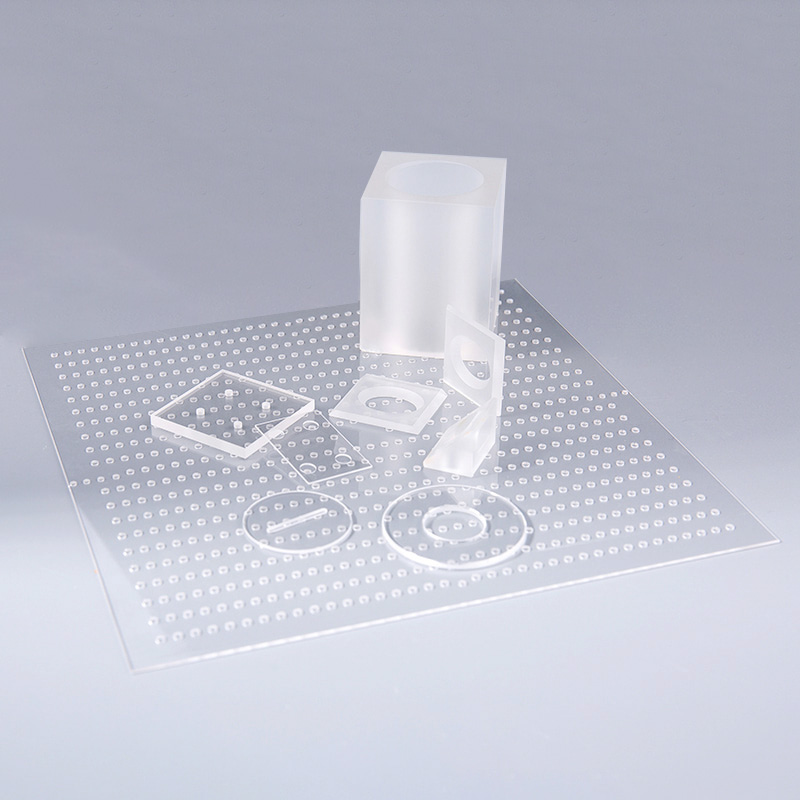
Perforated special-shaped parts
1. Understanding Perforated Special-Shaped Quartz Parts
Perforated special-shaped parts are optical or functional components manufactured with nonstandard outlines, apertures, holes, cutouts, or other geometrical features. In many applications, a simple round window cannot satisfy the requirements of an optical assembly. The component may need to fit within a restricted housing, follow the contour of an instrument, accommodate fasteners, or provide a precisely positioned light-transmission area.
Quartz window substrates are especially suitable for this type of component because quartz glass combines optical clarity with high temperature resistance and dimensional stability. The base material generally contains more than 99.99% silica. This high silica content contributes to the material’s purity, chemical stability, and reliable performance under demanding environmental conditions.
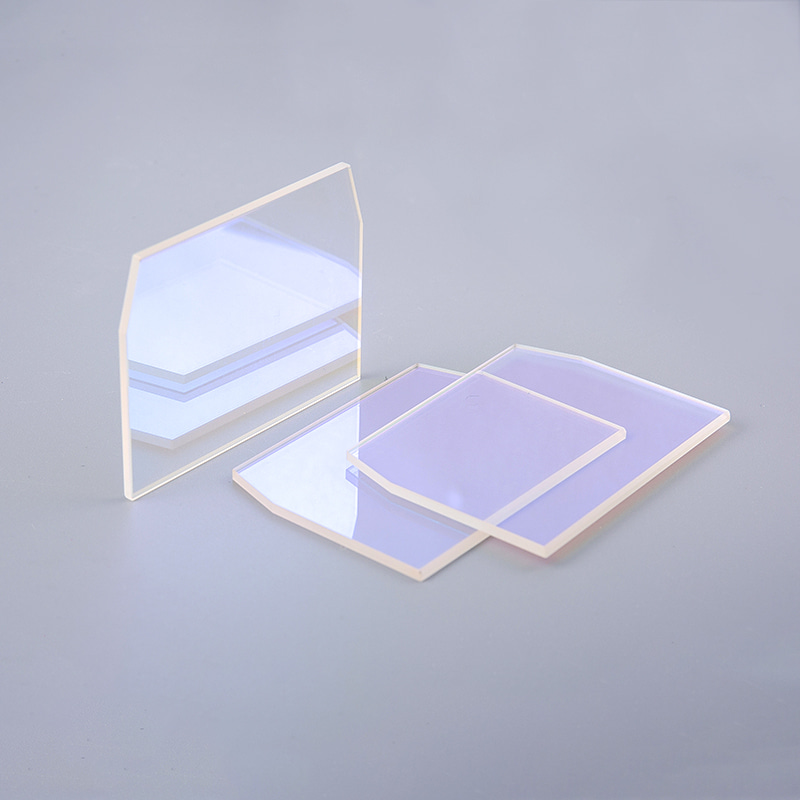
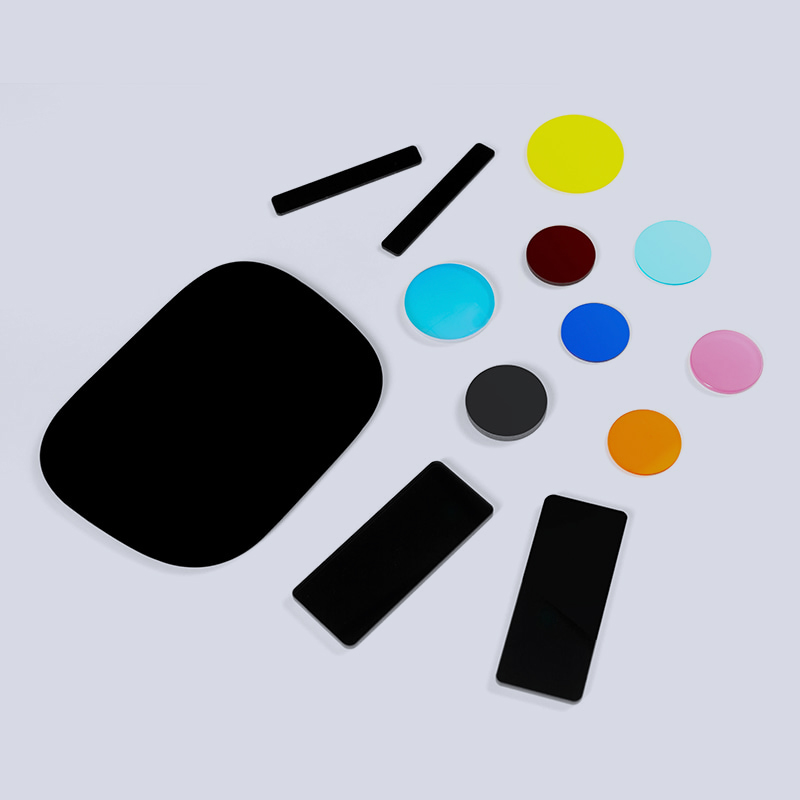
The term “special-shaped” may refer to a triangle, trapezium, irregular polygon, rectangular plate, or another geometry defined by a customer drawing. It may also refer to an optical window with holes or perforations. These features can be required for mounting, gas flow, alignment, sensing, inspection, or integration with a larger mechanical structure.
Although the appearance of a quartz window may seem simple, the manufacturing requirements can be highly demanding. A part with a thin profile, a tight thickness tolerance, a high-quality surface, and a non-circular perimeter requires careful control throughout material preparation, cutting, shaping, edge processing, polishing, cleaning, inspection, and packaging.
1.1 Typical Quartz Window Geometries
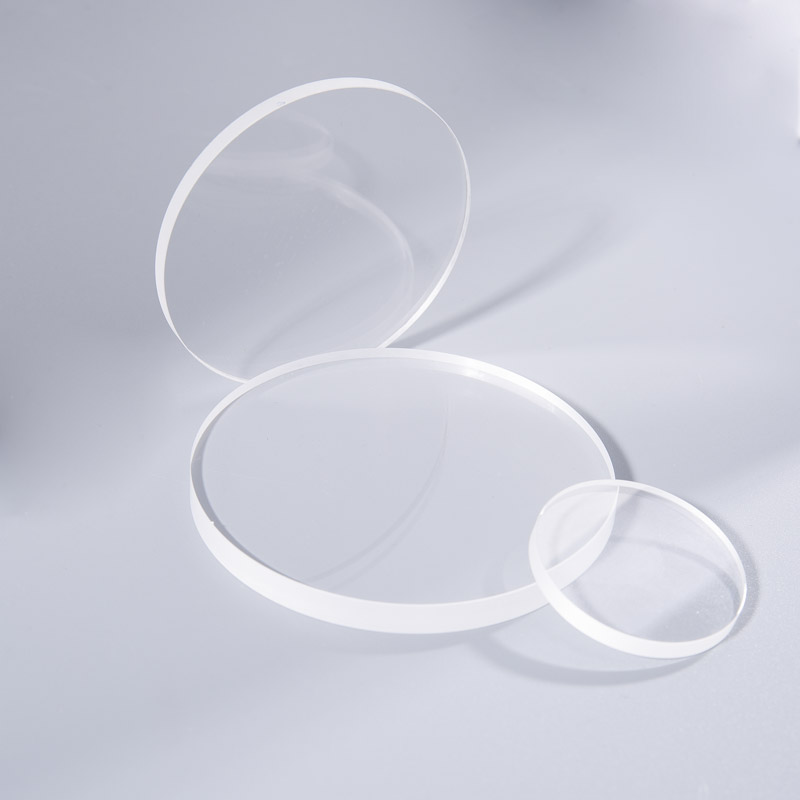
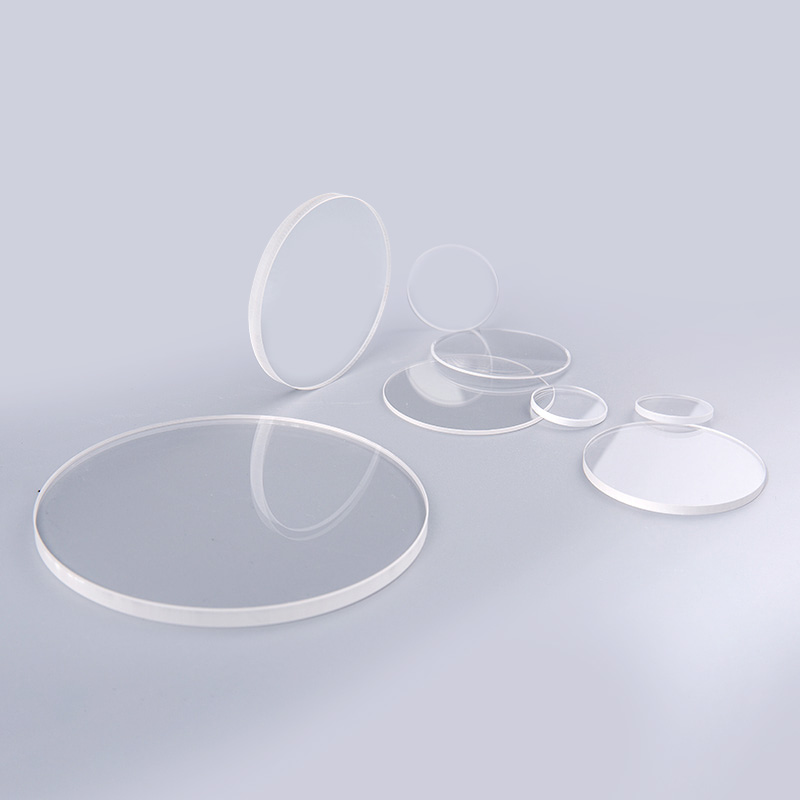
Round quartz windows can be produced with outer diameters from approximately 2 mm to 400 mm and thicknesses from 0.1 mm to 30 mm. Circular windows are widely used in optical ports, sensors, lamps, laser systems, analytical instruments, and vacuum equipment.
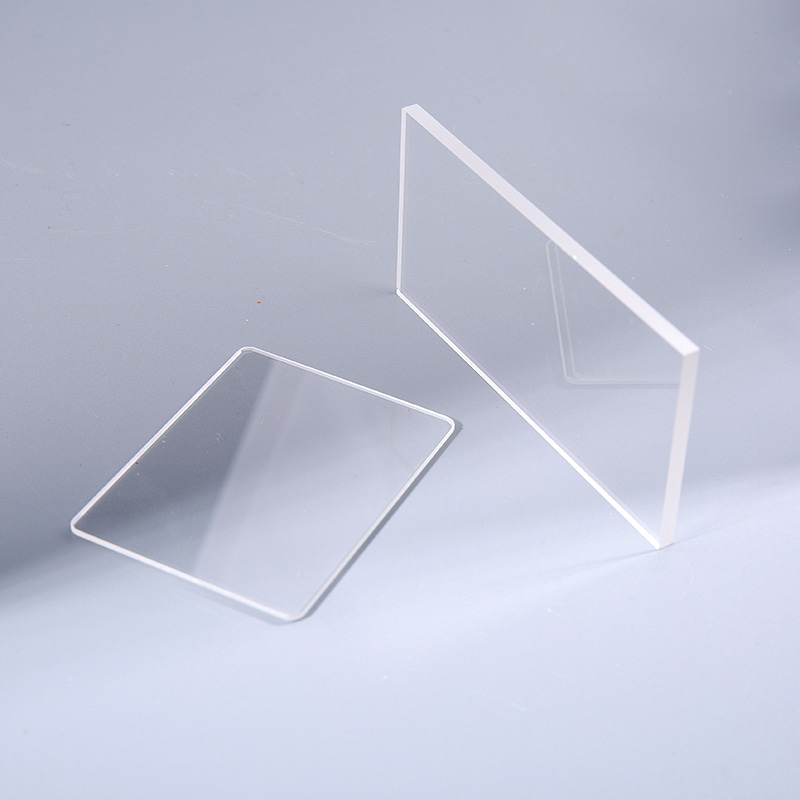
Square and rectangular quartz windows can generally be manufactured with lengths from 2 mm to 400 mm, widths from 2 mm to 400 mm, and thicknesses from 0.1 mm to 30 mm. These geometries are useful when a window must occupy a flat opening or fit into a rectangular frame.
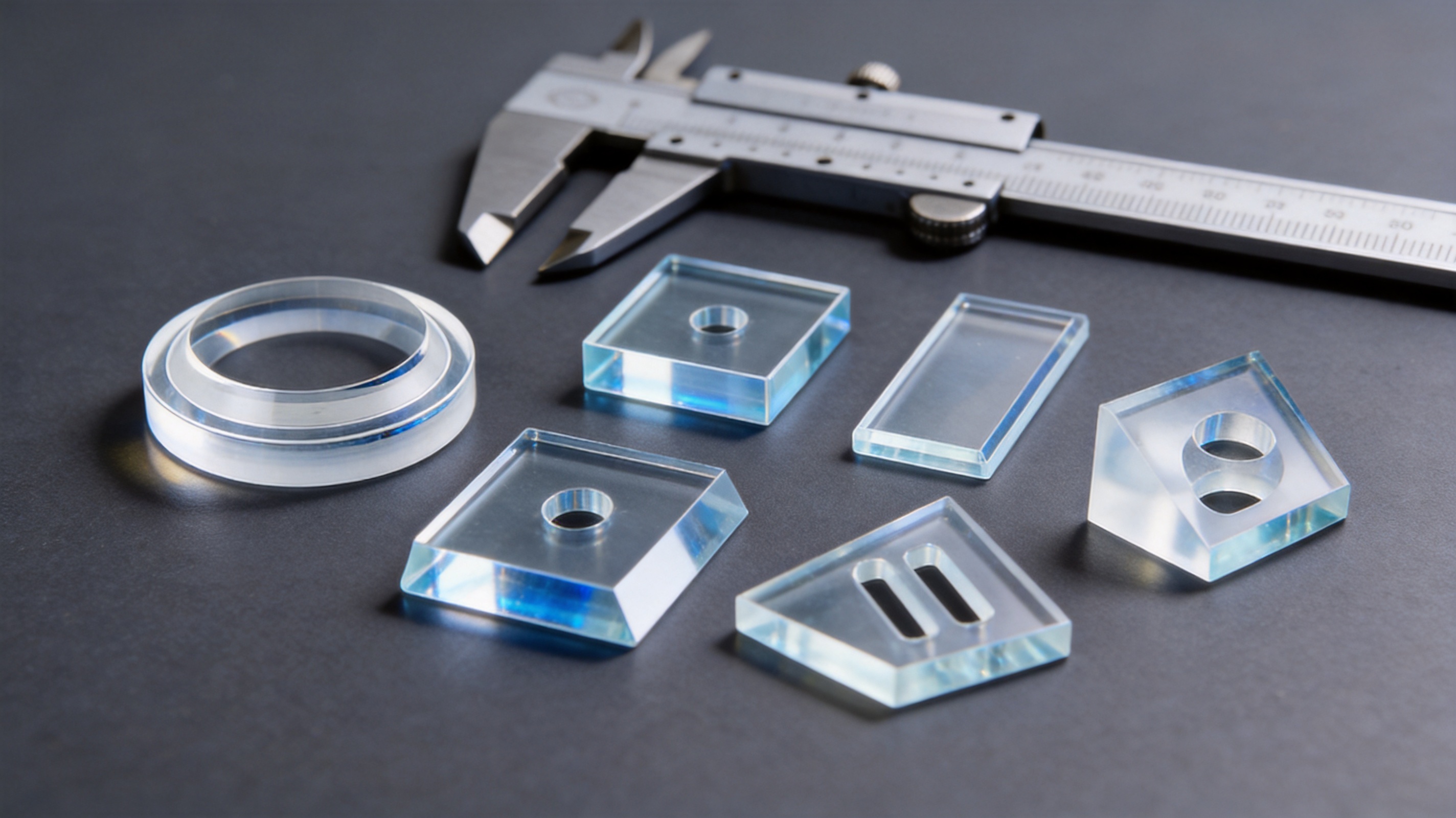
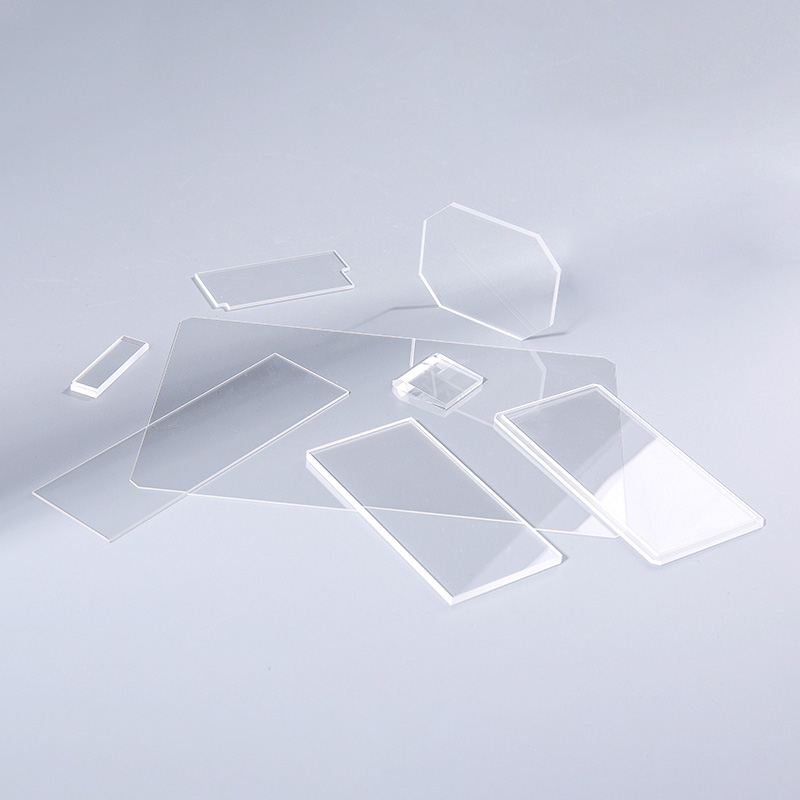
Triangular, trapezoidal, and irregular quartz windows are normally customized according to customer drawings. Their production may involve specially controlled cutting and edge finishing operations to achieve the required outline without compromising the optical surface or structural integrity.
Perforated windows may include one or more holes, slots, or open areas. The shape, position, diameter, and edge condition of each perforation can be defined according to the final assembly. When the component is used for optical transmission, the location and finish of the perforation must be coordinated with the effective aperture and the optical path.
1.2 Fused Quartz and Synthetic Quartz
Quartz glass can be divided into fused quartz glass and synthetic quartz glass. Both materials provide important advantages, including high heat resistance, electrical insulation, chemical stability, and optical transparency. The selection between them depends on the required wavelength range, purity, thermal conditions, application environment, and customer specifications.
Synthetic quartz is listed as the material for the quartz window products described in the supplied technical information. Synthetic quartz can provide a highly controlled material base for precision optical components. Its purity and consistency are valuable in applications where contamination, optical absorption, or material variation could affect system performance.
Material selection should be made together with the optical and mechanical requirements of the finished component. A suitable material specification helps ensure that the window performs reliably under the expected temperature, radiation, chemical exposure, pressure, and light-transmission conditions.
2. Material Advantages of High-Purity Quartz
The primary advantage of these special-shaped optical parts is the combination of high-purity quartz material and precision processing. Many transparent materials can transmit light, but fewer can maintain optical and mechanical performance across ultraviolet, visible, and near-infrared environments while also tolerating high temperatures and rapid thermal changes.
2.1 High Silica Purity
The quartz glass used for these substrates contains more than 99.99% silica. High purity supports low contamination levels and consistent optical behavior. This is particularly important in semiconductor, laser, analytical, and laboratory environments, where impurities can affect process cleanliness, light transmission, or component reliability.
A high-purity material also reduces the risk that unwanted constituents will react with process gases, chemicals, or high-temperature environments. For this reason, quartz windows are commonly selected for equipment in which the component must remain stable while exposed to aggressive or sensitive operating conditions.
2.2 High Hardness
Quartz has a Mohs hardness of approximately seven. This hardness gives the material good resistance to ordinary scratching and surface wear when it is handled correctly. A harder optical surface can help preserve transmission quality and reduce the risk of damage during service.
However, hardness does not mean that quartz is immune to chipping or breakage. Thin sections, sharp corners, holes, and irregular edges must still be designed and processed carefully. Proper edge treatment, protective packaging, and suitable installation methods remain necessary for reliable use.
2.3 Temperature Resistance
Quartz glass can operate in high-temperature environments where many conventional optical materials would soften, deform, discolor, or lose dimensional stability. This makes quartz windows suitable for furnaces, combustion chambers, high-temperature sensors, heating equipment, semiconductor processing tools, and other thermal systems.
High-temperature capability is particularly valuable when the optical window must remain in place during heating cycles. A stable window can help preserve the alignment between the optical path and the surrounding equipment, reducing the risk of performance changes caused by deformation.
2.4 Low Thermal Expansion
Quartz has a low coefficient of thermal expansion. As temperature changes, its dimensions vary relatively little compared with many other materials. This characteristic helps maintain dimensional accuracy and reduces thermal stress in precision assemblies.
Low thermal expansion is beneficial in applications involving repeated temperature fluctuations. It can also improve the stability of optical alignment, aperture position, and mechanical fit. When a window is installed in a metal or ceramic housing, engineers should nevertheless evaluate the expansion behavior of the complete assembly rather than the window alone.
2.5 Thermal Shock Resistance
Quartz provides strong resistance to thermal shock. The material can tolerate rapid temperature changes better than many ordinary glasses, provided that the component is properly designed and free from significant defects. This property is valuable in systems that experience intermittent heating, cooling, process cycling, or sudden exposure to hot gases.
Thermal shock resistance also supports the use of quartz windows in industrial environments where stable temperature control may not always be possible. It helps reduce the likelihood of cracking caused by abrupt changes in operating conditions.
2.6 Electrical Insulation
Quartz glass has positive electrical insulation properties. This makes it useful in equipment where the optical window must remain electrically nonconductive or must separate an optical path from energized components. Semiconductor equipment, laboratory instruments, high-voltage systems, and industrial sensors can benefit from this characteristic.
Electrical insulation can be combined with transparency, heat resistance, and chemical stability in a single component. This combination is one reason quartz remains an important material in advanced technology and precision equipment.
2.7 Broad Optical Transparency
Quartz exhibits useful transparency across a broad wavelength range extending from ultraviolet to near-infrared. The precise transmission performance depends on material grade, thickness, surface quality, coating, and wavelength. Nevertheless, the broad spectral range makes quartz suitable for applications requiring reliable transmission beyond the visible spectrum.
Quartz windows can therefore support ultraviolet light sources, visible inspection systems, near-infrared sensors, laser equipment, spectroscopy instruments, and optical communication assemblies. Where a specific wavelength band is critical, the customer should define the transmission target and coating requirements before production.
2.8 Chemical Stability
Quartz glass offers strong chemical stability in many operating environments. It is often selected for laboratory, semiconductor, chemical, and industrial equipment because it can resist a wide range of process conditions better than many alternative transparent materials.
Chemical resistance is not identical in every environment, and the final application should be assessed for exposure to acids, alkalis, solvents, plasma, process gases, cleaning agents, and other substances. Even so, quartz provides a reliable material foundation for many chemically demanding optical systems.
3. Technical Specifications and Performance Control
Precision optical performance depends on the relationship between material quality, geometry, surface condition, and cleanliness. The stated specifications for these quartz windows are designed to support demanding optical and mechanical applications.
| Parameter | Specification or Range | Practical Significance |
|---|---|---|
| Material | Synthetic quartz | Provides a high-purity base for precision optical applications |
| Round outer diameter | 2–400 mm | Supports small sensor windows and larger optical apertures |
| Square or rectangular length | 2–400 mm | Allows integration into compact and large flat openings |
| Square or rectangular width | 2–400 mm | Supports customized rectangular assemblies |
| Thickness | 0.1–30 mm | Accommodates thin optical windows and robust structural plates |
| Profile tolerance | ±0.03 mm | Helps maintain accurate perimeter and installation fit |
| Thickness tolerance | ±0.005 mm | Supports consistent optical path length and mechanical positioning |
| Surface quality | ≤1/8λ at 632.8 nm | Supports high-quality optical transmission and low wavefront distortion |
| Parallelism | ≤1 arcminute | Helps control angular deviation through the substrate |
| Cleanliness options | 5/10, 10/20, 20/40, 60/40 | Provides selectable surface cleanliness levels for different applications |
| Effective aperture | More than 90% | Ensures that most of the specified window area remains optically useful |
| Coating options | UV, visible, and infrared options | Allows transmission to be optimized for the intended spectral range |
3.1 Profile Tolerance
A profile tolerance of ±0.03 mm helps control the outline of the finished part. This is important for special-shaped windows because the perimeter must fit into a corresponding housing, gasket, frame, or alignment fixture.
For perforated parts, profile accuracy also applies to internal holes and cutouts. The position and size of a perforation can influence fastening, sealing, airflow, optical alignment, and the strength of the remaining material. Accurate profile control therefore supports both assembly efficiency and long-term reliability.
3.2 Thickness Tolerance
A thickness tolerance of ±0.005 mm is valuable in optical and precision mechanical applications. Thickness influences optical path length, transmission behavior, weight, mechanical fit, and the relationship between the front and rear surfaces.
Consistent thickness is especially important when multiple windows are used in the same equipment or when the component is installed alongside calibrated optical elements. Tight control can reduce variation between production batches and simplify the customer’s assembly and inspection procedures.
3.3 Surface Quality
The specified surface type is no more than 1/8 wavelength at 632.8 nm. This indicates a high level of flatness for the optical surface. Surface flatness influences wavefront quality, image formation, beam propagation, and the degree of distortion introduced by the window.
A flat optical surface is beneficial for laser systems, imaging assemblies, inspection instruments, and other equipment in which transmitted or reflected light must remain well controlled. The required surface specification should be matched to the application because not every protective window requires the same optical flatness.
3.4 Parallelism
Parallelism of no more than one arcminute helps limit the angular difference between the two primary surfaces. Poor parallelism can introduce beam deviation, unwanted interference effects, or positioning errors. Maintaining close parallelism is therefore important when the window is placed in a calibrated optical path.
For special-shaped windows, parallelism must be managed across the usable optical area even when the outside contour is irregular. This requires coordination between substrate preparation, grinding, polishing, measurement, and final inspection.
3.5 Cleanliness
Cleanliness grades such as 5/10, 10/20, 20/40, and 60/40 provide options for different application environments. A more demanding optical or semiconductor process may require stricter control of visible particles, surface defects, and contamination than a general industrial viewing window.
Clean handling is essential after final polishing and coating. Packaging must protect the component from dust, fingerprints, abrasion, and impact. Customers should specify whether the part will be used in a cleanroom, vacuum system, laser assembly, medical instrument, or general industrial environment.
3.6 Effective Aperture
An effective aperture greater than 90% means that more than 90% of the designated optical area is intended to remain useful for light transmission. This is an important consideration for windows with irregular outlines, edge zones, mounting features, or perforations.
Effective aperture should be evaluated together with the customer’s beam size, field of view, sensor area, and installation arrangement. A window may have a large overall dimension but a smaller usable optical area after edge exclusions, holes, or mounting regions are taken into account.
4. Manufacturing Process for Customized Quartz Windows
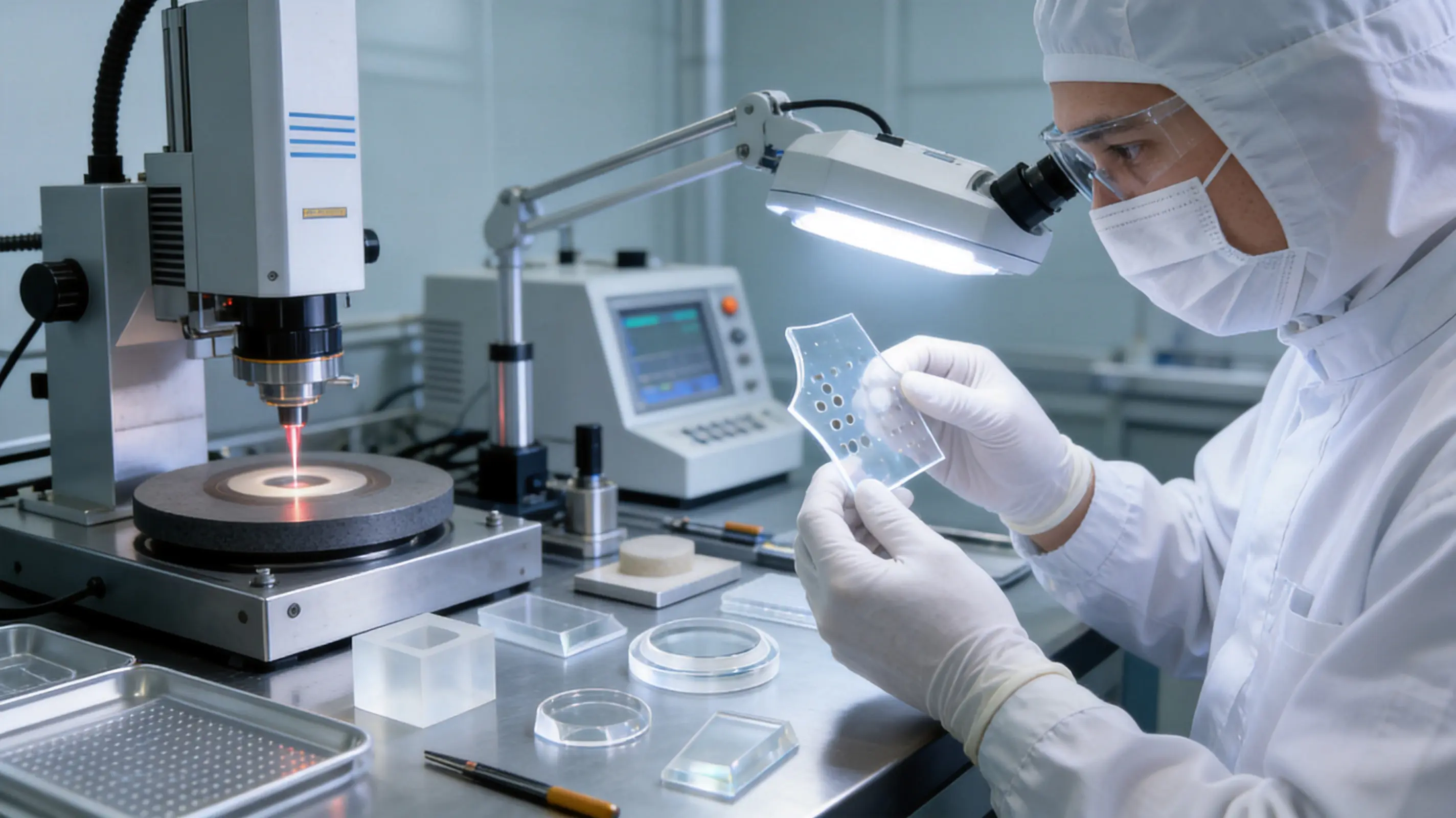
Producing special-shaped quartz parts requires a controlled manufacturing sequence. The exact route varies according to the geometry, thickness, aperture requirements, surface specification, and coating. The following stages describe the key manufacturing considerations associated with this type of product.
4.1 Technical Drawing Review
The process begins with a review of the customer’s drawing or technical specification. Engineers evaluate the overall dimensions, corner radii, hole locations, hole diameters, edge requirements, thickness, tolerances, optical area, coating, and cleanliness grade.
This review is particularly important for irregular and perforated geometries. Sharp corners, narrow sections, closely spaced holes, and very thin walls can increase manufacturing difficulty. Early technical communication helps determine whether design adjustments are advisable before production begins.
The drawing review can also clarify datum references and inspection methods. For example, the customer may define the position of a hole relative to an outside edge, a centerline, or another hole. A clear datum structure helps avoid dimensional ambiguity and improves consistency between the optical part and its mating assembly.
4.2 Material Preparation
High-purity quartz or synthetic quartz is selected according to the required optical and environmental performance. The raw material must be suitable for the requested thickness, size, transmission range, and application conditions.
Material preparation includes selecting a substrate large enough to produce the required component while allowing for machining and finishing allowances. The material should be handled carefully to prevent contamination, impact damage, or unintended surface defects before precision processing begins.
4.3 Cutting and Profile Formation
The quartz substrate is cut or shaped to create the initial outline. Circular, square, and rectangular shapes can be processed within the stated size range, while triangular, trapezoidal, and irregular shapes are made according to drawings.
At this stage, the part may retain additional material for subsequent grinding and polishing. Controlled profile formation is important because excessive mechanical stress can produce chips, microcracks, or edge damage. The processing strategy must account for the final dimensions and the fragility of thin or perforated sections.
4.4 Hole and Perforation Processing
Perforations and internal openings are produced according to the required geometry and position. The hole-making method must be selected according to the diameter, depth, thickness, edge quality, and tolerance requirements.
Hole edges can be especially sensitive because they create stress concentration areas. Careful processing and edge finishing help reduce chipping and improve the reliability of the finished component. When a hole is located close to an outside edge or another hole, the remaining material must be evaluated to ensure adequate structural strength.
Perforations can serve several functions. They may allow mechanical fastening, provide a passage for gases or fluids, accommodate pins, align the part within a housing, or create a defined optical opening. The functional role of each hole should be stated on the drawing so that dimensional and surface requirements can be interpreted correctly.
4.5 Grinding and Edge Treatment
Grinding refines the outline and removes excess material left by the initial cutting stage. Edge treatment can include chamfering, rounding, or other finishing operations intended to reduce sharpness and protect the component during handling and installation.
For thin windows, edge treatment is important because unprotected sharp edges may be more vulnerable to impact. For perforated parts, the internal edges of holes may also require controlled finishing. The final edge specification should identify whether the customer needs a chamfer, a radius, a polished hole, or a functional edge with a defined roughness.
4.6 Optical Surface Polishing
Polishing produces the optical surface required for light transmission and wavefront control. The process must be controlled to achieve the specified surface flatness, parallelism, clarity, and defect level.
Optical polishing is more demanding than ordinary transparent-part finishing because small variations can affect beam quality, image performance, or measurement accuracy. The work must be balanced across the surface to avoid excessive wedge, localized deformation, or nonuniform optical behavior.
For special-shaped parts, the polishing process must preserve the outline and the effective aperture. If the component includes holes or narrow sections, the polishing strategy must avoid damaging the surrounding material or changing the dimensions beyond tolerance.
4.7 Cleaning and Inspection
After polishing, the component is cleaned to remove particles, processing residues, and handling contamination. Cleaning requirements depend on the application and selected cleanliness grade. A window intended for semiconductor equipment or a laser assembly may require more stringent handling than a general industrial viewing window.
Inspection may include dimensional measurement, thickness measurement, surface flatness testing, parallelism measurement, visual inspection, defect evaluation, aperture verification, and coating inspection. The inspection plan should correspond to the customer’s drawing and agreed acceptance criteria.
4.8 Optical Coating
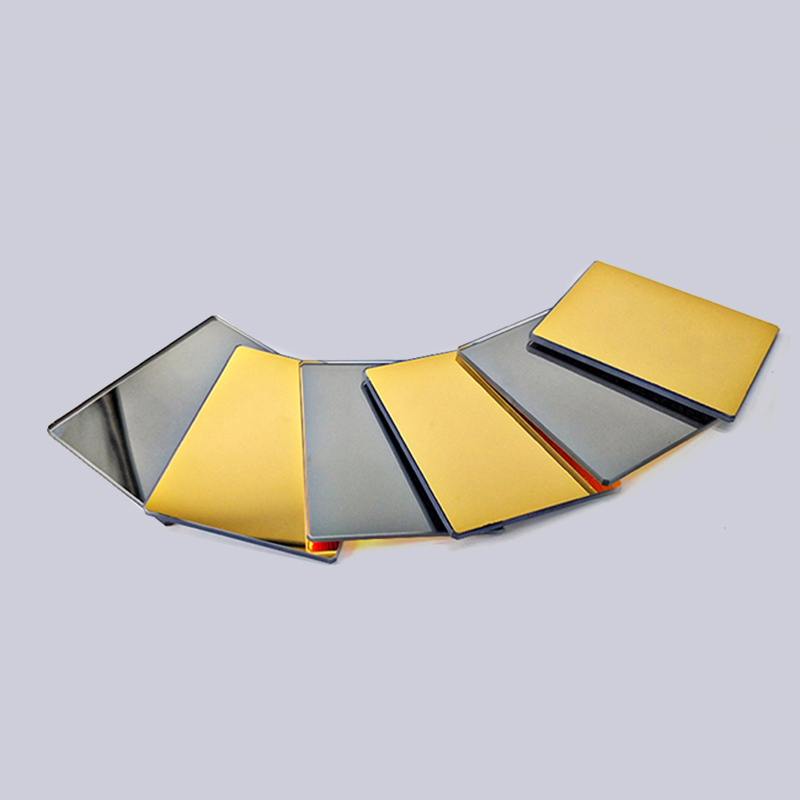
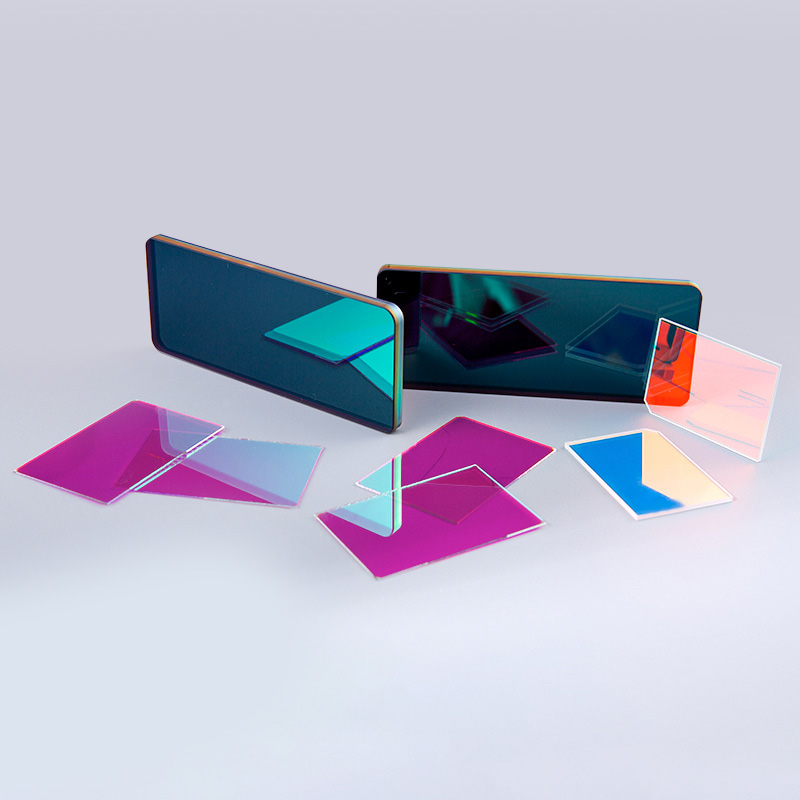
Quartz can be supplied with coating options for ultraviolet, visible, or infrared applications. A coating can improve transmission over a selected wavelength range and reduce reflection at the surface.
Coating selection should be based on wavelength, angle of incidence, polarization, operating temperature, humidity, cleaning method, and expected environmental exposure. A coating designed for a visible-light instrument may not be suitable for a high-temperature infrared system. The coating specification should therefore be confirmed before production.
4.9 Packaging and Delivery Protection
Quartz windows must be protected from impact, abrasion, dust, and contamination during packaging and transportation. Special-shaped and perforated parts may require individually separated packaging to prevent contact between edges and surfaces.
Suitable packaging is part of product quality because a perfectly polished component can be damaged after final inspection if it is not adequately protected. Packaging instructions should also address storage conditions, handling tools, protective films, and the removal of packaging materials before installation.
5. Advantages Compared with Conventional Optical Materials
Quartz windows are not the correct choice for every optical application, but they offer a compelling balance of properties when compared with many conventional glass or polymer alternatives.
5.1 Greater Thermal Capability
Many ordinary optical glasses and polymers have lower temperature limits than quartz. They may soften, deform, discolor, or experience significant optical changes under prolonged heating. Quartz is better suited to high-temperature environments and repeated thermal cycling.
This advantage can reduce the need for active cooling or protective thermal barriers in equipment where the window is exposed to heat. It can also extend component life in furnaces, combustion systems, and semiconductor processing tools.
5.2 Better Dimensional Stability
The low thermal expansion of quartz supports more stable dimensions across changing temperatures. In precision optical assemblies, this can help preserve alignment, aperture position, and mechanical fit.
Compared with materials that expand significantly with temperature, quartz can reduce the movement of the optical path. This is particularly useful when the window works with lasers, imaging systems, or calibrated sensors.
5.3 Wider Spectral Use
Quartz is transparent across a broad wavelength range extending from ultraviolet through near-infrared. Some standard glasses provide good visible transmission but perform less effectively in ultraviolet or near-infrared applications. Quartz offers greater flexibility when one platform must support more than one spectral band.
5.4 Stronger Chemical and Electrical Performance
Quartz combines chemical stability with electrical insulation. This combination is difficult to obtain in some other transparent materials. As a result, quartz windows are suitable for process equipment, laboratory devices, semiconductor tools, and electrically isolated optical systems.
5.5 Better Suitability for Custom Shapes
The ability to process quartz into circular, rectangular, triangular, trapezoidal, and irregular profiles gives designers more freedom. A customized geometry can reduce the need for adapters, simplify equipment layout, and improve the relationship between the optical component and its housing.
When the supplier can process different sizes and shapes according to drawings, customers can develop more compact and application-specific systems. This is especially useful for equipment with limited internal space or unusual optical paths.
6. Company Manufacturing Strengths and Technical Resources
Changzhou Haolilai Photo-Electricity Scientific and Technical Co., Ltd. was founded in 1998 and specializes in precision optical components. The company is located in Changzhou, Jiangsu, China, and covers approximately 35,000 square meters. Its product focus includes laser optics, automotive optics, semiconductor optics, and consumer optics.
The company has more than 300 employees and exports products to more than 20 countries. Its certifications include ISO9001:2015, ISO14001:2015, and IATF16949. These certifications are relevant to quality management, environmental management, and automotive quality requirements.
6.1 Long-Term Optical Manufacturing Experience
Experience accumulated since 1998 supports the development of practical manufacturing knowledge in precision optics. This experience can be valuable when a component combines demanding optical surfaces with unusual dimensions, thin sections, holes, or nonstandard outlines.
Long-term production experience also helps suppliers understand the relationship between drawing requirements and manufacturability. A customer may request a particular geometry for a legitimate system reason, but the design may benefit from small adjustments to corner radii, hole spacing, edge treatment, or tolerance allocation. Technical experience enables productive communication before production begins.
6.2 Engineering and Research Capabilities
The company has an experienced technical team and has established the Jiangsu Precision Optical Lens Engineering Technology Center and the Jiangsu Enterprise Technology Research Center. These resources indicate an emphasis on optical engineering, process development, and product improvement.
Research and engineering capabilities are particularly important for special-shaped quartz parts because the manufacturing method may need to be adapted to the product’s geometry and performance target. A standard window and a perforated irregular window may require different process controls even when they use the same base material.
6.3 Quality and Process Management
ISO9001:2015 certification reflects a structured quality management framework. ISO14001:2015 addresses environmental management, while IATF16949 is associated with automotive quality management systems. These certifications support the company’s ability to serve diverse industries with different documentation, traceability, and process-control expectations.
For customers, an organized quality system can improve order consistency, inspection documentation, nonconformance handling, corrective action, and communication between engineering and production teams. These factors are especially important when optical parts are supplied for repeat production or integrated into regulated equipment.
6.4 Patent and Product Development Activity
The company has obtained invention patents, utility model patents, and Jiangsu High and New Tech Products. Such development activity reflects an effort to improve products, equipment, methods, or applications within the optical manufacturing field.
For customers seeking customized quartz components, a development-oriented supplier may be better prepared to evaluate new geometries, unusual application conditions, and product modifications. The ability to move from a drawing review to process validation and repeat production is an important competitive advantage.
6.5 Multi-Industry Application Experience
Experience in laser optics, automotive optics, semiconductor optics, and consumer optics provides exposure to different levels of precision, cleanliness, durability, cost control, and production volume. These industries have distinct requirements, but the underlying optical manufacturing disciplines are closely related.
Automotive applications may emphasize durability, repeatability, and environmental resistance. Semiconductor applications may emphasize cleanliness, material purity, thermal stability, and traceability. Laser applications may prioritize surface flatness, parallelism, transmission, and coating performance. A supplier serving these fields can draw on a broad base of technical requirements.
7. Application Areas
7.1 Semiconductor Equipment
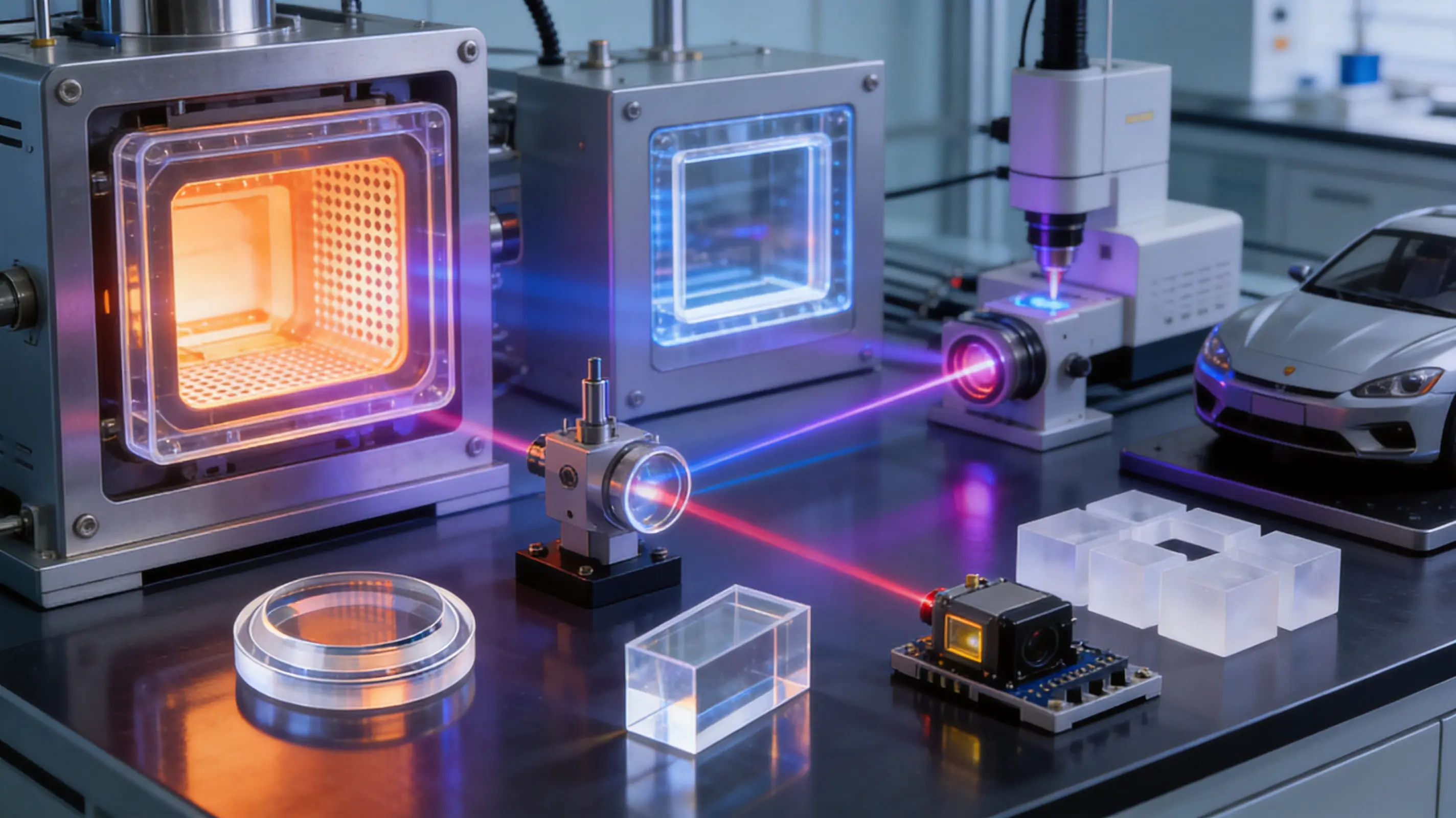
Quartz is widely used in semiconductor equipment because of its purity, thermal stability, chemical resistance, and optical properties. Special-shaped windows can be used in inspection modules, process chambers, optical monitoring assemblies, and equipment covers.
In semiconductor environments, contamination control is critical. The material, cleaning method, packaging, and cleanliness specification should be selected according to the process environment. A high-purity quartz substrate with controlled surface quality can support stable equipment performance.
7.2 Laser Systems
Laser systems require optical surfaces that do not introduce excessive wavefront distortion, scattering, or unwanted reflection. Quartz windows with a surface specification of up to 1/8 wavelength at 632.8 nm and parallelism of up to one arcminute can be considered for suitable laser applications.
The final selection depends on laser wavelength, power density, beam diameter, angle of incidence, coating, and environmental conditions. A window used in a high-power laser system may require additional evaluation of absorption, coating damage threshold, and thermal management.
7.3 Optical Instruments and Laboratory Equipment
Quartz windows are useful in spectrometers, analytical instruments, microscopes, sensors, and laboratory equipment. Their broad wavelength transparency allows designers to use them in ultraviolet, visible, and near-infrared measurement systems.
Special shapes can help the window fit into compact instruments or align with a detector, lamp, sample chamber, or measurement aperture. Perforations may also support mounting or controlled interaction between the optical path and the test environment.
7.4 High-Temperature Furnaces and Combustion Chambers
High thermal resistance and thermal shock resistance make quartz suitable for furnace observation windows, combustion monitoring, heating equipment, and thermal processing systems. The window can allow visual or optical monitoring while remaining stable under elevated temperatures.
For combustion applications, the design should consider soot, deposits, pressure differences, thermal gradients, and cleaning requirements. The material’s chemical stability is beneficial, but the complete assembly still requires appropriate sealing and mechanical support.
7.5 Medical Devices
Quartz optical windows can be used in medical instruments where transparency, chemical stability, sterilization compatibility, or ultraviolet transmission is required. The exact suitability depends on the device design, cleaning protocol, biological-contact classification, and regulatory requirements.
Special-shaped substrates can support compact optical modules and customized instrument housings. Dimensional accuracy and cleanliness are important because medical assemblies often require repeatable alignment and controlled handling.
7.6 Automotive Optical Systems
Automotive optics can include sensing, lighting, imaging, display, and monitoring systems. Quartz may be selected where thermal stability, optical transparency, and durable dimensional performance are needed.
Automotive production also places strong emphasis on repeatability, process documentation, environmental testing, and stable supply. The company’s IATF16949 certification is relevant to customers evaluating components for automotive-related programs.
7.7 Communication and Defense Equipment
Quartz windows can support optical communication, sensing, targeting, inspection, and defense equipment. The material’s broad spectral performance, electrical insulation, thermal stability, and chemical resistance can be advantageous in demanding field or equipment environments.
These applications may require additional testing for vibration, shock, humidity, temperature cycling, radiation, or specialized coatings. The final specification should be developed according to the operational environment and system-level performance requirements.
8. Design Guidance for Customers
To obtain a reliable quotation and efficient production plan, customers should provide as much technical information as possible. A complete drawing should identify the outside dimensions, thickness, holes, slots, corner details, tolerances, optical surfaces, coating, cleanliness, and packaging requirements.
8.1 Define the Optical Area
The drawing should distinguish between the overall physical outline and the effective optical aperture. Mounting edges, holes, chamfers, and non-optical zones can reduce the usable transmission area. Clearly identifying the required optical area helps the supplier select an appropriate blank size and finishing allowance.
8.2 Specify Wavelength Requirements
Customers should state whether the window is intended for ultraviolet, visible, near-infrared, or multiple wavelength bands. If a coating is required, the target wavelength range, angle of incidence, and transmission objective should be included.
8.3 Consider Edge Geometry
Sharp corners and narrow sections may increase the risk of chipping or breakage. Where the mechanical design permits, small radii or chamfers can improve manufacturability and handling safety. Hole edges should also be specified according to their function.
8.4 Match Tolerances to the Application
Tight tolerances can improve fit and optical performance, but they may also increase manufacturing complexity and cost. Customers should identify which dimensions are critical and which can use broader tolerances. This approach helps focus process control where it delivers the greatest system benefit.
8.5 Explain the Operating Environment
Temperature range, thermal cycling, vacuum, pressure, chemical exposure, humidity, radiation, vibration, cleaning method, and installation orientation can all affect product selection. Supplying this information allows the manufacturer to recommend suitable material, coating, edge treatment, cleanliness, and packaging.
8.6 Plan for Handling and Installation
Quartz surfaces should be protected from fingerprints, abrasive contact, and contamination. The assembly design should avoid point loading and excessive clamping force. Seals, fasteners, and support structures must accommodate the glass component without creating damaging stress concentrations.
9. Why Customized Production Creates a Competitive Advantage
Standard optical windows may be available quickly, but they do not always fit the mechanical and optical requirements of specialized equipment. Customized quartz parts can eliminate unnecessary adapters, reduce assembly complexity, and optimize the available space inside a system.
The ability to produce sizes from 2 mm to 400 mm provides flexibility for both miniature instruments and larger industrial assemblies. The availability of thicknesses from 0.1 mm to 30 mm also allows designers to balance weight, strength, transmission, and installation requirements.
Customized production can improve optical performance because the shape, aperture, coating, and surface specifications are developed together. Instead of modifying a standard window to fit a system, the customer can design the component around the actual optical path and mechanical structure.
Another advantage is supplier consolidation. A manufacturer capable of producing round, rectangular, triangular, trapezoidal, and irregular quartz parts can support multiple product families. This can simplify communication, quality management, sampling, and repeat purchasing.
The company’s combination of optical manufacturing experience, technical centers, quality certifications, international export experience, and multi-industry capabilities provides a foundation for serving both prototype and production requirements. Its product development resources can also support applications that require more than a standard catalog specification.
10. Quality Assurance and Long-Term Reliability
Long-term optical performance begins with material quality and continues through every manufacturing stage. High-purity quartz can provide excellent properties, but the finished component must also be free from unacceptable bubbles, inclusions, scratches, chips, contamination, and geometric deviations.
Dimensional inspection confirms whether the part matches the drawing. Surface inspection verifies that the optical area meets the required quality level. Flatness and parallelism measurements help determine whether the window can be used in precision optical systems. Cleanliness inspection and controlled packaging help preserve the product after manufacturing.
For repeat orders, process stability is as important as the performance of the initial sample. A suitable quality management system can support consistent raw material selection, process records, inspection procedures, corrective actions, and product traceability.
Customers should also evaluate the finished window within the complete assembly. Installation stress, sealing pressure, temperature gradients, vibration, and cleaning methods can affect performance even when the component meets its standalone specification. Cooperation between the optical manufacturer and system designer is therefore essential.
11. Frequently Asked Questions
Q1: What are perforated special-shaped quartz parts?
They are customized quartz components with irregular outlines, holes, slots, cutouts, or other nonstandard features. They can be used as optical windows, protective substrates, mounting elements, inspection windows, or functional parts in precision equipment.
Q2: What quartz materials are available?
Quartz glass may be produced as fused quartz glass or synthetic quartz glass. The described quartz window products use synthetic quartz. Material selection should be confirmed according to purity, wavelength, temperature, chemical exposure, and other application requirements.
Q3: What sizes can be manufactured?
Round parts can have outer diameters from approximately 2 mm to 400 mm. Square and rectangular parts can have lengths and widths from approximately 2 mm to 400 mm. Thicknesses can range from 0.1 mm to 30 mm, subject to the specific geometry and manufacturing requirements.
Q4: Can triangular and trapezoidal quartz windows be produced?
Yes. Triangular, trapezoidal, and other irregular geometries can be customized according to customer drawings. The final feasibility depends on dimensions, thickness, corner details, holes, tolerances, and optical surface requirements.
Q5: What is the profile tolerance?
The stated profile tolerance is approximately ±0.03 mm. The applicable tolerance for a particular feature should be confirmed on the final drawing, especially for holes, narrow sections, and critical mounting surfaces.
Q6: What is the thickness tolerance?
The stated thickness tolerance is ±0.005 mm. This specification supports applications requiring consistent optical path length and accurate mechanical positioning.
Q7: What surface quality is available?
The listed surface specification is no more than 1/8 wavelength at 632.8 nm. The appropriate surface requirement depends on whether the part is used for imaging, laser transmission, inspection, sensing, or general protection.
Q8: What does parallelism of one arcminute mean?
It means that the angular difference between the two primary surfaces is controlled to no more than one arcminute. Good parallelism helps reduce beam deviation and supports stable optical alignment.
Q9: Are optical coatings available?
Coating options are available for ultraviolet, visible, and infrared applications. The coating should be selected according to wavelength, angle of incidence, transmission target, operating temperature, and environmental exposure.
Q10: Can the parts be supplied with holes or perforations?
Yes. Holes and other perforations can be processed according to customer drawings. The drawing should specify hole size, position, quantity, edge condition, tolerance, and whether the hole is optical, mechanical, or functional.
Q11: Why is quartz suitable for high-temperature equipment?
Quartz has high temperature resistance, low thermal expansion, and good thermal shock resistance. These characteristics allow it to remain stable in many furnaces, combustion chambers, heating systems, and semiconductor process environments.
Q12: Is quartz suitable for ultraviolet applications?
Quartz can transmit light across a broad range from ultraviolet to near-infrared. The actual transmission depends on material grade, thickness, surface condition, and coating. A specific ultraviolet wavelength requirement should be confirmed before production.
Q13: How should customers prepare a quotation request?
Customers should provide a drawing or detailed dimensions, material preference, thickness, tolerance, surface quality, parallelism, effective aperture, coating, cleanliness grade, operating environment, quantity, and packaging requirements. Application information helps the manufacturer assess the design and recommend suitable processing.
Q14: What industries can use these components?
Applications include semiconductor equipment, laser optics, automotive optics, laboratory instruments, medical devices, optical communication systems, industrial equipment, furnaces, combustion chambers, defense systems, and other precision optical assemblies.
Q15: How does the manufacturer support quality consistency?
The company supports production with an established optical manufacturing organization, engineering resources, technical research centers, quality certifications, precision processing capabilities, and inspection procedures. Specific quality documentation should be agreed upon for each project.
12. Conclusion
Perforated special-shaped quartz parts provide a practical solution when an optical system requires more than a standard circular or rectangular window. Their value comes from the combination of high-purity quartz, broad optical transparency, high temperature resistance, low thermal expansion, thermal shock resistance, chemical stability, electrical insulation, and flexible custom processing.
The available production range covers small and large components, thin and robust substrates, standard profiles, and customized triangular, trapezoidal, irregular, and perforated geometries. Technical specifications such as ±0.03 mm profile tolerance, ±0.005 mm thickness tolerance, surface flatness of no more than 1/8 wavelength at 632.8 nm, parallelism of no more than one arcminute, cleanliness options, and effective aperture above 90% support demanding optical and mechanical applications.
Changzhou Haolilai Photo-Electricity Scientific and Technical Co., Ltd. combines long-term optical manufacturing experience with engineering resources, quality certifications, technical research centers, international market experience, and capabilities serving laser, automotive, semiconductor, and consumer optics. These strengths help the company address both standard quartz window requirements and complex custom projects.
For customers developing precision instruments, high-temperature equipment, semiconductor tools, laser systems, or specialized optical assemblies, a customized quartz window can improve system integration and reduce design compromises. The most effective results come from early cooperation on the drawing, optical requirements, operating environment, coating, tolerances, cleanliness, inspection, and packaging.
References
1. Manufacturer-provided technical information for synthetic quartz window substrates and perforated special-shaped parts.
2. Manufacturer-provided product specifications covering size ranges, tolerances, surface quality, parallelism, cleanliness, effective aperture, and coating options.
3. General technical principles of fused quartz and synthetic quartz glass used in optical, thermal, electrical, and chemical applications.
4. ISO 9001:2015, Quality Management Systems—Requirements.
5. ISO 14001:2015, Environmental Management Systems—Requirements with Guidance for Use.
6. IATF 16949, Quality Management System Requirements for Automotive Production and Relevant Service Parts Organizations.
7. General optical engineering references concerning surface flatness, parallelism, optical transmission, effective aperture, and precision substrate manufacturing.


 苏公网安备32041102000130号